



The reasons are simple: with more living space, a more stable sailing experience and layouts better suited to long-term living, catamarans are no longer merely recreational vessels, but rather resemble mobile homes at sea.
With the rise of lifestyles such as ‘working whilst travelling’ and ‘long-term life at sea’, a new generation of catamaran brands, exemplified by Oceanwalker, is driving the development of catamarans towards a more lifestyle-oriented and long-term phase.
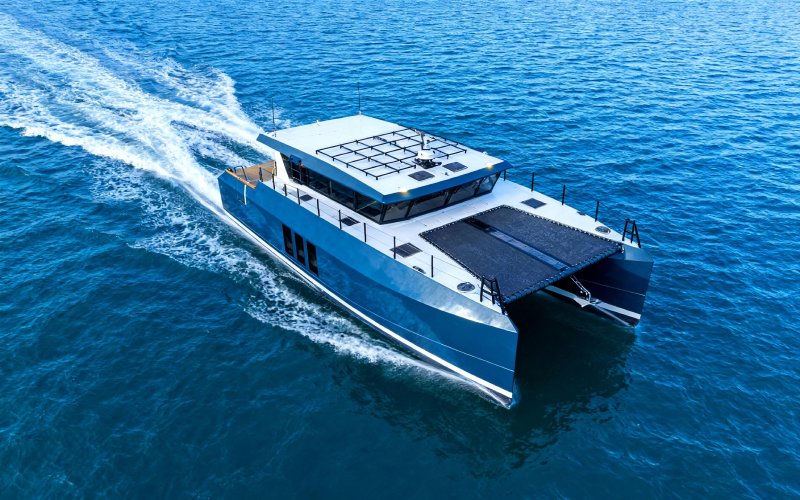
Who is best suited to buying a catamaran?
Not all buyers are suited to catamarans, but for the following groups, they are currently almost the most sensible choice.
Families
If your time at sea is primarily spent on family holidays, gatherings with friends, or providing children with maritime experiences, then a catamaran platform is clearly superior to a traditional monohull. The wide decks, larger living areas, multi-bedroom layouts and more stable sailing experience offered by the catamaran structure allow families to truly turn life at sea into a long-term, sustainable leisure activity.
Long-term Cruisers
Many people planning transoceanic or international cruises prioritise catamarans. During extended voyages, factors such as stability, storage capacity, energy systems and living comfort are far more important than sheer speed. Catamarans typically feature larger solar panel areas, greater fresh water storage capacity, and kitchen and living spaces better suited to long-term living.
Liveaboard Enthusiasts
An increasing number of remote workers, content creators and retirees are embracing the liveaboard lifestyle. As catamarans offer living spaces akin to ‘floating apartments’, they are better suited to long-term living than traditional monohulls. Particularly in tropical cruising regions, the catamaran has become an established way of life.
Of course, catamarans are not for everyone.
If you prioritise high-speed sailing and competitive sailing experiences, or if you frequently moor in confined harbours, then some larger catamaran platforms may not be suitable for you. Mooring fees, maintenance costs and width restrictions for catamarans also need to be considered in advance.
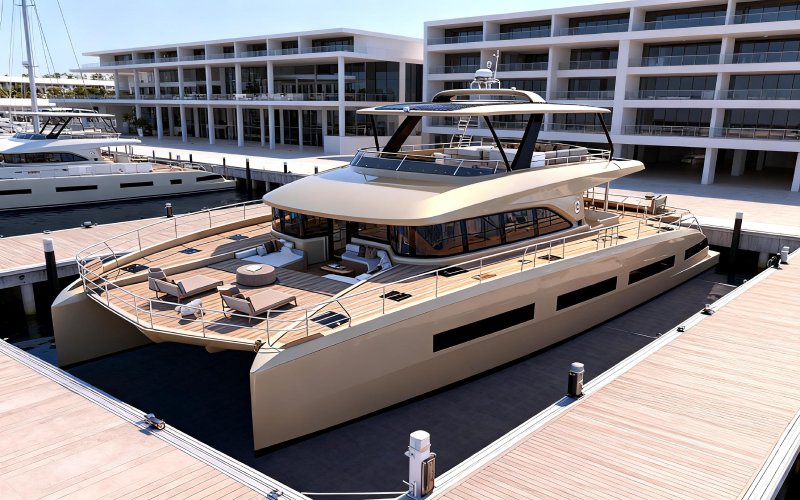
Different Scenarios for Catamaran Yachts
One of the key features of catamaran yachts is their ability to cater to a very wide range of needs.
Family Holidays
This is currently the most common use case.
Many buyers do not undertake long-distance voyages, but instead use their yacht for weekend leisure, island getaways and as a hub for family socialising. In this context, the advantages of a catamaran’s wide deck are particularly evident.
Children can play more safely, adults have a larger leisure area, and the kitchen, dining area and lounge remain uncrowded even when used by several people simultaneously.
Compared to traditional monohulls, a catamaran deck is more akin to a ‘villa at sea’.
Long-Distance Cruising
For those who truly love sailing, the core value of a catamaran lies in its ‘long-term comfort’.
During extended voyages, the vessel’s stability directly affects fatigue levels. As catamarans offer superior lateral stability, their roll is significantly less pronounced than that of monohull sailboats in most sea conditions.
Furthermore, many cruising enthusiasts install the following on board:
• Solar power systems
• Desalination equipment
• Long-endurance power generation systems
• Starlink satellite internet
• Long-term refrigeration systems
Moreover, the larger deck area and equipment space on catamarans make them better suited to this type of long-term cruising configuration.
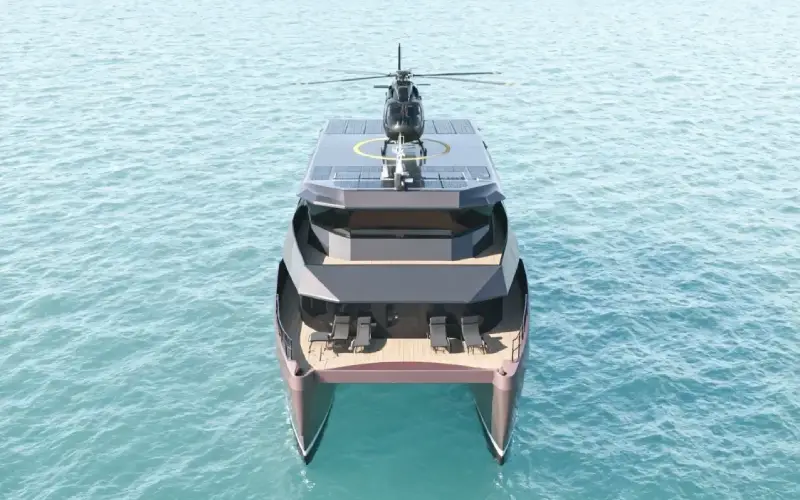
Liveaboard
This is the fastest-growing usage scenario in recent years.
An increasing number of people are seeking to break away from traditional, fixed living arrangements, combining life, work and travel. As catamarans feature a spatial layout closer to that of a home, they have become the core platform for long-term living on board.
Particularly in Southeast Asia, the Caribbean and the Mediterranean, the culture of long-term life on board is becoming increasingly established.
A 40–50-foot catamaran typically offers:
• Separate galley
• Multiple bathrooms
• Dedicated office area
• Ample storage systems
• Air conditioning and energy systems
This is why many people are now seriously exploring the practicality of buying a catamaran yacht, as it is no longer merely a recreational vessel, but a whole new way of life.
If your purchase-price ceiling is US$1 million, compare our selection of liveaboard yachts under $1 million to weigh catamarans against trawlers and flybridge motor yachts.
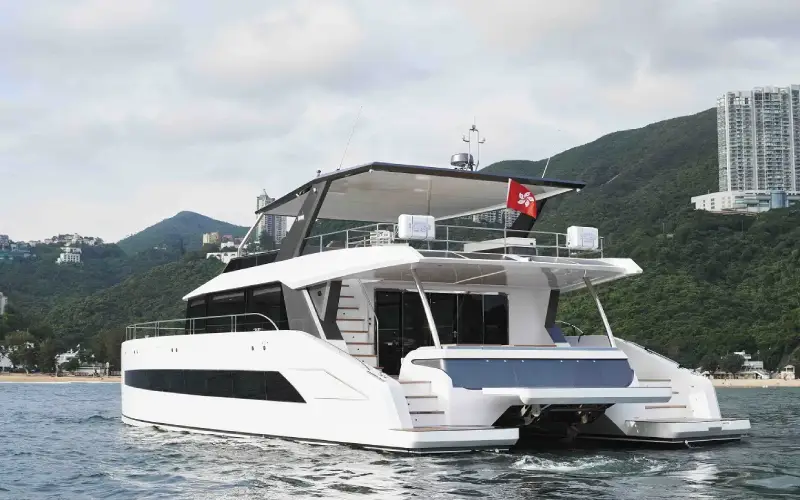
How to choose the right catamaran?
The most common mistake first-time buyers make when considering a catamaran is to focus solely on space. In reality, the following core factors are what truly determine the user experience.
Clarify Your Purpose
Are you looking for:
• Weekend leisure?
• Family cruising?
• Long-term cruising?
• Living at sea?
• Commercial charter?
Different uses place entirely different demands on a vessel. For example, family leisure places greater emphasis on living space, whilst long-term cruising focuses more on energy systems and storage capacity.
Consider the Hull Design
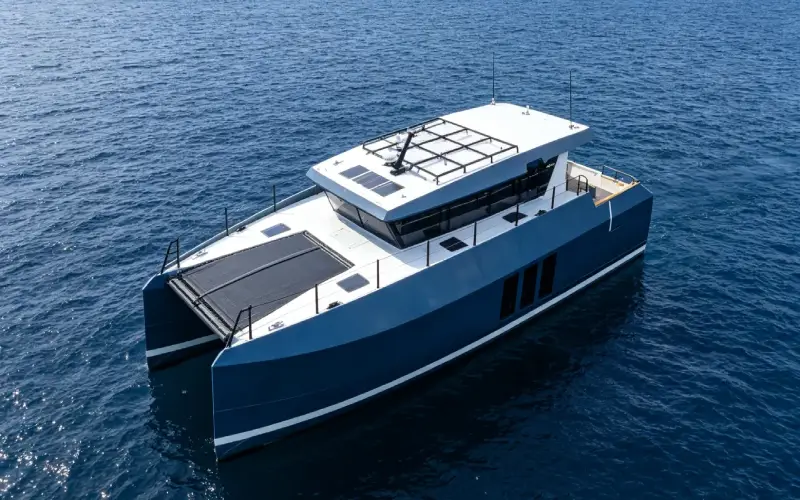
Not all catamarans prioritise comfort. Some are performance-oriented, being lighter and faster but with less living space; others are designed for living, sacrificing some speed in exchange for a larger interior.
Therefore, buyers need to clarify:
Do you prioritise sailing performance or the living experience?
Consider Maintenance Complexity
Catamaran platforms typically feature:
• Twin engines
• More complex electrical systems
• Larger air-conditioning systems
• More domestic appliances
This means maintenance costs are generally higher than for monohulls of the same size. Many first-time buyers of used catamaran yachts often underestimate the cost of upgrading ageing equipment, making a thorough pre-purchase inspection particularly important.
Consider Mooring Requirements in Advance
One of the biggest practical issues with catamarans is that they are ‘too wide’.
Many marinas charge by width, so mooring costs for catamarans are usually higher. Furthermore, some older marinas may simply be unable to accommodate large catamarans.
Therefore, before purchasing a boat, it is best to confirm in advance whether your usual port is suitable for the long-term mooring of a catamaran.
Size Selection Guide
When it comes to size, bigger is not necessarily better. The truly appropriate size depends on the number of people using the boat, your budget and your long-term plans.
| Size Range | Suitable For | Key Features | Ideal Scenarios |
| 35–40 feet | Small families, beginners | Easier to handle, lower maintenance costs | Weekend cruising |
| 40–45 feet | Mainstream family users | Best balance of space and cost | Long-distance cruising |
| 45–55 feet | Long-term liveaboards | Close to a floating home | Long-term living and round-the-world sailing |
| 55 feet and above | High-end enthusiasts | Luxury fittings and long-range capability | Commercial operations, high-end lifestyle |
For the vast majority of families, the 40–45-foot range is actually the most sensible choice.
This is because this size already offers:
• 3–4 bedrooms
• Separate galley
• Spacious saloon
• Long-term energy systems
• Comfortable living space
Yet the maintenance burden has not yet reached superyacht levels.
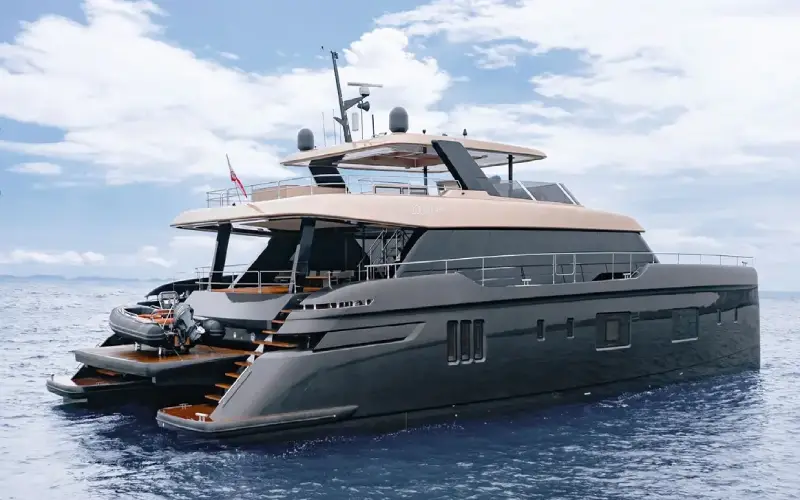
Once you exceed 50 feet, operating costs, mooring fees and the complexity of maintenance all rise significantly.
Budget Recommendations
A common mistake many people make when purchasing a catamaran is treating the ‘purchase price’ as the total budget. In reality, what truly determines the long-term experience is not how much you spend when buying the boat, but whether you can sustain the ongoing operating costs over the long term.
Due to their larger spaces, more complex systems and twin-engine configuration, the long-term holding costs of catamarans are typically higher than those of monohulls of the same size. Therefore, when determining your budget, it is advisable to consider not only the purchase price but also to plan for the following:
• Annual maintenance costs
• Mooring costs
• Insurance premiums
• Energy system upgrades
• Long-term equipment replacement budget
Only in this way will your future ownership experience remain unaffected by budgetary pressures.
$300,000–$600,000: Suitable for entry-level families and casual cruisers
This is the entry-level budget range for many first-time catamaran buyers.
Within this range, the market is dominated by older pre-owned catamarans, small cruising models, and some new boats with basic specifications.
This budget is typically suitable for:
• Weekend island cruising
• Short family leisure trips
• Seasonal use
• A first taste of life on board
Its greatest advantage is the relatively low entry barrier, allowing you to first experience whether a catamaran truly suits your lifestyle.
However, it is important to note that a low budget does not equate to low running costs. Many lower-priced catamarans often face the following issues:
• Aged power generation systems
• Reduced air conditioning efficiency
• Hull equipment renewal
• Electronics system upgrades
• Engine maintenance
Particularly for long-term cruising plans, the costs of refurbishing equipment later on may far exceed expectations. Therefore, at this stage, it is advisable for buyers to prioritise the condition of the vessel rather than simply pursuing the lowest price.
$800,000–$2 million: The most popular budget for family cruising today
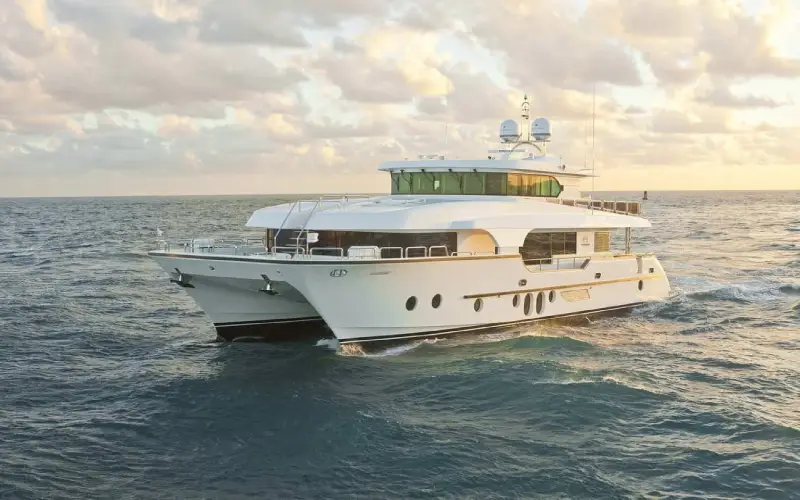
This is currently the most sought-after price range in the global catamaran market and the primary choice for the vast majority of families embarking on long-term cruising.
Within this price range, buyers can expect to find:
• Mainstream catamarans in the 40–50-foot class
• More spacious living quarters
• Multi-bedroom layouts
• Well-developed energy systems
• Long-range cruising capability
Catamarans in this category are no longer merely recreational vessels, but genuine platforms for life at sea.
Many families within this budget will prioritise the following considerations:
• Whether the yacht is suitable for long-term living on board
• Whether it supports remote working
• Whether it is capable of circumnavigating the globe
• Whether it is suitable for children to live on board long-term
Consequently, the importance of the galley, storage space, air conditioning and fresh water systems will be significantly greater than that of pure speed.
Furthermore, this budget bracket offers the best balance between ‘comfort’ and ‘running costs’. Compared to larger catamaran platforms, it still maintains relatively reasonable mooring fees and maintenance demands, making it highly suitable as a long-term holding yacht.
Over $3 million: High-end long-term living and round-the-world cruising platforms
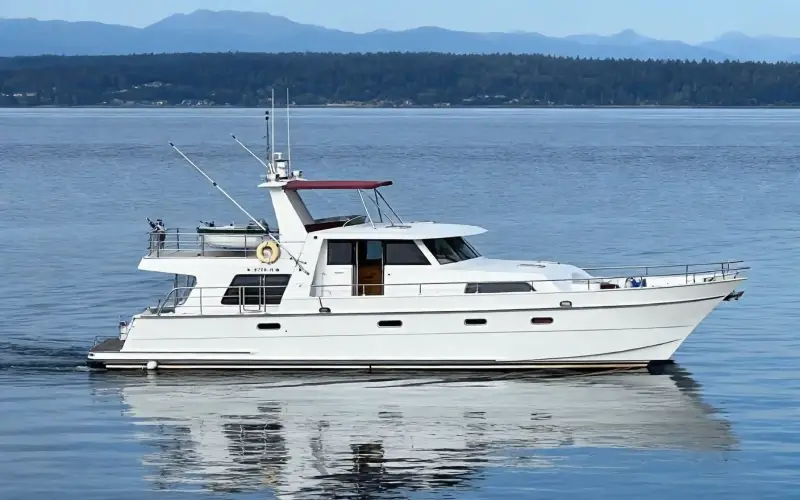
When the budget exceeds $3 million, the positioning of catamarans begins to shift significantly.
Buyers at this stage are typically no longer simply considering ‘going out to sea’, but are seeking a genuine long-term lifestyle solution at sea.
Catamarans in this class usually feature:
• Extensive living space
• High-end bespoke interiors
• Professional-grade energy systems
• Long-range capability
• Full suite of smart controls
• High-specification stabilisation systems
Many vessels even approach the concept of a ‘floating luxury residence’. Brands such as Oceanwalker, which are geared towards long-term living, are rapidly gaining attention in this market. This is because, for high-end users, the focus is no longer on short-term leisure, but rather on:
• The ability to live on board continuously for months or even years
• The ability to work remotely over the long term
• The ability to support family voyages around the world
• The ability to reduce fatigue during extended voyages
At the same time, a high budget implies higher long-term operating costs. In addition to the purchase price itself, owners must also bear the ongoing costs of:
• International mooring fees
• Crew costs
• High insurance premiums
• Global maintenance
• Long-distance resupply
Consequently, high-end catamaran platforms are better suited to those with genuine plans for long-term life at sea, rather than buyers who merely take the boat out for the occasional weekend.
Top Recommendations for Catamarans
👉 See the 2025 Nor-Tech 4000 Supercat

2025 Nor-Tech 4000 Supercat
- Length40 ft
- Cabins1
- Top speed60 kn
- TypeCatamaran yacht
The 2025 Nor-Tech 4000 Supercat is a high-performance luxury power catamaran designed for speed, stability, and handling during offshore cruising. It meets the diverse needs of boat owners by seamlessly blending performance, cutting-edge design, and practical features to deliver a premier yachting experience.
The 2025 Nor-Tech 4000 Supercat is a quintessential high-performance catamaran.
Nor-Tech has long been renowned for its high speeds, radical designs and distinctly sporty style, and the 4000 Supercat leans even more towards being a ‘performance machine at sea’. Compared to traditional cruising catamarans, it is better suited to:
• Those who enjoy a high-speed sailing experience
• Short-distance, high-performance leisure
• High-speed coastal cruising
Its most notable feature is its exceptional stability at high speeds; even at higher speeds, the catamaran structure maintains excellent lateral stability.
If you prefer exhilarating sailing rather than long-term living on board, this is a highly attractive option.
👉 Browse the 2025 Invincible 38 Catamaran
2025 Invincible 38 Catamaran
- Length37.17 ft
- Top speed55 kn
- TypeCatamaran yacht
The 2025 Invincible 38 catamaran is a high-performance offshore fishing and recreational powerboat that combines speed, stability, and versatility, making it the ideal choice for long-distance voyages, coastal cruising, or high-speed recreational outings.
This yacht has consistently enjoyed immense popularity in the North American market, and the 38 Catamaran is a quintessential offshore leisure catamaran.
Its key strengths are:
• Excellent adaptability to sea conditions
• Outstanding stability at sea
• Combines fishing and leisure
• Relatively simple maintenance
Compared to traditional luxury catamarans, it leans more towards functionality and practicality, making it ideal for:
• Sea anglers
• Long-distance coastal cruising
• Weekend offshore leisure
For those who do not require long-term accommodation but wish for a more stable offshore experience, this type of vessel offers greater comfort than traditional monohull speedboats.
👉 View Oceanwalker S60-Holiday for sale
Oceanwalker S60-Holiday
- Length60 ft
- Cabins4
- Top speed18 kn
- TypeCatamaran yacht
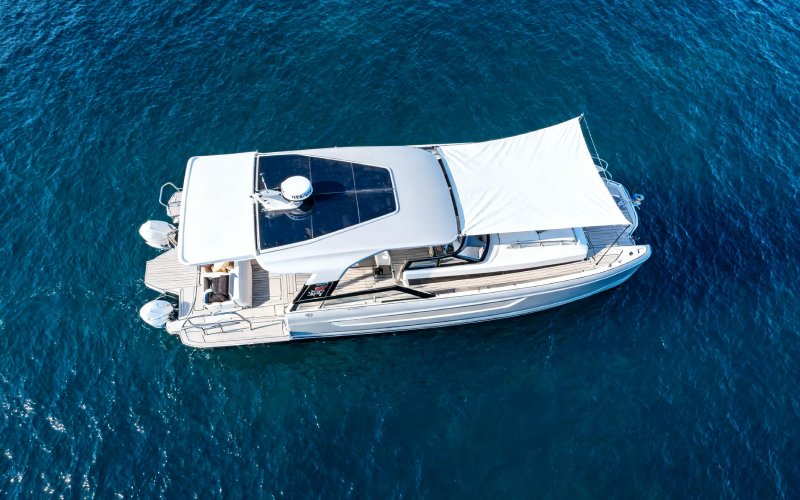
The Oceanwalker 60-Holiday, as the first yacht of the Oceanwalker shipyard, has beautiful lines, elegant flanks, innovative design, and large indoor and outdoor spaces. It has 4 cabins and 5 bathrooms, like a palace floating on the sea for cruising. Since its debut, it has been deeply loved by customers at home and abroad.
The Oceanwalker S60-Holiday, on the other hand, represents a completely different approach: a catamaran designed for long-term living.
Compared to performance-oriented catamarans, it prioritises:
• Long-term living comfort
• Spacious living experience
• Long-range capability
• Design for working at sea and family life
Its overall layout is very close to that of a genuine floating home, with large communal areas, a multi-bedroom layout and long-term energy systems, making it more suitable for:
• Long-term round-the-world cruising
• Family liveaboard living
• Extended remote working
• Luxury holiday experiences
This is why the Oceanwalker has attracted increasing attention from long-term cruising enthusiasts in recent years, as it represents a trend towards more lifestyle-oriented, long-term catamaran living.
Summary
The growing popularity of catamarans is not fundamentally due to them being ‘trendy’, but because they better suit the modern maritime lifestyle.
For families, this means a safer, more comfortable maritime environment that is better suited to shared living.
For cruising enthusiasts, it offers a more stable living platform ideal for extended voyages.
And for those living aboard long-term, a catamaran is no longer merely a boat, but a true floating home.
Of course, catamarans are not without their drawbacks.
Higher mooring fees, more complex maintenance systems and greater running costs all mean that buyers need to plan their budgets more carefully.
However, if your goals are:
• Extended life at sea
• Family cruising
• Tropical voyages
• Long-term living
then catamarans are indeed becoming an increasingly sensible choice.
FAQ
Q1: Are catamarans more stable than monohulls?
A: In most cases, yes. The catamaran design offers greater lateral stability, resulting in less rolling during cruising and daily life, making them more suitable for families and long-term living.
Q2: Are catamarans suitable for long-term living?
A: Absolutely. Catamarans over 40 feet in particular are typically equipped with a full kitchen, separate bedrooms, air conditioning and energy systems, making them well-suited to the demands of long-term life at sea.
Q3: Are the maintenance costs for catamarans high?
A: They are generally higher than for monohulls of the same size. As catamarans have twin engines, more complex systems and larger equipment, a long-term maintenance budget needs to be planned in advance.
Q4: Are catamarans suitable for round-the-world sailing?
A: They are very suitable. Many modern catamarans are designed specifically for long-distance cruising and offer clear advantages on tropical routes and for long-term life at sea.