



However, for first-time buyers entering this sector, the real question is not ‘which boat to buy’, but ‘what kind of catamaran is actually right for me’. Factors such as size, budget, intended use, ongoing maintenance, mooring costs, and the choice between new and second-hand vessels will all directly impact your experience over the coming years, or even decades.
This article will systematically analyse the key considerations to bear in mind before purchasing a catamaran, helping you to avoid common pitfalls.
Who is best suited to buying a catamaran?
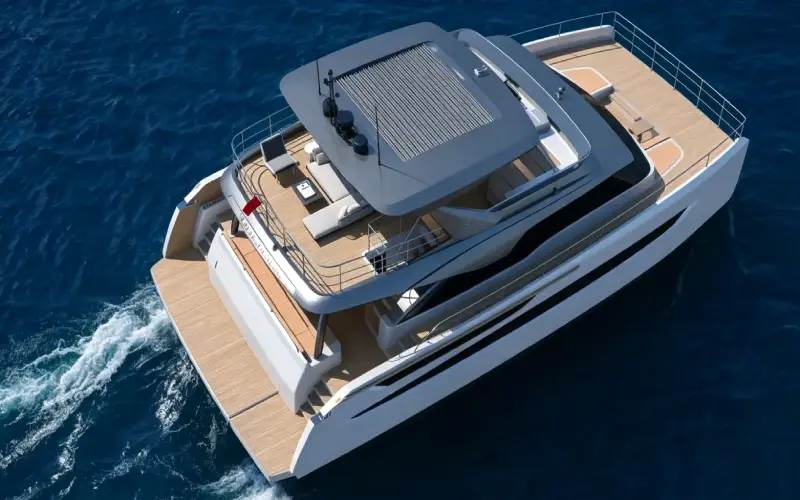
A catamaran is not merely a ‘larger sailing boat’; it is more akin to a maritime platform designed for a comfortable lifestyle. If you prioritise spaciousness, stability and the experience of long-term living on board, then a catamaran is generally a better fit than a traditional monohull.
For families, the greatest advantage of a catamaran lies in its spacious living quarters. The twin-hull design allows for a larger saloon, a more fully equipped galley and more private cabins; many catamarans over 50 feet in length offer an interior living experience that is almost akin to a floating apartment. At the same time, catamarans experience less roll when moored, resulting in significantly greater overall comfort for families with children embarking on extended voyages.
For long-term cruisers or those undertaking ocean-going voyages, catamarans are equally appealing. Greater storage space, more comprehensive energy systems and higher fresh water capacity all make them better suited to extended life on board and transoceanic voyages.
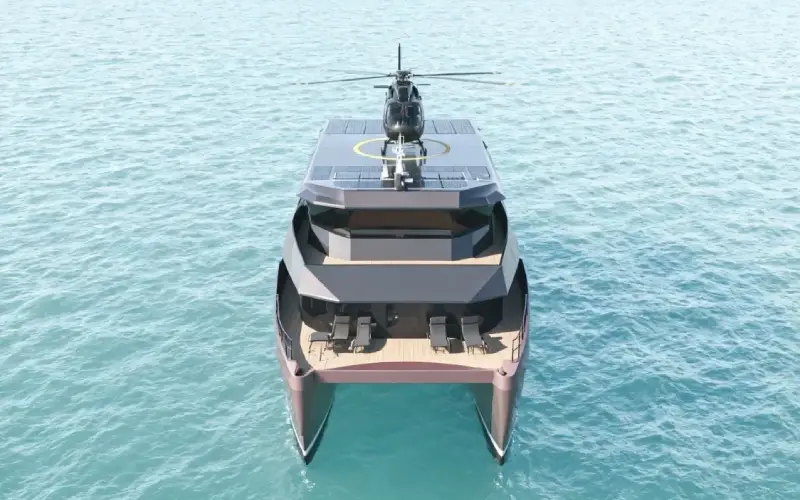
Furthermore, an increasing number of high-end leisure users are opting for large catamaran yachts. Compared to traditional motor yachts, catamaran platforms offer more spacious flybridge areas, a more stable mooring experience and layouts better suited to socialising at sea, making them a significant trend in high-end maritime living.
Consequently, the global market for new catamaran yachts has seen significant growth in recent years, with more and more buyers who previously favoured traditional luxury yachts now turning to catamaran platforms.
Different sailing requirements dictate different hull types
Many first-time boat buyers tend to look first at the brand, size and appearance, but a truly professional approach to purchasing a boat should actually begin with a clear understanding of one’s own sailing requirements.
This is because different usage scenarios will directly determine the most suitable hull type, size and budget structure for the future.
Weekend Leisure
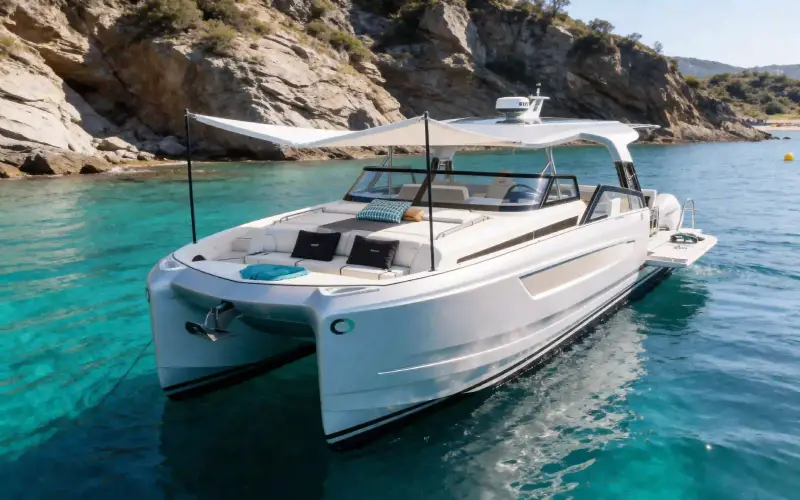
If your primary use involves weekend outings at sea, coastal cruising or short trips to nearby islands, you don’t actually need a particularly large catamaran.
For this type of user, small to medium-sized vessels that are simple to operate and require minimal maintenance are more suitable. For frequent short trips, convenience is far more important than ‘size’.
Many first-time buyers tend to think that ‘bigger is better’, but only realise after long-term use that as the size increases, so do the challenges of mooring, maintenance and handling.
For weekend leisure users, a catamaran that is easy to sail, convenient to moor and requires reasonable maintenance will actually see higher usage rates.
Family Cruising
Family cruising represents one of the largest user groups in the current catamaran market. Buyers at this stage are typically no longer considering merely ‘occasional trips out to sea’, but are beginning to plan summer cruises, international voyages, weeks of life aboard, and even long-term voyages at sea. Consequently, the vessel is no longer merely a means of transport, but a true ‘home at sea’.
This category of user typically pays greater attention to:
- Number of cabins
- Kitchen space
- Energy systems
- Air conditioning
- Long-term living comfort
Many family users eventually realise that what truly determines their sense of well-being is often not the boat’s speed, but the finer details of daily life. For instance, the reliability of the air conditioning, fresh water storage capacity and kitchen space all directly impact the long-term cruising experience.
Long-Range Ocean-Going
The demands placed on a vessel for ocean-going voyages are entirely different from those of ordinary recreational cruising.
Users undertaking genuine long-term transoceanic voyages place greater emphasis on: structural reliability, long-term self-sufficiency, adaptability to extreme weather, and ease of maintenance.
After undertaking long voyages, many ocean-going enthusiasts gradually realise that ‘reliability’ is far more important than ‘luxury’. This is why, in recent years, an increasing number of ocean-going users have begun to turn their attention to platforms such as Oceanwalker, which adopt a practical, ocean-oriented approach.
Compared to catamarans that emphasise luxurious design, these vessel types place greater emphasis on long-range stability, the efficiency of long-term life on board, and the self-sufficiency of their energy systems.
For buyers genuinely planning a round-the-world voyage, the ease of maintenance and the maturity of the systems are often more important than the exterior design.
Commercial Operation/Charter
In recent years, catamarans have also become increasingly popular platforms for commercial operations.
Particularly in the island tourism market, high-end catamarans are now widely used for: chartered sea cruises, corporate events, luxury tourism and bespoke cruising programmes. The key distinction between commercial and private use lies in the greater emphasis on long-term operational returns.
Consequently, such buyers typically prioritise: the number of cabins, brand recognition, ease of maintenance, and resale value. Many commercial owners favour established brands with comprehensive global service networks and high market liquidity, as this significantly reduces operational risks down the line.
How should one choose the size of a catamaran?
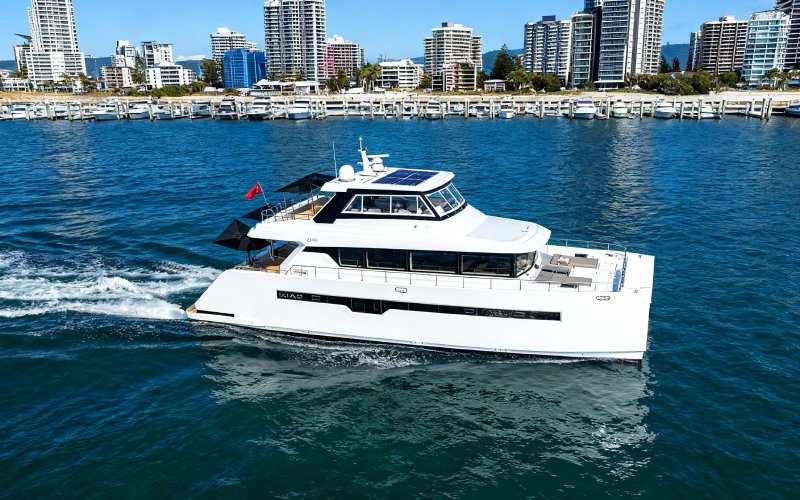
Size is the aspect of the entire boat-buying process that people most often regret. This is because many first-time buyers instinctively assume: ‘If the budget allows, buy as large a boat as possible.’
However, the reality is often quite the opposite. A larger size does not necessarily mean a better experience, as maintenance costs, mooring fees, operational complexity and labour requirements all rise rapidly with size.
Finding the size that truly suits you is far more important than simply opting for the ‘largest size’.
30–50 feet: Entry-level and inshore cruising
This is currently the most suitable size range for novice boat owners. The greatest advantage at this stage is that the overall demands are relatively manageable. Whether it be mooring, handling, maintenance or annual costs, these do not increase as rapidly as they do with larger catamarans.
For weekend leisure, short family cruises and learning the basics of sailing, this size is sufficient to meet most needs.
Many experienced boat owners would advise against buying a boat that is too large as a first vessel.
This is because it is only through genuine, long-term use that one gradually comes to understand what one will truly need in the future.
50–80 feet: The Mainstream Family Cruising Size
This is currently the most mainstream size range in the global catamaran market. This is because at this stage, it is possible to achieve a truly long-term lifestyle aboard the vessel.
The boat will typically begin to feature:
- A large flybridge
- A fully equipped galley
- Multiple private cabins
- A generator
- An air-conditioning system
- Long-range energy systems
For many high-net-worth families, this size range offers a good balance between comfort, long-range capability and long-term running costs.
For example, the 2026 Archipelago 47 is a new-generation family cruising platform that has attracted significant attention in recent years. Its most notable feature is that, within a relatively reasonable size, it achieves excellent space utilisation and long-range cruising capability, making it particularly suitable for family users seeking to balance comfort with the ability for extended cruising.
👉 See 2026 Archipelago 47

2026 Archipelago 47
- Length47.42 ft
- Cabins3
- Top speed30 kn
- TypeCatamaran yacht
The 2026 Archipelago 47 is a Category A rated ocean-capable catamaran that seamlessly blends performance, range, and luxury, designed for adventurers who refuse to compromise on comfort during extended offshore passages. This 47-foot explorer offers a unique helm layout and premium finishes, making it equally suited for year-round cruising in northern climates or tropical island hopping.
80–100 feet: Ocean-going and Long-term Living Aboard
This category falls within the realm of super catamarans. Whilst the space is exceptionally generous, it also implies a significant increase in management complexity.
Factors such as the need for professional crew, higher insurance costs, more complex equipment systems and global mooring restrictions all become very real challenges.
Many first-time buyers of large catamarans tend to underestimate the difficulty of managing such a large vessel.
In recent years, the Oceanwalker S60-Urban has garnered significant attention in the high-end ocean-going catamaran market. Compared to traditional luxury catamaran platforms, it places greater emphasis on long-term living comfort and ocean-going practicality, and as such enjoys a high level of recognition within the ocean-going sailing community.
👉 Browse Oceanwalker S60-Urban
Oceanwalker S60-Urban
- Length60 ft
- Cabins4
- Top speed18 kn
- TypeCatamaran yacht
The Oceanwalker S60-Urban is a 60-foot luxury power catamaran designed around exceptional beam, family-oriented accommodation and large indoor-outdoor living spaces. The current YachtTrading configuration offers four guest cabins, five bathrooms, twin Volvo D6-440 engines and an estimated 540-nautical-mile range. With a beam approaching 27.5 feet and shallow draft, the S60-Urban is particularly relevant to buyers prioritizing onboard space, stability and relaxed cruising over outright speed.
The Most Overlooked Costs When Buying a Catamaran
The vast majority of first-time boat buyers focus their attention on the ‘purchase price’. However, in reality, for catamarans, it is often the ongoing ownership costs that truly eat into the budget over the long term.
Large catamarans, in particular, tend to incur significantly higher annual costs than standard monohulls due to their greater width, more extensive equipment and more complex systems.
It is often only after the first year of ownership that many buyers realise for the first time that maintaining a boat can be more expensive than buying one.
Below are the estimated annual ownership costs (in US dollars) for mainstream 40–60-foot sailing catamarans in 2026:
| Cost Item | 40–45ft Catamaran | 50–60ft Catamaran |
| Berth/Moorage Fees | $12,000–$28,000 | $25,000–$60,000 |
| Hull Insurance | $3,000–$8,000 | $8,000–$20,000 |
| Annual twin-engine maintenance | $1,600–$4,000 | $4,000–$10,000 |
| Anti-fouling and hauling out | $3,000–$7,000 | $8,000–$18,000 |
| Generator and air conditioning maintenance | $2,000–$5,000 | $5,000–$15,000 |
| Sail and Rig Maintenance | $2,000–$8,000 | $10,000–$25,000 |
| Electronics Upgrades | $1,500–$5,000 | $5,000–$20,000 |
| Contingency Fund for Repairs | $5,000–$15,000 | $15,000–$50,000 |
| Annual Total Cost Guide | $30,000–$65,000 | $80,000–$200,000+ |
Of these, mooring fees are actually the most commonly underestimated. As catamarans are significantly wider than monohulls, many marinas charge for ‘two berths’. In popular cruising regions such as the Mediterranean, the Caribbean and Singapore, mooring costs for large catamarans often far exceed expectations.
Secondly, a twin-engine system also significantly increases maintenance expenditure. Although twin engines enhance safety and manoeuvrability, costs for engine oil, replacement parts and annual servicing are generally doubled.
Furthermore, catamarans truly suited to long-term ocean voyages are typically equipped with desalination systems, lithium-ion battery banks, generators and autopilot systems. Whilst these features enhance the long-distance cruising experience, the costs of subsequent maintenance and upgrades are equally substantial.
Many long-term owners eventually discover that the real ongoing expense is not the hull itself, but the various electronic and energy systems. Therefore, before making the final decision to buy a catamaran yacht, it is more important to confirm whether you can sustain the ongoing ownership costs in the long term, rather than simply focusing on the purchase budget.
Recommended Popular Superyacht Models
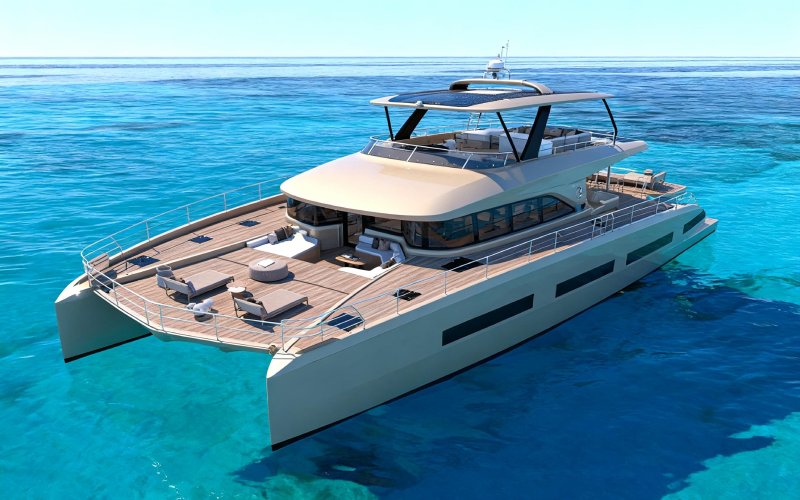
Currently, the high-end catamaran yacht market can broadly be divided into the new-build market and the established pre-owned market.
If you have a sufficient budget and wish to acquire the latest designs, state-of-the-art equipment and more comprehensive smart systems, then a new-build vessel is usually the better choice.
However, if you prioritise value for money and a mature, stable platform, a high-quality pre-owned vessel is often a more worthwhile consideration.
For example, the Fountaine Pajot MY6 is one of the most popular platforms currently available in the high-end pre-owned motor catamaran market. It features a mature and reliable propulsion system, whilst balancing comfortable family living space with long-range cruising capability, earning it high recognition amongst long-distance cruising enthusiasts.
👉 View Fountaine Pajot MY6 for sale

Fountaine Pajot MY6
- Build Year2024
- Length44 ft
- Cabins4
- Top speed16 kn
- TypeCatamaran yacht
The MY6 features are equivalent to those that a 20-metre monohull would offer. The living space on board, evocative of a holiday home, is simply breathtaking. Its huge flybridge offers a superb view on the horizon, its saloon, boasts a spacious lounge and a kitchen that opens directly onto the cockpit.
The Aquila 54 Yacht, on the other hand, is more geared towards high-end maritime entertainment and social occasions. Its flybridge space, entertainment layout and luxurious ambience are particularly outstanding, making it ideal for high-end leisure users and maritime business hospitality scenarios.
👉 See Aquila 54 Yacht
Aquila 54 Yacht
- Build Year2022
- Length54 ft
- Cabins5
- Top speed21 kn
- TypeCatamaran yacht
The Aquila 54 Yacht is a luxury 54-ft power catamaran with a fiberglass hull and 4.5-ft draft. Twin Volvo D6 480 hp engines provide stable performance, cruising at 17–18 knots and reaching up to 21 knots. The flexible interior offers 3–5 cabins and bathrooms, with flybridge and main deck spaces for 8–12 guests. Large fuel and freshwater tanks support long-range cruising, and optional crane, jet ski, and dinghy storage expand water activity options. Perfect for family vacations, friends’ gatherings, or coastal cruises, it combines comfort, luxury, and entertainment.
Is a new or second-hand catamaran better value for money?
This is a question all buyers eventually face. However, the real answer depends on what matters most to you.
If you prioritise the latest design, smart systems and the long-term ownership experience, then a new boat is usually the better choice.
In recent years in particular, catamarans have made significant strides in terms of spatial layout, energy systems and smart technology, with the new generation of platforms now clearly outperforming their predecessors.
At the same time, however, the biggest drawback of a new boat is also obvious: rapid depreciation.
The rate at which many new boats depreciate in value over the first three years is far greater than most people imagine. The greatest advantage of mature, high-quality second-hand boats, however, is that a large number of teething problems have already been resolved.
Many genuine long-term ocean-going users actually prefer established second-hand platforms, as these boats have been proven on actual routes and their equipment and systems are more reliable.
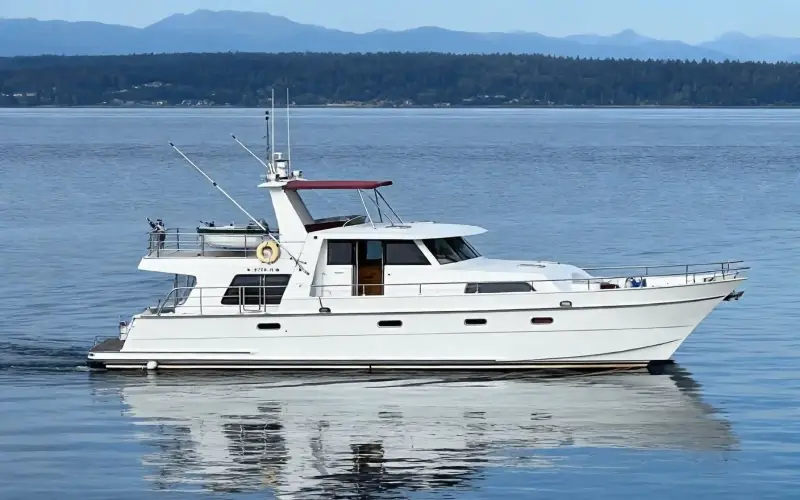
However, when purchasing a second-hand catamaran, a professional survey is essential.
Particular attention should be paid to inspecting:
- Hull structure
- Engine condition
- Electrical systems
- Water ingress
- Degree of ageing of the sails
This is because, should structural or equipment issues arise on a large catamaran, the subsequent repair costs may far exceed expectations.
Summary
Purchasing a catamaran is never a simple purchase. It is more akin to a long-term lifestyle choice.
What truly determines future satisfaction is often not the size of the boat or the prestige of the brand, but whether the vessel genuinely suits your sailing style.
Many first-time buyers hope to ‘get it right first time’. However, truly seasoned owners eventually realise that a boat that suits them is always more important than the largest boat available.
FAQ
Q1: Are catamarans suitable for beginners?
A: Yes, they are. Compared to monohulls, catamarans offer greater stability and more comfortable living space, making them generally more suitable for families and beginners. However, larger catamarans remain quite complex to handle, so beginners are better off starting with smaller or medium-sized models.
Q2: Why are catamarans becoming increasingly popular?
A: Because they can simultaneously meet the needs for comfort, space and long-term cruising. With the rise in popularity of family cruising and the long-term liveaboard lifestyle, catamarans have gradually become a key trend in high-end maritime living.
Q3: What are the approximate annual maintenance costs for a catamaran?
A: The true annual cost of ownership for a 40–50-foot catamaran typically ranges from US$30,000 to US$65,000, whilst large ocean-going catamaran platforms may even exceed US$200,000, depending on the mooring location, frequency of use and maintenance standards.
Q4: Are catamarans suitable for ocean-going voyages?
A: They are highly suitable. Large ocean-going catamarans, in particular, offer distinct advantages in terms of stability, storage capacity and long-term living comfort, which is why they are widely adopted by round-the-world sailing teams and long-term liveaboard users.