



However, many people only realise once they begin viewing boats that the actual cost of a catamaran extends far beyond the listed price. Factors ranging from hull size and brand positioning to equipment specifications, taxes, mooring fees and ongoing maintenance all directly impact the final budget. Particularly as we enter 2026, prices for high-end cruising catamarans remain generally high, whilst popular second-hand vessels maintain strong resale values due to tight supply.
In this article, we will provide a detailed breakdown of the actual price ranges for catamarans in 2026, budgets for different sizes, annual maintenance costs, and the most suitable purchasing options for various budgets, helping you to more clearly assess how much you truly need to invest.
Key Factors Affecting Catamaran Prices
The vast differences in catamaran prices are not solely due to variations in size. Many models that appear to be of similar length can differ in price by hundreds of thousands of dollars, or even more than double.
Firstly, there is brand positioning. Brands such as Sunreef, which focus on luxury customisation, typically feature higher-spec interiors, more intricate craftsmanship and a greater degree of bespoke configuration, resulting in prices significantly higher than those of standard mass-produced cruising brands. For many high-end buyers, the brand itself represents long-term value retention and a superior user experience.
Secondly, hull design and intended use play a significant role. Some catamarans are geared towards family cruising, prioritising space and comfort; others are designed for ocean-going voyages or performance cruising, utilising lighter materials, higher-specification rigging and superior seagoing capabilities. These factors are directly reflected in the price.
Propulsion systems and equipment specifications are also key factors. Nowadays, many buyers opt to upgrade to lithium-ion battery systems, solar panels, watermakers, air conditioning, generators and automated navigation systems; these specifications can easily add 10% to 30% to the final purchase price.
Furthermore, the age of the vessel has a significant impact on price. In recent years, the retention of value for high-quality used yachts on the market has improved markedly; in particular, catamarans with comprehensive maintenance records and up-to-date equipment often sell very quickly.
Prices by Size (2026)
Catamarans of different sizes cater to entirely different usage scenarios and budgetary considerations.
30–50-foot catamarans: The entry-level cruising market
This size is typically suited to weekend getaways, coastal cruising and small families. In the 2026 market, new catamarans in this category are priced between approximately US$400,000 and US$800,000.
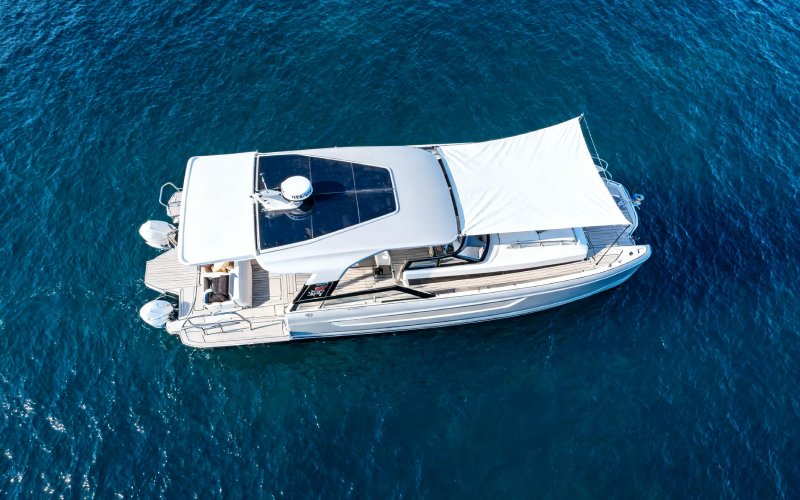
For example, the 2026 YOT 36 is one of the new motor catamarans that has attracted considerable attention in recent years. With a design geared towards a younger, sportier aesthetic, it features an open deck layout and excellent use of space, making it ideal for buyers who prioritise socialising and short leisurely cruises. For those new to catamarans, this class offers a relatively low entry barrier.
👉 View 2026 YOT 36 for sale

2026 YOT 36
- Length36 ft
- Cabins2
- Top speed35 kn
- TypeCatamaran yacht
The 2026 YOT 36 is a modern power catamaran with twin Mercury V8 300hp outboards, offering smooth performance, strong speed, and stable coastal cruising.It features a fold-out cockpit and two ensuite cabins in a spacious, resort-style layout, making it ideal for day trips or weekend escapes, and is available turn-key through Catamaran Gurus.
50–80-foot catamarans: The mainstream family cruising market
This is currently the world’s best-selling catamaran segment and the most popular size for long-term living on board and cross-regional cruising.
In 2026, new-build prices for most mainstream brands typically range between US$800,000 and US$1.8 million. Yachts in this category offer comprehensive living facilities, including separate galleys, multiple guest cabins, long-range energy systems and enhanced cruising capabilities.
At this stage, many buyers begin to compare differences between brands, such as spatial layout, handling characteristics, interior design and long-term maintenance costs.
80–100-foot catamarans: The high-end luxury cruising market
Upon entering this size category, price increases accelerate significantly. A wealth of high-end specifications, customisation requirements and more complex hull structures cause overall costs to rise rapidly.
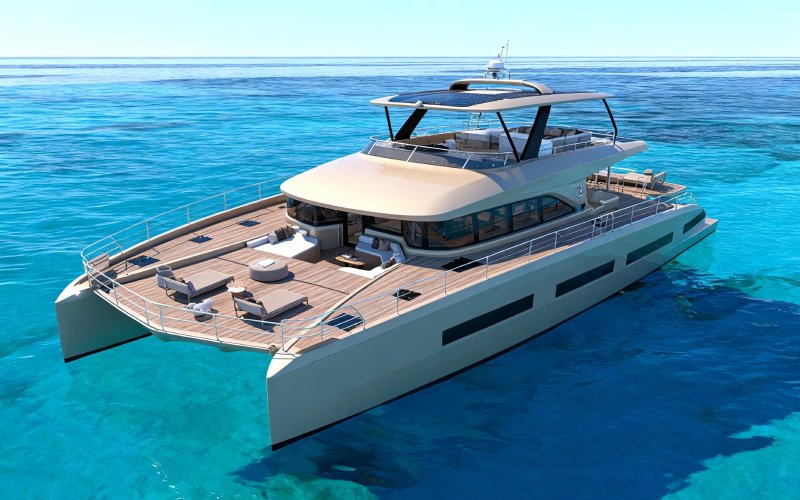
High-end luxury catamarans such as the 2026 Lagoon EIGHTY 3 have consistently attracted significant attention in the market. Its defining features are its exceptional living space and a lifestyle experience approaching that of a superyacht, making it ideal for extended round-the-world voyages or high-end family entertainment. Prices for this class of vessel typically reach the multi-million dollar range.
👉 See 2026 Lagoon EIGHTY 3
2026 Lagoon EIGHTY 3
- Length83 ft
- Cabins6
- TypeCatamaran yacht
The 2026 Lagoon EIGHTY 3 is Lagoon's flagship catamaran, positioned in the ultra-luxury sailing and long-term maritime lifestyle market. The yacht is approximately 24.4 meters long, boasts over 300 square meters of external living space, and combines superyacht craftsmanship with the stability of a catamaran structure.Compared to traditional monohull-powered yachts, the EIGHTY 3 emphasizes a spacious living experience, long range, and a customized lifestyle, making it suitable for both private vacations and high-end business receptions.
New Catamarans vs Used Catamarans
For many buyers, the most pressing dilemma is not ‘which boat to buy’, but ‘whether to buy new or used’.
The greatest advantage of a brand-new catamaran lies in the latest platform design, more efficient energy systems and a comprehensive manufacturer’s warranty. In particular, many new catamaran yachts now feature smart energy management systems, more efficient solar panel layouts and more modern living spaces – features that older models struggle to match.
However, the drawbacks of new boats are equally clear: high prices, long lead times, and the fact that depreciation is usually most rapid in the first three years.
In contrast, high-quality pre-owned catamaran yachts often offer better value for money. This is particularly true of vessels that have undergone extensive equipment upgrades and have comprehensive maintenance records; in many cases, they are even better suited to embarking on long-distance voyages straight away than new boats.
For example, mature catamarans in excellent condition, such as the PETITE BELLE, have usually undergone extensive pre-purchase upgrades and equipment fine-tuning. For buyers seeking to minimise initial investment and quickly embark on a cruising lifestyle, they represent a more practical choice.
👉 Browse the PETITE BELLE yacht

PETITE BELLE
- Build Year2025
- Length98 ft
- Cabins4
- Top speed16 kn
- TypeCatamaran yacht
Mazarin 55 Catamaran yacht comes with five cabins (including one fitted with bunk beds) and is equipped with an air conditioning system for optimal on-board comfort.Powered by twin 170HP Yanmar engines (with 800 hours of runtime), it is also equipped with a 12kW Paguro P14000 generator (457 hours of use) and a 140L/H water maker, covering the basic energy and water needs for voyages.
However, when purchasing a pre-owned vessel, the survey process must not be overlooked. The structural condition, engine performance, electrical systems and long-term maintenance records will all directly determine the subsequent running costs.
A Detailed Breakdown of Annual Maintenance Costs
Many first-time buyers of catamarans tend to focus solely on the purchase price, overlooking the fact that it is the subsequent annual running costs that truly impact the budget in the long term.
Generally speaking, the annual maintenance costs for a catamaran amount to approximately 8%–15% of the purchase price.
The main expenses include:
| Item | Annual Reference Cost |
| Moorage fees | $8,000–$60,000 |
| Insurance | 1%–3% of the purchase price |
| Engine maintenance | $3,000–$15,000 |
| Hull maintenance | $2,000–$10,000 |
| Battery and equipment replacement | $5,000–$30,000 |
| Provision for long-distance cruising maintenance | Over $10,000 |
Due to their greater beam, many marina berths for catamarans are significantly more expensive than those for monohulls. Furthermore, for long-term cruising in tropical waters, the frequency of maintenance for air conditioning, watermakers and generators will also increase significantly.
For large catamarans over 50 feet, annual costs will rise further if professional crew management is involved.
Consequently, truly seasoned buyers typically do not focus solely on the purchase budget, but instead calculate the total cost of ownership for the next 5–10 years in advance.
How to Choose the Optimal Solution for Different Budgets
If your budget is under $500,000, we recommend prioritising the established second-hand market. At this stage, the most important consideration is finding a vessel with a reliable structure and a clear maintenance history, rather than blindly pursuing a specific year of manufacture.
If your budget is between $800,000 and $1.5 million, you can enter the mainstream family cruising catamaran market. This is currently the most competitive segment, as the majority of long-term cruising families tend to fall within this budget range.
For buyers with a budget of over $2 million, the focus shifts from simply ‘whether they can afford it’ to ‘whether the long-term experience aligns with their lifestyle’. Many high-end buyers place greater emphasis on living comfort, round-the-world cruising capability and long-term resale value.
Furthermore, one issue that is often overlooked is that bigger is not necessarily better.
Many first-time buyers tend to opt directly for large catamarans exceeding 50 feet, only to discover once they start using them that mooring, maintenance and operational complexity all increase rapidly. Therefore, for most family owners, the 40–50-foot range actually offers a very balanced solution.
Common Misconceptions When Buying a Boat
One of the biggest misconceptions is focusing solely on the asking price.
In reality, the final purchase price often includes taxes, transport, equipment upgrades, insurance and survey fees. Some buyers may appear to have saved hundreds of thousands of dollars, but subsequent maintenance and upgrade costs end up being even higher.
The second common issue is underestimating long-term maintenance costs.
A catamaran is, by its very nature, a long-term asset rather than a one-off purchase. Engines, rigging, batteries and electronic equipment all deteriorate over time; if a maintenance budget is not set aside in advance, the financial strain down the line will be very significant.
The third misconception is an excessive focus on specifications.
Many people keep adding features when selecting a boat, only to discover after use that much of the equipment is rarely utilised. More complex systems often mean higher failure rates and maintenance costs.
Finally, do not overlook the importance of a survey.
This is particularly true for pre-owned catamarans, where the value of a professional surveyor far exceeds the cost of their services. Many hidden issues simply cannot be detected by the average buyer through a simple sea trial.
Summary
The catamaran market in 2026 remains in a phase of relatively strong demand. In particular, prices for medium to large cruising catamarans remain stable overall, driven by global trends towards long-term liveaboard living and ocean-going voyages.
For buyers, what truly matters is not the ‘lowest price’, but finding a vessel that best suits their specific usage scenarios, long-term budget and sailing plans.
If you prioritise the latest design and the long-term ownership experience, a brand-new catamaran will be more suitable; if you are more concerned with value for money and a quick transition to cruising life, then the high-quality second-hand market is often worth considering.
A truly informed decision to purchase a boat is never merely about buying a vessel; it is about choosing the way you will live at sea for the next few years, or even decades.
FAQ
Q1: Why are catamarans more expensive than monohulls?
A: Because catamarans offer more space, involve more complex construction techniques and incur higher material costs, whilst also typically requiring larger berths, more equipment and greater maintenance, their overall price is significantly higher than that of a monohull of the same size.
Q2: What are the annual maintenance costs for a catamaran?
A: Annual maintenance costs typically amount to around 8%–15% of the vessel’s purchase price, depending on size, frequency of use, mooring location and equipment configuration. Annual expenditure will be higher for large, high-end catamarans.
Q3: Is 2026 a good year to buy a new or second-hand yacht?
A: If you are seeking the latest design and a long-term ownership experience, a new yacht offers greater advantages; if you prioritise value for money and quick delivery, a high-quality second-hand catamaran is usually the more cost-effective option.
Q4: Are catamarans suitable for long-term living on board?
A: Absolutely. Catamarans offer more living space, better stability and a more comfortable living experience, which is why many families undertaking round-the-world cruises currently prefer catamarans.