Motor yachts are ideal for those seeking speed, comfort and socialising; sailing yachts are perfect for enthusiasts who love sailing, long voyages and low running costs. The final choice depends on your budget, intended use and sailing experience.
👉 Want to enjoy the sea and entertain friends with ease? → Choose a motor yacht
👉 Want to go on long voyages and experience sailing? → Choose a sailing yacht
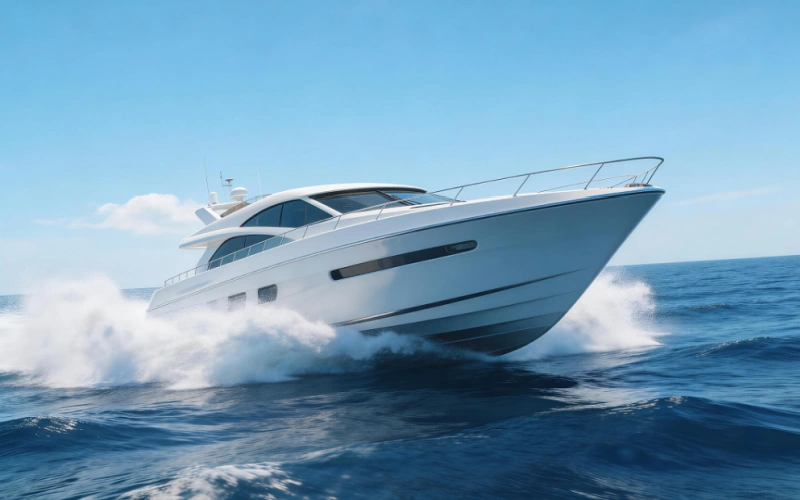
Motor Yacht vs Sailing Yacht: Key Differences at a Glance
| Feature | Motor Yacht | Sailing Yacht |
|---|---|---|
| Speed | Fast (20–30 knots) | Slow (5–10 knots) |
| Cost | High | Lower |
| Fuel Use | High | Very low |
| Ease of Use | Easy | Requires skill |
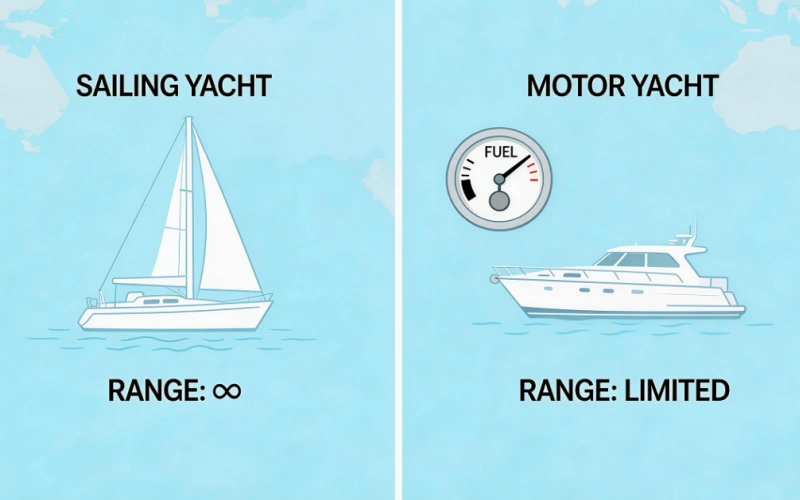
| Range | Limited by fuel | Nearly unlimited |
| Experience | Luxury & social | Hands-on & adventurous |
Difference Between Motor Yacht and Sailing Yacht
In my professional experience, the aspect that confuses clients most when purchasing their first yacht is the ‘fundamental difference between motor yachts and sailing yachts’.Essentially, the distinction stems from the source of power, the method of propulsion and the overall experience.
Fundamental Differences in Propulsion Systems
Motor Yachts: Powered primarily by diesel or petrol engines, with supplementary propulsion systems including traditional shaft drive, IPS or waterjet propulsion. The horsepower output from the engine is directly converted into speed, allowing the vessel to sail steadily even in calm conditions.Sailing Yachts: Primarily powered by wind, with the engine serving only as an auxiliary power source for docking and manoeuvring in confined waters. Wind direction and sail configuration directly affect speed and heading, requiring constant adjustment by the crew.
Impact of sailing principles on the experience:
- Motor yachts: No reliance on wind, highly controllable, suitable for beginners.
- Sailing yachts: Highly dependent on wind, offering a more ‘authentic’ experience, requiring judgement of wind direction, course adjustment and sail configuration.
Differences in Sailing Experience
| Type | Sailing Experience | Learning Curve |
| Motor yacht | Smooth, fast, comfortable | Very low |
| Sailing yacht | Noticeable heel, high level of involvement | High (requires sailing licence and training) |
In 2019, I took a European couple on a test sail in the Mediterranean; they were looking to purchase a yacht that could serve both family leisure and long-distance cruising. The motor yacht allowed the clients to appreciate the convenience of smooth, high-speed cruising, whilst the sailing yacht offered a more engaging experience imbued with the ‘spirit of sailing’.
Ultimately, they chose a motor yacht as their primary choice for family leisure, whilst also booking sailing lessons to experience long-distance cruising.
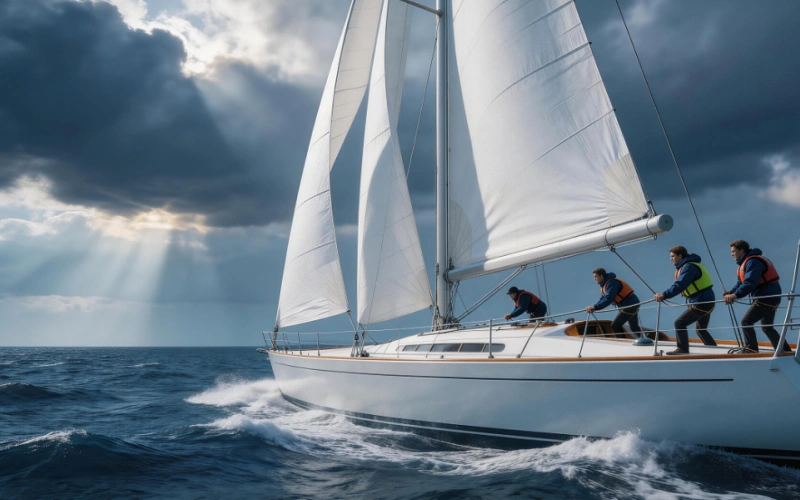
Motor Yacht vs Sailing Yacht Price Comparison
In my decade-plus of experience in the yacht trade, price differences are often one of the key factors in clients’ final decisions. Many first-time buyers ask me:👉 Is a sailing yacht cheaper than motor yacht?
Sailing Yacht vs Motor Yacht Cost
The following data is compiled from actual sales and listings in the Mediterranean and Asian markets over the past three years:| Size | Motor Yacht Price | Sailing Yacht Price |
| 30–40 ft | $300,000 – $800,000 | $150,000 – $400,000 |
| 40–60 ft | $800,000 – $3,000,000 | $300,000 – $1,200,000 |
| 60–80 ft | $3M – $8M | $1M – $3M |
| 80 ft and above | $8M | $3M+ |
Quick Insight: For the same size, motor yachts cost 1.5–3 times as much as sailing yachts.
Why Such a Significant Price Difference?
This price gap essentially stems from different configuration philosophies, rather than simply brand premiums:Motor yachts: Twin engines + luxury interiors + flybridge + stabilisation systems
Sailing yachts: Primarily wind-powered, with simpler structures and more functional configurations
👉 Based on the projects I’ve handled, it can be understood as follows:
- Motor yacht = A product for a luxurious lifestyle at sea
- Sailing yacht = Prioritises sailing experience and functionality
How Does Price Influence Your Choice?
Here’s a very practical decision-making framework, which is also the advice I usually give to clients:Want to ‘buy now and enjoy immediately’ → Motor yachts are the easier choice
Limited budget but want a larger size → Sailing yachts offer better value
Seeking a long-term sailing experience → Sailing yachts offer better value for money
👉 Browse Motor Yachts for Sale (Ready for Immediate Delivery)
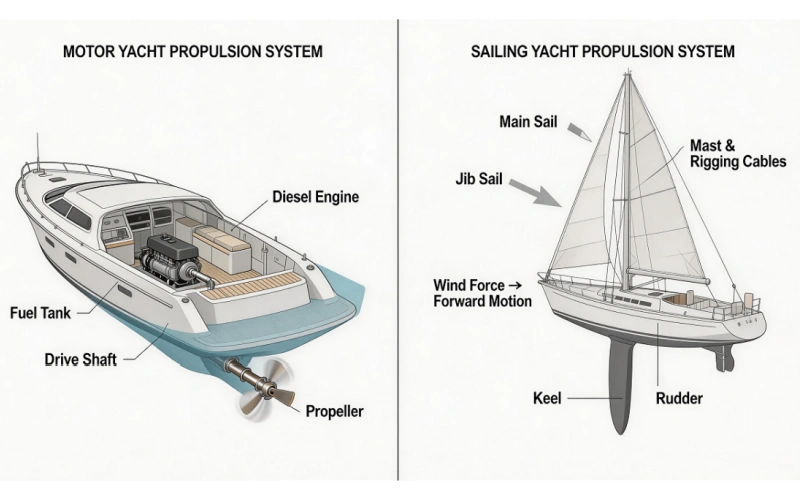
Motor Yacht vs Sailing Yacht: Performance and Speed Comparison
Speed Comparison
| Type | Cruising Speed | Top Speed |
| Motor Yacht | 20–30 knots | 30–45 knots |
| Sailing Yacht | 5–10 knots | 10–15 knots |
Expert explanation: Motor yachts typically feature planing hulls, which offer low water resistance at high speeds; sailing yachts usually have displacement hulls, where speed is limited by wind strength and hull drag.
Range Comparison
Sailing yachts: Theoretically ‘unlimited range’, limited only by wind conditions and crew endurance. For example, numerous sailing yachts have successfully completed transatlantic crossings.Motor Yachts: Range is limited by fuel capacity and requires refuelling. A 50-foot motor yacht can generally travel 300–500 nautical miles; transoceanic voyages require additional planning for refuelling points.
Stability and Comfort
Motor Yachts: More stable in calm or light winds, suitable for family leisure and business hospitality.Sailing Yachts: Significantly affected by wind and waves, requiring experienced crew to maintain balance.
Motor Yacht vs Sailing Yacht: Ownership Cost Comparison
Fuel Cost Comparison
| Type | Fuel Consumption per Hour | Notes |
| 50-foot motor yacht | 80–150 L/h | Fuel consumption increases at high speeds |
| 50-foot sailing yacht | 5–15 L/h | Engine used only for auxiliary purposes |
An article published by ICOMIA also highlights that motor yachts have high fuel consumption, with costs being particularly significant during high-speed cruising and long-distance voyages. Sailing yachts have low fuel consumption, but involve higher learning costs and operational complexity.
Maintenance and Servicing Costs
Motor yachts: Frequent engine maintenance and propeller servicing are required, with annual maintenance costs amounting to 3–5% of the vessel’s value.Sailboats: Sails need to be replaced every 5–8 years, whilst hull maintenance costs are relatively low.
Mooring and Management Costs
Yacht mooring costs are related to the vessel’s length and tonnage.Motor yachts are heavier, so mooring fees are slightly higher; sailboats are lighter, so costs are lower.

Motor Yacht vs Sailing Yacht Pros and Cons
Before deciding between a motor yacht and a sailboat, it is essential to understand the core strengths and weaknesses of each. Drawing on my years of experience conducting test sailings and guiding clients, I will analyse the pros and cons of each type of yacht.Pros and Cons of Motor Yachts
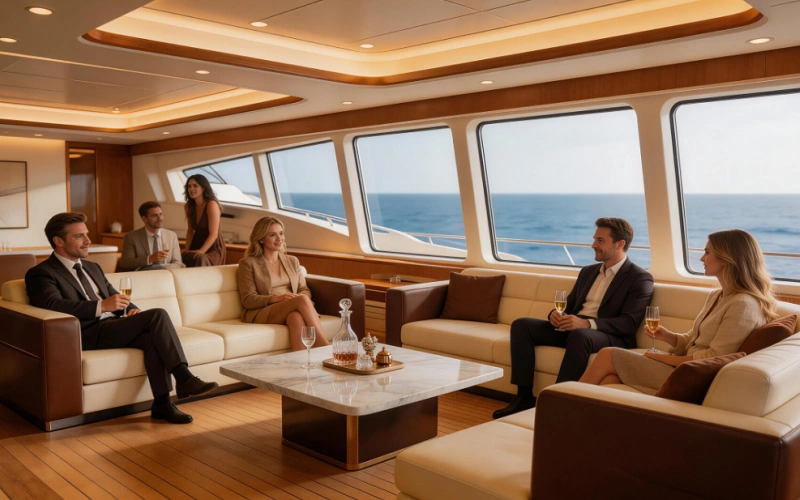
Powered by engines, motor yachts can reach destinations quickly and offer users a highly comfortable on-board experience. Take my test sail of a 55-foot Sunseeker in the Mediterranean as an example: it covered 15 nautical miles in just half an hour, making it ideal for family gatherings or parties with friends.Pros:
- High-speed cruising: 20–30 knots, highly efficient for short trips.
- Spacious and comfortable: flybridge and spacious cabins, accommodating 6–8 people.
- Easy to operate: beginners can get the hang of it quickly, with no need to judge complex wind conditions.
- High fuel consumption: 55-foot motor yachts consume approximately 80–150 litres per hour.
- High maintenance costs: Engines and propulsion systems require significant annual maintenance.
- Limited range: Fuel tank capacity determines cruising distance; long voyages require advance planning of refuelling points.
Pros and Cons of Sailing Yachts
Unlike motor yachts, sailing yachts rely more on wind power, resulting in lower speeds but an experience closer to traditional sailing. I once took a client on a transatlantic crossing aboard a 51-foot Hanse sailing yacht, relying almost entirely on wind power, and deeply appreciated the freedom and joy of long-distance sailing.Pros:
- Low fuel costs: A 51-foot sailing yacht consumes just 5–15 L/h.
- Suitable for long-distance voyages: Wind propulsion enables extended voyages or circumnavigation.
- Rich sailing experience: The interaction between the wind and the hull is dynamic, offering a high level of engagement and making it ideal for learning sailing skills.
- Complex operation: Requires training, certification and practical experience.
- Slow speed: Cruising at 5–10 knots, short journeys take longer.
- Highly weather-dependent: Unfavourable wind conditions may delay the itinerary.
Which Type of Yacht Should You Choose?
| Use Case | Recommended Type | Reason |
| Family leisure/boat parties | Motor yacht | High speed, comfort, ample social space |
| Long-distance cruising/round-the-world voyages | Sailing yacht | Long-range wind-powered cruising, low fuel consumption, rich experience |
| Weekend day trips | Motor yacht | Quick to learn, flexible and convenient |
| Sailing enthusiasts/learning to sail | Sailing yacht | High level of hands-on involvement, significant skill development |
Motor Yacht vs Sailing Yacht for Beginners: Which Is Better?
👉 This is one of the most searched questions:“motor yacht vs sailboat for beginners”Based on my experience with novice clients:
Around 90% of beginners choose motor yachts because they are easy to learn, intuitive to operate and allow you to enjoy life at sea quickly.
Sailing yachts have a steep learning curve, requiring training, certification and the accumulation of sailing experience.
Tip: If you plan to engage in sailing long-term, a sailing yacht is an investment in your skills; if you wish to enjoy life at sea immediately, a motor yacht is more suitable.
If you are preparing to purchase a yacht, Yachttrading’s professional brokers can recommend the most suitable motor yacht or sailing yacht model based on your budget and intended use!

Motor Yachts vs Sailing Yachts: Comparison Summary
| Category | Motor Yachts | Sailing Yachts |
| Speed | ⭐⭐⭐⭐⭐ | ⭐⭐ |
| Cost | ⭐⭐ | ⭐⭐⭐⭐ |
| Ease of Operation | ⭐⭐⭐⭐ | ⭐⭐ |
| Sailing Experience | ⭐⭐ | ⭐⭐⭐⭐⭐ |
| Range | ⭐⭐ | ⭐⭐⭐⭐⭐ |
Motor Yacht vs Sailing Yacht: Which Should You Choose?
Choose a motor yacht if you:
- Want speed and comfort
- Plan social events or parties
- Are a beginner
Choose a sailing yacht if you:
- Enjoy sailing and hands-on experience
- Plan long-distance cruising
- Want lower operating costs
👉Compare Available Motor & Sailing Yachts in Your Budget → Get Expert Recommendations
👉 Explore Sailing Yachts for Long-Distance Cruising

About the Author
Emery
Yacht Broker / Yacht Transaction Consultant / Contributing Writer for Yachting Magazine
SAMS Certified Surveyor No.: AMS #2458
Previously named one of ‘Asia’s Top 10 Yachting Experts’ and recipient of the ‘Yacht Broker Outstanding Service Award’, amongst others
Last updated: April 2026
Intended audience: Suitable for first-time buyers and sailing enthusiasts, assisting with the selection of motor yachts or sailing yachts and planning usage and budgets.
Disclaimer
This article has been written by yacht broker Emery and is intended solely for general information and educational purposes. The yacht models, performance specifications, sailing data, cost estimates and case studies mentioned herein are based on the author’s personal experience, publicly available industry data and client test-sailing experiences; actual circumstances may vary depending on vessel type, route, weather, maintenance condition and market factors. This article does not constitute investment advice, a recommendation to purchase, or legal, financial or insurance advice. Before purchasing a yacht, setting sail or making an investment, readers are advised to contact a professional yacht broker, marine surveyor, insurance company or legal adviser to obtain professional advice tailored to their specific circumstances. Neither the author nor the platform accepts liability for any direct or indirect losses arising from the use of the information contained in this article. By reading this article, you acknowledge that you have understood and accepted the above terms.
FAQ
Q1: Which is better, a motor yacht or a sailing yacht?
A: There is no definitive answer; it depends on the intended use: short-distance leisure and parties → motor yacht; long-distance cruising, offshore sailing and learning → sailing yacht
Q2: Are sailing yachts really more cost-effective?
A: It can be said that sailing yachts have lower long-term running costs, but the learning curve is steeper.
Q3: Which type of yacht is better suited for investment?
A: Motor yachts are suitable for short-term use and the charter market; sailing yachts are more suited to lifestyle investments.