Many first-time yacht buyers treat safety equipment as a “checklist item to pass annual inspections.” In reality, up to 70% of yacht accidents are linked to missing or malfunctioning equipment. Through years of inspection, sea trials, and transaction experience, I've observed that owners typically only realize the cost of safety negligence when accidents occur, resale is hindered, or penalties are imposed by maritime authorities.
A comprehensive yacht safety equipment checklist not only reduces navigation risks by approximately 40% but also proves crucial for successfully selling a pre-owned yacht at an ideal price and gaining professional buyers'trust.
Table of Contents:
1. Mandatory Yacht Safety Equipment (Regulation Checklist)
2. Practical Lifesaving Equipment for MOB Scenarios
3. Fire Protection System Inspection Guide
4. Communication & Navigation Redundancy Plan
5. Yacht Emergency Power Supply System
6. Advanced Safety Equipment for Night & Offshore Navigation
7.Frequently Asked Questions
8.Summary
1. Mandatory Yacht Safety Equipment (Regulation Checklist)
I once conducted a pre-sale inspection for a 62-foot flybridge yacht. The owner proudly showcased its Italian leather interior and German sound system, only to discover with embarrassment: the liferaft was expired by three years, the fire extinguisher pressure was zero, and the EPIRB battery was dead. A luxury yacht worth tens of millions had safety equipment inferior to that of an ordinary fishing boat. Many ask me, “How can you spot these hidden issues at a glance before buying a boat?” This guide, “2025 Edition: Top 5 Mistakes When Buying a Pre-Owned Yacht,” provides the answers.
This reflects a widespread issue in the yacht market: too many owners are willing to spend millions on a yacht but cut corners on life-saving safety equipment. Over 65% of yacht transaction disputes stem from safety issues. Yacht Insurance for Charter reveals that accident-free owners qualify for 30-40% premium discounts, while any safety incident or citation triggers premium hikes or outright policy denial. Yachts with poor safety records depreciate faster—which is why many sellers undergoing a comprehensive safety inspection and equipment upgrade before considering “how do I sell my yacht?”
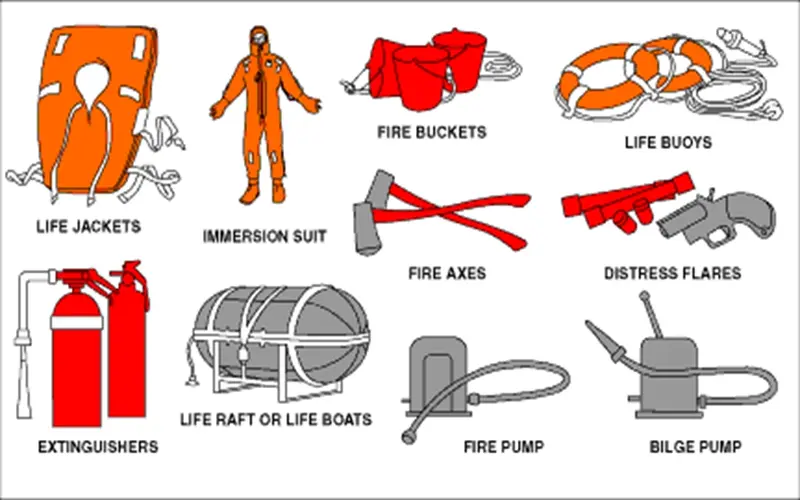
Safety equipment is not optional—it's mandatory. It safeguards navigation safety and directly impacts a yacht's value. Before exploring “yacht safety inspection requirements,” it's essential to understand core risk sources. The table below outlines statutory safety equipment alongside risk assessments, helping you build a reliable defense.
| Category | Core Equipment | Critical Requirements | 🔥 Security Risks and Consequences of Violations |
| 🆘 Life-saving Equipment |
Life jackets, life rafts, life buoys, signal flares, EPIRBs
| Passenger-matched, valid and functional | Drowning, missed rescue window, legal penalties |
| 🧯 Firefighting Systems | Fire suppression systems, extinguishers, smoke detectors | Functional, layout compliant |
Fire escalation, life risk, insurance denial |
| 📡 Communication & Navigation | VHF, AIS, GPS, navigation lights | Registered and operational |
Collision risk, invisible vessel at night |
Checklist Tip: Use this section as part of your yacht safety equipment checklist before every voyage or pre-sale inspection.
2. Practical Lifesaving Equipment for MOB Scenarios
What determines survival in a man overboard (MOB) scenario are those “extra but critical” practical upgrade devices. Many accidents occur not due to a lack of life jackets, but because of insufficient equipment to immediately detect, locate, and retrieve the person overboard. The UK Marine Accident Investigation Branch (MAIB) report notes that while the current SCV Code clearly stipulates requirements for yacht life jackets and basic boarding ladders (e.g., ladders must extend 600mm below the waterline), it does not mandate professional MOB recovery equipment. In a 2003 incident where a British yacht captain fell overboard, crew members were unable to recover him using only statutory equipment, resulting in the vessel running aground and the captain's drowning. The investigation emphasized that equipping the vessel with a helicopter hoist or a professional Sowester recovery ladder could have prevented the tragedy. This demonstrates that statutory equipment meets minimum survival requirements, while practical upgrade gear is crucial for “rapid detection, precise location, and safe recovery.”
The following curated gear transforms passive waiting into active rescue, proving especially vital during solo voyages with limited visibility.
| Equipment Name | Core Functions and Value |
| Automatic Triggered MOB Alarm | The system automatically triggers an alarm the instant a crew member falls overboard, buying critical seconds for rescue operations. It serves as an essential safety tool for night navigation and solo voyages. |
| AIS/PLB Personal Locator Beacon | Worn by the person in distress, this device continuously transmits precise location data to nearby vessels with a single press, completely solving the problem of locating the individual. |
| Throwable Life Buoy (with Retrieval Line) | Compared to traditional lifebuoys, it offers more precise deployment, is easier to grasp, and ensures a physical connection with the person in the water. |
| Stern Recovery Aid (e.g., Rescue Net/Powered Stern Ladder) | Solving the ultimate challenge of “getting aboard,” this is especially, especially suitable for rescuing individuals who are physically exhausted or already exhibiting symptoms of hypothermia. |
| Onboard Rapid Response Procedure (Including Dedicated Lighting and Markings) | Integrate disparate equipment into a cohesive system, streamline operations through standardized procedures to minimize confusion, and ensure every step of the rescue operation is precise and efficient. |
While not mandatory, these pieces of equipment form a genuine “combat-ready safety system.” If the statutory configurations discussed earlier represent the baseline for compliance, these five upgrades are the critical difference that ensures every person on board can truly return home safely.
3. Fire Protection System Inspection Guide
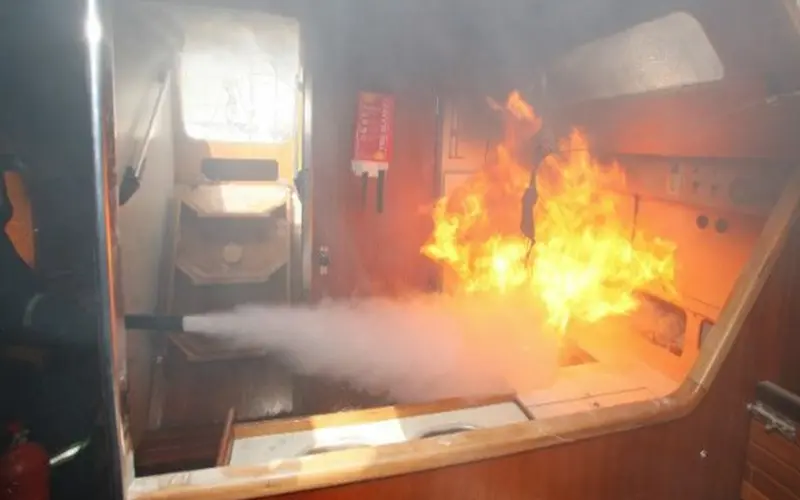
While statutory firefighting equipment is essential, our goal is to extinguish flames before they ignite. The true determinant of fire risk lies in hazard management. The Sea Scout Manual published by Ireland's maritime authority highlights engine rooms and galleys as the most overlooked high-risk areas. In my years of inspections, yachts—both new and old—consistently exhibit issues like oil residue buildup, obstructed ventilation, or electrical overload. These hidden dangers are more likely to trigger sudden fires than outdated equipment.
Engine rooms are hot, enclosed spaces where oil stains, leaks, or aging wires can accelerate fire spread. Fixed fire suppression systems must remain operational, and oil lines, battery disconnects, and ventilation systems require regular inspection. Kitchen hazards primarily stem from excessive electrical loads, with overheated outlets and scorched wiring serving as common precursors.
The key to reducing fire probability lies in fundamental maintenance: keeping the engine room dry and clean, ensuring wire insulation remains intact, maintaining compliant electrical loads for kitchen appliances, and conducting a quick pre-sailing inspection. Consistently implementing these simple measures proves more effective at lowering fire risk than relying on any single piece of equipment.
4. Communication & Navigation Redundancy Plan
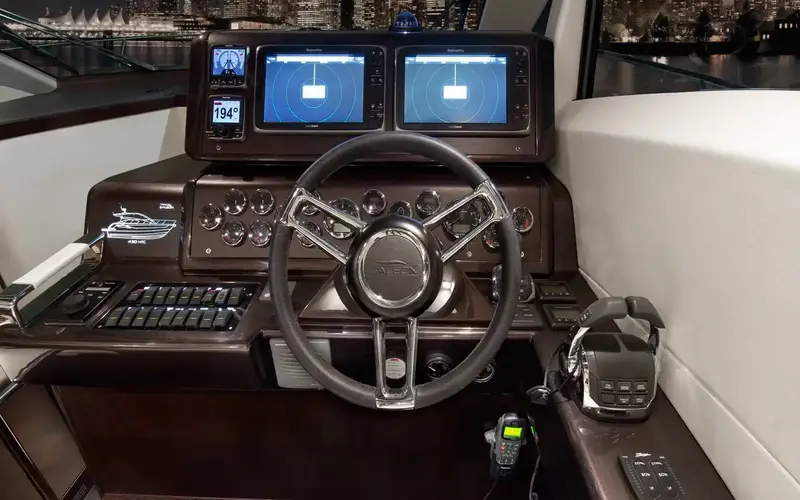
After equipping vessels with mandatory communication and navigation devices, establishing “fail-safe” redundancy for critical systems becomes paramount. Compliance with VHF, GPS, or AIS specifications on paper does not guarantee operational reliability—I've witnessed countless cases during inspections and accident reviews where single-point failures caused “functional equipment to fail at critical moments.” Especially during offshore or night navigation, failure of the main power supply, antenna, or an entire system can instantly render a vessel invisible and “off the grid.”
Therefore, owners should configure backup pathways for core distress signaling and positioning functions, such as:
•Handheld VHF with independent power source: Maintains communication even during engine room power loss.
•Modular standalone GPS/charting equipment: Maintains basic positioning and heading determination when primary navigation displays fail.
•AIS Class B backup device: Ensures surrounding vessels can still identify the target if the antenna is damaged or the primary system malfunctions.
•Portable navigation lights (commonly used in yacht configurations): Prevents becoming an “invisible vessel” when primary navigation lights fail.
⚠️ Common Mistakes
-
Relying solely on primary VHF/GPS/AIS
-
Ignoring backup lights or power supply
-
Assuming statutory compliance = full operational safety
The core of redundancy lies not in adding equipment, but in ensuring every critical function has at least one backup path “independent of the primary system.” As long as primary system failures do not result in “total loss of voice, functionality, or position,” the window for distress signaling is maximized, while providing search and rescue units with continuous, stable positioning signals.
5. Yacht Emergency Power Supply System
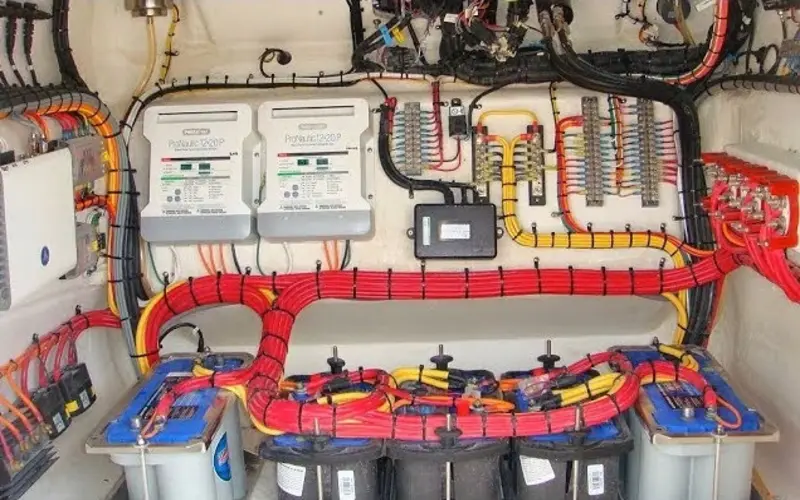
At sea, the effectiveness of safety equipment ultimately depends on a stable power supply. Failures in the main generator, depleted batteries, or electrical short circuits can instantly disable liferafts, fire suppression systems, navigation, and communication equipment—risks that become particularly dangerous during night voyages or ocean crossings. According to the 2019 Recreational Boating Accident Statistics Report, 23% of maritime distress incidents resulted from electrical system failures that rendered emergency equipment inoperable, with nighttime accident fatalities increasing by 3.2 times.
To mitigate these risks, high-end yachts typically incorporate independent emergency power systems. These include backup battery banks, portable generators, and UPS (Uninterruptible Power Supply) units—collectively termed yacht emergency power systems—ensuring critical equipment remains operational under any circumstances. However, the system's effectiveness hinges on proper circuit load distribution and regular monitoring of backup power status. During numerous pre-sale inspections, I've observed that while many yachts appear fully equipped, long-term neglect of backup batteries—manifesting as insufficient charge or deteriorated wiring—can cause emergency power to fail when most needed. Implementing independent power solutions combined with regular drills minimizes electrical failure risks, elevating systems from “compliance protection” to “battle-tested reliability.”
6. Advanced Safety Equipment for Night & Offshore Navigation
Different navigation scenarios demand varying levels of safety and operational efficiency, making it difficult for basic equipment alone to cover all risks. Night navigation must comply with Navigation Rules by installing high-intensity navigation lights (side lights ≥3 nautical miles, masthead light ≥5 nautical miles, all-round lights covering 135° sector), supplemented by deck work lighting (illuminance ≥50 lx) and night vision/thermal imaging devices to ensure swift detection of persons overboard. While many yachts appear fully equipped with night navigation safety gear, practical inspections reveal that details like beam angles, color temperature, or obstructed light positions often compromise effectiveness.
Ocean voyages require dual AIS/PLB systems, extended liferafts, and hull-mounted safety points to maintain distress signaling and positioning capabilities even if primary systems fail. In high seas or extended voyages, deployable ropes, crew rescue belts, and stern recovery aids significantly enhance the efficiency of recovering persons overboard.
When customizing scenario-based configurations, the key lies in systematizing equipment and operational procedures. For instance, night navigation gear can integrate with night patrols and rapid illumination markers, while ocean-going configurations should incorporate backup power and redundant communication systems. Through scenario-specific customization, safety systems transcend mere “regulatory compliance” to deliver proactive protection, ensuring crew and passengers receive effective safeguards across all extreme conditions.
7.Frequently Asked Questions:
Q1. What statutory safety equipment must yachts carry?
A: Life jackets, life rafts, fire extinguishers, VHF, AIS, EPIRBs, signal flares, navigation lights.
Q2. Are there requirements for the number and type of life jackets?
A: Must match passengers and validity; high-visibility, MOB alarm-equipped jackets recommended for night or ocean voyages.
Q3. How should yacht fire systems be inspected and maintained?
A: Quarterly inspections focusing on extinguishers, suppression systems, smoke alarms, engine, and galley hazards.
Q4. Why is an emergency power system recommended for yachts?
A:Ensures critical yacht emergency equipment remains operational during main power failure.
Q5. Does expired safety equipment impact yacht transactions?
A:Yes, it may reduce price, void insurance, or block the sale. Compliance is key.
8.Summary:
Ultimately, the essential safety equipment a yacht must carry extends far beyond the items on any checklist. A truly reliable safety system must encompass: legally mandated lifesaving and firefighting gear, MOB equipment proven effective in real-world scenarios, redundant communication and navigation solutions, an independent emergency power system, and scenario-specific configurations for night navigation and ocean voyages. Only by integrating these components into a continuously operational system can a yacht avoid becoming silent, incapacitated, or lost during emergencies. Achieving this ensures every voyage is truly safe and controllable.
About the Author:
Andrew Rogers is a seasoned yacht broker and marine surveyor with extensive expertise in yacht safety equipment, system redundancy, and real-world reliability assessment. Drawing on years of inspection expertise, he provides professional guidance to owners, assisting them in establishing genuinely effective safety protocols during yacht acquisition and operation. This ensures each vessel meets dual standards for reliable navigation and value retention for resale.
Disclaimer:
This article is for informational purposes only and does not constitute legal or safety advice. Actual implementation must comply with local regulations and consult professional agencies. The author assumes no liability for any losses arising from the use of this information.