Quick Answer: What are the prices of Fountaine Pajot catamarans in 2026?
In 2026, the prices of Fountaine Pajot catamarans generally follow a clear gradient: new boats typically range from US$700,000 to over US$3 million, whilst pre-owned boats generally fall between US$200,000 and US$1.2 million. This disparity stems not only from the age of the boat, but also depends on its size, model positioning and level of specification. For the vast majority of buyers, the 40- to 50-foot range remains the most mainstream and liquid segment of the market.
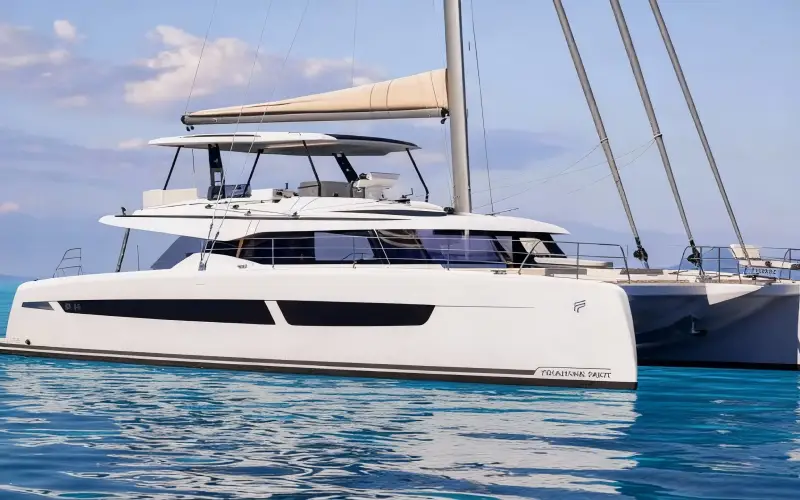
Analysis of Fountaine Pajot New Boat Prices in 2026
In the new boat market, Fountaine Pajot continues to position itself within the mid-to-high-end cruising catamaran segment, with a product range spanning from entry-level to luxury models. Prices rise significantly with increasing size, and the 50-foot mark often serves as a watershed—marking the transition from ‘comfort cruising’ to ‘luxury cruising’.
To gain a clearer understanding of the pricing structure, please refer to the following 2026 new-build market ranges:
| Size Range | Typical Models | 2026 Price Range (USD) | Market Positioning |
| 40–44 ft | FP 41 / FP 44 | $700,000 – $1,000,000 | Entry-level cruising |
| 45–50 ft | Elba 45 / Tanna 47 | $900,000 – $1,500,000 | Mainstream cruising |
| 50–55 ft | Aura 51 | $1,300,000 – $2,300,000 | High-end cruising |
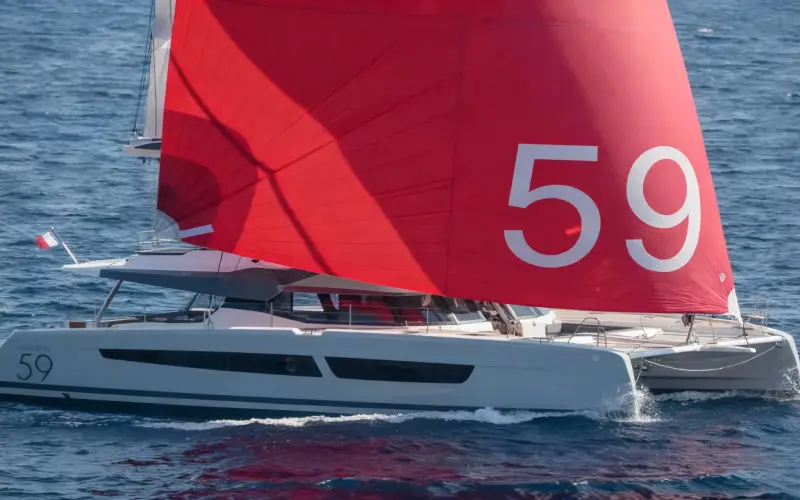
| 55–60 ft | Samana 59 | $2,500,000 – $3,000,000+ | Luxury class |
As can be seen from the table, as size increases, not only does space increase, but the complexity of systems, comfort features and construction costs also rise significantly; this is the fundamental reason for the rapid increase in price.
Furthermore, the ‘flexibility’ in new boat pricing is considerable. The price difference between a base model and a fully equipped version can often reach 20% or even 40%. For instance, adding a generator, air conditioning system, lithium-ion battery pack, solar system or electric propulsion solution will result in a significant increase in the final price. Consequently, many buyers will find that ‘quotes for the same model vary considerably’ when requesting prices; this is, in fact, a normal occurrence.
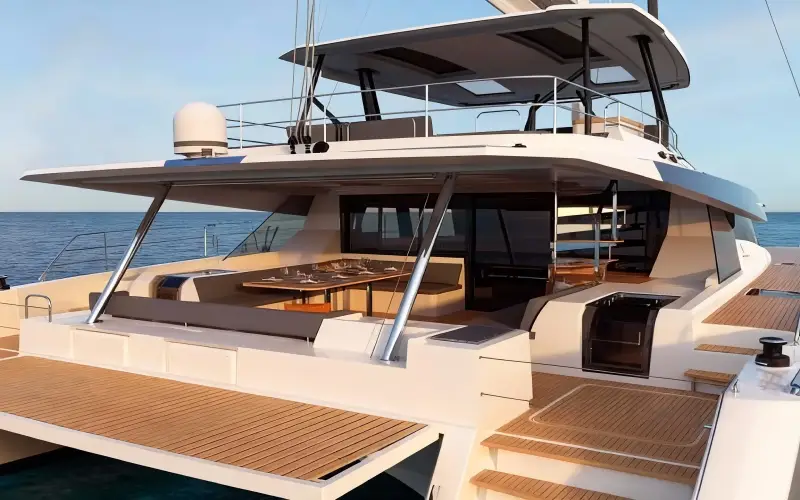
Analysis of Used Fountaine Pajot Prices in 2026
Compared to the new-build market, used Fountaine Pajots offer greater practical appeal, particularly for buyers planning to set sail immediately or those on a tight budget. Prices in the second-hand market are primarily determined by the boat’s age, usage history and condition.
Below are typical second-hand price ranges for 2026:
| Age of Boat | Common Models | Price Range (USD) | Features |
| 3–5 years | Astrea 42 / Saona 47 | $450,000 – $900,000 | Best value for money |
| 5–8 years | Lucia 40 / Helia 44 | $300,000 – $600,000 | Market mainstream |
| 8–12 years | Older FP models | $200,000 – $400,000 | Entry-level options |
| 12+ years | Early models | $100,000 – $300,000 | Requires refurbishment |
Based on market trends, pre-owned yachts aged 3 to 5 years are the most sought-after. Such boats avoid the initial depreciation of new vessels whilst retaining relatively modern design and equipment, thus striking a good balance between price and performance.
Another key variable is usage. Boats previously used for charter are typically cheaper but have undergone more intensive use; conversely, boats owned by private owners, though more expensive, tend to be in a more consistent state of maintenance. Consequently, within the same model, price differences are often determined by factors other than age alone.
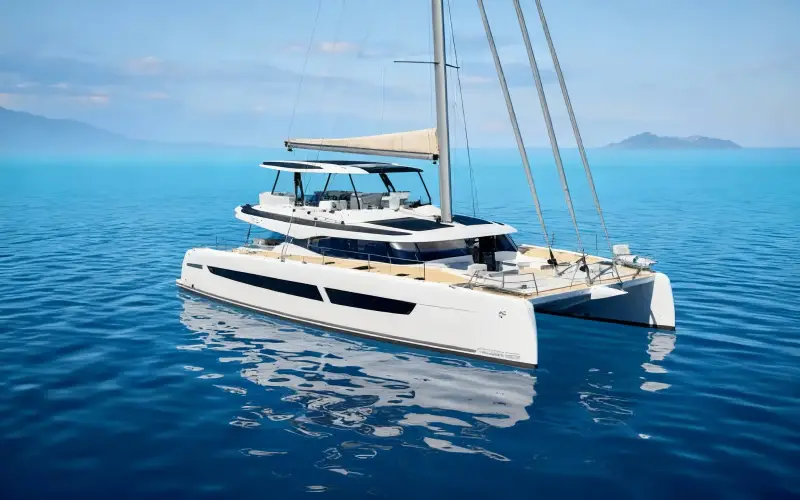
Key Factors Influencing Fountaine Pajot Prices
Fountaine Pajot prices are essentially the result of multiple variables. Size is undoubtedly the core factor; as the length of a catamaran increases, the complexity of its materials, structure and systems rises significantly, thereby driving up costs.
Model positioning is equally crucial. Different series place varying emphasis on comfort, performance and space in their designs, and these differences are directly reflected in the price tiers. At the same time, the level of specification is becoming an increasingly important factor, particularly against the backdrop of the gradual proliferation of renewable energy systems; vessels equipped with solar panels, battery packs and electric propulsion often command a premium.
Furthermore, market supply and demand play a role. In recent years, demand for catamarans has continued to grow, leading to extended delivery times, which has kept new-build prices high whilst also supporting stability in the second-hand market.
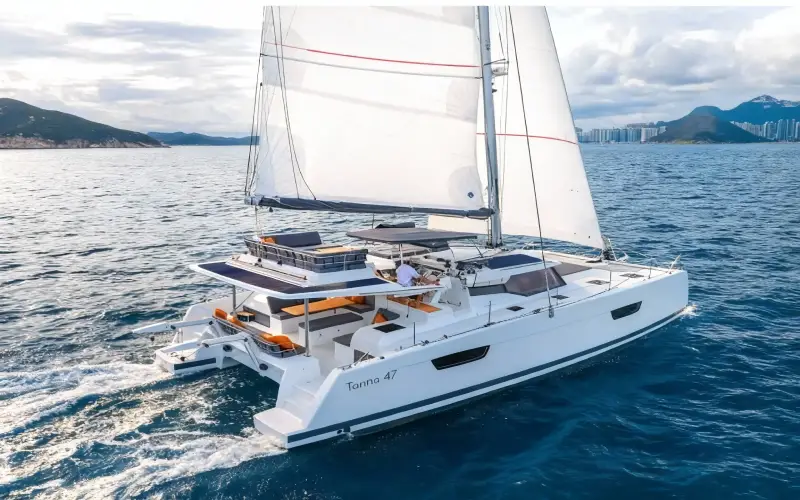
New vs Used: Which is the Better Buy?
There is no definitive answer when choosing between a new and a second-hand boat; it depends entirely on your budget and intended use.
The advantages of a new boat lie in its customisability and cutting-edge technology. You can configure the vessel entirely to suit your sailing style and lifestyle, whilst enjoying the comfort offered by the latest designs. However, new boats typically involve a lengthy delivery wait and suffer significant depreciation in the first few years.
Used boats, on the other hand, offer a more practical solution. It is ready for immediate use, offers better value for money, and avoids the pressure of initial depreciation. For buyers keen to start their cruising life as soon as possible, this option is often more efficient. However, a used boat may require additional investment in upgrades or maintenance, a factor that needs to be factored into your budget in advance.
Looking at actual market trends, most experienced buyers tend to favour used boats aged between 3 and 8 years, as this is generally the price-performance sweet spot.
Buying Advice: How to Choose the Right Fountaine Pajot for You
When selecting a specific model, the most important factor is to consider your actual needs. If you are only looking for short holidays or weekend sailing, a 40 foot class is sufficient; for long-term family cruising or even transoceanic voyages, a 45 to 50-foot model offers a better living experience; whilst for a high-end lifestyle or commercial operations, models over 50 feet are more suitable.
Your budget also determines your options. For budgets under US$800,000, you will typically need to weigh up entry-level new boats against pre-owned vessels of moderate age; the US$1 million to US$1.5 million bracket represents the mainstream cruising market; and above US$1.5 million, you enter the luxury segment.
At the same time, do not overlook the long-term holding costs. Annual maintenance costs for catamarans are typically around 5% of the purchase price; when combined with mooring, insurance and operating expenses, the overall outlay in Singapore and the wider Southeast Asian region is not insignificant. Therefore, from a long-term perspective, choosing ‘the right size and configuration for you’ is more important than simply pursuing larger and more luxurious vessels.
Conclusion
The Fountaine Pajot catamaran market remains robust in 2026, with new-build prices staying high, whilst the second-hand market offers more flexible and cost-effective options. For most buyers, the 40 to 50-foot range remains the optimal balance.
Ultimately, the value of a Fountaine Pajot lies not only in its price but also in its mature balance between space, comfort and ocean-going capability. This is the core reason why it has long been favoured by cruising enthusiasts worldwide.
Riley Miller
Riley Miller is the owner of the “Serendipity” yacht, a contributing columnist for Yachting Monthly, and the author of 17 in-depth analyses on yacht cost management. He also serves as an advisory committee member of the European Second-Hand Yacht Association (ESYA) and holds the International Certificate of Competence (ICC-UK-2019C-17429), with certified cruising areas covering the Mediterranean and the western Atlantic coast.
Disclaimer
This article is based on publicly available market data, broker listings, and industry depreciation reports.
The content is provided for informational purposes only and reflects the author’s personal experiences and perspectives. It does not constitute legal, tax, or investment advice. Yacht transactions involve complex legal, financial, and technical considerations, and actual purchasing processes may vary depending on regional regulations, vessel types, or individual circumstances.
Before making any yacht purchasing decisions, readers are advised to consult licensed professionals—such as attorneys, tax advisors, licensed yacht brokers, or marine surveyors—for guidance tailored to their specific situation.
Neither the author nor the publisher shall be liable for any direct or indirect losses arising from reliance on the information presented in this article.
FAQ
Q1: Are Fountaine Pajot catamarans suitable for ocean-going voyages?
A: Yes, particularly models 45 ft and above, which are designed with blue-water cruising requirements in mind.
Q2: Is it better value to buy a new or used boat in 2026?
A: From a financial perspective, second-hand boats offer better value for money; from an experience perspective, new boats are more appealing.
Q3: How does Fountaine Pajot hold its value?
A: Overall, they retain their value well, particularly the mainstream sizes and popular models.
Q4: What are the most critical factors to consider when purchasing?
A: For new boats, it is the choice of specifications and delivery times; for used boats, it is the condition of the vessel and its maintenance history.