When considering buying or chartering a yacht, many of us are concerned with one central question: how far can a yacht travel? As a matter of fact, the sailing distance of a yacht is not a simple fixed figure, it will be affected by a number of factors, including the size of the yacht, the performance of the engine and fuel reserves. Today, Yachttrading will bring you a detailed discussion on the key factors affecting the range of a yacht, to help you have a clearer understanding of ‘how far can a yacht travel’.
How Far Can a Yacht Travel?
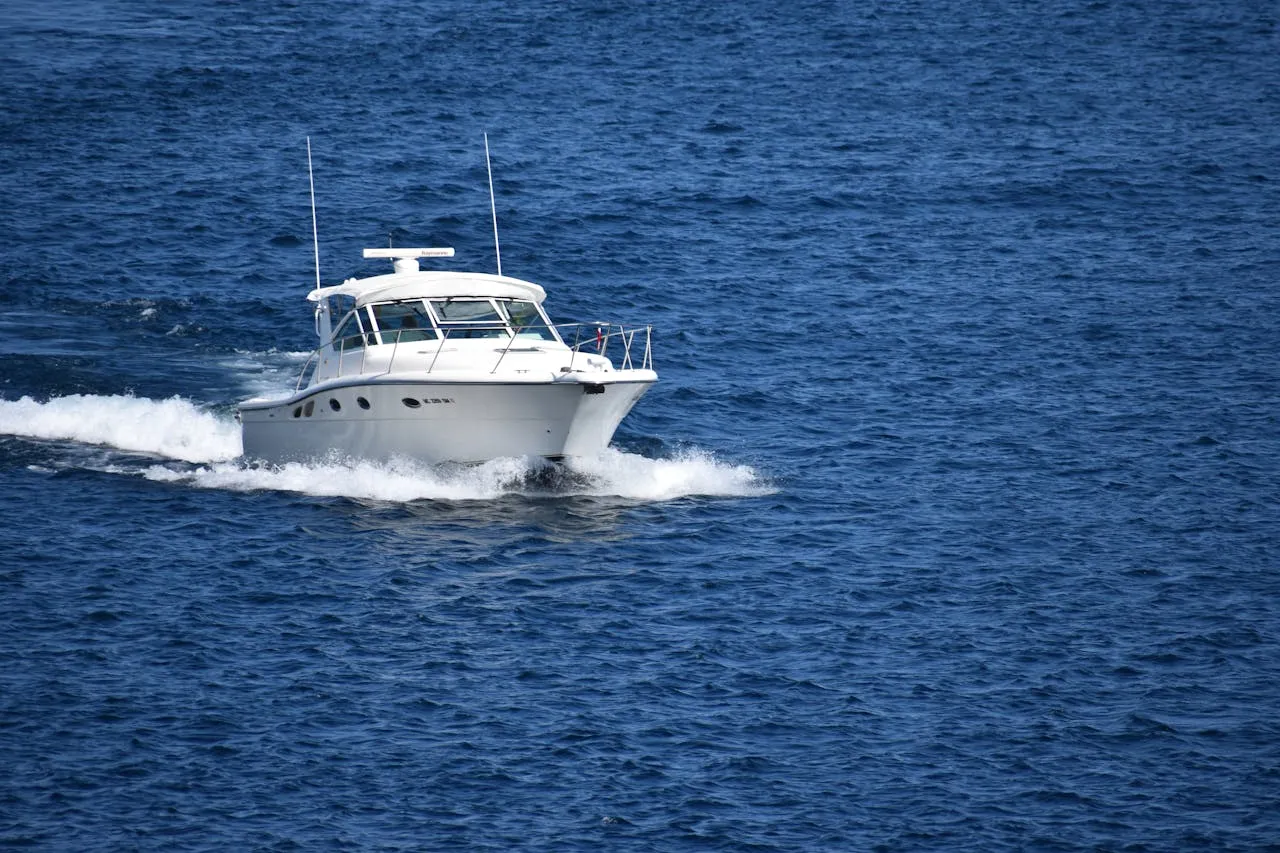
The range of a yacht depends on three core factors: size, engine power and fuel capacity. A motor yacht of about 35 feet in length can cover a distance of between 200 and 300 nautical miles per day at a moderate speed. In contrast, a larger sized voyaging yacht can achieve a range of around 3,000 nautical miles at a time with a full tank of fuel. It is important to note that the actual distance travelled is directly affected by the strength of the wind, the speed of the boat and the extra weight it carries.
Depending on the type and size of the yacht, the distance travelled varies significantly:
Small motor yachts (30-50ft): suitable for short coastal and day trips, with typical ranges of around 200 to 400 nautical miles.
Medium motor yachts (50-80ft): suitable for medium to long distance cruises, some even with ocean-going capabilities, with ranges between 500 and 1,000 nautical miles.
Superyachts (80ft+): designed for long distance trans-oceanic voyages, with a range of 1,000 to 3,000 nautical miles or more.
Expedition yachts (70ft+): designed for extreme sea conditions and ultra-long distance sailing, with ranges exceeding 3,000 to 6,000 nautical miles.
Sailing yachts (25-50ft+): range is highly variable and relies heavily on wind, manoeuvring skills and hull design.
These data can help yachting enthusiasts plan their voyages more rationally and choose the right type of yacht in combination with their actual needs.
Key Factors Affecting the Range of a Yacht
Fuel Capacity and Efficiency
The larger the capacity of a yacht's fuel tank, the longer the range it can go on a single voyage; of course, fuel efficiency is equally important. A well-maintained, well-designed yacht will be able to achieve longer ranges even with a limited fuel tank capacity, thanks to its energy efficiency. On a yacht charter, for example, fuel efficiency is a priority when planning a long voyage.
The fuel capacity and corresponding range of different sized yachts varies significantly, for example:
A 40ft yacht is typically equipped with around 5,000 litres of fuel and has a range of up to 3,000 nautical miles.
Yachts between 40 and 50 feet have a fuel tank capacity of about 500 gallons and a range of about 600 nautical miles.
75ft yachts have a fuel tank capacity of up to 11,000 litres and a range of about 1,500 nautical miles.
95ft yachts have a fuel capacity of around 9,000 litres and a range of around 1,200 nautical miles.
Engine Type and Power
The engine is the “heart” of a yacht's range, and the type of fuel used, from diesel, to petrol and even electricity, all have a bearing on range performance. Generally speaking, modern diesel engines are more popular with owners due to their environmental friendliness and fuel economy. For example, engines from leading brands such as Yanmar and MerCruiser have varying fuel consumption ranging from 2 to 50 litres per hour at different speeds and loads. Some innovative hybrid yachts, combining diesel and electric drives, even utilise solar assistance to extend range.
Hull Design
According to recent research from the International Symposium on Sustainable Energy and Management, the shape of a yacht's hull has a huge impact on fuel efficiency. A sleek and smooth hull design reduces water resistance and increases speed and fuel efficiency. In contrast, wide, flat hulls consume more fuel, even though they are faster. Proper hull design is especially important for long distance sailing.
Weight and Speed
The maximum displacement of a yacht limits the maximum weight it can carry. Exceeding this limit increases drag, reduces speed and indirectly affects fuel efficiency. Studies have shown that additional weight in itself does not significantly increase a yacht's fuel consumption, but it can lead to a reduction in speed and overall range.
Weather
During sailing, the weather conditions are also directly related to the yacht's range. A calm sea and suitable wind speed will help the engine to work stably and the range will be relatively long. On the contrary, when encountering wind and waves or bad weather, the sailing speed will decrease, and the range will naturally be shortened.
How to Calculate the Sailing Distance of a Yacht?
Generally speaking, the range of a yacht can be estimated by the following formula:
Distance (D) = Speed (S) x Sailing Time (T)
Here the speed is in knots (nautical miles per hour) and the time is in hours, the result is the number of nautical miles travelled. A reasonable assessment of speed and sailing time is a key step in planning a voyage.
The actual distance travelled by a yacht is the result of a combination of factors. Size, fuel capacity and engine performance are the basics, while hull design, weight and weather conditions play a key role in the actual voyage. Understanding these factors helps yacht owners to plan their voyages more accurately and ensure a safe and smooth voyage. Whether it's a short coastal cruise or an ocean crossing voyage, a reasonable assessment of a yacht's range is a basic skill that every yachtsman must have.
If you want to know more about yacht sailing performance and maintenance expertise, welcome to pay attention to us, Yachttrading will provide you with the most intimate yacht service!