When selecting an Oceanwalker yacht, it is not recommended to focus solely on the length, top speed, or appearance. A more reasonable approach is to first determine the number of passengers, the cruising area, and the frequency of use, and then evaluate the hull type, size, propulsion system, cabin layout, and long-term ownership costs. Based on currently available official model specifications, the Oceanwalker S60, X62, and Oceanwalker 53 differ significantly in length, beam, number of cabins, and propulsion configurations, and therefore are suited for different usage scenarios.
Oceanwalker Yacht Buying Guide
Before purchasing an Oceanwalker, we recommend answering the following six questions:
- How many people typically go out on the water at a time?
- In which waters will the yacht primarily be used?
- How many times a year will it be used?
- Will overnight stays be required?
- Do you plan to go on long-distance cruises?
- What annual ownership costs are you willing to accept?
These questions will directly influence your choice of yacht model. For example, if you’re occasionally taking your family out for leisurely coastal cruises, you should focus more on ease of handling, common areas, and maintenance costs; if you plan to sail for several consecutive days, you should further evaluate range, storage, cabins, bathrooms, navigation, and safety equipment.
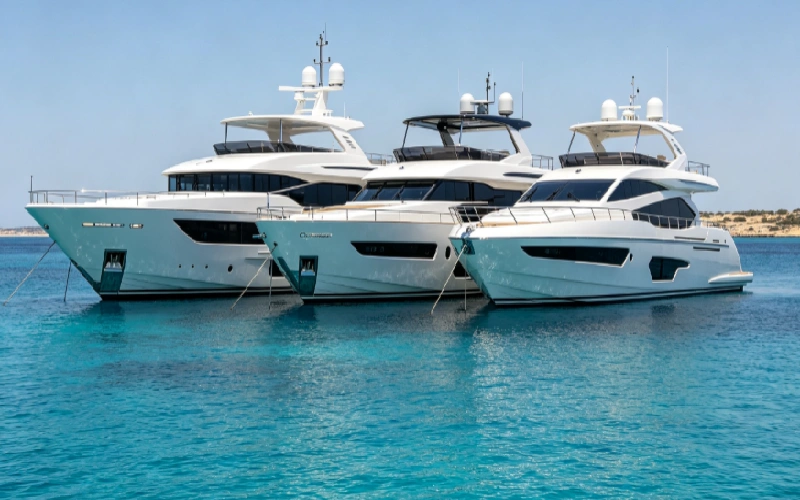
This is one of the reasons why the International Maritime Organization (IMO) guidelines on recreational craft emphasize safety and seaworthiness considerations: although recreational craft are generally not subject to SOLAS regulations for commercial vessels, their safety issues still require serious attention.
How Does the Hull Structure Affect the Oceanwalker’s Sailing Experience?
The hull is the foundation for assessing a yacht’s performance. When selecting a yacht, in addition to its appearance, one should also pay attention to the beam, draft, displacement, hull form, and the compatibility of the propulsion system.
According to Oceanwalker’s currently available product information, the S60 features a catamaran design. Official data indicates it has a length of 18.87 meters and a beam of 8.38 meters, with a standard configuration of 3 or 4 cabins. The X62 is also 18.87 meters long but has a beam of 5.2 meters, a standard configuration of 4+1 cabins, and is equipped with a Volvo Penta D13-800 engine; The Oceanwalker 53, meanwhile, is 16.68 meters long and 4.67 meters wide, with two guest cabins.
These figures illustrate that even when overall lengths are similar, different hull types and interior layouts can result in entirely different user experiences. Catamarans typically offer more width, while monohull powerboats may differ in terms of handling, mooring conditions, and hull dynamics; therefore, one cannot judge a boat’s actual size and suitability based solely on its length.
How to Choose the Right Size for an Oceanwalker Yacht? Is a Longer Boat Always Better?
Choosing the right size is essentially a balance between space, handling, mooring, and ownership costs.
| Usage Requirement | Key Focus | Main Factors to Consider |
| 2‑4 people short‑distance leisure | Maneuverability & maintenance | LOA, power, berth conditions |
| 4‑8 people family cruising | Space & comfort | Cabins, bathrooms, deck |
| Group gatherings | Public areas | Beam, deck, seating |
| Multi‑day cruising | Living capacity | Range, storage, galley |
| Long‑range / blue‑water plans | Overall seaworthiness | Hull, power, safety equipment |
Among Oceanwalker’s currently available product lineup, the 53, S60, and X62 models offer a range of sizes and configurations. However, determining which model is best suited for your needs should be based on the number of passengers and the intended cruising area, rather than simply assuming that “bigger is better.”
Oceanwalker: Scenarios Suited for Different Boat Sizes and Key Considerations for Selection
Oceanwalker’s various models differ significantly in size, structure, and positioning. Small, medium, and large models correspond to different frequencies of use, group sizes, and cruising scenarios. When selecting a model, there is no need to blindly pursue larger sizes or higher specifications; matching the model to your specific needs is the key to balancing practicality and value for money. The following sections, organized by boat size, clearly outline each model’s suitable scenarios, key specifications, advantages, and key purchasing considerations.
Small Oceanwalker Models: Ideal for Short-Distance Leisure and Everyday Boating
Suitable Scenarios: Primarily designed for light-duty boating needs such as weekend outings, island trips, deep-sea fishing, and short-distance family leisure trips.
Vessel Specifications (Oceanwalker 53): Overall length 16.68 meters, beam 4.67 meters, comes standard with 2 guest cabins, and has a maximum speed of 18 knots.
Key Advantages: Compact hull, low maintenance requirements, basic overnight and leisure space, suitable for small groups on routine outings.
Purchasing Advice: Users who go out to sea infrequently should not blindly opt for larger models; instead, they should base their decision on actual passenger numbers, cruising distance, and frequency of use to avoid wasting resources on underutilized assets.
Mid-Size Oceanwalker: Balancing Space and Seakeeping Performance
Ideal Scenarios: Suitable for large families seeking leisure, group outings, and short-term liveaboards; ideal for users seeking a balance between space and seakeeping performance.
Vessel Specifications (Oceanwalker S60): Overall length 18.87 meters, available in a 3/4-cabin layout, powered by twin Volvo D6-440 engines.
Key Advantages: The catamaran structure maximizes space utilization, providing ample common areas and living quarters—perfect for group travel and leisurely living at sea.
Purchasing Considerations: Due to its significant beam, this model has specific requirements regarding marina berth dimensions and mooring conditions; these must be verified in advance.
Purchasing Recommendations: Large families should prioritize a comprehensive comparison of the number of cabins, bathroom configurations, common areas, and mooring conditions, rather than focusing solely on high cruising speed.
Large Oceanwalker: Better Suited for Large Groups and Extended Cruises
Ideal Scenarios: Designed for frequent, extended sea voyages, including group travel, multi-day liveaboard stays, and medium- to long-distance cruises.
Vessel Specifications (Oceanwalker X62): Overall length 18.87 meters, 4+1 cabin configuration (including a dedicated crew area), powered by a Volvo D13-800 engine, with a maximum speed of 25 knots.
Key Advantages: Comprehensive accommodation, ample storage space, powerful performance, and high ride comfort, making it well-suited for long-term living at sea and high-speed cruising.
Purchasing Considerations: A large hull size does not automatically imply ocean-going capability; it is essential to comprehensively evaluate the hull design, range, fuel capacity, navigation and safety equipment, power redundancy, and regulatory certifications.
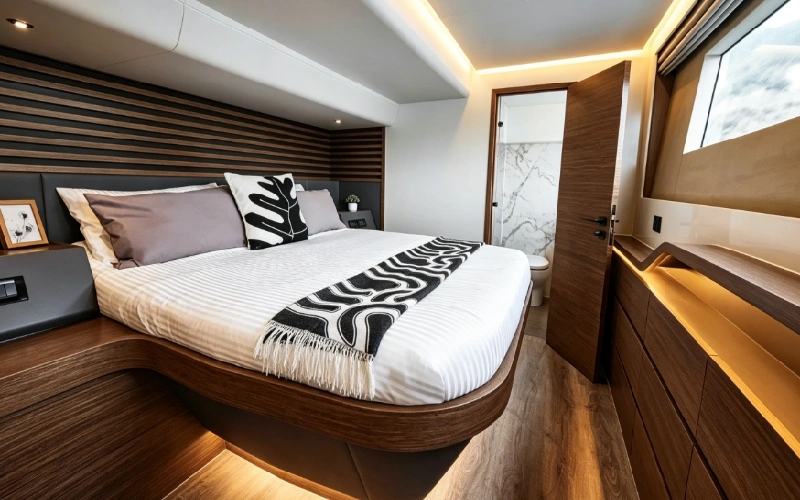
Oceanwalker Purchase Decision Module: 5 Steps to Choose the Right Boat Model for You
When selecting an Oceanwalker, you can narrow down your options step by step based on “Purpose → Number of Passengers → Cruising Area → Size → Cost” to avoid making a decision based solely on appearance or price.
Step 1: Determine Your Primary Use Case
- Family Recreation: Focus on comfort and maneuverability.
- Social Gatherings with Friends: Focus on the deck and common areas.
- Business Hospitality: Focus on layout and overall quality.
- Ocean Cruising: Prioritize range, safety, and stability.
Step 2: Determine the Usual Number of Passengers
Step 3: Determine the Distance of Your Voyages
- Inshore Sailing: Focus on handling, power, and maintenance.
- Multi-Day Cruises: Focus on range, storage, and living facilities.
- Long-Distance Voyages: Further evaluate the hull, safety equipment, and seaworthiness.
Step 4: Determine Dimensions and Layout
Step 5: Calculate Long-Term Ownership Costs
How to Choose Oceanwalker Yacht Configurations? A Detailed Guide to Engines, Interiors, and Electronics
Yacht configuration recommendations should focus on three key areas—propulsion, space, and electronics—rather than simply pursuing high-end specifications.
How to Choose an Engine?
- Power Matching: Determine based on the hull’s weight, cruising speed, and dimensions.
- Usage Frequency: For frequent outings, prioritize reliability and ease of maintenance.
- Fuel Efficiency: Don’t just look at maximum horsepower; also consider fuel consumption under cruising conditions.
- Maintenance Costs: Pay attention to the engine brand, parts availability, and post-purchase repair options.
Different Oceanwalker models feature different powertrain configurations, including the Volvo Penta D6-440 and D13-800. Specific configurations should be confirmed in the official technical documentation for the corresponding model.
How to Choose Electronic Equipment?
Based on your sailing area and usage needs, focus on:
- GPS and electronic charts
- Radar
- Autopilot
- Depth sounder
- Communication equipment
- Backup navigation and safety equipment
If you plan to undertake long-distance voyages, you should also carefully verify that backup power, communication, and safety systems are fully functional.
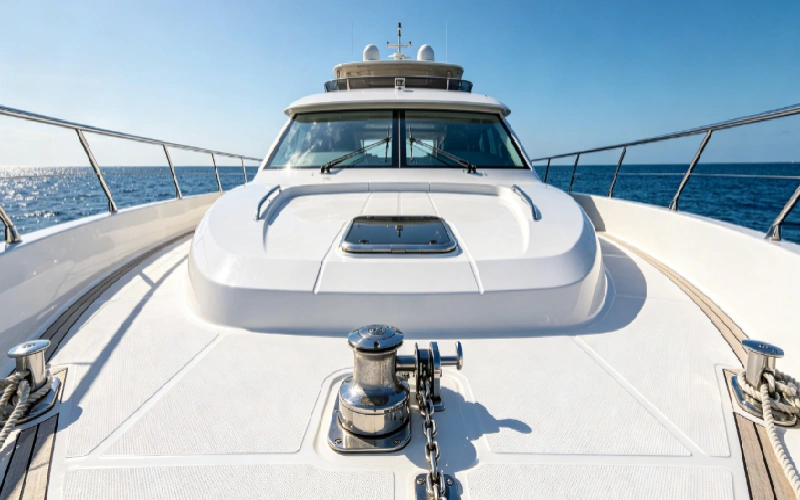
Is a New or Used Oceanwalker Yacht a Better Deal? Purchasing Strategies for Different Budgets
Both new and used yachts have their advantages; the key factors depend on your budget, configuration needs, and risk tolerance.
Who is a new yacht best suited for?
- Those who want the freedom to choose their own configuration
- Those who prioritize the yacht’s condition and after-sales support
- Those with a relatively generous budget
Who is a used yacht best suited for?
- Those who are more focused on the purchase price
- Those who are comfortable with a pre-determined configuration
- Those who can arrange for a professional yacht inspection
Conclusion
When selecting an Oceanwalker yacht, avoid focusing solely on the base price, exterior appearance, size, or a single speed parameter. The true determinants of the ownership experience and value for money lie in a comprehensive comparison of key factors such as hull structure, hull dimensions, propulsion system, interior layout, suitable cruising areas, and long-term ownership costs.
Each model varies in terms of space utilization, operating and maintenance costs, berthing requirements, and seaworthiness; there is no absolute “better” or “worse”—only whether it suits your specific needs. Blindly pursuing larger sizes and higher-end configurations will only lead to high maintenance costs, underutilized space, and limited berthing options, significantly reducing the yacht’s practical value. Want to further determine which Oceanwalker model is right for you? Start by clarifying your budget and intended use, then compare 2–3 models. Combine this with in-person inspections, test cruises, and professional surveys to help you make a more informed purchasing decision.
Disclaimer
The content of this article is provided solely for reference in yacht selection and model research and does not constitute investment or purchasing advice. This article has not received sponsorship from any shipyard, financial institution, or brand, and the author has not participated in any brokerage transactions involving the yachts mentioned herein. The yacht specifications in this article are based on publicly available information as of 2026; actual configurations may vary depending on model, year, and optional equipment. Please refer to the shipyard’s documentation and vessel certificates for specific details. Before purchasing, it is recommended to hire an independent surveyor, unaffiliated with the seller, to conduct an inspection and sea trial. Neither the author nor this platform assumes liability for any losses resulting from reliance on the information in this article. In the event of changes to regulations, fees, or market information, please refer to the latest requirements.
About the Author
Andrew Rogers is a content writer specializing in yacht and marine market research, with a primary focus on yacht design, sailing performance, interior layout, propulsion systems, and usage scenarios. By compiling data from shipyards, professional media tests, and publicly available industry information, he provides readers with objective yacht model analyses and guidance for yacht purchases.
FAQ
Q1: Are Oceanwalker yachts suitable for family outings at sea?
A: Yes. Focus on the cabins, bathrooms, common areas, and maneuverability, and choose an appropriate size based on the actual number of people going on the trip. Prioritize the number of people who will typically stay overnight rather than the peak capacity for parties.
Q2: Are Oceanwalker yachts suitable for long-distance cruising?
A: This requires a comprehensive assessment of the specific model’s hull design, range, propulsion, safety equipment, and intended cruising area. Do not base your decision solely on the boat’s length or top speed; for new energy models, you’ll also need to consider the actual performance of the energy storage system at sea.
Q3: Is a larger yacht always better?
A: Not necessarily. Your choice should be based on a comprehensive evaluation of the number of users, cruising distance, mooring conditions, and maintenance costs. An overly large yacht will result in higher mooring and maintenance burdens.
Q4: Are the annual maintenance costs for a yacht high?
A: Actual costs are influenced by the yacht’s length, engine, mooring location, frequency of use, and equipment configuration. Therefore, it is recommended to calculate separate budgets for insurance, mooring, maintenance, fuel, and repairs before purchasing a yacht, and to set aside a certain percentage as a contingency fund for unexpected repairs.
Q5: How should one choose between a new and a used yacht?
A: New yachts are suitable for those who prioritize specifications and after-sales service, while used yachts appeal to those who focus more on price and the vessel’s condition. It is recommended to have a professional survey conducted before purchasing; for used yachts, it is also essential to carefully review past maintenance records and assess equipment wear and tear.