If you prioritize flexible maneuverability, family cruising and a lower vessel burden, the Azuree 41 is more suitable. If you want more living space, greater load capacity and medium-to-long-distance cruising capability, the Azuree 46 is worth considering. The two are not simply a "large boat vs small boat" pair; instead, they are performance cruising sailboats designed for different usage needs.
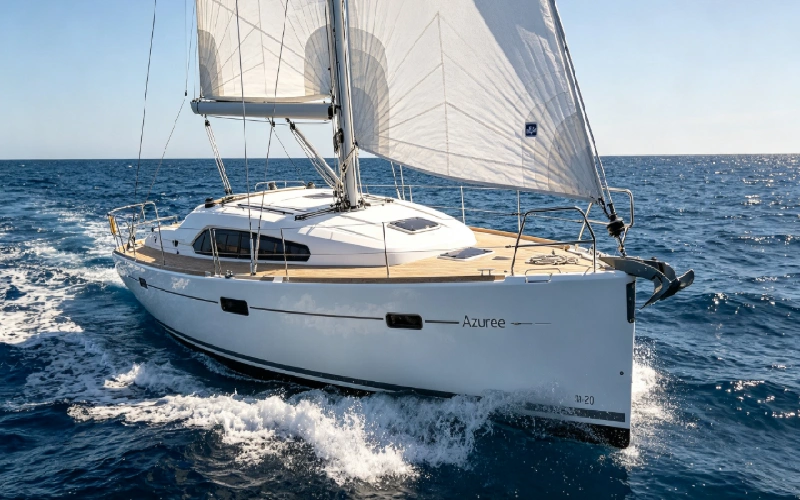
Parameter Comparison: Azuree 41 vs Azuree 46
Although both the Azuree 41 and Azuree 46 are performance cruising sailboats, the differences brought by the 46-foot model extend far beyond the roughly 5-foot increase in overall length. Hull length, waterline, beam, sail area and interior volume collectively affect sailing performance, living space and long-distance cruising capability.
| Comparison Item | Azuree 41 | Azuree 46 |
| Vessel Positioning | Performance Cruiser | Flagship Performance Cruiser |
| LOA Class | 41-foot class | 46-foot class |
| Designer | Rob Humphreys | Rob Humphreys |
| Core Features | Balanced performance and comfort | Enhanced performance, space and cruising capability |
| Rudder Concept | Performance-oriented | Twin rudders with emphasis on handling |
| Suitable Scenarios | Family cruising, coastal and medium-distance sailing | Family cruising, medium-to-long-distance and offshore sailing |
| Space Capacity | Relatively compact | More spacious |
| Handling Burden | Relatively low | Higher |
| Budget Requirement | Relatively low | Generally higher |
Please note that specifications may vary depending on the vessel’s build year, optional packages and individual fit-outs. For second-hand boat purchases, no online specification sheet should be treated as the final configuration of the specific vessel.
Which offers better sailing performance: Azuree 41 vs Azuree 46?
Both yachts were designed by Rob Humphreys and belong to the performance cruising category. However, notable differences exist in hull dimensions, rudder configuration and suitable sea states. Neither is inherently superior in sailing performance; the better choice largely depends on your sailing waters, crew setup and usage goals.
Azuree 41: Prioritises agility and responsiveness
Rob Humphreys Yacht Design’s official description of the Azuree 41 highlights its dual purpose: comfortable cruising alongside regatta ambitions. It features a hull engineered to deliver sensitivity in light winds while maintaining stability as wind strength picks up.
For owners, the 41-foot model’s strength lies not in outright top speed, but in its manageable scale. Especially when sailed shorthanded by two or three people, the smaller hull and simpler onboard systems make it far easier to establish a steady sailing rhythm.
Azuree 46: Focused on speed, stability and long-distance capability
The Azuree 46 is built around a concept that blends high performance with cruising practicality. According to Rob Humphreys Yacht Design, its long waterline, broader beam and low wetted surface area are engineered partly to deliver efficient sailing across a wide range of wind conditions.
Independent sea trials offer useful real-world reference. During a Cruising World test of the Azuree 46 on Narragansett Bay, with wind speeds under 10 knots, the boat recorded approximately 7 knots SOG. The testers also praised the responsive handling delivered by the Jefa steering system and twin rudders. It is important to note that these figures were recorded under specific trial conditions and do not represent a fixed speed for all weather scenarios.
How should you interpret the performance gap between the two boats?
The Azuree 41 delivers a compelling performance cruising experience for weekend sails, coastal trips and short island-hopping voyages. If you require greater load-carrying capacity, more living space and extended offshore passages, the Azuree 46’s larger size will bring more tangible benefits.
From my yacht research perspective, I recommend buyers focus on whether the boat’s performance aligns with their actual usage pattern, rather than simply chasing larger sail area or longer hull length. For most private owners, a 41-foot yacht that regularly gets out on the water will deliver far more practical value than a 46-foot yacht that stays moored at the dock most of the time.
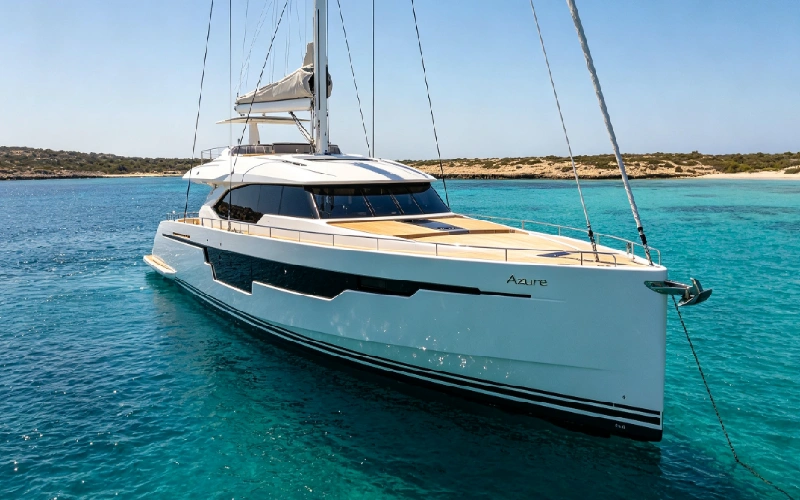
How to choose between the Azuree 41 and Azuree 46 based on interior layout?
Both boats feature a 3-cabin configuration suitable for family sailing, yet they differ substantially in cabin spaciousness, storage capacity and communal living areas. The final choice mainly depends on the number of crew on board and whether you plan to live aboard for extended periods.
Azuree 41: Meets basic requirements for family cruising
The Azuree 41 is not designed as an outright racing yacht by positioning. According to publicly available information, it balances comfortable cruising and performance targets, so its interior layout is engineered for multi-crew voyages and long-term onboard use.
For family users, the 41-foot vessel generally satisfies the basic needs of couples, families with one child or small groups of friends. If you mostly go sailing on weekends or take medium-distance coastal trips, upgrading to the 46-foot model merely for extra space may not be necessary.
Azuree 46: Noticeably larger cockpit and interior volume
The Azuree 46’s wider beam delivers a more generous cockpit and interior space. Sea trials by Cruising World noted that the 46 comes with a spacious cockpit, central dining table, twin helm stations and ample storage; its seats can also be converted into sunbathing or resting zones.
Below deck, the test boat reviewed by Cruising World is fitted with 3 double cabins and 2 heads. The saloon, galley and navigation station are all optimized for multi-person cruising.
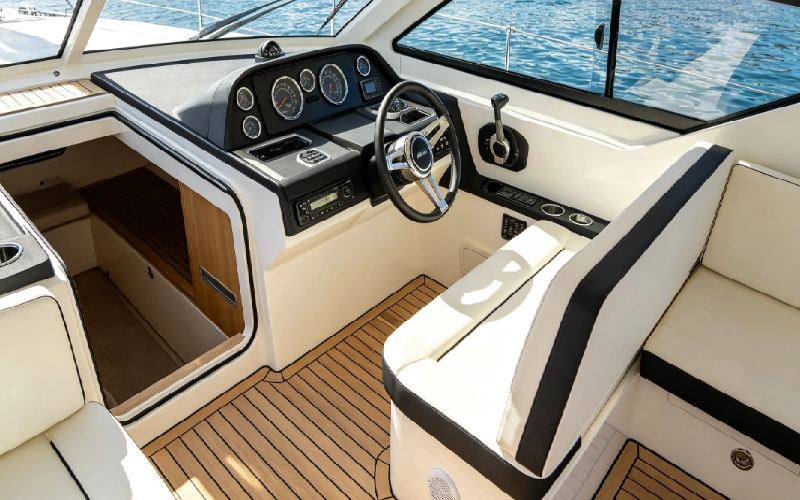
Azuree 41 vs. Azuree 46: A Buying Decision
If you’re on a tight budget, the Azuree 41 is the better choice
If your typical crew size is 2–4 people and your main sailing routes involve coastal cruising, weekend getaways, or short island hops, the Azuree 41 will meet most of your needs. There’s no need to shoulder the higher docking, maintenance, and equipment costs associated with the 46-foot model just for the extra space.
If you plan to cruise long-term with a large group, the Azuree 46 offers clear advantages
If you plan to take your family on a long-term cruise in the future, or frequently invite friends to join you on the water, the 46-foot model’s advantages in terms of the cockpit, cabins, bathrooms, storage, and living space will be even more apparent.
If you plan to sail offshore, you should prioritize the specific condition and configuration of the boat
Offshore sailing requires more than just size; it demands comprehensive system capabilities. World Sailing explicitly includes hull structure, stability, keel and rudder, communications, navigation, EPIRB, and personal safety equipment in its offshore safety requirements.
Summary of the Advantages and Disadvantages of Azuree 41 vs Azuree 46
Both models belong to the performance cruising series designed by Rob Humphreys, with each offering different trade-offs in core hardware and suitability for specific scenarios. Below, we outline their respective strengths and weaknesses in terms of sailing performance, space, maintenance, and ease of handling to help you quickly determine which model is right for you.
| Comparison Dimension | Azuree 41 | Azuree 46 |
| Sailing Performance | High | High |
| Maneuverability | High | Medium-High |
| Family Space | Medium-High | High |
| Cockpit Practicality | Medium-High | High |
| Multi-crew Cruising | Medium-High | High |
| Blue-water Potential | Medium-High | High |
| Daily Maintenance Burden | Medium | Medium-High |
| Berth Requirement | Relatively Easy | More Demanding |
| Beginner-Friendliness | Medium | Medium-Low |
| Liveaboard Capacity | Medium-High | High |
From my perspective of yacht research, there is no absolute "better one" between the 41 and the 46. The Azuree 41 excels in balanced dimensions and maneuverability, while the Azuree 46 boasts advantages in space, performance platform and long-distance cruising capability.
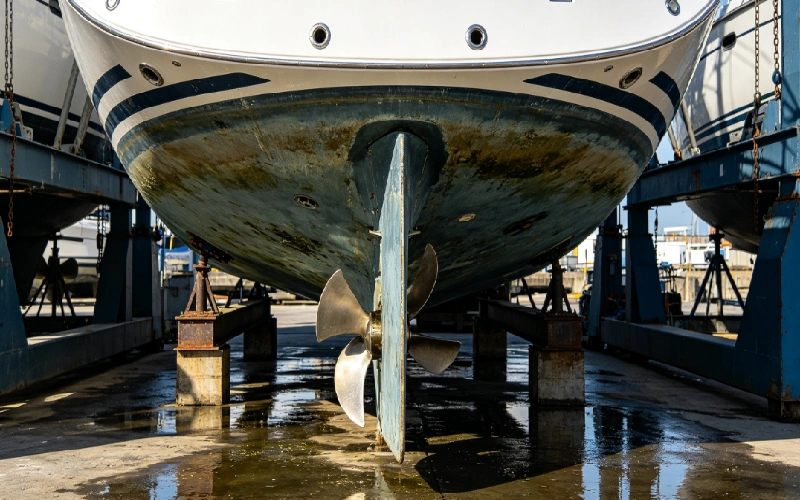
Conclusion
Both the Azuree 41 and Azuree 46 carry forward Rob Humphreys’ design philosophy for performance cruising yachts, yet they cater to different yacht-buying needs. The Azuree 41 is better suited for family cruising with 2–4 people, coastal sailing, and owners who value responsive, manageable handling. The Azuree 46, by contrast, works best for larger crews, medium-to-long-distance voyages, and users seeking generous onboard living space.
When choosing between the Azuree 41 and 46, the key question is not “which boat performs better”, but “do I truly need the extra space, load capacity and cruising capability that the 46-foot model provides?” If the answer is yes, the upgrade to the 46 is well justified. If your sailing will mainly consist of weekend trips and coastal passages, the 41 may be the more practical pick. 👉 Compare specifications of the Azuree 41 and 46 for professional yacht-selection advice.
Disclaimer
This content is for reference only for yacht selection and vessel research and does not constitute investment or purchasing advice. Information herein is based on publicly available data as of 2026. Actual configurations and vessel conditions may vary; please refer to official shipyard documentation and vessel certificates for definitive details. It is recommended to engage an independent marine surveyor for inspection and sea trials prior to purchase. Regulations, costs and market information are subject to change, so always check the latest official requirements.About the Author
Andrew Rogers is a content writer specializing in yacht and sailing market research. His focus covers vessel design, sailing performance, interior layout and offshore cruising capability. Drawing on publicly available data, professional sea trials and industry insights, he delivers impartial vessel analysis and purchasing guidance for readers.
FAQ
Q1: What is the biggest difference between the Azuree 41 and the Azuree 46?
A: The biggest differences between the two lie in hull size, interior layout, and cruising capabilities. The Azuree 41 is more versatile and compact, while the Azuree 46 is better suited for larger crews and medium- to long-distance voyages.
Q2: Is the Azuree 41 suitable for family cruising?
A: Yes, it is particularly well-suited for coastal and short-to-medium-range cruising for families of 2–4 people, while offering good sailing performance and ample living space on board.
Q3: Is the Azuree 46 suitable for ocean cruising?
A: The Azuree 46 has good potential for ocean cruising, but whether it’s actually suitable for transoceanic voyages requires a comprehensive assessment of the boat’s condition, equipment configuration, route, and the crew’s experience.
Q4: Which is better for beginners: the Azuree 41 or the Azuree 46?
A: Both models are better suited for sailors with some basic sailing experience. The Azuree 41 is relatively easier to handle due to its size, making it generally easier for beginners to gain hands-on experience.
Q5: What should you focus on when inspecting a used Azuree?
A: Focus on inspecting the hull, keel, steering system, rigging, sails, engine, and electrical systems. It is also recommended to conduct an independent survey and a sea trial to confirm the boat’s actual condition.