Oceanwalker Yachts can be regarded as a yacht brand focusing on power yachts, spatial experience and modern offshore lifestyle. According to currently publicly available official information from Oceanwalker, the brand’s product line consists of the Oceanwalker 53, S60 and X62. Among them, the S60 features a power catamaran layout, the X62 leans more toward a high‑performance flybridge yacht, and the 53 emphasizes compact dimensions and space utilization. For boat owners pursuing family leisure, group offshore trips, and prioritizing space and comfort, Oceanwalker’s products are worthy of consideration. Nevertheless, whether it is ultimately suitable depends on intended usage, number of passengers, navigation area and budget.
What is Oceanwalker Yachts’ brand positioning?
All of Oceanwalker’s currently available models are motor yachts. The S60 features a wide-body motor catamaran design, the X62 features a traditional monohull flybridge layout, and the 53 is primarily positioned as a 16-meter-class motor yacht. These three models are not simply a progression in size; rather, they cater to different usage scenarios through distinct hull types and interior layouts.
In terms of brand development, Oceanwalker has continued to refine its product lineup and global market strategy in recent years. Official records indicate that the brand name and visual identity were updated in 2025, while Fujian Skywalker Yacht Co., Ltd. remains the registered name of the manufacturer.
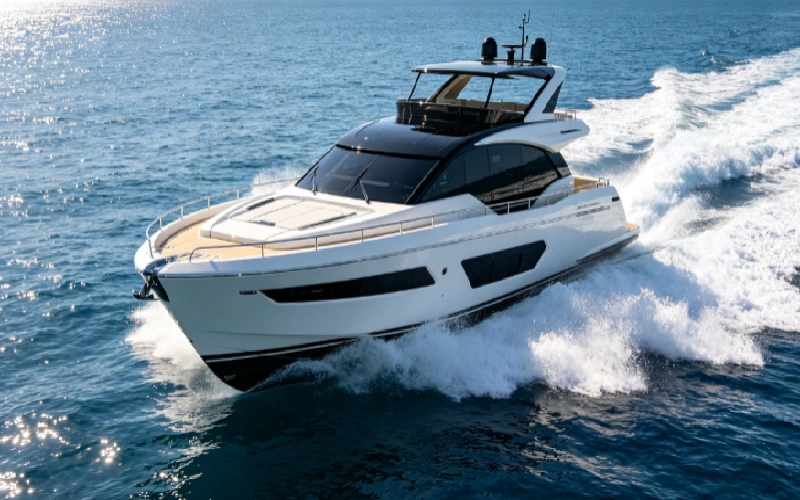
What Models Does Oceanwalker Offer? How to Choose Between the 53, S60 and X62
Oceanwalker’s official product page mainly features three models: the 53, S60 and X62. A basic comparison can be drawn based on currently published specifications.
| Model | Overall Length | Beam | Cabins | Standard Power | Standard Max Speed |
|---|---|---|---|---|---|
| Oceanwalker 53 | 16.68 m | 4.67 m | 2 | Sino‑Trunk MC07 ×2 | 18 kn |
| Oceanwalker S60 | 18.87 m | 8.38 m | 3/4 | Twin Volvo Penta D6‑440 | 18 kn |
| Oceanwalker X62 | 18.87 m | 5.2 m | 4+1 crew | Volvo Penta D13‑800 | 25 kn |
The above data is sourced from Oceanwalker’s current official product specifications; specific vessel configurations may vary depending on optional equipment.
Expert yacht analysis suggests that what makes these three models most noteworthy is not the numerical designations “53, 60, and 62,” but rather their hull structures, beam widths, number of cabins, and propulsion systems. In particular, while the S60 and X62 are similar in length, their beam widths differ significantly, resulting in variations in actual interior space and berthing requirements.
Oceanwalker 53: Better Suited for Compact Recreational Needs
The Oceanwalker 53 has a total length of 16.68 meters and a beam of 4.67 meters. It features 2 cabins, 2 bathrooms, and a capacity for 12 passengers. The standard power setup consists of two Sino-Trunk MC07 engines, and official data indicates a fuel capacity of 2,200 liters.
From a practical standpoint, it is better suited as a candidate for family leisure, weekend outings, and short-to-medium-range cruises. Compared to wider catamarans, its 4.67-meter beam also allows for relatively flexible berthing options, though this ultimately depends on local marina conditions.
Oceanwalker S60: A Representative of Spacious Catamarans
The S60 is a highly distinctive model in Oceanwalker’s current product line. According to official specifications, it measures 18.87 meters in length and 8.38 meters in beam, featuring 3 or 4 guest cabins and 4 or 5 bathrooms. The standard engine configuration consists of twin Volvo Penta D6-440 engines, with an optional upgrade to twin D8-600 engines.
The generous beam provides the S60 with significant layout advantages in terms of common areas, decks, and living spaces, though it also necessitates larger berthing requirements. Official data also indicates that the S60’s design categories include CE A and CE B; therefore, specific seaworthiness and scope of use should still be confirmed based on the actual hull configuration and certification documents.
Oceanwalker X62: A Focus on Performance and Luxury Cruising
The X62 measures 18.87 meters in length and 5.2 meters in beam, with a standard configuration of 4+1 cabins. It comes standard with a Volvo Penta D13-800 engine, with an official maximum speed of 25 knots; when upgraded to the Volvo Penta IPS1200, the maximum speed can reach 32 knots.
Compared to the S60, the X62’s product philosophy aligns more closely with that of traditional high-speed flybridge motor yachts, making it ideal for users who prioritize speed, the driving experience, flybridge space, and overnight accommodations for multiple guests.
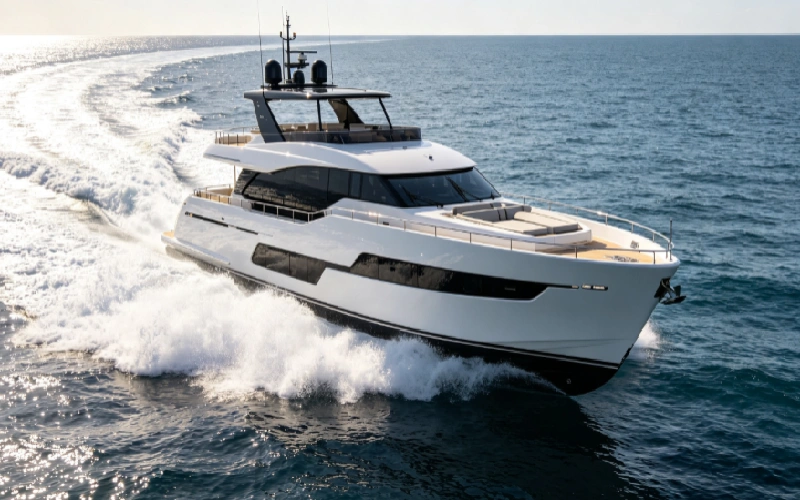
Are Oceanwalker Yachts Suitable for Ocean‑Going Cruising?
Ocean‑going capability cannot be judged merely by overall length, top speed or marketing materials. It is essential to verify fuel capacity, real‑world cruising speed, range, hull design, stability, navigation‑communication gear and safety equipment. For reference, official specs list 2200 L fuel and 600 L fresh water for the Oceanwalker 53; twin 1620 L fuel tanks plus 800 L fresh water for the S60; and 3000 L fuel with 800 L fresh water for the X62.
These figures serve only as a baseline. For cross‑regional or long‑distance voyages, qualified professionals should conduct an assessment considering target sailing zones, weather conditions, load weight and real‑world cruising conditions.
Recreational‑vessel safety guidelines from the International Maritime Organization (IMO) also stress that safety management for leisure yachts should take into account voyage plans, vessel condition and crew‑passenger safety.
Which Oceanwalker Model to Recommend? Model‑Selection Guide for Different Users
If you make an initial screening based on currently published specifications, you may follow the logic below:
| User Priority Focus | Key Points to Review | Recommended Models |
| Family leisure | Living space, cabins, comfort | S60, 53 |
| Large‑group outings | Cabins, bathrooms, decks | S60, X62 |
| High‑speed cruising | Power, speed, handling | X62 |
| Compact‑scale usage | Dimensions, berthing, maintenance | 53 |
| Extended offshore stays | Space, range, storage | S60 |
The “recommendations” here are merely scenario‑based matches derived from public specifications and do not imply that any single model outperforms others under all user requirements. If you have not yet defined your primary boating purpose, avoid starting with the question “which model is the best”. Instead, clarify the number of regular occupants, sailing areas, overnight‑stay needs and annual usage days first.
5‑Step Checklist to Find the Right Brand and Model
Step 1: Define your primary usage scenarios
Family getaways, friend gatherings, corporate hospitality and long‑distance cruising place vastly different demands on a yacht. Prioritize the scenarios that account for 80 % of your boating time, then factor in occasional special‑event requirements.
Step 2: Confirm regular passenger numbers
Base your choice on day‑time occupants and overnight guests, while reserving adequate onboard space. Do not size your yacht for peak guest counts from rare gatherings, as this will lead to unnecessarily high day‑to‑day running costs.
Step 3: Identify your navigation area
Coastal day trips, multi‑day cruises and cross‑regional voyages require different power output, range and safety equipment. Define your intended sailing zones first, then verify the yacht’s technical specifications and certifications accordingly — do not purchase a vessel before confirming its suitable operating range.
Step 4: Evaluate dimensions and onboard space
Focus on overall length, beam, cabins, bathrooms, galley, helm station and storage capacity. Physical onboard inspection is highly recommended, since area figures from brochures cannot fully reflect real‑life living experience.
Step 5: Calculate long‑term ownership
costs Beyond the acquisition budget, account for berthing fees, insurance, fuel, routine maintenance, repairs, cleaning and equipment upgrades. A sensible yacht budget accounts for purchase cost plus long‑term ownership expenses, rather than comparing base‑vessel prices only.
Who Are the Target Users of Oceanwalker Yachts?
Based on available public product information, Oceanwalker’s potential target users fall into four main groups:
- Family‑leisure users: Prioritize space, cabins and comfort for weekend getaways, island trips and family gatherings.
- Group‑social users: Value decks, salons and flybridge areas for group activities; wide‑beam catamarans such as the S60 are well‑suited.
- Performance‑oriented users: Focus on speed, handling and power; the X62 matches these requirements.
- Long‑range cruising users: Emphasize range, storage, living amenities and safety systems over top speed.
Conclusion
Considering its comprehensive product portfolio alongside the TCA (Target Customer Analysis) framework, Oceanwalker has established a new generation of high-end domestic yachts with clear differentiation and comprehensive coverage of usage scenarios, moving beyond the traditional, one-dimensional “luxury” or “performance” labels associated with conventional yacht brands. Judging by the current product lineup, the brand has achieved precise market segmentation, with three distinct boat models covering mainstream yacht usage scenarios such as entry-level leisure, family residency, group socializing, high-speed cruising, and business hospitality.
Overall, leveraging its strengths in localized smart manufacturing and international technological capabilities, Oceanwalker employs a product philosophy centered on specific usage scenarios, user needs, and technology to precisely meet the demands of the new generation of yacht owners both domestically and globally. It is an innovative high-end yacht brand that balances practicality, comfort, technology, and value for money. Once you have determined your budget and usage requirements, you can further compare the Oceanwalker 53, S60, and X62 models. By combining in-person inspections, test cruises, and professional vessel inspections, you can select the model that best suits your needs.
Disclaimer
The content of this article is provided solely for reference regarding yacht selection and model research and does not constitute investment or purchase advice. This article has not received sponsorship from any shipyard, financial institution, or brand, and the author has not participated in any brokerage transactions involving the yachts mentioned herein. The yacht specifications in this article are based on publicly available information as of 2026; actual configurations may vary depending on model, year, and optional equipment. Please refer to the shipyard’s documentation and vessel certificates for specific details. Before purchasing, it is recommended to engage an independent surveyor, unaffiliated with the seller, to conduct an inspection and sea trial. Neither the author nor this platform assumes liability for any losses resulting from reliance on the information in this article. In the event of changes to regulations, fees, or market information, please refer to the most current requirements.
About the Author
Andrew Rogers is a content writer specializing in yacht and marine market research, with a primary focus on yacht design, sailing performance, interior layout, propulsion systems, and usage scenarios. By compiling data from shipyards, professional media tests, and publicly available industry information, he provides readers with objective yacht model analyses and guidance for yacht purchases.
FAQ
Q1: What is the Oceanwalker Yachts brand?
A: Oceanwalker currently focuses primarily on motor yachts. Its publicly available models include the Oceanwalker 53, S60, and X62, each with its own unique characteristics in terms of size, hull type, and propulsion system.
Q2: What are Oceanwalker’s main models?
A: Currently, the official product page primarily showcases the 53, S60, and X62, each designed to meet different needs in terms of space, cabins, power, and cruising requirements. When purchasing a yacht, you should choose based on your actual intended use.
Q3: Is Oceanwalker suitable for family cruising?
A: Models such as the S60 and 53 are worth considering, but the final decision should be based on a comprehensive assessment of family size, overnight accommodation needs, cruising areas, and requirements for space and comfort.
Q4: What is the difference between Oceanwalker and Prestige?
A: The two brands differ in product design and brand positioning. It is recommended to compare models of the same size based on hull type, interior layout, propulsion systems, comfort, and primary usage scenarios.
Q5: When buying a yacht, should you prioritize the brand or the model?
A: We recommend first determining your intended use, the number of passengers, and your cruising area, then narrowing down specific models. Finally, comprehensively compare brands, specifications, purchase price, and long-term ownership costs—this approach makes it easier to make a rational purchasing decision.