As a broker with over a decade of experience in the international yacht market, I frequently encounter clients—especially first-time buyers or charterers—struggling with the “sailing vs motor yacht” dilemma. I recall one call from a family client in Northern Europe. They said: We just want to take the kids out on weekends to enjoy the sea breeze, but we also want to occasionally go speedboating or tow water toys." Their hesitation struck me as very typical.
In truth, their real issue wasn't whether one yacht type was “technically superior” to the other—they were unsure which vessel best suited their actual lifestyle. They weren't concerned with sail fabric or engine horsepower, but rather needed a quick decision-making chart for “choosing the right boat for the job.”
This article is designed to help people like them (and perhaps you): quickly identify your usage scenario, then match it to the most suitable, hassle-free, and enjoyable boat type based on key dimensions (budget, operation, technical difficulty, etc.).
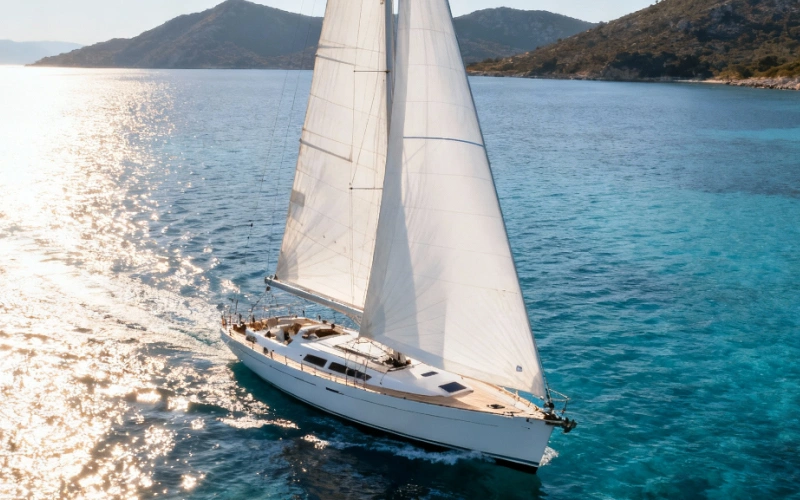
Sailboat vs Motor Yacht: Which Usage Scenario Fits You?
Over the past decade, I've recommended countless boat types to diverse clients. From this experience, I've identified six primary yacht usage scenarios to help you first determine your true needs.
| Use Case | Real Client Example |
| Weekend Coastal Leisure/Family Outings (2–6 hours) | A German family living on the Baltic coast rents a boat every weekend. They simply want to take their children to nearby bays for sunbathing and picnics. A sailboat would be ideal, but on one occasion, light winds forced them to rely on the engine for a slow departure. |
| Coastal Fishing Enthusiast (Occasional Night Fishing) | An Italian client who enjoys fishing in the Mediterranean after retirement. He occasionally fishes at night and desires a stable platform, though speed isn't a top priority. |
| Inter-Island Cruising/Multi-Day Vacations | A French couple planning to cruise from Corsica to several islands, anchoring and overnighting. They prioritize comfort and range. |
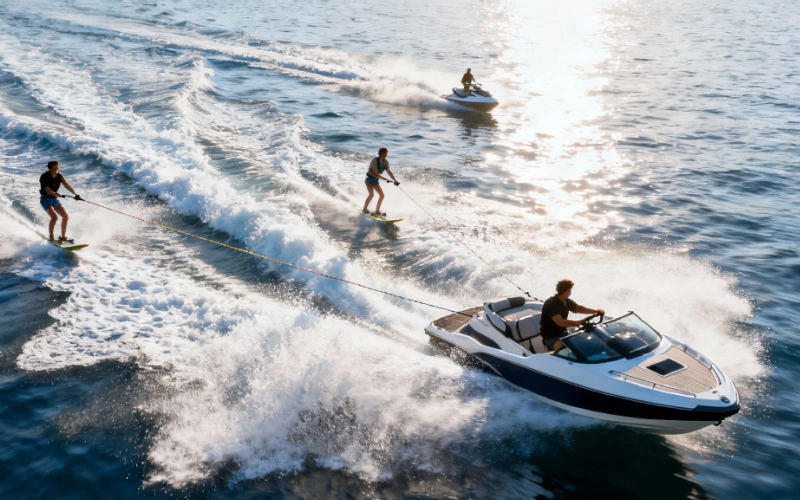
| Speed & Thrill / Water Toy Enthusiasts | A group of American friends who enjoy speedboats, water skiing, and even hovercraft. They seek extreme speed and ample water sports space. |
| Eco-Conscious / Sailing Experience / Aspiring “Captain” | A young British entrepreneur wanting to learn sailing and enjoy the experience of trimming sails. Fuel costs are a concern, and he prefers hands-on involvement in sail handling and wind-driven navigation. |
| Occasional Racing / Systematic Sailing Training | An Australian sailing enthusiast dreaming of competing in regattas. He's willing to invest time learning sail handling, mast operations, and racing, with future plans to modify sails himself. |
By reviewing your boating habits, family structure, budget, and interests, you can first identify one of these scenarios. This will significantly simplify your yacht selection process.
Buyers who are still considering fishing boats, multihulls, day boats or tenders can use our complete boat types guide to compare the wider market.
7 Key Differences Between Sailboats and Motor Yachts
Understanding the core distinctions between these two vessel types empowers more informed decision-making. Below are seven critical dimensions I frequently discuss with clients and partners, presented in accessible yet professional terms to clarify your thinking.
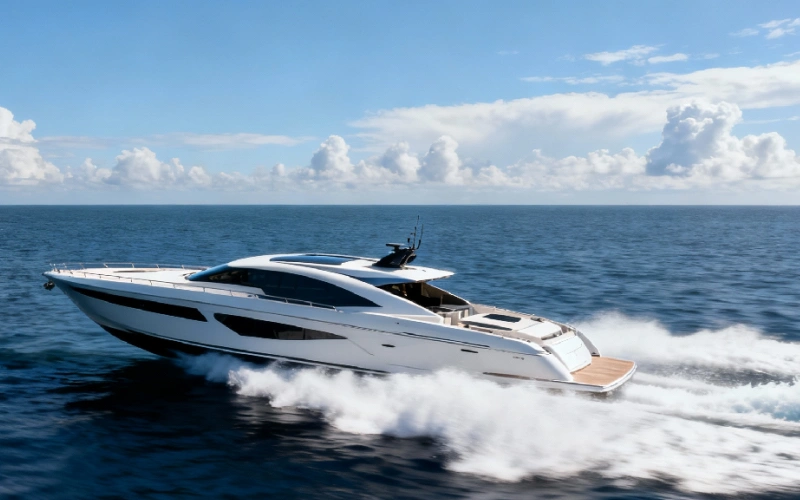
Purchase Budget (One-Time Investment)
Sailboats feature relatively simple structures: masts, rigging, and hulls constitute the primary expenses. Compared to motor yachts, they lack large engines and heavy fuel systems, making entry-level sailboats sometimes more manageable.
Motor yachts span an enormous price range: from compact cruisers to large luxury flybridge yachts and superyachts, with vast cost differences. Therefore, the question “how much does it cost to build a yacht” is closely tied to the yacht's brand and engine size.
Below is a summary of price ranges for these two vessel types:
| Yacht Type | Price Range (New) | Price Range (Used) |
| Sailboats | $30,000–$5,000,000+ | $10,000–$3,000,000+ |
| Motor Yachts | $50,000–$10,000,000+ | $20,000–$5,000,000+ |
Additionally, the Motor Yacht Buyers Guide published by Insider Yachting, a leading yacht industry resource, indicates that annual operating costs for large yachts account for 10–15% of the purchase price.
Operational and Maintenance Costs for Sailing Boats and Motor Yachts
Sailboats rely on wind power, resulting in minimal fuel consumption. Engines are typically only used for port entry/exit or during windless conditions.
Motor yachts consume significant fuel. Their engines and propulsion systems also require more frequent and complex maintenance. If considering a motor yacht, familiarize yourself with How to Maintain a Yacht's Propulsion System.
Mooring fees, insurance, and routine maintenance may also be higher for motor yachts. With over a decade in yacht brokerage, I can confidently state that regular engine upkeep and marina fees represent substantial expenditures.
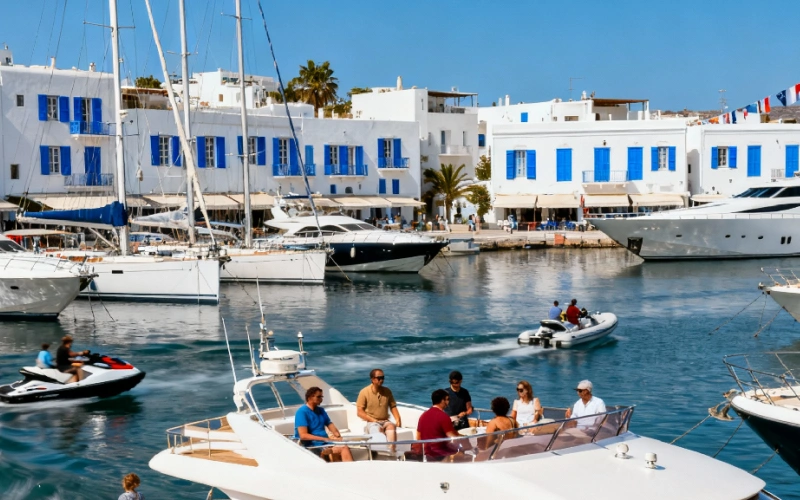
Best Yacht for Beginners
Sailboats: You must learn wind direction, sail trimming, and heeling techniques (balancing wind forces by tilting the hull). For beginners, this requires significant time and effort.
Motor Yachts: Relatively easy to master. Typically, just a few hours of training suffices to grasp basic operations like starting, turning, and reversing.
Therefore, relatively speaking, the most suitable yacht for beginners is a small motor yacht.
Space and Comfort
Sailboats: Mast and rigging designs can sometimes limit interior layouts, but sailboats can offer surprisingly spacious interiors for their length.
Motor Yachts: Without tall masts and heavy rigging, designs are more flexible. Interiors can be more modern and livable, with greater freedom for bedrooms, kitchens, and leisure areas.
Speed and Range
Motor Yachts: Clearly superior for high-speed cruising and rapid destination reach. If speed and island-hopping are priorities, powerboats hold the advantage.
Sailboats: Speed is wind-dependent and variable—fast in favorable conditions, slow in light winds. However, they offer compelling fuel efficiency and an unmatched sailing experience.
Safety and Seaworthiness
Sailboats: Benefit from a low center of gravity and heeling mechanism (leaning the hull to catch wind), offering stability advantages in larger waves and winds.
Motor Yachts: Rely on engine maneuverability to quickly avoid waves or adjust course, but face greater risk if the engine fails.
Mooring Conditions and Operational Ease
Sailboats: Tall masts may restrict access to certain ports or bridges. Wind direction can also complicate reversing or precise maneuvering.
Motor Yachts: Offer agile handling, particularly for reversing in tight docks or shallow waters. This is crucial for some users.
Which is Better Sailboat or Motor Yacht?
Whether sailboats or motor yachts are better is not an absolute question—it depends on your needs, budget, intended use, and personal interests. Below is a “Requirement → Recommended Boat Type” checklist I design and frequently recommend to clients. Tick each item to clarify your direction:
| Your Needs/Scenario | Better Suited for Sailboat | Better Suited for Motor Yacht |
| Want lower operating costs | ✔ | |
| Limited budget, entry-level | ✔ | |
| Prefer eco-friendly, quiet sailing experience | ✔ | |
| Want to learn authentic sailing skills | ✔ | |
| Seek speed, thrills, water toys | ✔ | |
| Family outings, prioritize space & comfort | ✔ | |
| Want weekend freedom to sail anytime, regardless of wind conditions | ✔ | |
| Want island hopping/fast travel | ✔ | |
| Interested in sail handling and sailing techniques | ✔ | |
| Mainly want fishing, diving, or self-guided offshore trips | ✔ |
Real-life Examples of Choosing Sailboats or Motor Yachts
Below are a few real cases I encountered in my brokerage work, shared briefly to show how I helped clients make decisions.
Case A: Limited Budget + Learning to Sail
A novice buyer from the UK purchasing his first boat. He stated: “I want to learn sailing but avoid high fuel costs.” I recommended a 35–40-foot cruising sailboat. He was willing to participate in sail handling and maintenance. Over the years, he made friends at sailing gatherings and joined amateur races.
Case B: Family + High-Speed Fun
An American family of four who enjoy weekend boating, water skiing, and creating a “vacation-at-sea” experience for their children. I recommended a mid-sized motor yacht. Given their high demands for speed, comfort, and recreational space, a motor yacht proved more suitable than a sailboat. They described it as one of their most satisfying decisions.
Case C: Inter-Island Cruising + Cost-Sensitive
A European couple passionate about sailing planned summer cruises across multiple Mediterranean islands. They prioritized fuel efficiency without compromising inter-island range. I designed a larger cruising sailboat for them, enabling wind-powered fuel savings while ensuring safe engine-assisted crossings during calm periods. Over the years, they've developed a “second home” feeling in numerous ports.

Summary
From my professional perspective on choosing between sailboats and motor yachts, the conclusion is clear: no single hull type is universally optimal. The key lies in:
Defining your actual usage frequency: occasional weekend outings or year-round cruising
Understanding your budget structure: purchase cost + annual operating expenses + maintenance + insurance + marina fees
Evaluate your desired lifestyle: Do you aspire to master sail handling, or prioritize speed and comfort?
Consider future time commitment for learning or maintenance: sail trimming, repairs, berth selection, etc.
If you'd like, I can provide a personalized needs analysis + boat recommendation report. Based on your budget, sailing area, and frequency of use, I'll help narrow down 3–5 vessels best suited for you. I'd be happy to assist with this step if you're interested.

Frequently Asked Questions
Q: Which vessel type offers greater environmental advantages?
A: Sailboats rely on wind power, consuming minimal fuel and being environmentally friendly. Motor yachts have higher fuel consumption, though newer engines and electric propulsion systems are improving their eco-friendliness.
Q: I don't want to learn extensive sailing skills—which boat should I choose?
A: Motor yachts offer quick mastery; basic operation can be learned in a few hours. Sailboats require learning sail handling, wind direction, and heeling techniques, taking longer to master but offering a unique experience.
Q: Is a Sailboat Cheaper to Maintain?
A: Yes, because sailboats primarily rely on wind power for propulsion, their engines are low-powered and rarely used. This results in lower fuel and mechanical maintenance costs, along with simpler construction. Routine maintenance mainly involves inspecting the hull, sails, and rigging. Compared to motor yachts, this significantly reduces expenses associated with power systems and electronic equipment upkeep.
About the Author
Emery
Yacht Broker / Yacht Transaction Consultant / Contributing Writer for Yachting Magazine
SAMS Certified Surveyor #2458
Honored as one of “Asia's Top 10 Yachting Industry Experts” and recipient of the “Outstanding Yacht Broker Service Award”
Last Updated: November 2025
Applicable Audience: Individuals and families planning to purchase or charter yachts, as well as enthusiasts and first-time buyers seeking to understand the differences between sailboats and motor yachts to select the most suitable vessel type.
Disclaimer
This content is compiled based on the author's extensive yacht brokerage experience and industry knowledge, aiming to provide reference for individuals, families, and enthusiasts planning to purchase or charter yachts. Pricing ranges, vessel characteristics, operating costs, and other information mentioned herein may vary from actual conditions due to market fluctuations, brand differences, regional policies, and other factors. Case studies are provided solely for specific client decision-making reference and do not represent universal applicability. Readers should make comprehensive judgments based on their actual needs, budgets, and professional consultations before making decisions. The author and publisher assume no liability for any direct or indirect losses arising from decisions made based on this content.