



The main difference between monohull and catamaran sailing boats lies in the distinct sailing experiences offered by their hull structures. A monohull has a single hull and relies on a keel to maintain balance; it heels noticeably when sailing, offering a more responsive feel, better upwind performance and a traditional sailing experience; In contrast, a catamaran consists of two parallel hulls, deriving its stability from a wider beam. It offers a smoother ride and more spacious accommodation, making it better suited to family cruising, long-term living and comfortable sailing. Put simply, monohulls are more about ‘handling and performance’, whilst catamarans are more about ‘space and living’.
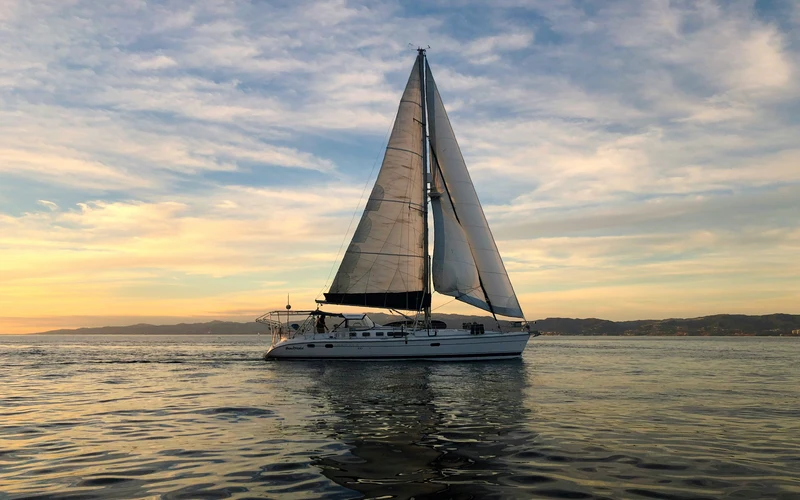
Fundamental structural differences between monohull and catamaran sailboats
What is a monohull sailboat?
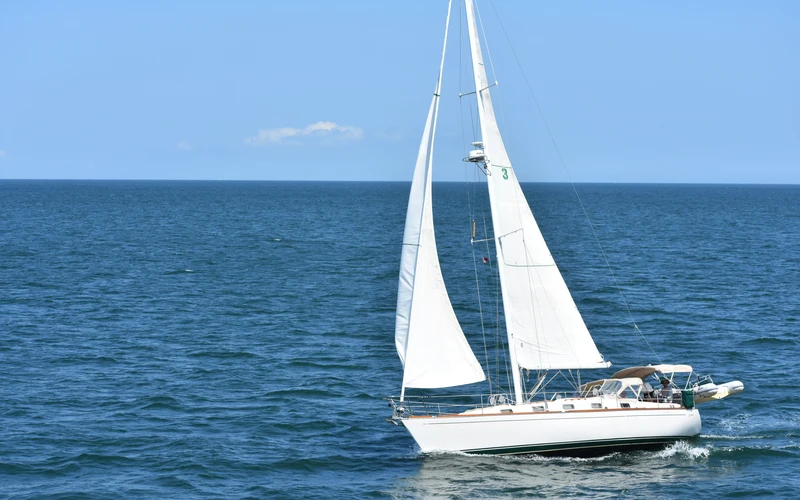
Monohull sailboats are currently the oldest and most numerous type of sailing vessel. As the name suggests, they have a single main hull and are typically fitted with a deep keel structure. The keel contains a substantial amount of ballast to ensure the vessel can regain its balance when heeling.
Traditional sailing regattas, round-the-world races and most classic cruising yachts are almost exclusively monohull designs. Due to their narrower hulls, monohull sailboats excel in cutting through waves, handling upwind angles and providing responsive handling feedback at high speeds; consequently, many experienced skippers still favour monohull designs.
Monohull sailboats have another distinct characteristic: they heel (lean) whilst sailing. For beginners, this list may take some getting used to, but for many sailing enthusiasts, this is precisely what constitutes the ‘true sailing experience’. You will clearly feel the wind pressure, the swell, and the interaction between the hull and the sea.
Currently, a large number of classic cruising brands on the market, such as Bavaria, Beneteau, Jeanneau and Hallberg-Rassy, still focus primarily on monohulls in their core product lines. When searching for ‘monohull sailboats for sale’, many people naturally turn first to these traditional European cruising brands.
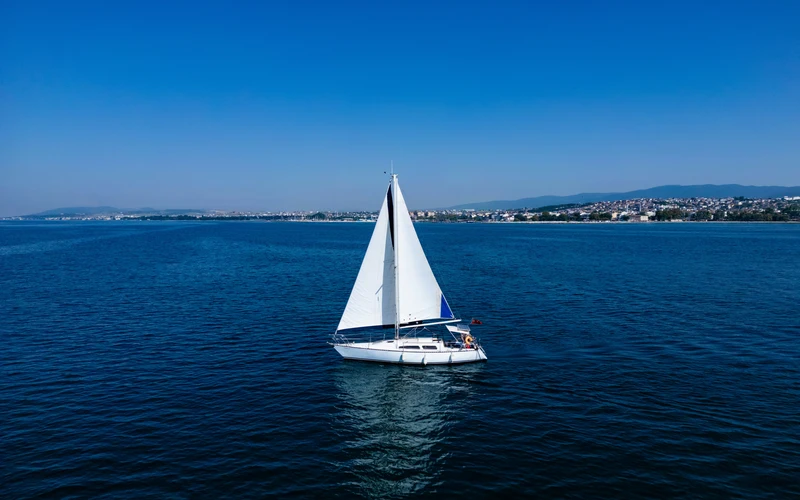
What is a Catamaran Sailboat?
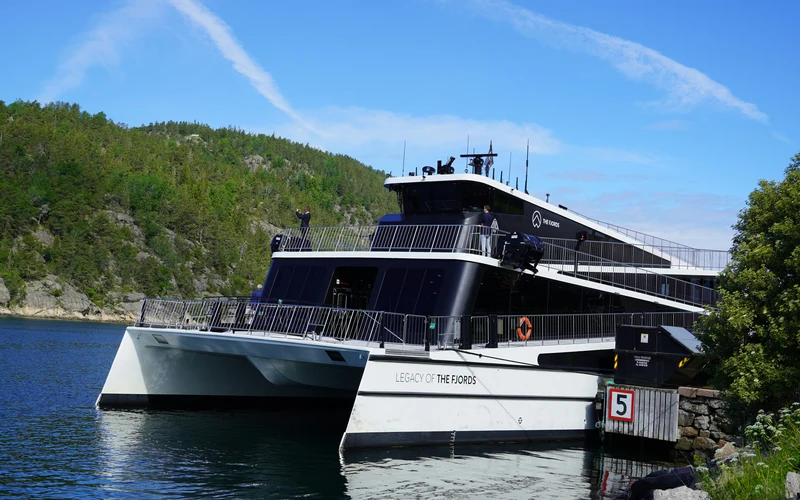
A catamaran consists of two parallel hulls connected by a deck, resulting in a significantly greater overall beam than a monohull. Unlike monohulls, which rely on a keel for stability, catamarans primarily utilise the lateral stability provided by their wide hulls to minimise heeling.
It is precisely for this reason that catamarans are generally smoother at sea. Whether moored, cooking, sleeping or on extended cruises, those on board find it easier to remain comfortable. This is why, in recent years, a growing number of families, charter companies and those seeking a long-term life at sea have increasingly favoured catamarans.
Catamarans also offer a very distinct advantage: exceptional use of space. For the same length, the interior area of a catamaran is usually far greater than that of a monohull. For example, a 45-foot catamaran offers a living experience comparable to that of a 55-foot monohull.
In recent years, with the rise of remote working and the trend towards life at sea, more and more people are looking into how to buy a catamaran sailboat for long-term round-the-world cruising, family sailing, or even ‘life on board’.
However, catamarans are not without their drawbacks. Wider hulls mean mooring costs are higher and some marinas cannot accommodate them; at the same time, their upwind performance is generally weaker than that of monohulls, and this difference becomes more pronounced in strong headwinds.
Why Do the Two Hull Designs Affect the Sailing Experience?
Many people new to sailing assume that the only difference between monohulls and catamarans is the ‘space available’. In reality, however, the differences go far beyond the internal layout and affect the entire sailing experience.
Firstly, hull width affects stability. Monohulls rely on ballast to restore balance, allowing for a certain degree of heel; catamarans, on the other hand, reduce rolling through their extra-wide beam, resulting in a smoother ride.
Secondly, hull shape influences speed and upwind performance. Monohulls are generally better at sailing into the wind and remain the mainstream choice in competitive and performance sailing; catamarans, on the other hand, are better at maintaining high speeds when sailing downwind and cruising.
Thirdly, structural differences also alter the experience of life at sea. Catamarans are more like ‘floating apartments’, whilst monohulls are more like ‘true sailing machines’.
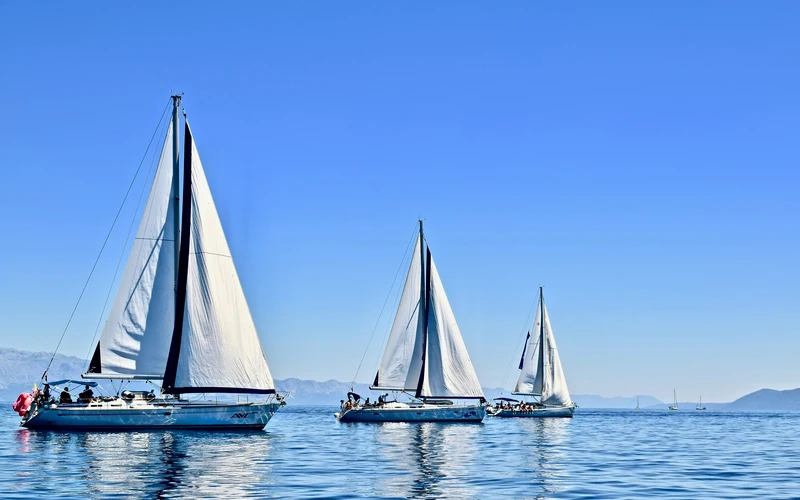
Therefore, before choosing a boat type, the most important question is not ‘which is better’, but:
• Do you prefer sailing, or do you prefer living on board?
• Do you favour performance, or do you prioritise comfort?
• Are you planning short weekend trips, or long-distance ocean cruising?
• Will you be living on board long-term?
These questions are often more important than budget.
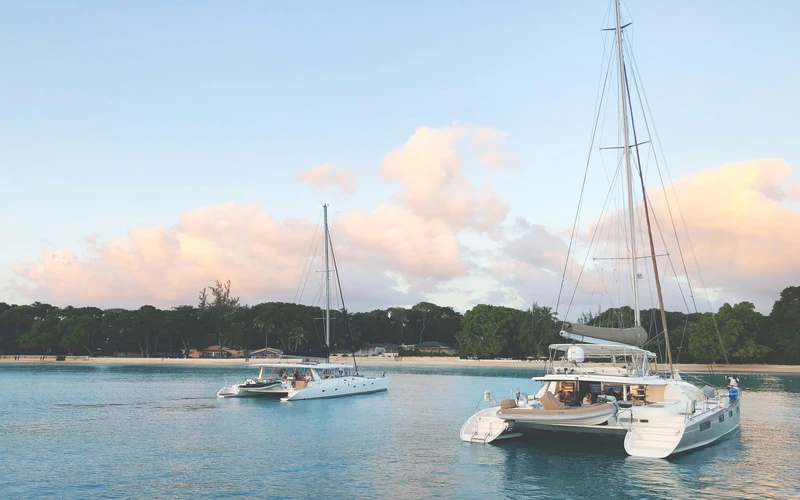
Monohull vs Catamaran: Key Differences at a Glance
When researching sailing boats for the first time, many people fall into a common trap: focusing solely on size, price or appearance, whilst overlooking the fact that the hull structure itself is the key factor that truly determines the sailing experience. In reality, the difference between monohulls and catamarans is not simply a matter of ‘one hull’ versus ‘two hulls’; it directly affects sailing performance, interior layout, stability, maintenance costs, and even your lifestyle at sea for years to come.
For those who enjoy the thrill of sailing and a traditional maritime experience, monohulls often offer a greater sense of ‘interaction between man and sea’; whereas for family cruisers, long-term liveaboards and leisure holidaymakers, catamarans are more like a stable and comfortable apartment at sea. Therefore, before making a final decision to buy a boat, understanding the core differences between the two hull types is far more important than simply comparing brands and specifications.
The table below will help you quickly grasp the most critical differences between monohull and catamaran sailboats.
| Comparison Criteria | Monohull | Catamaran |
| Hull Structure | Single hull + keel | Two parallel hulls |
| Heeling | Significant | Minimal |
| Upwind Performance | Stronger | Relatively weaker |
| Interior Space | Compact | Very spacious |
| Mooring Difficulty | Relatively easy | More demanding on berths |
| Stability | Relies on keel for recovery | Relies on beam width for stability |
| High-Speed Cruising | Moderate | Easier to cruise at high speeds |
| Maintenance Costs | Relatively low | Higher |
| Suitable for | Sailing enthusiasts, competitive sailors | Family cruising, long-term living |
| Life at Sea Experience | More sailing-oriented | More living-oriented |
Comparison of sailing performance
If we were to compare sailing boats to cars, monohulls are more like precision-handling sports saloons, whilst catamarans are more like high-speed luxury SUVs.
The greatest advantage of monohull sailing boats lies in their excellent upwind performance and handling feedback. Due to their narrower hulls and deeper keels, monohulls can maintain a smaller angle of heel when sailing into the wind, making them more efficient on long-distance ocean voyages. Particularly in challenging sea conditions, monohulls tend to ‘cut through the waves’ rather than crashing directly into the crests.
Furthermore, many experienced skippers believe that monohulls provide a more pronounced ‘early warning’ sensation in strong winds. As the wind intensifies, the hull gradually heels, allowing the helmsman to recognise the need to reduce sail sooner. This progressive feedback is a key reason why many sailing enthusiasts prefer monohulls.
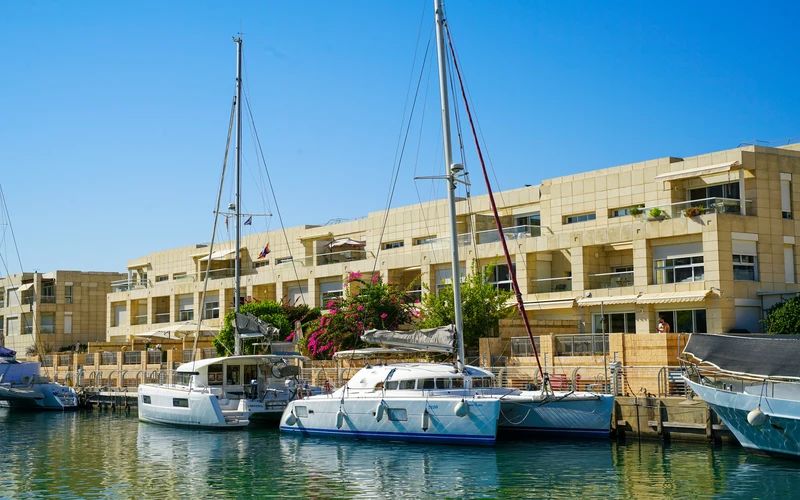
In contrast, the sailing dynamics of catamarans are entirely different.
Due to their exceptional lateral stability, catamarans rarely heel significantly during normal cruising, making them more comfortable for offshore sailing. Particularly when sailing downwind, catamarans often maintain a higher average speed. Some modern performance catamarans can even easily exceed 20 knots.
However, catamarans also present a frequently discussed issue: a lack of clear feedback at the limits. Monohulls will heel to alert you that you are ‘approaching the limit’, whereas catamarans typically remain stable for a long time, making it easier for inexperienced skippers to over-sheet in strong winds.
Furthermore, catamarans are generally more susceptible to crosswinds. When entering harbour at low speed or manoeuvring alongside, the catamaran’s large lateral surface area significantly increases the difficulty of handling.
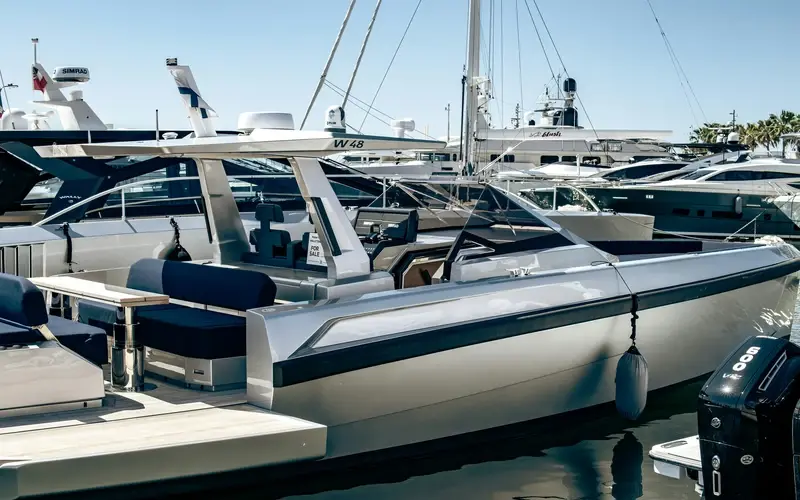
Therefore:
• Those who prefer a hands-on feel and a traditional sailing experience tend to favour monohulls
• Those who prefer high-speed cruising and stability and comfort tend to favour catamarans
This is why monohulls remain the dominant choice in round-the-world races, whilst the charter market for holiday cruises is increasingly favouring catamarans.
Comparison of Comfort
Comfort is often the greatest advantage of catamarans.
For many families, the real deciding factor when purchasing a boat is not its speed, but whether ‘the family is willing to spend extended periods on board’.
In this respect, catamarans have a near-innate advantage.
Space
Thanks to their two hulls and extra-wide decks, the interior of a catamaran features a layout akin to a ‘villa at sea’. The living room, galley, helm station and leisure areas are usually situated on the same level, creating a very open and airy feel.
Monohulls, however, are constrained by their beam, so most of the interior space extends downwards; consequently, many areas have limited headroom, which can create a noticeable sense of confinement during long-term living.
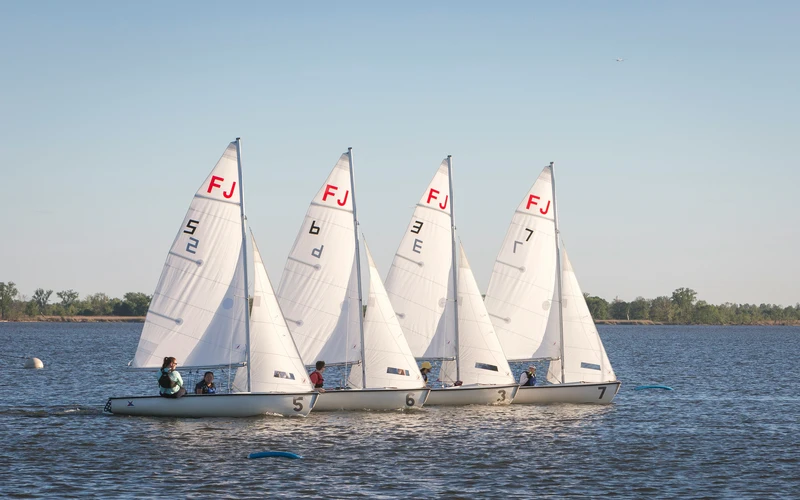
Stability
Monohulls heel continuously whilst sailing, which affects activities such as cooking, showering and sleeping. For many novices on their first long voyage, the hardest thing to get used to is not the waves, but the constant list of ten or even twenty degrees.
Catamarans, however, have virtually no such issue.
When moored at anchor, the stability advantage of catamarans is even more pronounced. Many family owners find that a catamaran feels more like a floating platform than a ‘constantly rocking mode of transport’.
That said, monohulls are not entirely at a disadvantage.
As monohulls have a deeper hull, their longitudinal movement in heavy seas is generally smoother. Whilst catamarans offer lateral stability, certain models may exhibit noticeable ‘surfing’ in short-wave conditions, particularly when the bridge deck is not high enough.
Therefore:
• Long-term living, family cruising, socialising and leisure: catamarans have a clear advantage
• Traditional sailing experience, comfort in dynamic sea conditions: monohulls still have a loyal following
Safety Comparison
The question of ‘which type of sailing boat is safer’ has actually been debated within the sailing community for many years.
Monohull advocates believe that the greatest safety advantage of monohulls lies in their ‘self-righting ability’. Thanks to their heavy keels, monohulls theoretically still have a chance of righting themselves even if capsized by a large wave.
In contrast, once a catamaran has capsized completely, it is usually unable to right itself.
This is one of the reasons why many traditional ocean-going skippers have long remained committed to monohulls.
On the other hand, supporters of catamarans argue: “The real danger is not capsizing, but prolonged crew fatigue.”
As catamarans offer a smoother ride, crew members find it easier to rest, suffer less from seasickness and are better able to maintain their stamina; consequently, overall safety may actually be higher during long-distance voyages.
Furthermore, the structural strength of modern catamarans is far superior to that of earlier models. Many ocean-going catamarans have undergone significant upgrades in terms of bridge deck strength, collision bulkheads and structural rigidity.
There is another practical factor that is often overlooked:
Catamarans usually have two engines.
This means that if one engine fails, the vessel can still continue sailing by relying on the other. Many monohulls, however, are fitted with only a single engine.
Therefore, true safety cannot be defined simply by whether a vessel ‘capsizes’ or not, but depends on:
• The skipper’s experience
• The condition of the vessel’s maintenance
• Ability to judge the weather
• Route planning
• The quality of the hull design
An excellent skipper can navigate safely in any type of vessel, whilst an inexperienced person, even with the most expensive boat, may still face risks.
Total Cost of Ownership Analysis (2026)
When purchasing a boat, many people focus solely on the purchase price whilst overlooking the long-term running costs. In reality, the true expenses associated with a sailing boat often arise after the purchase.
Generally speaking, the total cost of ownership for a catamaran is significantly higher than that of a monohull. The main reasons for this include the following:
Berthing Fees
The biggest issue with catamarans is that they are ‘too wide’.
Many marinas charge based on beam rather than just length. Consequently, for a 45-foot vessel, mooring fees for a catamaran may be nearly 1.5 to 2 times those of a monohull.
Some popular marinas do not even have berths wide enough to accommodate them.
Maintenance costs
Catamarans have more systems:
• Two engines
• Two propulsion systems
• Larger deck area
• More cabins
• More complex electrical systems
This means that maintenance costs are usually higher in the long run.
Onshore Maintenance Costs
Catamarans require wider lifting equipment and cradles, so the cost of onshore maintenance is typically higher than for monohulls. Below is a guide to the approximate annual holding costs for common cruising yachts in 2026:
| Item | 45-foot monohull | 45-foot catamaran |
| Annual mooring fees | $8,000 - $18,000 | $15,000 - $35,000 |
| Annual maintenance | $6,000 - $15,000 | $12,000 - $25,000 |
| Insurance costs | $3,000 - $7,000 | $5,000 - $10,000 |
| Out-of-water maintenance | $2,000 - $5,000 | $4,000 - $8,000 |
| Total annual cost | $20,000+ | $40,000+ |
Of course, there are significant variations between different countries and marinas.
For example, in popular mooring areas such as the Caribbean, the Mediterranean and Singapore, the cost of catamaran berths has risen particularly sharply.
Therefore, if you are on a limited budget but wish to sail frequently, a monohull will generally offer better value for money.
Recommended Popular Monohulls and Catamarans
For first-time boat buyers, rather than blindly comparing specifications, it is better to first clarify your intended use.
If you prefer a traditional sailing experience, value manoeuvrability, and also want good cruising capabilities, the Bavaria CRUISER 51 is currently one of the most well-rounded large cruising monohulls available. It strikes a good balance between space, sailing stability and price, making it ideal for families undertaking long-distance voyages and those planning extended cruises.
👉 See Bavaria CRUISER 51

Bavaria CRUISER 51
- Length49.20 ft
- TypeMonohull sailboat
The CRUISER 51 is one of our largest sailing yachts. However, you'll hardly notice this when she's under sail, as the boat is extremely easy to handle. The standard version is designed to accommodate up to 10 crew members and is equipped with three cabins. Nevertheless, upon the owner's request, this can be changed to five cabins – to meet various needs.
If you prefer lighter handling, weekend day trips or club racing, the Beneteau First 27 offers a more enjoyable sailing experience. It is a typical modern performance monohull, with responsive handling that holds great appeal for young sailors.
👉 View Beneteau First 27 for sale
Beneteau First 27
- Length26 ft
- TypeMonohull sailboat
Built with modern design and construction techniques, the First 27 brings unprecedented downwind planing pleasure to sailing. It's not only an ideal choice for families' daily cruising, offering a fun - filled and exciting sailing experience, but also a star in club sailing races, enabling participants to win trophies with ease. This exquisite small sailboat can comfortably accommodate up to six passengers. It is equipped with a private fore - cabin, a spacious open - plan salon area, a modern galley with fresh water and a refrigerator, and a separate marine toilet, ensuring convenience and comfort on every voyage.
In the catamaran sector, the Leopard 52 has been one of the most popular ocean-going cruising catamarans in recent years. Its strengths lie in its well-designed living space layout, combined with long-distance cruising capabilities, making it ideal for family round-the-world voyages.
👉 Browse Leopard yachts
Leopard 52
- Length51.80 ft
- Cabins4
- Top speed9 kn
- TypeCatamaran sailboat
Leopard 52 is a premium bluewater cruising catamaran built by Leopard Catamarans, designed for safe and comfortable global voyaging. It features a modern spacious layout and stable twin-hull structure with high seaworthiness, shallow draft and excellent adaptability. Powered by efficient diesel engines, it offers economical fuel consumption, long range and easy handling. The interior is bright, luxurious and spacious with premium materials and complete facilities.
If you have a higher budget and wish to experience a lifestyle at sea approaching superyacht standards, the Fountaine Pajot Samana 59 is a quintessential luxury catamaran. With its strong social appeal, expansive flybridge and open-plan layout, it is perfectly suited to long-term life at sea and high-end holiday use.
👉 Browse Fountaine Pajot Samana 59
Fountaine Pajot Samana 59
- Length59 ft
- Cabins6
- Top speed18 kn
- TypeCatamaran sailboat
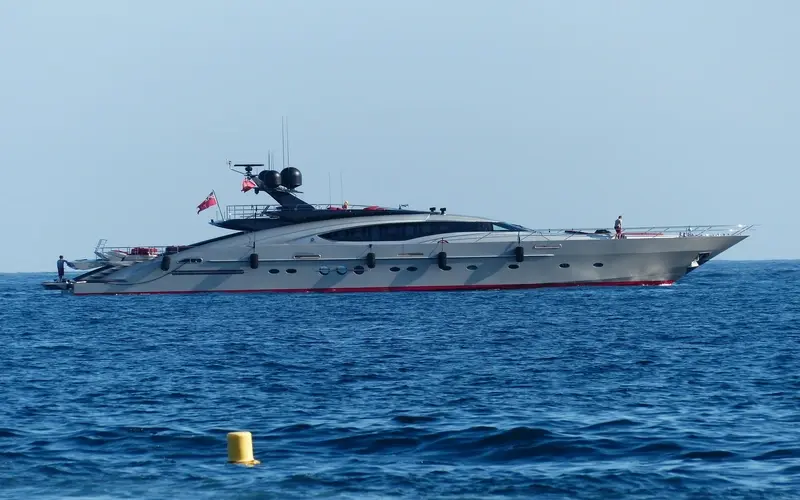
Benetti IDYLLIC is a custom-built luxury yacht by Italy’s Benetti, inheriting the brand’s century-old Italian shipbuilding essence. It features elegant and gentle design, spacious and transparent spaces, and comfortable, stable long-distance cruising performance. With a warm and luxurious interior and humanized layout, it balances family leisure and high-end socializing, suitable for global cruising, private gatherings and corporate hospitality.
Conclusion
When it comes to monohulls and catamarans, there is no absolute answer as to ‘which is better’.
What truly matters is how you intend to use the boat.
If you love traditional sailing, enjoy the handling, appreciate the feedback from the wind and waves, and wish to enter the world of ocean cruising at a lower cost, then a monohull is usually the better choice for you.
If you prioritise family comfort, space, stability and the long-term experience of life at sea, then a catamaran will offer a higher quality of life.
Looking at global market trends:
• Monohulls remain the most established and classic sailing system
• Catamarans are rapidly becoming the new mainstream for modern cruising life
For most first-time boat buyers, the best way to choose is not just to look at specifications, but to actually take a test sail. Only by personally experiencing the heel of a monohull and the stability of a catamaran will you truly understand the difference between the two.
FAQ
Q1: Are monohull sailboats better suited to ocean-going voyages?
A: Traditionally, many round-the-world sailors have favoured monohulls due to their more established performance in terms of upwind capability, self-righting ability and handling in challenging sea conditions. However, modern offshore catamaran technology has advanced significantly, and an increasing number of round-the-world sailors are now choosing catamarans for long-term cruising.
Q2: Why are catamarans becoming increasingly popular?
A: The main reason is their clear advantages in terms of space and comfort. For families, catamarans are more stable and better suited to long-term living, whilst the social experience for multiple people is far superior to that of traditional monohulls; consequently, the market has grown very rapidly in recent years.
Q3: Which is more expensive: monohulls or catamarans?
A: Generally speaking, catamarans are more expensive, both in terms of purchase price and ongoing running costs. In particular, mooring fees, maintenance costs and dry-docking expenses for catamarans are typically significantly higher than for monohulls of the same size.
Q4: Should beginners opt for a monohull or a catamaran?
A: If you’re on a tight budget and wish to learn the fundamentals of sailing, a monohull is the better choice for beginners; if you have a generous budget and prioritise family comfort and a stable ride, then a catamaran is also an excellent option for novice cruisers.