



A monohull sailboat is best suited for sailors who value true sailing experience, handling performance, and offshore capability. If you enjoy direct steering feedback, want to learn real sailing skills, or plan to do offshore and long-distance cruising in the future, a monohull is often the better choice over a catamaran.
At the same time, monohulls usually have lower maintenance, docking, and long-term ownership costs, making them one of the most practical and widely used sailboat types for buyers entering the sailing world.
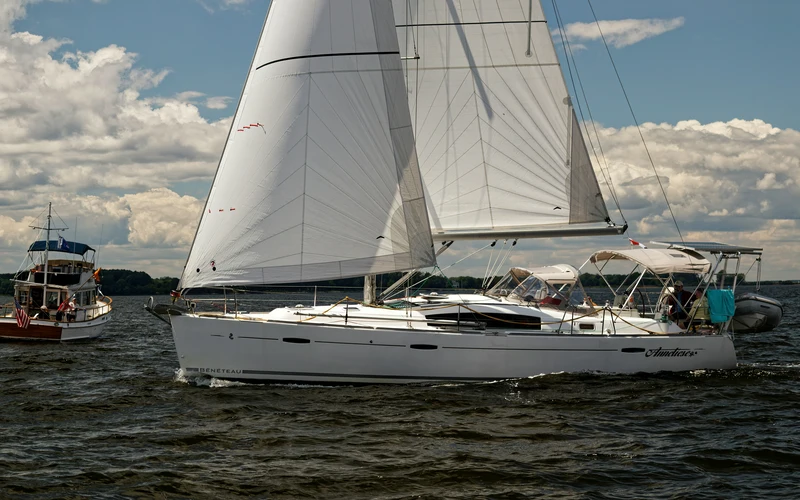
Monohulls vs Catamarans: What Are the Fundamental Differences?
When people first encounter sailing, many are faced with a dilemma: should they choose a monohull or a catamaran? The key distinction between the two lies not merely in having ‘one hull’ versus ‘two hulls’, but in the entirely different sailing experiences they offer.
The defining characteristic of a monohull is that it heels naturally in response to the wind. To those unfamiliar with sailing, this heel may seem uncomfortable, but for true sailing enthusiasts, it is precisely one of the most captivating aspects of the sport. You can distinctly feel the wind pressure, the boat’s speed, the swell, and the interaction between the hull and the water—this feedback makes the experience far more engaging.
Catamarans, on the other hand, place greater emphasis on stability and comfort. As the two hulls provide greater lateral support, they hardly heel at all, and the deck space is far larger than that of a monohull of the same size. Consequently, many families, recreational sailors and charter operators prefer catamarans.
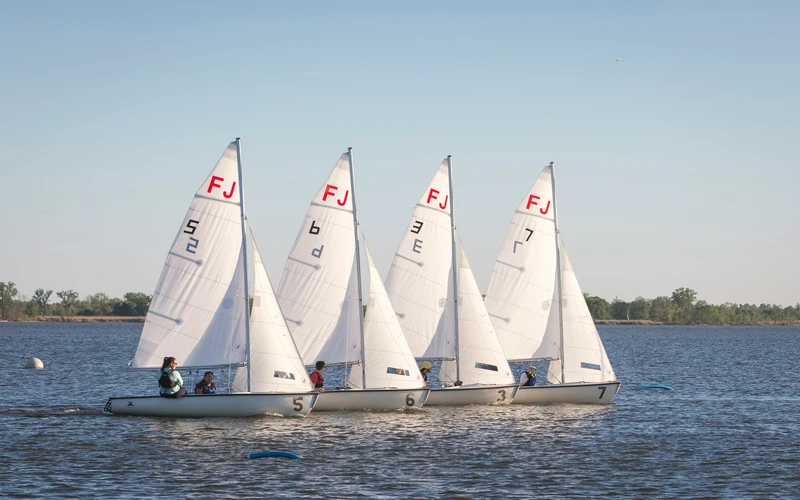
In terms of sailing performance, monohulls generally offer better upwind capability. Particularly in challenging sea conditions or during long offshore voyages, the deep keel design of a monohull provides more stable course-holding performance. Many round-the-world sailors on classic ocean-going routes still prefer monohulls to this day.
In terms of ownership costs, monohulls are generally more economical. As they are narrower, mooring fees are lower; furthermore, having a single propulsion system and fewer structural components means that maintenance costs are easier to manage.
Of course, catamarans are not without their advantages. If your core requirements are family comfort, socialising with a group, and the experience of long-term living at sea, then a catamaran will indeed offer a lifestyle more akin to a ‘floating apartment’.
Put simply:
• Monohulls are more like ‘driving machines’
• Catamarans are more like ‘floating villas’
Which of these aspects you value most will essentially determine your choice.
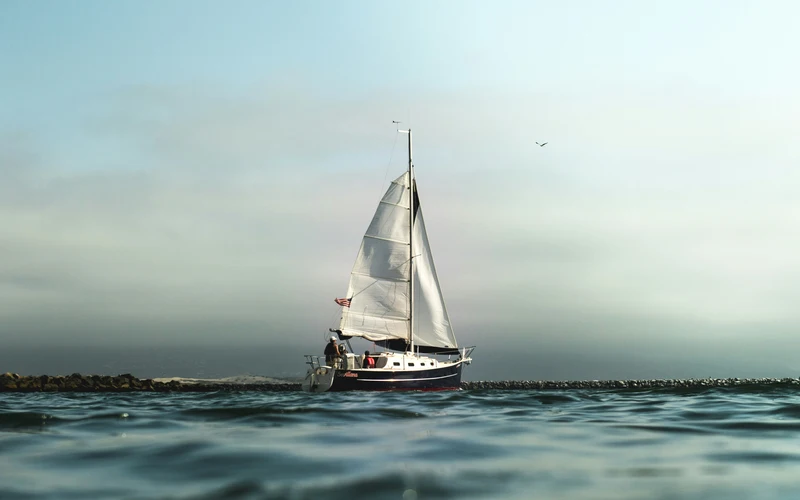
What are the ideal scenarios for monohull sailing boats?
Many people mistakenly believe that monohull sailing boats are only suitable for experienced sailors, but in reality, their range of applications is much broader than one might imagine.
Firstly, monohull sailing boats are ideal for weekend cruising. For many boat owners in coastal areas near cities, setting sail on Friday evenings, taking short cruises over the weekend, and mooring overnight are the most common ways to use them. Due to their manoeuvrability and ease of mooring, monohulls are perfectly suited to small crews of two or three people.
Secondly, monohull sailing boats are virtually the ‘gold standard’ in the field of sailing instruction. Currently, the majority of sailing schools worldwide, as well as ASA or RYA courses, still primarily use monohull sailing boats for teaching. The reason is simple: they allow learners to grasp core techniques such as wind direction, sail trim, hull balance and upwind sailing more directly.
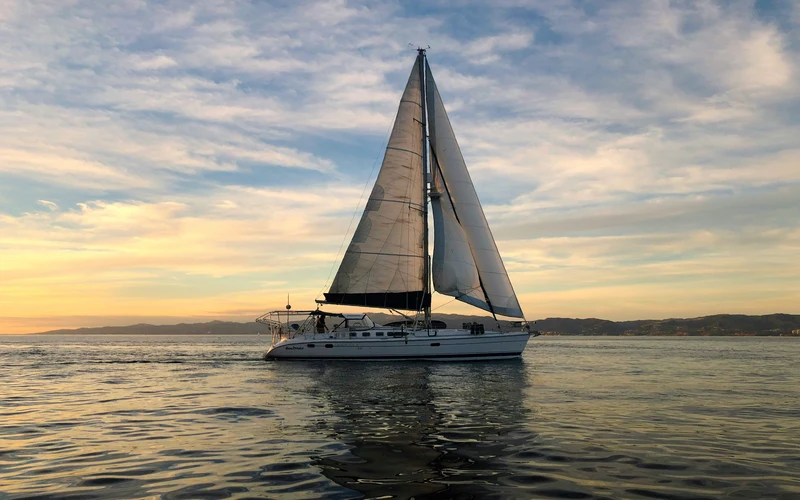
Monohulls are equally appealing to those planning future long-distance or ocean-going voyages. Numerous round-the-world sailing expeditions have demonstrated that well-designed monohulls remain highly reliable in challenging sea conditions. Particularly in heavy seas, the way a monohull moves aligns more closely with traditional marine design principles.
Furthermore, monohull sailboats are well-suited to those who truly enjoy ‘solo sailing’. Compared to large catamarans, many monohulls of around 40 feet can be operated entirely by a single person or a crew of two. This means you can enjoy high-quality sailing without the need for a large crew.
For budget-conscious buyers, the advantages of monohulls are even more pronounced. There is now a wide range of established new monohull sailboats on the market; whether entry-level or mid-to-high-end ocean-going models, they all feature well-established specifications and a thriving second-hand market.
Of course, if your primary requirements are long-term living at sea, hosting large family gatherings, providing space for children’s activities, or seeking a virtually roll-free deck experience, then a catamaran will still be the more suitable choice.
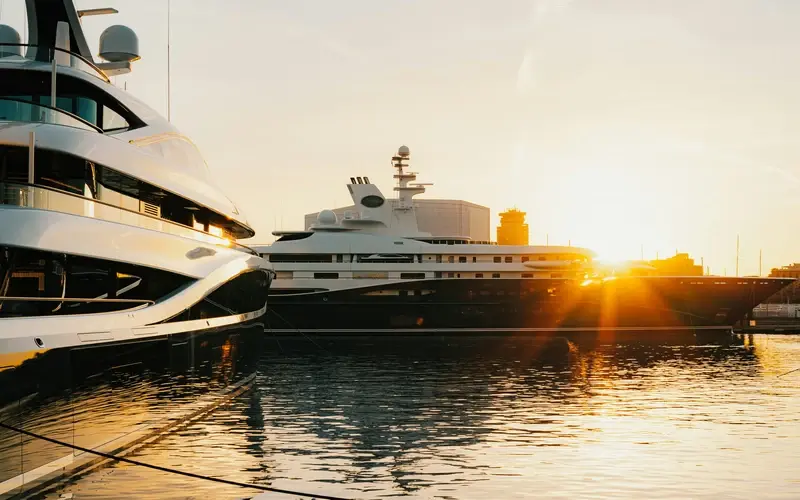
How to choose the right size monohull sailboat for you?
When buying a sailboat for the first time, many people assume that ‘the bigger the boat, the better’. In reality, however, the size of a monohull sailboat affects not only the amount of space available but also directly impacts the difficulty of handling, maintenance costs, mooring fees and your future sailing experience.
The size that truly suits you should be determined by your sailing plans, frequency of use, budget and sailing ability, rather than simply pursuing a larger hull.
30–40 feet: Ideal for beginners and weekend cruising
The 30–40-foot range is currently the most classic entry-level size for monohull sailboats. It provides a complete basic living space without adding excessive operational pressure due to an overly large hull.
This size is ideal for weekend cruising, short offshore voyages and sailing as a couple. In most cases, two people can easily handle mooring, hoisting sails and day-to-day operations, making it very beginner-friendly for those new to sailing.
At the same time, maintenance costs, insurance premiums and mooring fees for this size are typically lower, making it a more suitable choice for a first sailboat intended for long-term use.
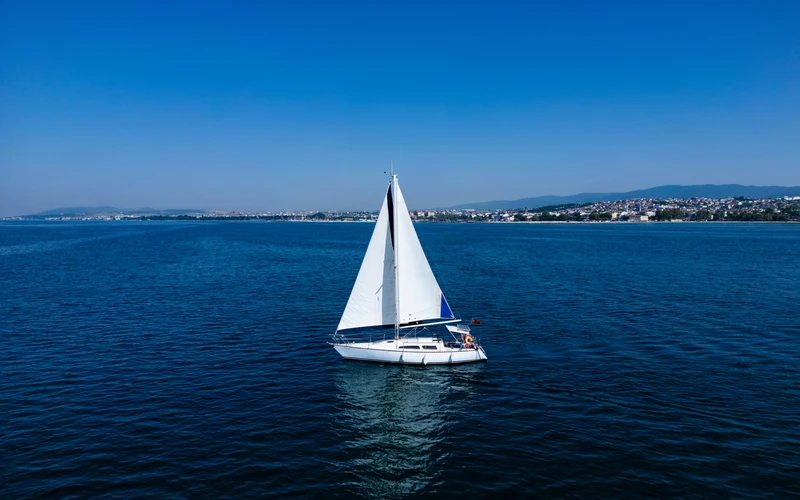
40–50 feet: The most balanced size for long-term cruising
The 40–50-foot range is currently the most popular category for cruising monohulls worldwide, and is the preferred size for many families and long-distance sailors.
Compared to smaller vessels, boats in this range feature a larger saloon, a more fully equipped galley, more comfortable cabins and greater storage capacity, making them better suited to extended life at sea.
Furthermore, a longer hull typically translates to more stable sailing performance, offering greater comfort than smaller boats, particularly in challenging sea conditions. Consequently, many who plan to cruise across regions or even undertake future ocean voyages prioritise this size.
However, as the size increases, mooring costs, maintenance budgets and operational complexity rise significantly, necessitating more seasoned sailing experience and long-term financial planning.
50 feet and above: Ocean-going and high-end cruising requirements
Monohull sailing yachts of 50 feet and above enter the realm of high-end ocean cruising. These vessels typically boast superior transoceanic capabilities, larger fuel and fresh water reserves, and a higher standard of living comfort.
For those planning extended round-the-world voyages or long-term life aboard, large monohull sailing yachts offer superior stability and endurance.
However, maintenance, insurance, mooring fees and equipment management costs also rise rapidly. For the average enthusiast, a boat that is too large does not necessarily mean a better experience; on the contrary, the pressure of handling such a vessel may actually reduce the frequency of sailing.
Consequently, most beginners and ordinary families do not actually require a monohull sailing yacht exceeding 50 feet. The truly ideal choice should be ‘the size best suited to one’s own usage’, rather than the largest size available.
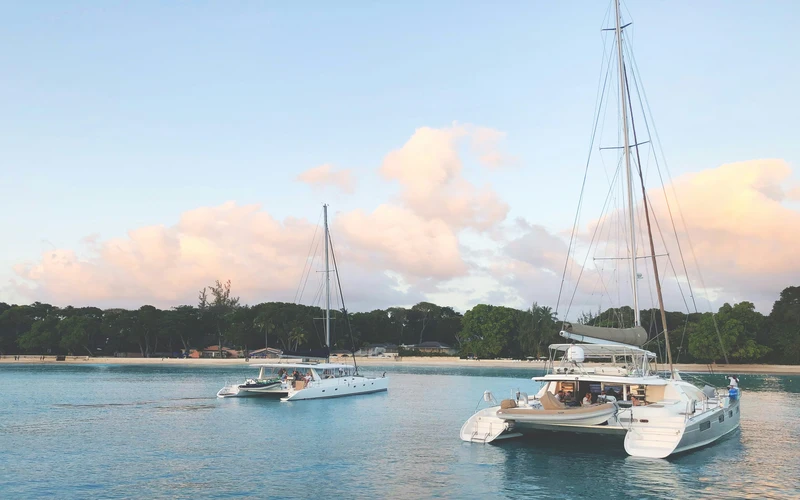
Budget Recommendations
When purchasing a monohull sailing yacht, many people focus solely on the ‘purchase price’ whilst overlooking the long-term running costs. In reality, a truly reasonable budget should take into account the costs of purchase, maintenance, mooring and upgrades.
Entry-level budget: US$100,000–300,000
Within this range, you can purchase:
• A 30–40-foot second-hand cruising monohull
• A new boat with basic specifications
• Suitable for weekend cruising and learning to sail
This is the starting point for the vast majority of beginners entering the world of sailing. Maintenance costs are relatively manageable, and the risks are lower.
Mid-range Budget: $300,000–$800,000
This is currently the most common budget range among mainstream cruising enthusiasts. For this budget, you can expect:
• More living space
• More comprehensive electronic equipment
• Greater ocean-going capability
• Newer model year vessels
This budget bracket is also the most common choice for families.
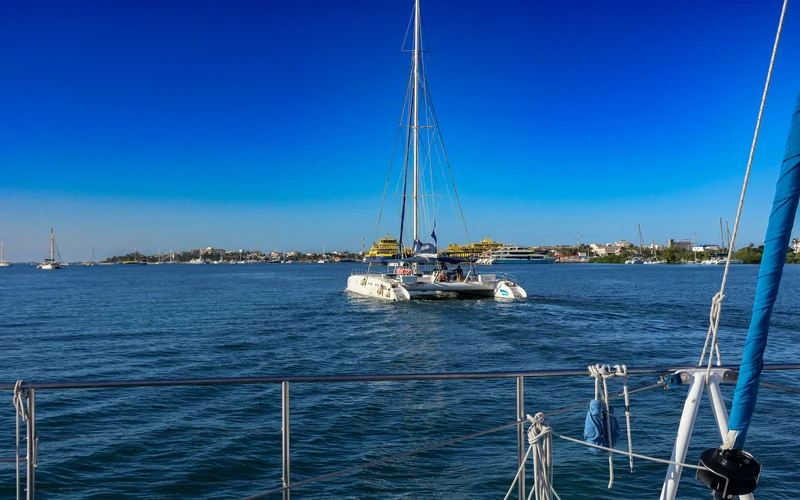
High-end budget: $800,000 and above
This tier typically enters the realm of high-end ocean cruising, including:
• High-performance cruising monohulls
• Semi-custom interiors
• Long-distance cruising specifications
• More advanced automation systems
If you are planning a round-the-world voyage or long-term life on board, this budget will significantly enhance comfort and safety.
Furthermore, do not overlook the annual running costs. Typically, the total annual cost of ownership for a monohull sailboat is approximately 8%–12% of the purchase price, covering mooring, insurance, maintenance, hull upkeep, sail replacement, engine servicing and so on.
Planning a long-term budget in advance is far more important than simply being able to ‘afford’ the boat.
Top Recommendations for Monohulls
Beneteau First 36
Beneteau’s First 36 is a modern performance cruising monohull that has been extremely popular in recent years. Its standout feature is the excellent balance it strikes between racing performance and cruising comfort.
This boat is particularly suited to:
• Those who enjoy the feel of sailing
• Enthusiasts wishing to learn high-performance sailing
• Users seeking a dual-purpose boat for weekend racing and family cruising
Compared to traditional cruisers, the First 36 offers more direct handling feedback and a more modern hull design. For those who wish to ‘truly enjoy sailing’, it is one of the most representative modern monohulls.
👉 See First 36

2026 Beneteau First 36
- Length36.08 ft
- Cabins3
- Top speed12 kn
- TypeSailboat
The 2026 Beneteau First 36 is a quintessential ‘performance cruiser’, designed to combine race-grade speed with the comfort of everyday cruising. Through its lightweight construction and modern hull design, this model achieves planing performance in moderate winds whilst retaining a three-cabin layout and full living facilities, making it ideal for both competitive sailing and family use.
Bavaria C45
The Bavaria C45 from Bavaria Yachts is a quintessential European family cruising monohull. Its greatest strengths lie in its use of space and comfort.
This boat is ideal for:
• Families
• Long-term life at sea
• Medium to long-term cruising
• Buyers prioritising comfort
Compared to performance-oriented models, the C45 places greater emphasis on stability, ease of handling and living space. It features a highly refined interior layout, offering an excellent living experience within the 40-foot class.
👉 View Bavaria C45 for sale
Bavaria C45
- Length47.40 ft
- Cabins3
- Top speed7 kn
- TypeMonohull sailboat
When we designed the BAVARIA C45, we wanted to create a yacht that makes people feel at home – featuring a huge bathing platform, a large cockpit, and a bright salon, etc. – and at the same time, it is also a yacht with maximum flexibility. There are two versions available: "Holiday" and "Style". In addition, this is the only yacht of its kind that offers five-cabin, three-cabin, and four-cabin ve
For many first-time buyers looking for a monohull sailboat for sale, the Bavaria range is often a top contender, as it strikes a good balance between price, space and maintenance costs.
Hanse 348
The Hanse 348 from HanseYachts is a small, modern monohull sailboat that is ideal for beginners and double-handed cruising.
Its strengths lie in:
• Ease of handling
• Suitability for single-handed sailing
• High level of automation
• Low maintenance requirements
👉 Browse Hanse yachts
Hanse 348
- Length34.10 ft
- Cabins1
- TypeMonohull sailboat
The Hanse 348 sailboat is built to greet various factors with a smile. It has a higher equipment level and a more sporty sail plan to ensure maximum performance and excellent easy sailing. Below the deck, three double cabins and a large number of windows allow one to feel a charming and fresh breeze.
In recent years, the Hanse range has placed a strong emphasis on the concept of ‘easy sailing’, meaning that much of the equipment layout is better suited to beginners. For those new to the world of sailing, the 348 offers a very low-pressure learning experience.
At the same time, its hull design retains excellent sailing performance, so the pleasure of sailing is not lost simply because it is ‘easy to handle’.
Summary
The reason monohull sailing boats still have such a large and loyal following today is not simply a matter of tradition, but because they continue to represent the purest sailing experience.
If you truly enjoy:
• The interplay between wind and sail
• The tactile feedback of handling the boat
• The challenge of ocean-going voyages
• Learning genuine sailing skills
then a monohull will usually be a better fit for you than a catamaran.
It may not offer the same extravagant space and stable platform as a catamaran, but it provides a sailing experience that feels closer to a ‘direct connection between man and the sea’. This is why, even as the catamaran market continues to grow, there remains a large global community of offshore sailors, traditionalists and frequent cruisers who steadfastly choose monohulls.
Ultimately, there is no absolute standard for choosing between the two. What truly matters is whether you prefer to ‘live at sea’ or to ‘sail at sea’.
FAQ
Q1: Are monohulls suitable for beginners?
A: Yes, they are. In fact, most sailing schools use monohulls for instruction, as they help learners understand wind direction, hull balance and the principles of sail handling more directly.
Q2: Are monohulls more likely to cause seasickness than catamarans?
A: Generally speaking, yes. This is because monohulls experience noticeable heel and roll, though many experienced sailors actually prefer this authentic sailing feedback.
Q3: Are monohulls suitable for ocean-going voyages?
A: Very much so. Numerous round-the-world sailing expeditions have demonstrated that high-quality monohulls remain highly reliable even in challenging sea conditions.
Q4: Are monohulls expensive to maintain?
A: Generally, they are cheaper than catamarans of the same size. This is because they have only one propulsion system and fewer structural components, whilst mooring fees are also lower.
Q5: What is the most suitable size for a monohull?
A: For most families and beginners, a vessel of around 40 feet is usually the most balanced choice, as it meets cruising needs without placing an excessive burden on maintenance.