Quick Answer:
Not every private yacht legally requires professional crew. Many 40–60ft yachts can be owner-operated by a suitably qualified and experienced owner, subject to flag-state rules, local licensing requirements and insurance terms.
As yachts approach 60–80ft, owners commonly hire a professional captain and at least one deck or engineering crew member. Yachts around 100ft are normally operated by a professional team of approximately 4–7 crew. However, there is no universal size at which the same crew becomes legally mandatory worldwide—the final requirement depends on yacht use, flag state, gross tonnage, cruising area, onboard systems and any applicable safe-manning document.
Yacht Crew Requirements by Size Chart
| Yacht Size | Typical Private Yacht Setup | Owner-operated? | Main Consideration |
|---|---|---|---|
| Under 40ft | No paid crew | Often possible | Local licence, insurance and experience |
| 40–60ft | Owner-operated or 1 captain | Often possible | Handling, berthing and trip length |
| 60–80ft | Captain + 1–2 multifunction crew | Sometimes | Night watches, engineering and fatigue |
| 80–100ft | Approximately 3–6 crew | Rare | Separate deck, engineering and interior duties |
| 100–130ft | Approximately 4–8 crew | Generally impractical | Full-time captain, engineering and guest service |
| 130–165ft | Approximately 8–12 crew | No | Departmental crew structure |
| 165ft+ | 12–20+ crew | No | GT, systems, watches and service level |
These are common operational ranges, not universal statutory minimums. Actual requirements depend on the yacht’s flag administration, gross tonnage, insurance terms, cruising area, classification requirements and any applicable Minimum Safe Manning Document.
Do You Legally Need Crew for a Private Yacht?
Not always. A private yacht may not legally require a professional crew, but practical operation, safety considerations and insurance conditions may make crew highly advisable.
Crew requirements are determined by several factors:
- Flag state regulations – Different countries apply different rules regarding manning requirements.
- Vessel size and gross tonnage (GT) – Larger yachts usually involve more complex systems and operational responsibilities.
- Cruising area and voyage type – Offshore passages, international cruising and night navigation may increase operational requirements.
- Insurance terms – Many insurers set requirements for captain qualifications, experience levels or approved operators.
There is no universal rule stating that every private yacht above a specific length must carry the same crew arrangement. While 24 metres is an important regulatory and operational threshold, it does not automatically mean that every privately used yacht above this size requires an identical crew structure.
In practice, owners should evaluate four key factors:
- Legal compliance – What does the yacht’s flag state require?
- Insurance requirements – What conditions must be met for coverage?
- Operational safety – Can the yacht be managed safely during normal and emergency situations?
- Owner capability – Does the owner have the experience and skills to operate the vessel?
The key question is not simply “Is this yacht private?” but rather:“Can this yacht be operated safely, legally and reliably by the people onboard?”
What Size Yacht Requires a Captain?
There is no single global yacht length at which every private yacht must legally carry a captain.
However, industry practice shows clear changes as yachts become larger and more complex.
Under 60 Ft: Many Owners Operate Independently
Many yachts below approximately 60 feet can be operated by owners who have:
- Appropriate local licences
- Sufficient boating experience
- Knowledge of the vessel’s systems
- Insurance approval
At this size, decisions are often based more on owner confidence and usage style rather than operational necessity.
60–80 Ft: Professional Captains Become More Common
As yachts approach the 60–80 foot range, many owners choose to employ a captain.
The reasons are practical:
- More complex docking procedures
- Increased maintenance requirements
- Larger engines and onboard systems
- Higher workload during longer trips
- Greater responsibility when carrying guests
For owners who use the yacht frequently or cruise unfamiliar waters, a captain can significantly improve safety and convenience.
80 Ft and Above: Professional Operation Becomes Standard
For yachts above approximately 80 feet, professional crew are increasingly common because responsibilities are usually divided between multiple roles.
A larger yacht may require attention to:
- Navigation
- Engineering systems
- Deck operations
- Guest services
- Maintenance schedules
At this stage, the question is usually not whether a captain is useful, but how many additional crew members are needed to support safe and efficient operation.
How Many Crew Does a 100-Foot Yacht Need?
A typical private 100-foot yacht (approximately 30 metres) is usually operated by around 4–7 crew members, although the exact number depends on the yacht’s design, gross tonnage, cruising plans, onboard systems and the level of service expected.
Unlike smaller yachts where one person may combine several responsibilities, a 100-foot yacht usually requires more dedicated roles because navigation, engineering, maintenance and guest support become increasingly difficult to manage by one or two people.
A common private 100-foot yacht crew structure may include:
| Position | Main Responsibilities |
|---|---|
| Captain | Navigation, safety management, voyage planning, crew coordination and compliance |
| Engineer | Engines, generators, electrical systems and technical maintenance |
| Deckhand | Deck operations, anchoring, tender operations and exterior maintenance |
| Steward/Stewardess | Interior service, housekeeping and guest assistance |
| Chef (optional) | Food preparation and guest dining requirements |
| Additional Crew | Added depending on cruising range, guest capacity and service expectations |
Some 100-foot yachts may operate with fewer crew for private owner use and shorter coastal cruising, while yachts designed for extended cruising or frequent guest use may require a larger team.
The important point is that yacht length alone does not determine crew numbers. Two 100-foot yachts can have very different requirements depending on:
- Displacement and gross tonnage
- Engine and electrical complexity
- Interior layout
- Guest capacity
- Cruising region
- Owner expectations
Legal Minimum vs Practical Crew Setup
One of the most common misunderstandings among yacht buyers is confusing minimum legal requirements with practical operating needs.A yacht may satisfy the minimum requirements established by its flag state but still require additional crew for comfortable and safe operation.
| Aspect | Legal Minimum | Practical Crew Consideration |
|---|---|---|
| Navigation | Minimum qualified person(s) required by applicable regulations | Additional crew may reduce fatigue and improve watchkeeping |
| Engineering | Depends on vessel requirements and regulations | Technical support becomes increasingly important on larger yachts |
| Safety | Required emergency capability | More crew improves emergency response and workload distribution |
| Guest service | Usually not a regulatory requirement for private use | Additional interior crew improve owner and guest experience |
| Long-distance cruising | Depends on applicable rules | Additional crew often needed for watches and maintenance |
For example, a private yacht owner may technically be able to operate a vessel with minimal crew during short daytime trips. However, the same yacht may require a larger team for:
- Offshore passages
- Extended cruising periods
- Multiple guests
- Complex weather conditions
- Continuous operation
Factors That Change Crew Requirements
Yacht size provides a useful reference, but crew requirements are ultimately determined by how the yacht is operated. Several factors can change the appropriate crew configuration:| Factor | Why It Matters |
|---|---|
| Flag State | Different flag administrations may apply different rules for manning, certification and operational requirements. |
| Private vs Commercial Use | Private yachts and charter yachts may follow different compliance and crew expectations. |
| Length and Gross Tonnage (GT) | Larger yachts usually involve more complex systems, maintenance responsibilities and operational workload. |
| Cruising Area | Offshore passages, international routes and remote cruising areas generally require more preparation and support. |
| Night Watch Requirements | Night operations increase workload and may require additional crew for safe watchkeeping and fatigue management. |
| Insurance Terms | Insurers may set requirements regarding captain experience, crew qualifications or approved operating conditions. |
These factors work together rather than individually. A 70-foot yacht used for short coastal trips may require a very different crew arrangement from a similarly sized yacht used for offshore cruising or frequent guest operations.
The key principle is: Crew requirements are not determined by yacht length alone, but by the combination of vessel complexity, operating profile, regulatory requirements and owner capability.
Typical Yacht Crew Roles
Now that it's determined that crew members are required, the next critical question is: What qualifications must these crew members possess to legally board the vessel and truly perform their duties competently?
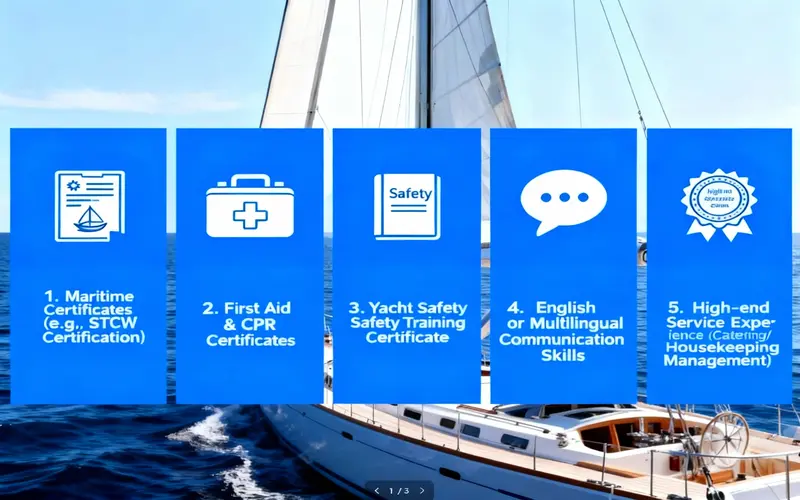
For most private yachts, crew qualifications are typically assessed across four dimensions: compliance certificates, position-specific credentials, practical experience, and daily collaboration skills.
Essential Certificates (Compliance Threshold)
- STCW Basic Safety Training Certificate: Internationally recognized, covering lifesaving, firefighting, first aid, etc.
- Seafarer Medical Certificate (e.g., ENG1 or equivalent): Verifies physical fitness for maritime work
- Passport/Seaman's Book, etc.: Required by certain flag states or routes
Without these certificates, crew members cannot legally board and may face insurance and compliance issues.
Relevant Certificates (Role-Specific)
- Navigation/Deck Roles: Captains and deck officers require corresponding navigation practice certificates.
- Engineering: Engineers require mechanical or engineering qualifications
- Service roles (stewards, cooks, etc.): Often require food hygiene certificates and service training
Experience and Skills (Determining Competency)
Certificates represent the “compliance threshold,” but actual job performance hinges on practical abilities, such as:
- Navigation and ship handling skills
- Engine room maintenance and troubleshooting
- Emergency response and teamwork
Soft Skills and Daily Competencies (Often overlooked but crucial)
- Strong communication and teamwork
- Adaptability to high-intensity work and multicultural environments
- English communication proficiency (English is the primary language for most routes and work interactions)
These four categories collectively form the fundamental requirements for private yacht crew: certifications ensure compliance and safety, experience determines competency, while soft skills impact daily operations and team collaboration.
What Qualifications Should Owners Verify?
Crew qualifications depend on the yacht’s flag state, operating area, vessel type and individual role. Owners should verify that crew members meet applicable requirements rather than assuming the same standards apply to every yacht.
Key areas to review include:
- Required certifications: Depending on the circumstances, professional crew may need qualifications such as STCW Basic Safety Training, recognised medical certificatio, or role-specific credentials.
- Relevant experience: Certificates represent minimum requirements, but practical ability is equally important. Owners should consider previous yacht size experience, cruising areas, technical knowledge and emergency response skills.
- Professional suitability: Communication, teamwork, reliability and familiarity with private yacht operations are also important, especially for crew working closely with owners and guests.
Detailed certification requirements vary significantly by yacht type, flag state and operation profile. Owners evaluating crew candidates should also review the relevant STCW certification requirements for yacht crew to understand international training standards and compliance expectations.
Private Yacht Crew Hiring Checklist
Before hiring crew, owners should evaluate the following:
Define How the Yacht Will Be Used
Consider:
- Coastal cruising or offshore passages?
- Owner use or frequent guests?
- Seasonal or year-round operation?
- Private use or future charter?
Confirm Regulatory Requirements
Review:
- Flag-state requirements
- Applicable manning documents
- Certification requirements
- Local operating rules
Review Insurance Conditions
Confirm:
- Required captain experience
- Crew qualifications
- Approved navigation areas
- Operating limitations
Match Crew Size to Real Usage
Avoid both extremes:
Too few crew may create safety and maintenance problems.
Too many crew may create unnecessary ownership costs.
The correct crew structure should match:
- Yacht size
- Cruising style
- Owner expectations
- Guest requirements
Verify Experience, Not Only Certificates
Certificates confirm minimum qualifications, but practical experience matters greatly.
Owners should consider:
- Similar yacht experience
- Previous cruising regions
- Technical knowledge
- Communication ability
- Team compatibility
About the Author
Andrew Rogers is a yacht broker and yacht valuation specialist at YachtTrading, focusing on private yacht transactions, ownership planning and operational consulting.
He helps yacht owners evaluate practical ownership decisions, including yacht selection, operational requirements and crew planning.
Disclaimer
The content herein is provided for general informational and experiential purposes only and does not constitute legal, compliance, insurance, or professional advice. Yacht crew requirements, certification standards, and regulatory frameworks vary significantly by flag state, operational region, vessel purpose, and insurance policies. Specific requirements should be determined based on formal guidance from relevant regulatory authorities, flag state legislation, insurance policy terms, and professional maritime consultants. Readers are advised to consult qualified professionals and verify the latest regulations and standards before making any purchasing, operational, or employment decisions. The author and platform assume no liability for any losses or damages arising from the use of the information provided herein.
FAQ
Q1: Do all private yachts need crew?
A: No. Many private yachts can be owner-operated. Crew needs depend on size, regulations, insurance, complexity and owner experience.
Q2: What size yacht usually requires a captain?
A: No fixed rule exists. Captains become more common around 60–80ft as handling, systems and operational demands increase.
Q3: Does a 24-metre yacht automatically need crew?
A: No. 24m is an important threshold, but crew requirements vary by flag state, GT, yacht use and operating conditions.
Q4: How many crew does a 100-foot yacht need?
A: A private 100-foot yacht typically operates with about 4–7 crew, depending on layout, systems, cruising plans and service needs.
Q5: Do private yacht crew always need STCW certification?
A: Not always. Requirements depend on flag state, crew role, vessel type, operation and whether the crew is professionally employed.
Q6: Can an owner operate a 60-foot yacht alone?
A: Yes, in many cases. It depends on the owner’s experience, licence, insurance terms, yacht complexity and intended cruising area.