



To sum it up in a single sentence: catamaran yachts place greater emphasis on ‘comfort and lifestyle’, whilst catamaran sailboats focus more on the ‘sailing experience’.
Put simply:
• If you prioritise comfort, relaxation and frequent leisure use, a motor catamaran is the better choice.
• If you prefer ocean-going voyages, extended cruising and actively participating in the sailing process, a sailing catamaran will be more appealing.
The real deciding factor is not which type of boat is “superior”, but your lifestyle and sailing goals.
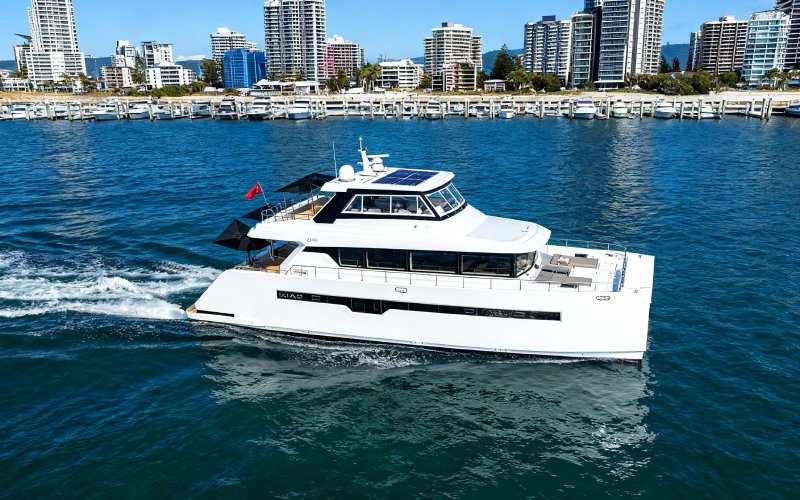
What is a catamaran?
A catamaran is a type of yacht featuring a twin-hull structure and primarily powered by engines.
Compared to traditional monohull motor yachts, the greatest advantage of the catamaran design lies in its lateral space. As it has two separate hulls, the beam is usually significantly wider than that of a monohull of the same size, thus offering a larger saloon area, a more spacious master cabin and a more stable sailing experience.
In practical terms, the key features of a catamaran include:
• A smoother sailing experience
• More living space
• Better suited to socialising with larger groups
• More suitable for long-term living on board
• Better suited to a tropical cruising lifestyle
The improved stability provided by the catamaran platform is particularly noticeable when at anchor. Compared to traditional monohulls, rolling is significantly reduced, making long-term living on board much more comfortable.
In recent years, as global demand for luxury cruising has grown, many new catamaran yachts have begun to evolve into ‘floating mansions’, rather than remaining purely functional vessels.
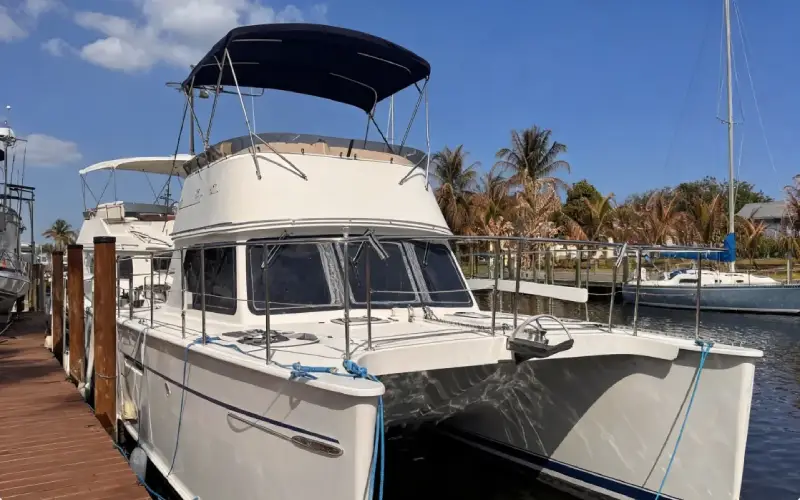
For example, the 2026 Lagoon EIGHTY 3 is one of the most representative models in the current high-end motor catamaran market. It features a layout approaching superyacht standards whilst maintaining long-range cruising capabilities, making it ideal for high-net-worth families seeking a long-term life at sea. Its spacious flybridge and open-plan living areas also epitomise recent design trends in luxury catamarans.
👉 See 2026 Lagoon EIGHTY 3

2026 Lagoon EIGHTY 3
- Length83 ft
- Cabins6
- TypeCatamaran yacht
The 2026 Lagoon EIGHTY 3 is Lagoon's flagship catamaran, positioned in the ultra-luxury sailing and long-term maritime lifestyle market. The yacht is approximately 24.4 meters long, boasts over 300 square meters of external living space, and combines superyacht craftsmanship with the stability of a catamaran structure.Compared to traditional monohull-powered yachts, the EIGHTY 3 emphasizes a spacious living experience, long range, and a customized lifestyle, making it suitable for both private vacations and high-end business receptions.
The Oceanwalker S60-Urban, on the other hand, is more geared towards a modern long-range cruising lifestyle. Its greatest strength lies in the balance it strikes between space utilisation and long-term living comfort, making it ideal for families planning frequent cruises or extended periods living on board.
👉 View Oceanwalker S60-Urban for sale
Oceanwalker S60-Urban
- Length60 ft
- Cabins4
- Top speed18 kn
- TypeCatamaran yacht
The Oceanwalker S60-Urban is a 60-foot luxury power catamaran designed around exceptional beam, family-oriented accommodation and large indoor-outdoor living spaces. The current YachtTrading configuration offers four guest cabins, five bathrooms, twin Volvo D6-440 engines and an estimated 540-nautical-mile range. With a beam approaching 27.5 feet and shallow draft, the S60-Urban is particularly relevant to buyers prioritizing onboard space, stability and relaxed cruising over outright speed.
However, whilst catamarans offer comfort, they also entail higher fuel consumption and maintenance costs. Consequently, they are better suited to those who wish to enjoy life at sea with ease, rather than delving deeply into the technical aspects of sailing.
What is a sailing catamaran?
A sailing catamaran is a twin-hulled vessel that relies primarily on sails for propulsion.
Compared to motor catamarans, sailing catamarans place greater emphasis on the act of sailing itself. Many true enthusiasts of ocean-going sailing are ultimately drawn to catamarans, as they offer reduced reliance on fuel, longer range and a more authentic sailing experience.
Over the past few decades, catamarans have evolved from being the choice of a ‘niche group of ocean-going enthusiasts’ to becoming one of the most popular types of cruising sailboats worldwide today.
The reasons for their popularity are clear:
• Lower costs for long-distance sailing
• Better suited to round-the-world cruising
• Significantly more space than monohull sailboats
• Markedly better stability
• Better suited to long-term family living
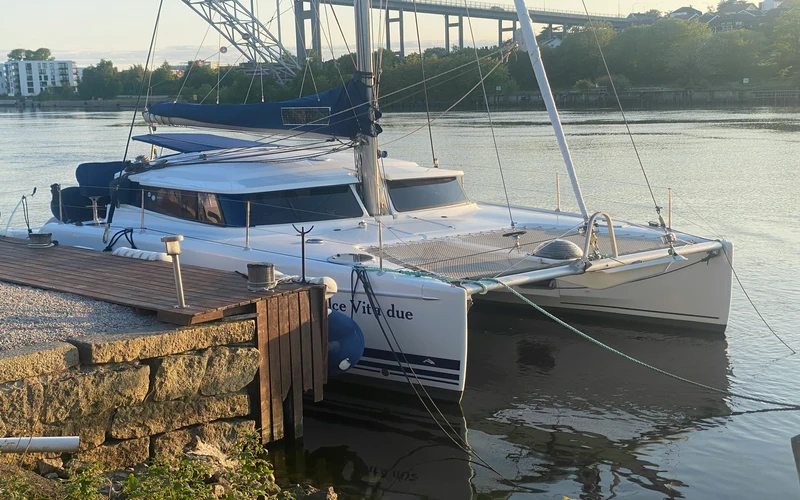
For example, the Leopard 52 is one of the most popular family-oriented ocean-going catamarans currently on the market. It strikes an excellent balance between sailing performance, living space and long-term cruising capability, making it highly popular among families embarking on long-term round-the-world voyages.
👉 Browse Leopard yachts
Leopard 52
- Length51.80 ft
- Cabins4
- Top speed9 kn
- TypeCatamaran sailboat
Leopard 52 is a premium bluewater cruising catamaran built by Leopard Catamarans, designed for safe and comfortable global voyaging. It features a modern spacious layout and stable twin-hull structure with high seaworthiness, shallow draft and excellent adaptability. Powered by efficient diesel engines, it offers economical fuel consumption, long range and easy handling. The interior is bright, luxurious and spacious with premium materials and complete facilities.
At the same time, many buyers searching for ‘catamaran sailboats for sale’ will find that high-quality catamarans generally retain their value quite well. In particular, ocean-going models with comprehensive maintenance records and strong seaworthiness have consistently enjoyed stable demand in the second-hand market.
For those prioritising performance and genuine ocean-going capability, the Catana Ocean Class has also emerged as a highly sought-after range of premium catamarans in recent years. Featuring a lighter structural design and excellent transoceanic capabilities, it has consistently garnered high praise amongst seasoned sailors.
👉 Browse Catana Ocean Class
Catana Ocean Class
- Length49.40 ft
- Cabins4
- TypeCatamaran sailboat
The new Catana Ocean Class catamaran sailboat is a luxurious and extraordinary reference for Grand Voyage yachts. Thanks to the mastery of the "CARBONE INFUSION" technology, it is both lightweight and durable, and this technology is now used in all Catana models.
Of course, a sailing catamaran does not mean ‘no engine is required at all’. In fact, most cruising catamarans are fitted with twin engines for manoeuvring in and out of harbours, sailing in calm conditions, and emergencies. However, the key difference lies in the fact that a sailing catamaran relies primarily on wind power for true long-distance voyages.
This is why many sailing enthusiasts believe that sailing catamarans represent true freedom at sea.
Catamaran Yachts vs Sailing Catamarans: A Key Differences Overview
Many people encountering catamarans for the first time assume that the only difference between catamaran yachts and sailing catamarans is simply ‘whether or not they have sails’. However, upon closer examination, it becomes clear that the two are fundamentally different in terms of usage, long-term costs, sailing experience and the types of people they suit.
Motor catamarans are more akin to a ‘leisure-oriented’ tool for life at sea. They prioritise comfort, space and convenience, making them ideal for family outings, short cruises and long-term mooring. For many who do not wish to spend extensive time learning sailing skills, the barrier to entry for motor catamarans is significantly lower.
Sailing catamarans, on the other hand, are more geared towards a ‘sailing lifestyle’. They are not merely a vessel, but a tool for long-term ocean voyages. Many who are truly passionate about circumnavigating the globe will appreciate the sense of freedom that comes from sailing under sail, as well as the long-term economic benefits of reduced reliance on fuel.
The table below provides a clearer overview of the key differences between the two.
| Comparison | Catamaran Yacht | Catamaran Sailboat |
| Primary Propulsion | Engine | Sails + auxiliary engine |
| Difficulty of Handling | Low | High |
| Learning Curve | More suitable for beginners | Requires sailing knowledge |
| Level of Involvement | Low | High |
| Cruising Speed | Stable and fast | Dependent on wind conditions |
| Fuel Consumption | High | Low |
| Long-Distance Range | Limited by fuel | Excellent |
| Living Space | Very spacious | Spacious |
| Long-term living comfort | Very high | High |
| Maintenance Focus | Engine, electrical systems | Sails, rigging |
| Annual maintenance costs | Generally higher | Relatively lower |
| Best suited for | Family leisure, relaxed cruising | Offshore sailing enthusiasts |
In practice, most first-time boat buyers ultimately find themselves choosing between ‘comfort’ and ‘the freedom of sailing’.
If your primary use cases are:
• Weekend island getaways
• Family leisure
• Business hospitality
• Frequent short-haul cruising
then a catamaran is usually a better fit. As it does not require frequent sail adjustments and is less dependent on weather conditions, the overall experience is more relaxed.
However, if you truly wish to:
• Live on board long-term
• Sail around the world
• Low-cost ocean cruising
• Greater hands-on involvement in the sailing process
then a sailing catamaran will offer a completely different experience. Particularly on long-distance ocean voyages, a sailing catamaran’s low reliance on fuel will gradually reveal significant long-term advantages.
Therefore, the key distinction between a motor catamaran and a sailing catamaran is not a question of ‘which is superior’, but rather that they represent two entirely different lifestyles at sea.
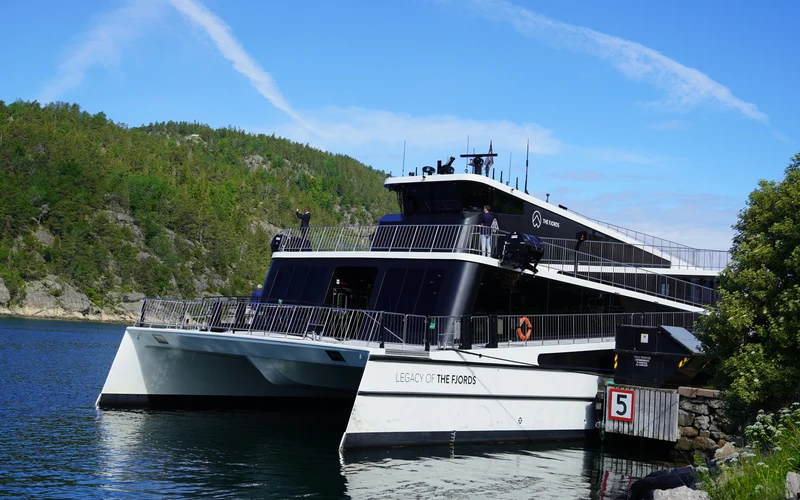
2026 Budget Guide: Which is the Better Value for Money?
When researching catamarans for the first time, many people find that motor catamarans are usually significantly more expensive than sailing catamarans. However, in reality, it is not just the ‘purchase price’ that needs to be considered, but also long-term maintenance, fuel, mooring costs and future resale value.
For most boat owners, the real cost lies not in the moment of purchase, but in the ownership costs over the coming years or even decades.
The table below provides a clear overview of the approximate budgetary differences between motor catamarans and sailing catamarans in 2026.
| Size Range | Motor Catamaran Price (New) | Sailing Catamaran Price (New) | Ideal for |
| 35–45 feet | $600,000–$1.5 million | $500,000–$1 million | Entry-level family users |
| 45–55 feet | $1.5 million–$3.5 million | $1 million–$2.2 million | Long-term cruising families |
| 55–70 feet | $3.5 million–$8 million | $2.2 million–$5 million | High-end ocean-going users |
| 70 feet and above | Over $8 million | Over $5 million | Superyacht market |
As the table shows, for the same size, motor catamarans are typically 20%–50% more expensive than sailing catamarans. The reasons for this are primarily as follows:
Higher Propulsion System Costs
Catamarans generally require more powerful engines, more complex fuel systems and higher-specification power generation equipment. This not only increases the purchase price but also raises long-term maintenance costs.
In particular, for large motor catamarans, fuel systems and air conditioning systems often become a significant component of ongoing expenditure.
More luxurious fittings
Most motor catamarans currently on the market are positioned towards a high-end lifestyle.
Features such as large flybridges, marine entertainment systems, stabilisers, water toy platforms and full-size galleys all significantly drive up the overall price.
In contrast, whilst sailing catamarans are becoming increasingly luxurious, they generally still place greater emphasis on sailing efficiency and ocean-going capability.
Significant Differences in Long-Term Operating Costs
If used only occasionally at weekends, the cost difference between the two may not be particularly noticeable. However, if you plan to undertake long-term cruising or even circumnavigation, the difference in fuel costs will gradually become more pronounced.
For many owners of long-range sailing catamarans, annual fuel expenditure may amount to only a fraction of that of a large motor catamaran. This is why an increasing number of families planning long-term circumnavigation ultimately opt for sailing catamarans.
Different Logic Behind Resale Value in the Second-hand Market
Sailing catamarans, particularly those designed for ocean cruising, have consistently enjoyed stable global demand; consequently, many established models retain their value remarkably well.
Whilst large motor catamarans offer greater comfort, maintenance pressures increase rapidly as equipment ages, meaning that depreciation is more pronounced for certain high-end models.
So, which option offers better value for money? The answer actually depends on how you intend to use the vessel.
If you:
• Prioritise comfort and leisure
• Do not use the vessel particularly frequently
• Prefer a more relaxed style of sailing
• Mainly undertake short cruises
Then a catamaran would be more suitable, as it offers a more immediate and effortless experience of life at sea.
However, if you:
• are a true sailing enthusiast
• hope to undertake long-distance ocean voyages
• plan to travel around the world
• wish to minimise long-term running costs
then a catamaran is usually the better value for money, and the long-term ownership burden will be lower. Truly savvy buyers rarely look solely at the ‘purchase price’, but instead calculate the total cost of ownership over the next 5–10 years.
Expert Advice: How to Choose Your First Boat?
First, clarify your actual usage scenarios
When buying a boat for the first time, the most important thing is not to look at the brand or size first, but to clarify how you intend to use the boat. If you mainly go out to sea at weekends, for family leisure and short cruises, then a catamaran will usually be more relaxed and comfortable; if you plan to live on board long-term, undertake ocean voyages or travel around the world, then a sailing catamaran will be more suitable. Many people only realise after purchasing a boat that their actual usage frequency differs completely from what they initially imagined; therefore, your intended use is always more important than your ‘dream specifications’.
Don’t Blindly Pursue Larger Sizes
Many first-time buyers instinctively assume that ‘bigger is better’, but in reality, larger sizes mean higher maintenance costs, more complex equipment systems and higher mooring fees. Particularly once you exceed 50 feet, the difficulty of operation and the long-term ownership burden increase significantly. For most family users, a 40–50-foot vessel typically provides ample living space whilst remaining easier to manage.
Decide what matters most to you
Catamaran yachts and catamaran sailing boats essentially represent two distinct lifestyles at sea. Motor catamarans place greater emphasis on comfort, convenience and the entertainment experience, whilst sailing catamarans prioritise the hands-on experience of sailing and long-range ocean-going capability. If you prefer relaxed cruising and frequent leisurely trips, a motor catamaran will be more suitable; if you are a true sailing enthusiast and wish to reduce long-term reliance on fuel, then a sailing catamaran is generally more appealing.
Calculate the long-term ownership costs in advance
Many newcomers focus solely on the purchase price, overlooking the subsequent annual maintenance costs. In reality, mooring fees, insurance, engine maintenance, hull upkeep and equipment upgrades all form part of the long-term expenditure. Generally speaking, the annual maintenance costs for motor catamarans are higher than those for sailing catamarans. Therefore, when determining your budget, it is best to calculate the total cost of ownership over the next five years in advance, rather than looking solely at the price at the time of purchase.
Prioritise Established Models and Professional Surveys
When purchasing a boat for the first time, it is not advisable to blindly pursue overly niche or highly customised models. Established brands generally offer more consistent quality, more comprehensive after-sales support and better resale value. Furthermore, whether buying a new or second-hand boat, a professional survey is essential. Many hidden issues, such as structural fatigue, ageing electrical systems or the condition of the engine, are difficult for the average buyer to detect on their own, whereas a professional survey can often prevent very costly repairs down the line.
Conclusion
There is no absolute ‘better’ choice between motor catamarans and sailing catamarans.
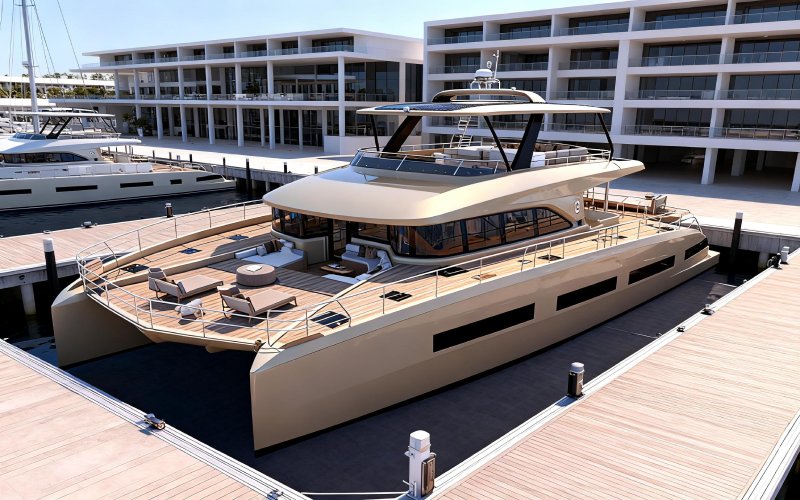
If you prioritise comfort, convenience and leisurely enjoyment, a motor catamaran can offer an experience akin to a floating villa.
However, if you are a true sailing enthusiast who wishes to be actively involved in the sailing process and plans for long-distance ocean voyages, a sailing catamaran will provide a greater sense of freedom and a more immersive exploration experience.
For the vast majority of buyers, the best boat is not the most expensive one, but the one that best suits their actual lifestyle.
Naturally incorporate the following models into the article: the motor catamaran Oceanwalker S60-Urban and the sailing catamaran Catana Ocean Class, providing brief reasons for recommendation. These should be inserted only once and must not appear in the same paragraph.
FAQ
Q1: Are motor catamarans more expensive than sailing catamarans?
A: Generally speaking, yes. The propulsion system, more complex equipment and higher fuel consumption mean that motor catamarans have a higher overall price and running costs than sailing catamarans of the same size.
Q2: Are sailing catamarans suitable for beginners?
A: Yes, but they do require some learning. Compared to motor yachts, sailing requires a greater understanding of navigation and sailing techniques, so they are better suited to those willing to invest time in learning.
Q3: Are motor catamarans suitable for long-term living on board?
A: They are very suitable. Large motor catamarans offer spacious accommodation and a high level of comfort, which is why an increasing number of families are choosing them as a platform for long-term life at sea.
Q4: What size is recommended for a first-time boat purchase?
A: For most families, a 40–50-foot vessel is usually the most balanced choice, offering ample comfort without making maintenance and operation overly difficult.