



Catamarans are not just for professional sailors; in fact, they are better suited to those seeking a ‘life at sea’ experience. Compared to traditional monohulls, the catamaran design offers more living space, a more stable sailing experience and greater comfort for long-term living. As a result, families, those planning to live on board long-term, retired cruisers and long-distance sailing enthusiasts typically give priority to catamarans.
If you wish to take your family out for a leisurely weekend sail, are planning to live on board long-term in the future, or fancy cruising around tropical islands, then a catamaran will better suit a modern sailing lifestyle than a traditional monohull. Today, more and more people are searching for ‘buy catamaran sailboat’, and the key reason is precisely that catamarans offer an experience closer to that of a ‘floating home at sea’.
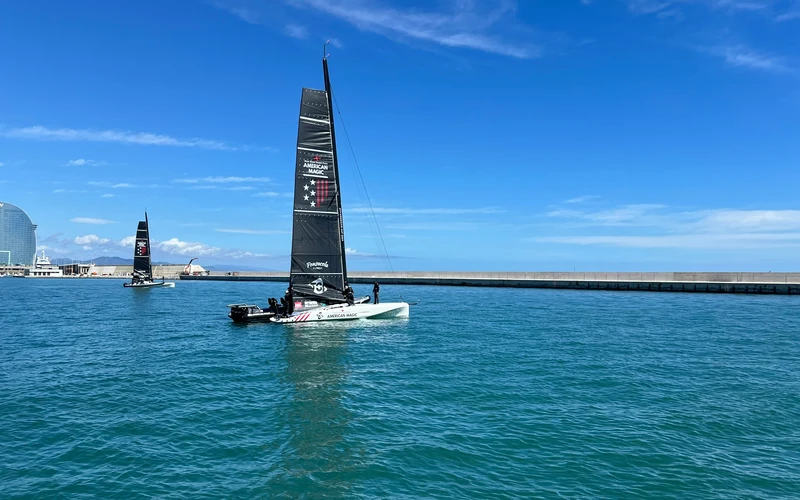
Why are more and more people choosing catamarans?
In the past, catamarans were primarily found in the professional long-distance sailing and commercial charter sectors, but in recent years, they have gradually become the mainstream choice for ordinary families and long-term cruising enthusiasts.
The most significant shift stems from evolving ‘lifestyle demands’. Modern boat owners increasingly prioritise comfort over mere sailing performance. Thanks to their wider hull layout, catamarans offer larger saloon areas, more fully equipped galleys, more spacious cabins and superior ventilation. For families with children, these spatial advantages are particularly evident.
Another key factor is stability. Catamarans experience less roll whilst moored or cruising, making life on board far more comfortable. This difference is particularly noticeable for those living on board long-term, especially during extended cruises in tropical waters, where stability directly impacts the quality of daily life.
Furthermore, the rise of remote working and the digital nomad lifestyle has also driven the growth in demand for catamarans. Increasingly, people are treating boats as long-term living spaces rather than merely recreational vessels.
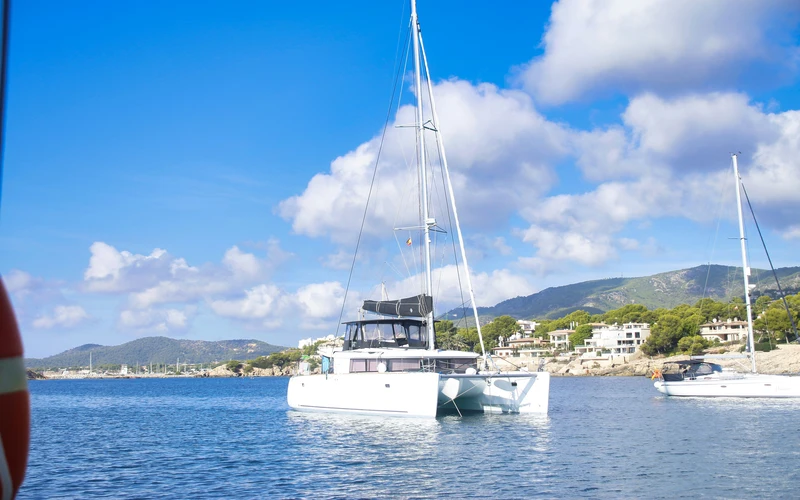
In which scenarios are catamarans best suited?
Catamarans are not limited to a single type of sailing; they actually cater to a wide range of scenarios, from leisurely cruising to long-distance voyages.
Family holidays at sea
Families are one of the fastest-growing user groups for catamarans. Compared to traditional monohulls, catamarans are better suited to communal living. Spacious decks allow children to move about freely, whilst larger saloon areas are ideal for family gatherings, dining and socialising.
Furthermore, catamaran layouts typically feature more separate cabins, meaning every family member can enjoy greater privacy. For families planning extended sailing trips with children, this layout offers a distinct advantage.
Long-term Liveaboard Living
Long-term liveaboard living has become an increasingly popular lifestyle worldwide, and catamaran sailboats are virtually the ideal choice for this scenario.
Compared to monohull sailboats with limited space, catamarans can accommodate more living equipment, such as large refrigerators, solar power systems, watermakers and long-term storage space. Consequently, ‘Catamaran Sailboat for liveaboard’ has become a frequently searched keyword in overseas markets.
Many long-term liveaboards spend months or even years living on board, so they place greater emphasis on comfort, ventilation systems and energy self-sufficiency – precisely the strengths of modern catamarans.
Before committing to a sailing catamaran, compare liveaboard yacht types under $1 million to assess the trade-offs in living space, berth requirements and onboard systems.
Round-the-World Voyages and Ocean Cruising
Modern catamarans are no longer merely ‘coastal leisure craft’. Many brands have begun designing hull structures and energy systems specifically for transoceanic routes, endowing them with greater long-distance cruising capabilities.
During long-distance voyages, the importance of living comfort increases significantly. Larger fresh water reserves, a more stable sailing condition and a more practical living layout will significantly enhance the long-term cruising experience.
Commercial Chartering and Island Operations
In popular waters such as the Caribbean, the Mediterranean and Southeast Asia, catamarans have become the mainstream choice in the charter market. The reason is simple: they are better suited to socialising in groups.
Spacious flybridge areas, open-plan saloons and comfortable leisure spaces significantly enhance the guest experience, which is why catamarans are so popular in the commercial sector.
Who is best suited to buying a catamaran?
When encountering catamarans for the first time, many people automatically assume they are simply ‘larger sailing boats’, but in reality, the target audience for catamarans is very specific. They are not a hull type designed purely for speed or competitive performance, but rather a ‘lifestyle-oriented’ sailing vessel.
Particularly in recent years, with the rise of family cruising, retirement living on board, and the digital nomad lifestyle, an increasing number of owners are viewing catamarans as long-term living spaces rather than merely weekend pleasure craft. Different groups have varying requirements regarding space, stability, storage capacity and energy systems, and catamarans are uniquely positioned to meet these needs.
The table below will help you quickly determine whether you belong to the group best suited to purchasing a catamaran:
| User Type | Why a Catamaran is Suitable | Key Considerations |
| Family Users | Spacious, suitable for multi-person living, safer for children’s activities | Cabin layout, safety, comfort |
| Long-term Liveaboards | Better suited to long-term living, superior storage and energy systems | Storage capacity, energy independence |
| Retired Cruisers | Relaxed lifestyle, greater stability | Comfort, ease of maintenance |
| Digital Nomads | Suitable for long-term remote working and a mobile lifestyle | Internet connectivity, electrical systems, living space |
| Charter Operators | Ample social space, better suited to group experiences | Layout, commercial hospitality capacity |
| Ocean Voyagers | Significantly greater comfort on long voyages compared to traditional monohulls | Water storage capacity, stability, range |
For families, the greatest appeal of a catamaran lies in the ‘shared experience’. It is not merely a boat, but more like a mobile holiday retreat at sea. Consequently, Catamaran Sailboat for families has gradually become one of the most popular search terms in recent years.
Long-term liveaboard users, however, place greater emphasis on energy systems, storage space and comfort. Compared to monohulls, catamarans are better suited to the installation of long-term living equipment such as solar panels, watermakers and large refrigerators.
Who are catamarans not best suited for?
Although catamarans offer clear advantages, they are not suitable for everyone.
Firstly, if you are more passionate about competitive sailing and seek the ultimate in handling, a monohull may better suit your needs. Traditional monohulls still possess a unique appeal in terms of upwind performance and steering feedback.
Secondly, if your budget is very limited, you should think carefully. Catamarans not only have a higher purchase price, but subsequent mooring fees, maintenance costs and insurance premiums are typically significantly higher.
Furthermore, if you only go out to sea a few times a year, and mainly undertake short coastal voyages, the space advantages of a catamaran may not truly come into their own.
Finally, larger catamarans have more demanding mooring requirements and may face issues with limited availability in certain areas.
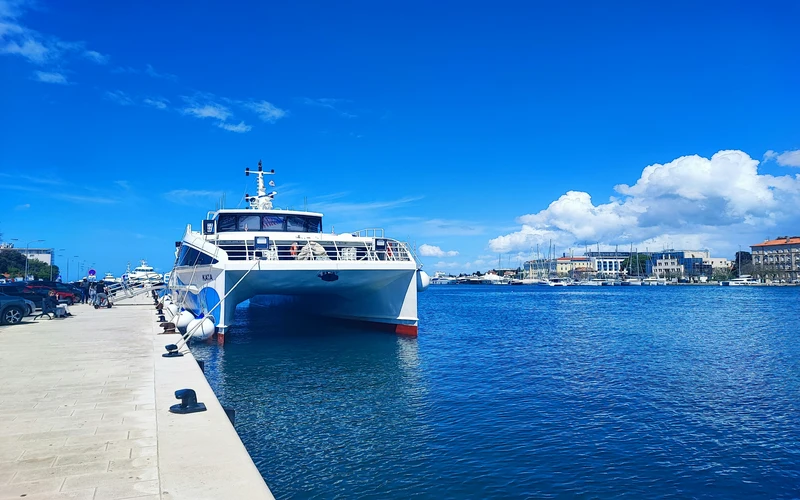
Recommended Models for Different User Groups
Different users have different needs, so the ideal catamaran will vary considerably. The following are some of the most popular catamaran models currently on the market, each catering to the core requirements of different user types. Whether you are a family cruiser, a long-term liveaboard, or a novice just entering the world of catamarans, you can find the right fit here:
Recommended for Families
The Lagoon 46 is currently one of the most popular family cruising catamarans. It features spacious communal areas, excellent natural light in the saloon, and a layout perfectly suited to family life.
Many families particularly appreciate its ‘children’s room’-style cabin design, as it offers enhanced safety and comfort. At the same time, its flybridge area is ideal for socialising and leisure activities with a group.
👉 See Lagoon 46

Lagoon 46
- Length45.10 ft
- Cabins4
- TypeCatamaran sailboat
The Lagoon 46 sailboat, a representative of the latest generation of Lagoon catamarans, possesses all the genes of the brand: freedom, bold innovation and comfortable space. Its elegant lines, unparalleled indoor lighting and sense of interconnected space all highlight the core theme of this catamaran design, which is to enjoy the sweetness of life to the fullest.
Recommended for Retired Liveaboards
The Fountaine Pajot FP 44 enjoys an excellent reputation in the long-term liveaboard market. Its storage space is very well designed, whilst its overall energy efficiency is excellent, making it suitable for extended cruising in tropical waters.
For retired liveaboards, the FP 44’s greatest advantage lies in its “long-term living comfort”, rather than a mere pursuit of luxury.
👉 Browse Fountaine Pajot yacht
Fountaine Pajot FP 44
- Length44 ft
- Cabins4
- Top speed9 kn
- TypeCatamaran yacht
This Ocean Version catamaran offers a well-equipped and thoughtfully specified platform for comfortable cruising, delivered with a comprehensive range of factory and dealer-installed options. Powered by twin Yanmar 4JH57-CE engines and featuring a complete Garmin navigation suite including autopilot, VHF, AIS, and dual GPS displays, she is ready for immediate enjoyment.
Recommended for Beginners
The Bali 4.2’s most distinctive feature is its unique “Bali Door” design, which allows for a seamless connection between indoor and outdoor spaces, significantly enhancing ventilation and natural light.
Furthermore, its control interface is more modern, making it relatively easy for beginners to learn, and therefore highly suitable as a first catamaran.
Bali 4-2
- Length42 ft
- Cabins4
- Top speed10 kn
- TypeCatamaran sailboat
The Bali 4.2 is a 42-foot catamaran sailboat crafted by the Catana Group, renowned for its revolutionary “open space” design offering either a three-cabin or four-cabin layout. Constructed using vacuum infusion technology for high strength and lightweight performance, it features a spacious flybridge, large galley, and impressive range, making it an ideal choice for family cruising and charter investment.
Practical Considerations Before Buying a Catamaran
Before making a purchase, there are several practical issues that must be carefully considered in advance.
Firstly, there is the matter of mooring. Catamarans are typically much wider than monohulls, so some marina berths may not be suitable, and costs will be higher.
Secondly, there is the matter of maintenance costs. Dual engines, additional living systems and a larger surface area all translate to higher long-term maintenance expenses. Many first-time buyers focus solely on the purchase price initially, overlooking the ongoing running costs.
Furthermore, sailing experience must be taken into account. Although modern catamarans are becoming increasingly easy to handle, larger catamarans still require a certain level of sailing experience, particularly in strong winds, at narrow marinas and in challenging weather conditions.
Below is a typical guide to long-term ownership costs:
| Cost item | Annual reference cost (40–45-foot catamaran) | Cost breakdown |
| Mooring fees | $10,000–$28,000/year | Catamarans are wider, so fees at popular marinas are significantly higher |
| Insurance | $3,000–$8,000/year | Depends on the boat’s value, sailing area and whether it involves transoceanic voyages |
| Engine maintenance | $1,500–$4,000/year | Maintenance costs for twin engines are higher than for monohulls |
| Hull maintenance and anti-fouling | $3,000–$7,000/year | Includes hauling out, hull cleaning, anti-fouling paint, etc. |
| Sail and rigging maintenance | $2,000–$6,000/year | Costs are typically higher for long-term cruising owners |
| Energy and electrical systems | $1,000–$5,000/year | Includes maintenance of batteries, solar panels, inverters, etc. |
| Contingency fund for unexpected repairs | $5,000–$15,000/year | Failures in seawater systems, pumps and electronic equipment are relatively common |
| Reference for total annual ownership costs | $30,000–$65,000+/year | Varies significantly depending on sailing area, DIY skills and frequency of use |
For modern 40–45-foot catamarans, long-term ownership costs are often higher than many newcomers anticipate. This is particularly true for long-term cruisers or live-aboard owners, as maintenance budgets rise significantly with increasing equipment complexity. It is generally recommended within the industry that owners set aside an annual budget of 5%–10% of the boat’s purchase price for maintenance and operation.
Summary
Catamarans are best suited to those who truly value the ‘life at sea’ experience. They are not merely a means of navigation, but an extension of a lifestyle.
If you wish to take your family on extended cruises, plan to live aboard, undertake long-distance voyages in tropical waters, or seek a more stable and comfortable experience at sea, then a catamaran is a choice well worth considering.
However, this also entails a higher budget, a more complex maintenance regime and higher long-term ownership costs. Therefore, before purchasing, the most important question is not ‘which boat is best’, but ‘which lifestyle truly suits you’.
FAQ
Q1: Are catamarans suitable for beginners?
A: Yes. Modern catamarans increasingly emphasise ease of handling, particularly cruising catamarans around 40 feet in length, which are relatively beginner-friendly. With greater stability and more comfortable living quarters, they can help alleviate the discomfort of your first extended voyage at sea, though it is still advisable to undergo basic sailing training first.
Q2: Are catamarans suitable for long-term living?
A: Very suitable. Catamarans offer more living space, better ventilation and greater storage capacity, and can be fitted with equipment for long-term living such as solar panels and watermakers. As a result, they have become the mainstream choice for many long-term liveaboards and round-the-world cruisers.
Q3: How much more expensive are catamarans than monohulls?
A: Generally speaking, the purchase price, mooring fees and long-term maintenance costs of a catamaran are higher than those of a monohull of the same size. However, they also offer a more stable sailing experience, more spacious living quarters and a layout better suited to long-term family living.
Q4: Are catamarans suitable for round-the-world sailing?
A: Yes, they are. Many modern catamarans are specifically designed for ocean-going cruising, featuring larger fresh water reserves, more robust energy systems and greater comfort for long-term living. Consequently, they are being used by an increasing number of round-the-world sailors for transoceanic and long-term cruising.