



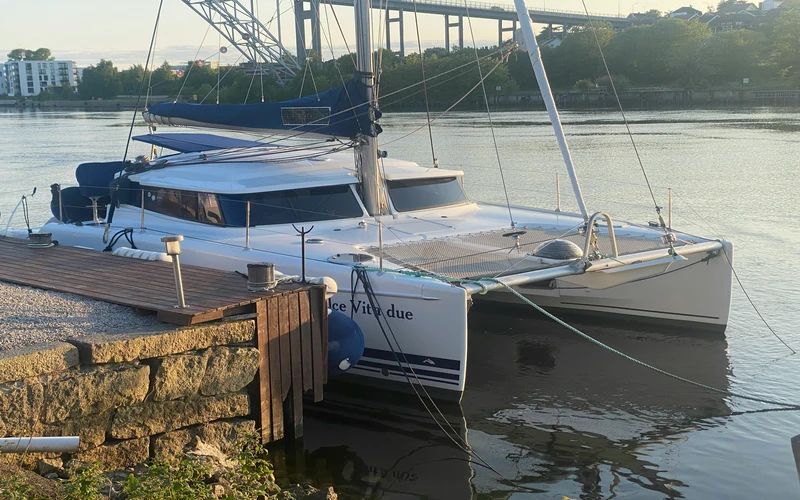
What factors determine the price of a catamaran?
The price variation among catamarans is far greater than many beginners imagine. The price of an entry-level cruising catamaran of over 30 feet can differ by a factor of several times, or even tenfold, from that of an ocean-going catamaran of over 50 feet. The core factors influencing price are not limited to size alone.
Hull length and beam
Catamarans inherently have a wider structure than monohulls, which means that construction materials, deck area and interior space all increase significantly. As the size increases by one class, costs do not rise linearly; rather, the overall specification is upgraded in tandem.
Sailing Profile
Inshore cruising catamarans are primarily used for weekend getaways and short island hops, with relatively lower requirements for water storage, electrical power, structural reinforcement and resistance to wind and waves. In contrast, ocean-going vessels with genuine blue-water capabilities require stronger hull structures, larger fuel and water reserves, more comprehensive energy systems and equipment for extended offshore voyages, resulting in significantly higher prices.
Propulsion System
Catamarans typically feature a twin-engine design; the number of engines, their horsepower ratings, and the electrical generation system all contribute to increased purchase and maintenance costs. Buyers planning to live aboard long-term or undertake round-the-world voyages often add solar panels, lithium batteries, watermakers and satellite communication systems.
Brand Positioning
Brands that emphasise a luxurious lifestyle tend to prioritise interior design and comfort, whilst high-performance ocean-going brands place greater emphasis on lightweight construction and sailing efficiency. Consequently, even among vessels of similar size, the price disparity between different brands remains very pronounced.
For many first-time boat buyers, the most easily overlooked issue when buying a new catamaran sailboat is the cost of subsequent upgrades. Many new boats that appear to be ‘basic models’ often see their overall budget increase by 20% to 40% once fully equipped for long-distance cruising.
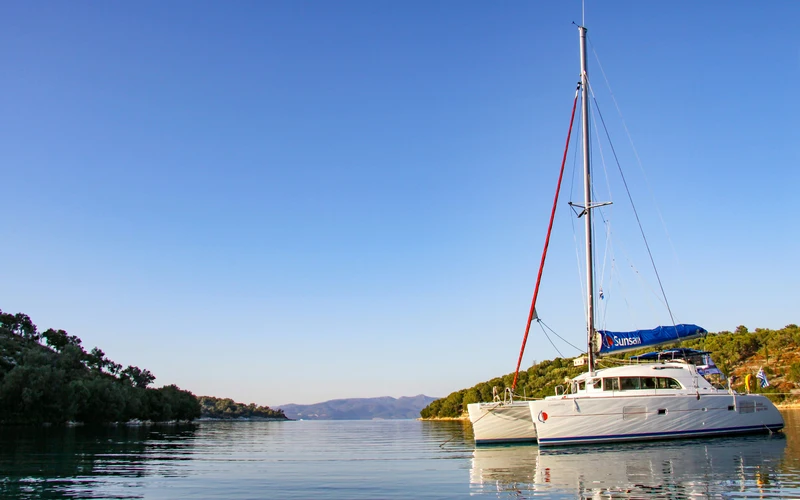
Catamaran Prices by Size
Price variations in the catamaran market are rarely as simple as ‘the bigger, the more expensive’. As size increases, the hull structure, propulsion system, energy configuration and ocean-going capabilities are all upgraded in tandem; consequently, different size categories actually correspond to entirely different usage scenarios and owner requirements.
Less Than 30ft
Catamarans under 30 feet typically fall within the light recreational and inshore sailing market. These vessels are primarily aimed at day trips, short weekend excursions and novice sailors, so the overall price barrier is relatively low.
The defining features of this size category are simple maintenance and low operational demands, whilst mooring fees are also significantly lower than for larger catamarans. For those new to sailing, they offer the stability of a catamaran structure without incurring excessive ownership costs.
However, the drawbacks are equally evident. Due to limited space, these vessels are generally unsuitable for long-term living on board and cannot undertake true ocean-going voyages. Capacity for water, electricity and cargo is significantly restricted.
Currently, catamarans under 30 feet on the market generally range in price from US$50,000 to US$250,000. Prices are lower on the second-hand market, whilst new boats with modern interiors and comprehensive living facilities command significantly higher prices.
30–50ft
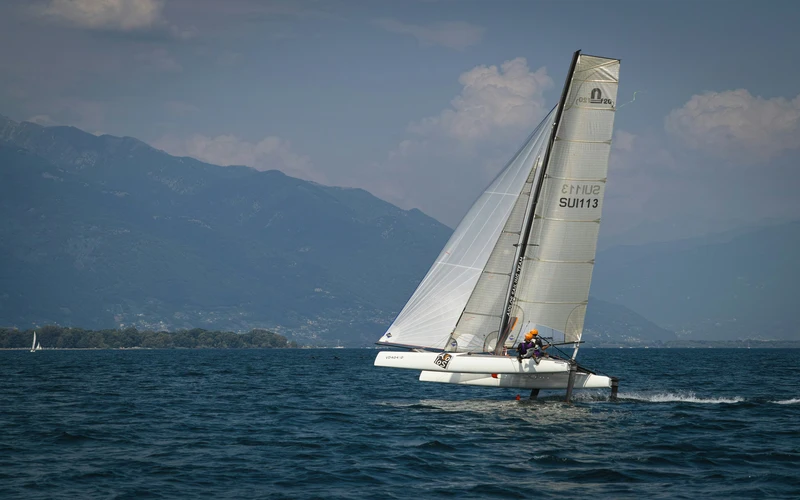
The 30–50-foot range is currently the core and most popular market segment for sailing catamarans worldwide. The vast majority of family cruisers, long-term liveaboards and cross-regional sailors opt for this size.
Models over 30 feet are typically geared more towards inshore cruising, making them ideal for weekend getaways, island hopping and family holidays. Once you move into the 40-foot range and above, many catamarans begin to possess genuine ocean-going capabilities, including more comprehensive energy systems, greater fresh water capacity and more stable performance on long voyages.
The greatest advantage of this size is that it strikes a good balance between space, comfort and running costs. You can enjoy a lifestyle akin to a ‘floating apartment’ without facing the immense maintenance demands associated with large luxury catamarans.
The Rapido 40, for example, is a prime example of a model that combines performance with a cruising experience. Compared to traditional cruising catamarans, it places greater emphasis on speed and lightweight construction, making it ideal for those seeking greater sailing enjoyment whilst still requiring a degree of long-distance capability.
👉 View Rapido 40 for sale

Rapido 40
- Length43.90 ft
- Top speed20 kn
- TypeCatamaran sailboat
The Rapido 40 is a high-performance luxury catamaran sailboat, focusing on lightweight design, high speed and comfortable space, balancing racing and leisure cruising. Constructed with carbon fiber composite materials, it features a light and strong hull and outstanding stability from its catamaran design, with sharp and dynamic lines.
50–80ft
From 50 feet upwards, catamarans begin to move firmly into the realm of high-end ocean-going and luxury cruising.
Vessels in this size range typically feature more comprehensive long-term living systems, including large power generation systems, higher-grade navigation equipment, greater energy storage capacity and more comfortable private living spaces. Many long-term round-the-world sailors consider 50 to 60 feet to be the ideal size for blue-water sailing, as it strikes a balance between long-distance cruising capability and long-term living comfort.
At the same time, catamarans in this category begin to place a marked emphasis on luxury features. Larger flybridges, more spacious main saloons and more sophisticated interior designs all contribute to a rapid increase in the overall price.
New-build prices in this market typically start at US$2 million, whilst high-end custom versions can even exceed several million dollars. In addition to the purchase cost, ongoing maintenance, insurance and mooring fees also rise significantly.
80–100ft
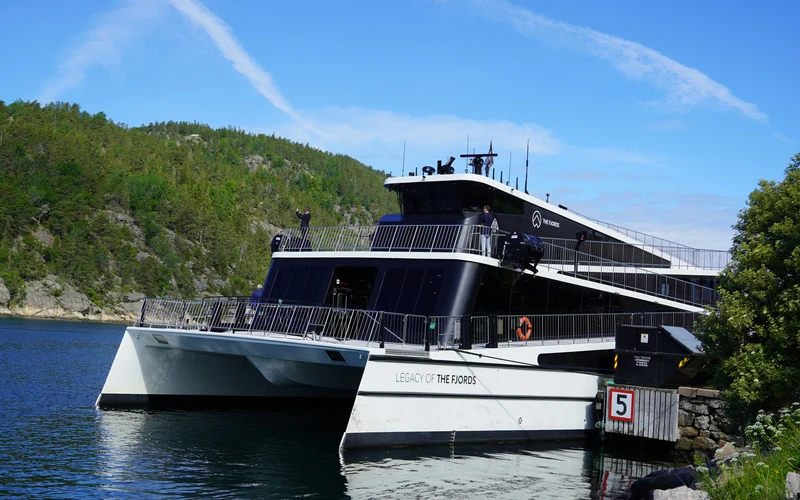
Catamarans over 80 feet enter the realm of super catamarans.
Vessels in this category are no longer merely sailing vessels, but rather resemble high-end private residences at sea. Many models feature full crew quarters, professional kitchens, large entertainment spaces and the capability for extended global cruising.
Owners of vessels in this size category typically prioritise comfort, global freedom of navigation and the private living experience, so designs tend to be more bespoke.
In terms of pricing, 80–100-foot catamarans generally start at the tens of millions of dollars, whilst high-specification fittings and bespoke designs will further increase the overall budget. At the same time, operational practices begin to resemble those of superyachts, including professional crew management, international mooring arrangements and long-term maintenance plans.
More Than 100ft
Catamarans over 100 feet belong to an extremely exclusive ultra-high-end bespoke market.
This size category falls squarely within the superyacht sector, with vessels typically built entirely to order, a process that can take several years. In addition to ocean-going capabilities, the emphasis is on private entertainment, global travel and high-end socialising.
Compared to traditional monohull superyachts, the greatest advantage of ultra-large catamarans lies in their more stable platform and more extravagant living spaces. Consequently, they have begun to attract increasing attention from high-net-worth owners in recent years.
There is virtually no ‘standard price’ in this market. Many projects start at tens of millions of dollars, whilst highly customised flagship catamarans can cost even more than traditional superyachts.
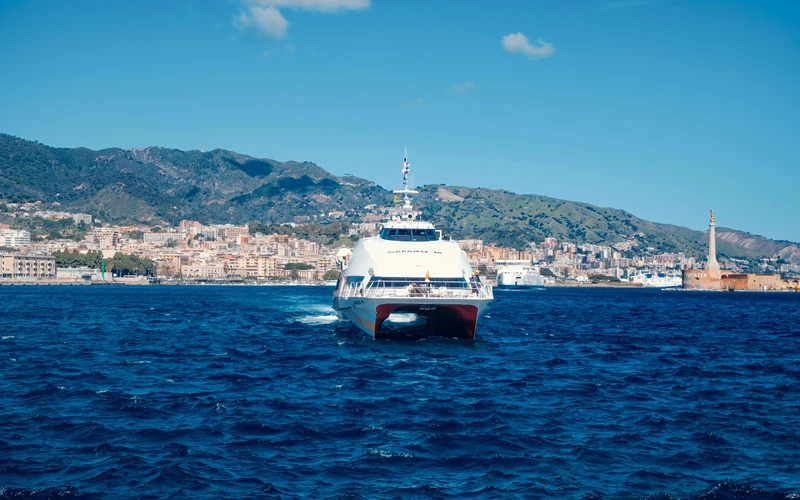
New vs Used Catamarans: Which Offers Better Value?
The Advantages and Risks of New Yachts
The greatest advantages of new yachts are customisable specifications, the latest equipment, and longer maintenance intervals. For those planning to hold the vessel long-term, a new yacht can be more easily configured to suit their specific sailing requirements.
However, the issue lies in the fact that depreciation on new yachts typically occurs most rapidly in the first few years, particularly for large catamarans. Furthermore, many owners underestimate the additional expenditure required after delivery, including marine electronics, backup systems and long-range sailing upgrades.
The Most Overlooked Issues with Second-Hand Boats
Many people believe that buying a second-hand catamaran can save a significant amount of money, but the real issue lies in the boat’s condition.
In the second-hand market, the most commonly overlooked issues are hull leaks, fatigue in the laminate structure, ageing electrical systems and the condition of the engine. This is particularly true for boats that have been operated in tropical waters for long periods, where UV radiation and high humidity significantly accelerate ageing.
For those looking to buy a used catamaran sailboat, a professional survey is virtually essential. A low purchase price often translates to higher maintenance costs down the line.
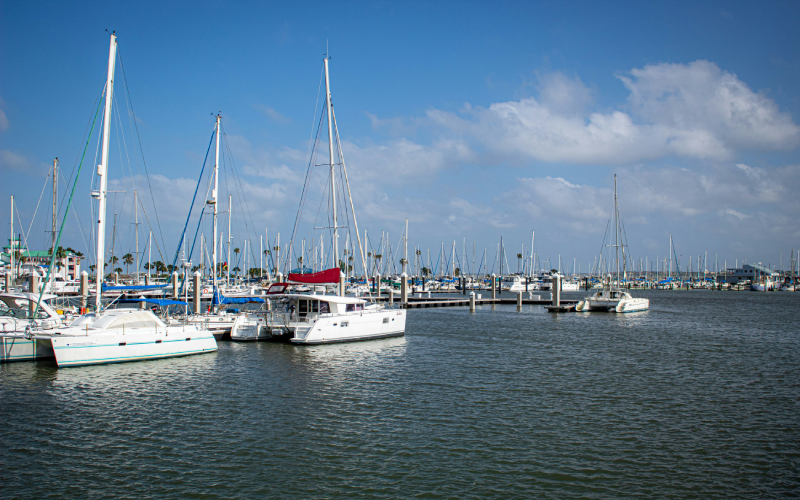
Which Buyers Are Best Suited to Purchasing a Second-Hand Ocean-Going Yacht?
If you have a limited budget but wish to embark on ocean-going voyages straight away, a well-maintained second-hand ocean-going yacht is actually a very sensible choice.
The Sunreef 60 Sailing has consistently attracted significant attention in the second-hand market, owing to its mature blend of spacious comfort and high-end positioning, making it ideal for those seeking a long-term life on board or a high-quality cruising lifestyle.
👉 See Sunreef 60 Sailing

Sunreef Sunreef 60 Sailing
- Build Year2023
- Length60 ft
- Cabins5
- Top speed10 kn
- TypeCatamaran sailboat
"Mr. Si" is an impeccably maintained 2023 Sunreef 60 luxury catamaran that represents the pinnacle of contemporary multihull design and customization. Professionally maintained by a dedicated three-person crew, this vessel combines exceptional volume and privacy with bespoke high-end finishes throughout.
The Xquisite Yachts X5, on the other hand, leans more towards a practical ocean-going cruising approach, emphasising energy systems, self-sufficiency and long-haul stability, which is why it is highly regarded among ocean-going enthusiasts.
👉 Browse Xquisite Yachts X5
Xquisite Yachts X5
- Build Year2017
- Length51 ft
- Cabins3
- Top speed9 kn
- TypeCatamaran sailboat
Xquisite Yachts X5 is a 50-foot class sailing catamaran purpose-built for blue-water cruising and long-term life at sea. Featuring a robust hull structure and CE Category A ocean certification, it is delivered with a fully integrated propulsion, energy, and living systems package, minimizing the need for post-delivery modifications. The three-cabin layout, spacious saloon, and fully equipped galley balance comfort with practicality, making the X5 well suited for transoceanic passages, global cruising, and extended liveaboard use by families or short-handed crews.
It is worth noting that many high-end second-hand ocean-going yachts actually retain their value more consistently than standard motorboats, particularly internationally renowned brands such as Sunreef, which generally circulate more easily on the global second-hand market.
Coastal Cruising Catamarans vs Bluewater Catamarans
Many people mistakenly believe that all catamarans are suitable for round-the-world sailing, but in reality, there is a significant difference between coastal cruising vessels and bluewater sailing yachts.
Coastal cruising models place greater emphasis on the spatial experience and leisure aspects. They typically feature larger saloons, more open living areas, and designs better suited to short-distance mooring. These vessels are ideal for island hopping, weekend getaways and holidays in tropical waters.
Ocean-going catamarans, however, are a completely different proposition. True blue-water sailing yachts place greater emphasis on structural strength, load-carrying capacity and long-term stability at sea. They usually feature larger fresh-water capacity, more comprehensive energy systems, stronger rigging and more reliable navigation and safety equipment.
Furthermore, ocean-going catamarans generally place greater emphasis on controlling hull weight. As prolonged sailing under heavy load directly affects speed and safety, many ocean-going enthusiasts are particularly concerned with the vessel’s actual load-carrying capacity.
Put simply, inshore cruisers are more like ‘floating holiday homes’, whilst ocean-going yachts are closer to true ‘mobile maritime bases’.
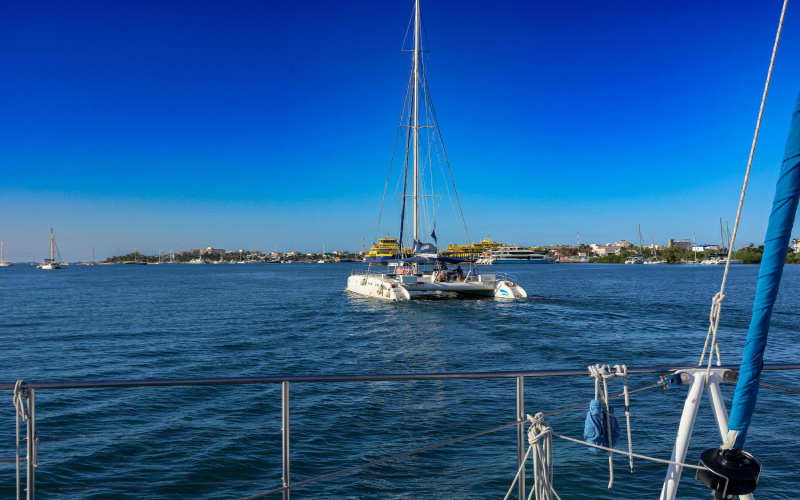
A Detailed Breakdown of the Annual Cost of Owning a Catamaran
Many first-time boat buyers tend to focus solely on the purchase budget, whilst overlooking the ongoing costs of ownership. In reality, the period when a catamaran really starts to ‘cost money’ is often after delivery.
Firstly, there are mooring fees. As catamarans are significantly wider than monohulls, many marinas charge for two berths. In popular cruising areas, annual mooring fees for large catamarans can run into tens of thousands of dollars.
Secondly, there are maintenance costs. A twin-engine system means double the maintenance expenses, along with a larger hull area, more deck equipment and a more complex electrical system.
Insurance costs also rise rapidly with the size of the vessel. This is particularly true for owners planning transoceanic voyages, as insurers typically impose additional requirements regarding the cruising area, season and the age of the vessel.
If you plan to live aboard long-term, you will also need to factor in energy system upgrades, sail replacement, seawater desalination system maintenance and electronic system upgrades. Taken together, these long-term expenses often amount to 5–10% of the vessel’s value annually.
Annual Ownership Cost Guide for Catamarans (2026)
| Cost Item | 30–40-foot inshore cruiser | 40–50-foot offshore cruiser | Ocean-going catamarans over 50 feet |
| Mooring fees | $8,000–$18,000/year | $15,000–$35,000/year | Over $30,000/year |
| Engine maintenance | $2,000–$5,000/year | $4,000–$8,000/year | Over $8,000 per year |
| Hull maintenance | $3,000–8,000 per year | $8,000–20,000 per year | Over $20,000 per year |
| Insurance costs | $3,000–7,000 per year | $8,000–20,000 per year | Over $20,000 per year |
| Sail and rigging maintenance | $2,000–$6,000 per year | $5,000–$12,000 per year | Over $12,000 per year |
| Energy system maintenance | $1,000–$3,000 per year | $3,000–$10,000 per year | Over $10,000 per year |
| Annual total costs | $20,000–$45,000 | $45,000–$120,000 | Over $120,000 |
It should be noted that these figures represent average ranges under ‘normal usage conditions’. If the vessel is frequently used for transoceanic voyages, long-term mooring in tropical waters, or high-frequency charter operations, overall maintenance costs will increase further.
Therefore, for many catamaran buyers, a truly sensible approach to budgeting is not to consider only the ‘purchase price’, but to assess the total cost of ownership over the next five years in advance.
Advice on Buying a Catamaran
If you intend to use the boat primarily for weekend cruising and family holidays, an entry-level catamaran under 40 feet is usually sufficient. This size involves lower maintenance demands and makes it easier to find mooring space.
If you plan to live aboard long-term or undertake cross-regional cruising, the 40 to 50-foot range generally offers the best balance. It strikes a good equilibrium between space, comfort and maintenance costs.
For those seriously planning a round-the-world voyage, however, size should not be the sole consideration; greater attention should be paid to whether the vessel has a proven ocean-going configuration, including energy redundancy, safety systems, water storage capacity and structural reliability.
Furthermore, many beginners fall into the trap of believing that ‘bigger is better’. In reality, as a boat gets larger, maintenance complexity and operating costs increase exponentially. Choosing a boat that suits your sailing style is far more important than blindly pursuing size.
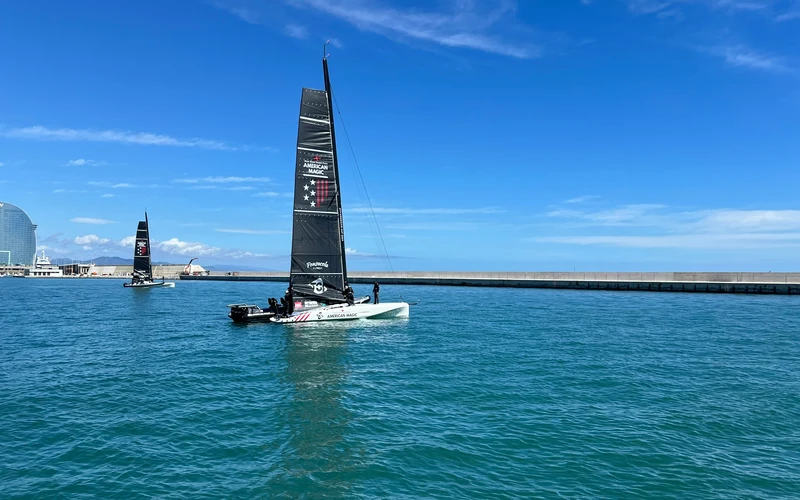
Summary
The fundamental reason for the growing popularity of catamarans lies in their ability to simultaneously meet the needs for spacious comfort, sailing stability and long-term life at sea. From inshore cruisers to true ocean-going vessels, not only do prices vary significantly between different types, but their operational logic is also entirely different.
For first-time boat buyers, the most important consideration is not simply comparing prices, but clearly defining your actual usage scenario. Do you want to enjoy a relaxed weekend at sea, or are you planning a long-term life at sea? Do you prioritise family comfort, or do you place greater emphasis on ocean-going performance? These questions will directly determine your budget and final choice.
Why are catamarans more expensive than monohulls?
Because catamarans have a larger hull area, a wider structure and a twin-engine system, whilst their interior space and fittings are typically of a higher standard, resulting in significantly higher construction and maintenance costs.
FAQ
Q1: What size is suitable for ocean-going voyages?
A: For most family users, a length of 40 to 50 feet is generally a sensible size for ocean-going voyages, striking a balance between storage capacity, comfort and ease of handling.
Q2: Are catamarans suitable for long-term living on board?
A: Absolutely. Catamarans offer more living space, a more stable platform and superior storage capacity, making them the preferred choice for many who live on board long-term.
Q3: Is it better value to buy a new or a second-hand boat?
A: If your budget is limited, a well-maintained second-hand ocean-going yacht usually offers better value for money; if you wish to customise the specifications and keep the boat for the long term, a new boat would be more suitable.