Quick Answer
The annual costs for a yacht primarily comprise: one-off acquisition costs, annual fixed expenses, and hidden costs.
For instance, buying a 50 ft yacht requires setting aside funds for the initial deposit and taxes, alongside mooring fees, insurance premiums, fuel costs, maintenance expenses, and crew wages.
Below is a Typical Yacht Range Cheat Sheet:
| Yacht Length | Minimum Annual Budget | Median Annual Budget | High-End Annual Budget |
| 30 ft | $5,000 | $15,000 | $30,000 |
| 40 ft | $15,000 | $50,000 | $100,000 |
| 50 ft | $50,000 | $150,000 | $300,000 |
| 80 ft | $200,000 | $600,000 | $1,000,000 |
This article draws upon over a decade of my personal experience in yacht buying, selling, and operation, combined with authoritative data, to help prospective owners understand the true annual costs of yacht ownership.
Yacht Initial Purchase Cost
Acquiring a yacht first requires addressing the purchase cost. New yachts command the highest prices but come with brand-new equipment and warranties; used yachts are cheaper upfront, though they may necessitate greater expenditure on refurbishment or repairs.
For instance, an article by professional brokerage Galatiyachts highlights that while purchasing a used yacht saves on the initial price, it often entails higher maintenance costs.
Furthermore, the yacht's age significantly impacts future expenditures: generally, new yachts depreciate by 40%–50% within the first five years, with approximately half this loss occurring in the initial two to three years. The rate of depreciation only slows after five years.
Yacht Pricing and Options
The advantages of a new yacht include customisable specifications, cutting-edge technology, and lower maintenance costs in the early years; The drawbacks include higher purchase costs and substantial upfront taxes.
Conversely, used yachts offer lower prices and reduced depreciation rates; however, they may require extensive refurbishment, such as engine replacement or hull restoration. Consequently, post-purchase maintenance costs for used yachts are often higher.
My experience suggests allocating at least 5–10% of the original price for refurbishment costs when purchasing a used yacht, otherwise there is a significant risk of budget shortfalls.
One-off Costs Associated with Yacht Purchase
When acquiring a yacht, one must also account for the following one-off expenses:
Sales Tax: Typically 6–10% of the yacht's value. For instance, US states generally levy sales tax within this range; EU nations impose Value Added Tax (VAT), which can reach up to 20% of the purchase price.
Import Duties: Additional tariffs or import taxes may apply when importing yachts from overseas. Policies vary by country, with some also levying import VAT.
Registration/Transfer Fees: Costs for registering a yacht differ by nation, ranging from tens to hundreds of dollars.
Brokerage Commission: When purchasing through a yacht broker, commission is generally around 10% of the yacht's price. This portion is often borne by the seller.
Survey and Legal Fees: Buying a yacht typically involves expenses for surveys, legal notarisation, and moving costs, potentially amounting to several thousand dollars.
Initial Equipment Configuration: To tailor the yacht to requirements, one-off upgrades to electronics, safety equipment, or interior fittings may be necessary, costing from several thousand to tens of thousands of dollars.
Annual Yacht Ownership Cost Breakdown
The annual cost of owning a yacht can be divided into fixed and variable expenses. Below are common items and their approximate ranges:
Annual Fixed Yacht Costs
Mooring/Berthing Fees: These constitute a significant portion of annual costs, charged by length or fixed tier. For a 40–60 ft yacht, annual fees at premium marinas globally can reach $8,000–60,000; In the United States, the average annual fee per foot ranges from approximately $150–350; fees are considerably lower in remote locations or for owner-owned berths.
Yacht Insurance: Hull and liability insurance are mandatory. Premiums are generally calculated at 0.5%–2% of the yacht's value, depending on sailing regions, age, and claims history. Coverage typically includes hull damage, third-party liability, and crew insurance.
Registration and Certification: Certain nations require annual renewal of inspection certificates or navigation permits, such as radio licences and sewage discharge certificates, costing several hundred to several thousand dollars.
Loan Interest: Should the yacht be financed, annual fixed costs include loan interest payments. Interest constitutes a higher proportion during the initial loan period but diminishes annually as principal is repaid.
Annual Inspections: Certain navigation zones mandate annual or periodic safety inspections, such as US Coast Guard surveys or European flag state ISM certificate renewals, often costing several thousand dollars.
Annual Variable Yacht Costs
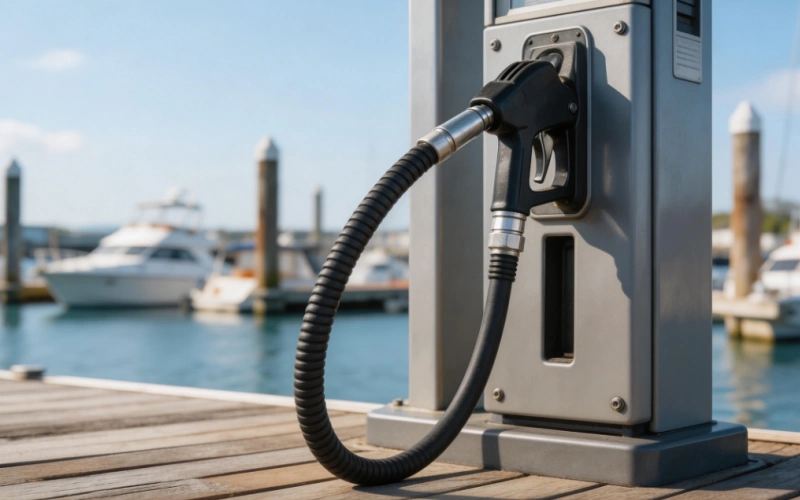
Fuel: Fuel expenses fluctuate significantly based on mileage. For a 50–60 ft sports yacht, annual fuel costs range from $5,000 to $80,000.
For example, a 50 ft yacht consuming approximately 100 litres per hour at economical cruising speed, operating 200 hours annually at $1.20 per litre, incurs fuel costs of around $24,000. The farther the cruising distance and the higher the speed, the greater the fuel consumption.
Maintenance: Industry experience suggests costs amounting to approximately 5%–10% of the yacht's value. This encompasses periodic servicing including antifouling, engine maintenance, filter replacements, cleaning, and oil changes. Annual maintenance extends the yacht's lifespan and prevents major overhauls; neglecting upkeep often leads to substantially higher repair costs.
Crew Salaries: Small yachts are often crewed by the owner, incurring no additional wages. However, larger yachts require professional captains and crew. Yachts exceeding 24 metres typically necessitate a full-time captain.
A skipper's annual salary ranges from approximately $45,000 to $90,000, while total crew wages (including chefs, sailors, engineers, etc.) can reach hundreds of thousands or even millions of dollars. Even without full-time employment, costs for temporary crew, cleaners, or maintenance technicians must be accounted for.
Towing/Transportation: Costs for moving and storage arise when yachts require transoceanic transport (barge or ferry) or winter towing for maintenance. These represent irregular variable expenses.
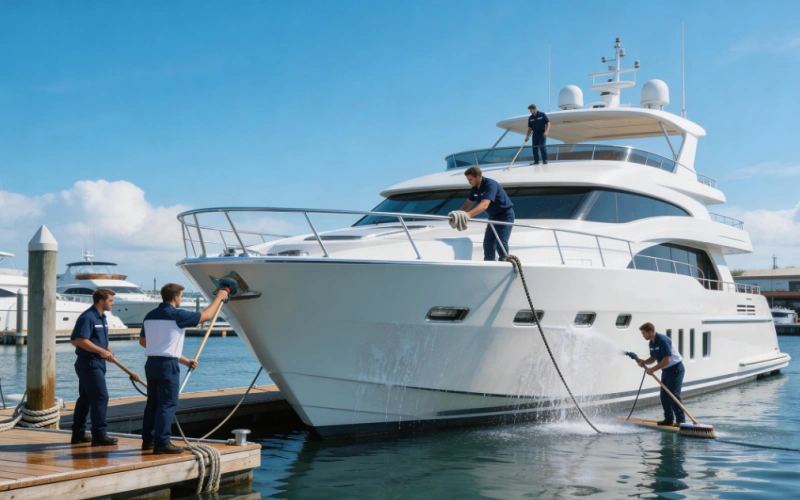
Cleaning and Supplies: This includes regular hull washing, interior sanitation, refuelling, fresh water replenishment, and onboard consumables. Though less significant than the preceding costs, these are annual items requiring planning.
Rule of Thumb
| Item | Annual Cost Percentage |
| Maintenance & Repairs | 5%–10% of yacht value |
| Insurance | 1%–3% of yacht value |
| Berth/Mooring Fees | 10%–30% of annual budget |
| Fuel | 5%–15% of annual budget |
This table provides a quick benchmark for assessing budget feasibility, though actual figures must account for vessel age, mooring location, and sailing plans.
Hidden Costs and Risk Factors in Yacht Ownership
In 2019, a client purchased a 30 ft used Hanse 311 sailing yacht, budgeting solely for fixed costs. After six months of sailing, he discovered severe corrosion in the engine's water pump, incurring unexpected repair costs of $7,500 and significantly exceeding the annual budget.
This incident serves as a reminder: beyond visible expenditures, yacht ownership entails numerous latent costs requiring advance budgeting. Otherwise, minor issues may escalate into substantial losses.
Depreciation and Opportunity Cost: Yachts represent a luxury asset depreciating annually. New yachts may lose 40%–50% of their value within the first five years. In other words, acquiring a high-performance yacht today often yields minimal return upon resale.
Major Failures and Unplanned Repairs: Yacht systems are complex and prone to failure after prolonged use. Major overhauls can easily cost tens of thousands or even hundreds of thousands of dollars, such as gearbox failures, main engine rebuilds, propeller replacements, or hull crack repairs.
Even with regular maintenance, unforeseen failures are difficult to entirely prevent. I once witnessed a 45 ft motor yacht, merely three years old, requiring emergency repairs exceeding $25,000 due to a cracked thruster shaft. Such latent risks necessitate setting aside contingency funds.
Regulatory/Compliance Upgrades: Evolving environmental and safety regulations worldwide may mandate yacht retrofits. For instance, progressively stringent CO₂ emission standards for international voyages could necessitate upgrading to low-sulphur fuel systems or installing wastewater treatment equipment.
Furthermore, converting a yacht from private use to commercial charter necessitates additional inspections (e.g., ISM, ISPS regulations) and insurance requirements, all incurring extra expenditure.
Fixed Costs During Idle Periods: Even when not in use, certain ongoing expenses persist, such as shore power fees to maintain battery charge, periodic engine cycling, and anti-humidity/mould prevention measures.
Tax and Legal Risks: Utilising a yacht for commercial charter may allow partial expense deductions, but necessitates tax declarations and compliance with commercial regulations; international voyages may also incur import duties or usage taxes at each port of call.
Registration and tax burdens vary significantly across different nationalities, with negligence potentially incurring fines or tax liabilities.
Annual Holding Costs by Yacht Size
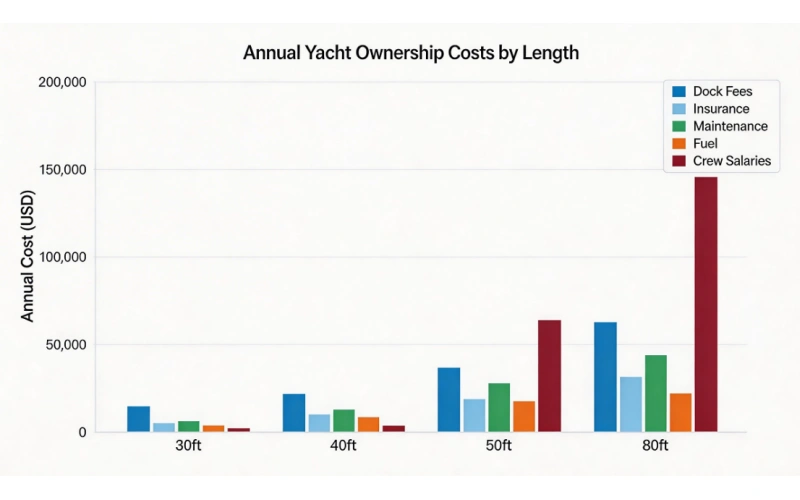
Below is an annual expenditure template for yachts of varying lengths, compiled from my years of accumulated experience for reference:
| Annual Cost Item | 30 ft Yacht | 40 ft Yacht | 50 ft Yacht | 80 ft Yacht |
| Berthing Fees | $3,000 | $8,000 | $15,000 | $30,000 |
| Insurance | $500 | $1,500 | $5,000 | $12,000 |
| Maintenance | $5,000 | $12,000 | $25,000 | $100,000 |
| Fuel | $2,000 | $5,000 | $20,000 | $50,000 |
| Crew Salaries | $0 | $0 | $50,000 | $300,000 |
| Annual Total Cost | $10,500 | $26,500 | $115,000 | $492,000 |
The cost of owning a yacht also depends on its type. Motor yachts are typically the most expensive, while sailing yachts and catamarans often incur lower annual fuel and maintenance costs. Here is the explanation:
Typical Annual Yacht Costs by Type and Size
| Yacht Type | 30 ft | 40 ft | 50 ft | 80 ft |
|---|---|---|---|---|
| Motor Yacht | $10,500 | $26,500 | $115,000 | $492,000 |
| Sailing Yacht | $7,500 | $20,000 | $80,000 | $400,000 |
| Catamaran | $8,500 | $22,000 | $95,000 | $450,000 |
With the size budget established, we now examine the relationship between fuel consumption and speed, which significantly impacts a yacht's annual operating costs.
Operational Cost Considerations for Yacht Ownership
Fuel and Range Costs
For every 10% increase in yacht speed, fuel consumption may rise by 20–30%, making slow cruising the most economical approach.
Annual fuel budget formula: Annual fuel cost = Average fuel consumption (L/h) × Annual sailing hours × Fuel unit price
Example: 80 L/h × 100 h × $1.2/L ≈ $9,600/year
I generally advise clients to plan for slow cruising, adjust propeller pitch, and conduct regular hull polishing to reduce fuel costs and long-term wear.
Maintenance and Repair Strategy
Preventive maintenance outperforms reactive repairs, reducing annual unexpected yacht expenditures by 15%–25%.
Recommended annual checklist:
Quarterly: Propulsion systems, steering gear, electronics
Annually: Hull cleaning, antifouling, main engine servicing
Every 5 years: Hull structure, propulsion systems, main engine overhaul
During sea trials, I identified minor propeller anomalies which, through pre-inspection, prevented a $20,000 overhaul.
Crew, Management & Charter Solutions
Small yachts may be self-crewed by owners, whilst larger yachts require 1–5 crew members.
Third-party management firms typically charge 10%–20% management fees, reducing owner administrative burdens but increasing annual costs.
Offsetting costs through yacht chartering requires consideration of tax implications, regulatory compliance, and insurance ramifications.
Yacht Taxation, Insurance, and Registration
Essential insurance cover: Hull, Liability, Crew/Passenger
Differences between flag states: Impact tax liabilities and operational flexibility
Claims history: Long-term influence on yacht insurance premiums
10-Year Ownership Cost Estimate
After understanding the annual operational costs—fuel, maintenance, and crew expenses—it's crucial to consider the cumulative cost over a decade. This allows prospective owners to plan for long-term budgeting and avoid unexpected financial strain.
The table below provides a conservative estimate based on a 50 ft Motor Yacht, with Sailing Yacht and Catamaran comparisons. It includes gradual increases due to inflation, maintenance escalation, and occasional refurbishment:
| Year | Motor Yacht ($) | Sailing Yacht ($) | Catamaran ($) |
|---|---|---|---|
| 1 | 115,000 | 80,000 | 95,000 |
| 2 | 118,000 | 82,000 | 97,000 |
| 3 | 120,000 | 84,000 | 99,000 |
| 4 | 122,500 | 86,500 | 101,500 |
| 5 | 125,000 | 89,000 | 104,000 |
| 6 | 127,500 | 91,500 | 106,500 |
| 7 | 130,000 | 94,000 | 109,000 |
| 8 | 132,500 | 96,500 | 111,500 |
| 9 | 135,000 | 99,000 | 114,000 |
| 10 | 137,500 | 101,500 | 116,500 |
| 10-Year Total | 1,263,000 | 903,000 | 1,073,000 |
How to Reduce Yacht Ownership Costs?
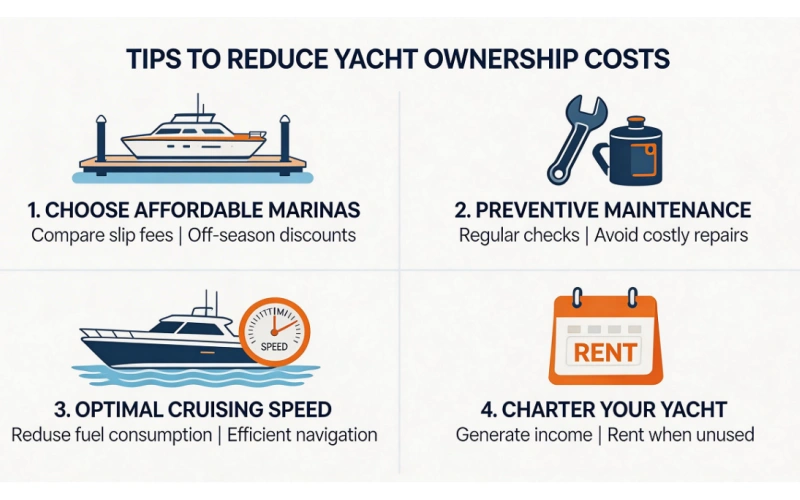
Yacht ownership entails substantial expenditure, prompting many experienced owners to employ cost-control strategies such as:
Selecting optimal mooring locations
Relocating the yacht to lower-cost harbours during off-peak seasons significantly reduces berthing fees.
Adhering to preventive maintenance
Regular servicing prevents costly emergency repairs.
Moderating cruising speeds
Lower cruising velocities markedly reduce fuel consumption.
Moderate Yacht Chartering
Some owners offset operational costs by offering short-term charters when their yacht is idle. However, this practice requires compliance with local regulations and insurance requirements.
Conclusion
The Cost of Owning a Yacht extends far beyond the purchase price, encompassing a long-term operational budget.
For most yachts, owners should typically budget approximately 5%–15% of the vessel's value annually for running costs.
Thoroughly understanding these costs before purchasing a yacht enables prospective owners to make more informed decisions, enjoying maritime life while avoiding unexpected financial strain.
If you are considering purchasing a yacht, first answer these three key questions:
Which port will your yacht primarily be moored in?
How many hours of sailing do you anticipate annually?
Will you require crew or a management company?
These factors directly influence the yacht's annual budget.
About the Author
Emery
Yacht Broker / Yacht Transaction Consultant / Contributing Writer for Yachting Magazine
SAMS Certified Surveyor No.: AMS #2458
Previously named among ‘Asia's Top Ten Yachting Industry Experts’ and recipient of the ‘Outstanding Service Award for Yacht Brokers’
Last Updated: March 2026
Scope of Application: This article is intended for prospective yacht owners planning to purchase or maintain a vessel, particularly those focusing on annual ownership costs, berthing fees, and maintenance budgets.
Disclaimer
This content is compiled solely based on the author Emery's personal experience, publicly available industry data, and general market conditions, aiming to provide reference information for prospective yacht owners. Actual yacht ownership costs vary significantly depending on vessel type, age, port of registry, sailing frequency, insurance requirements, maintenance strategies, and other factors. The budgets, cost ranges, and formulas presented herein serve solely as illustrative estimates and do not constitute specific investment, purchasing, or financial advice. Readers should consult professional brokers, insurers, and legal advisers tailored to their individual circumstances before proceeding with a yacht purchase or planning annual expenditures to obtain precise, personalised guidance. Neither the author nor the platform shall be liable for any direct or indirect losses arising from the use of this information.
FAQ
Q1: How much does a 40 ft yacht cost to maintain annually?
A: The annual holding costs for a 40–60 ft yacht typically amount to 10%–15% of the yacht's purchase price. For instance, a 40 ft yacht costing $400,000 may incur annual operating expenses between $40,000 and $60,000.
Q2: Can chartering offset ownership costs?
A: Yacht chartering can generate income to offset operating expenses. However, this introduces the complexity of commercial operations, requiring business insurance, tax declarations, and legal operating credentials.
Q3: What is the 10% rule for yacht ownership costs?
A: The 10% rule is an empirical guideline: annual total yacht costs typically amount to approximately 10% of the purchase price. For instance, a $300,000 yacht requires an annual operating budget of $30,000. This proportion encompasses both fixed and variable expenses.