



If you are looking for a family motor yacht under 50 feet, the biggest decision is not simply how much space you can get for your budget. Layout, sleeping capacity, weather protection, marina access, handling systems and the way your family actually uses the boat can make a much bigger difference.
Quick Answer: What Is the Best Motor Yacht Under 50 Feet for a Family?
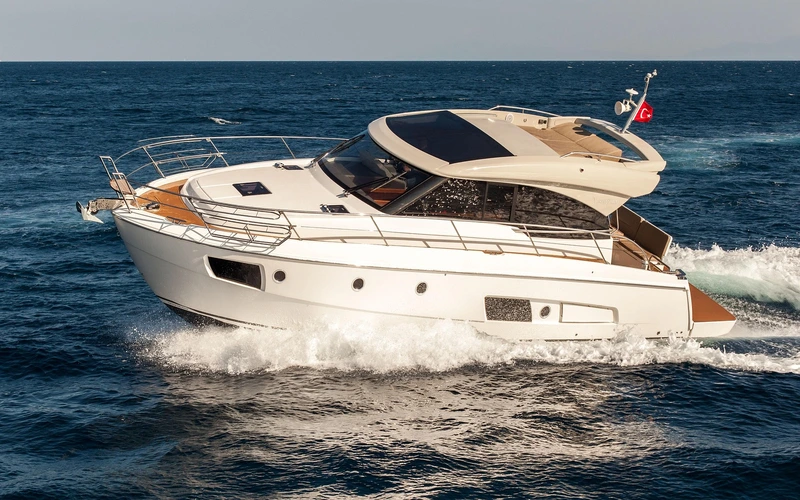
The Princess F45 is our best all-round motor yacht under 50 feet for family cruising, combining two en-suite cabins, a flybridge and a 47 ft 1 in LOA including pulpit. Choose the Galeon 440 Fly for more flexible accommodation, the Prestige M48 for greater multihull living space, or the Aquila 36 Sport for day boating, watersports and short overnight trips.
The right choice depends on how many people need private berths, whether you prefer a flybridge or enclosed helm, the width of your home berth, and how often the yacht will be used for overnight cruising.
Best Motor Yachts Under 50 Feet: Quick Comparison
| Model | Published LOA | Type | Cabins / Fixed Berths | Best For | Main Trade-Off | Availability |
|---|---|---|---|---|---|---|
| Princess F45 | 47 ft 1 in including pulpit | Flybridge | 2 / 4 | All-round family cruising | Only two private cabins | New / Used |
| Galeon 440 Fly | 45 ft 8 in | Flybridge | 2 or 3 / configuration dependent | Flexible family accommodation | Expanded width in Beach Mode requires berth planning | New / Used |
| Prestige M48 | 48 ft 6 in | Power catamaran | 3 / configuration dependent | Space and privacy | Wide beam limits berth options | New / Used |
| Absolute 48 Coupé | 48 ft 11 in | Enclosed coupé | 3 / approx. 6 | Weather-protected cruising | Less open-air space than a flybridge | New / Used |
| Azimut Atlantis 45 | 47 ft 11 in | Sport cruiser | 2 / 4 | Sporty family cruising | Two-cabin layout | New / Used |
| Aquila 36 Sport | Approximately 36 ft | Power catamaran / day boat | 2 / configuration dependent | Day boating and watersports | Smaller overnight platform | New / Used |
| Beneteau Gran Turismo 45 | 48 ft 6 in | Express cruiser | 2 or 3 / configuration dependent | Used all-weather cruising | Used-market availability varies | Used |
| Cranchi T36 Crossover | Approximately 38 ft 10 in | Crossover / sport cruiser | 2 / configuration dependent | Value-oriented weekend cruising | Older-generation design | Used |
Specifications vary by model year, market and configuration. LOA is based primarily on the manufacturer's published overall length; where a builder distinguishes length including or excluding a pulpit or similar structure, that distinction should be checked before comparing berth requirements.
Not sure which model fits your family?
Compare current 40- to 50-foot motor yachts by type, age and budget, or ask a YachtTrading broker to shortlist suitable new and used options.
👉 Compare 40–50 ft Motor Yachts
👉 Browse New Yachts
👉 Browse Used Yachts
👉 Ask a Broker
How We Chose These Family Motor Yachts
This is not a ranking based on a single specification or claimed sales-volume data.
We selected the eight models using several practical criteria:
- Manufacturer-published LOA of approximately 50 feet or less
- At least two private sleeping cabins, or particularly strong day-boating capability for families
- Useful circulation between cockpit, salon, helm and accommodation areas
- Practical outdoor space, shade or enclosed-weather protection
- Layouts that can work for owner-operated cruising, while recognizing that professional instruction and experience are still required
- Current production models or established used-market availability.
- A clearly identifiable family use case
- A meaningful trade-off, rather than presenting any yacht as universally "best"
For family buyers, we also place more weight on boarding access, deck movement, helm visibility, sleeping privacy and weather protection than on headline top speed alone.
8 Best Motor Yachts Under 50 Feet for Families
Most models on this list are in the 40- to 50-foot range, while the Aquila 36 Sport and Cranchi T36 Crossover are included as smaller alternatives for families who prioritize day boating, weekend cruising and easier marina access.
Here are eight motor yachts under 50 feet worth considering for family cruising, each offering a different balance of space, comfort, performance and practicality.
Princess F45 — Best All-Round Compact Flybridge
The Princess F45 is the strongest all-round choice in this group for families who want a traditional luxury flybridge motor yacht without moving into the 50-foot-plus category.
Why It Fits a Family
The key advantage is balance. The F45 provides a proper flybridge for outdoor dining and relaxing, a spacious cockpit and a two-cabin lower-deck arrangement that gives a family of four genuine private sleeping accommodation.
The flybridge is particularly useful for families who spend much of their time cruising in good weather but still want an indoor salon when conditions change.
Key Family-Relevant Specs
- LOA: 47 ft 1 in including pulpit
- Beam: 14 ft
- Cabins: 2
- Berths: 4
- Heads: 2 en-suite
- Engines: Twin Volvo D6-480 IPS 650
- Maximum Speed: 29–31 knots
Main Compromise
The two-cabin arrangement limits sleeping capacity compared with some three-cabin competitors. Buyers who regularly travel with children plus grandparents or several guests may need to look at the Galeon 440 Fly, Prestige M48 or Absolute 48 Coupé.
What to Verify Before Buying
Check engine hours, IPS service history, generator condition, flybridge upholstery, hydraulic systems and the exact cabin configuration of the individual boat.
👉 View current Princess F45 listings or request current pricing.

Princess F45
- Build Year2022
- Length47.10 ft
- Cabins2
- Top speed29 kn
- TypeFlybridge yacht
The Princess F45, launched by Princess Yachts, is a classic entry-level flybridge luxury yacht measuring approximately 45 feet in length, offering a perfect balance of performance, space and comfort.This model continues Princess’s tradition of British craftsmanship and sporting heritage, combining an efficient hull design with powerful propulsion to deliver a smooth and enjoyable cruising experience.
Galeon 440 Fly — Best for Flexible Family Space
The Galeon 440 Fly is one of the most interesting choices for families because its accommodation can be configured with two or three cabins.
Why It Fits a Family
Flexibility is the main attraction.
A two-cabin configuration gives more room to the main accommodation areas, while the three-cabin version can make better use of the boat for families with children or additional overnight guests.
The flybridge, large windows and convertible outdoor areas also give the 440 Fly a strong balance between indoor and outdoor family living.
Key Family-Relevant Specs
- LOA: 45 ft 8 in / 13.97 m
- Beam: Approximately 4.2–4.31 m / 13 ft 8 in–14 ft 2 in, depending on model year and specification
- Cabins: 2 or 3
- Engine Options: Twin Volvo Penta D6
- Engine Power: Documented versions include up to 480 hp per engine; later specifications may offer higher-output options
- Category: B
Best for: Families who want flexible two- or three-cabin accommodation.
Main Compromise
The standard beam is already substantial, while the optional Beach Mode configuration can expand the usable width considerably. Marina compatibility therefore needs to be checked before purchase.
What to Verify Before Buying
Confirm whether the individual yacht has the two- or three-cabin layout, check the actual beam required for marina storage, verify the engine power and propulsion specification, inspect the hydraulic platform and balcony systems, and review the engine and electronic service history.
👉 View current Galeon 440 Fly listings or request current pricing.
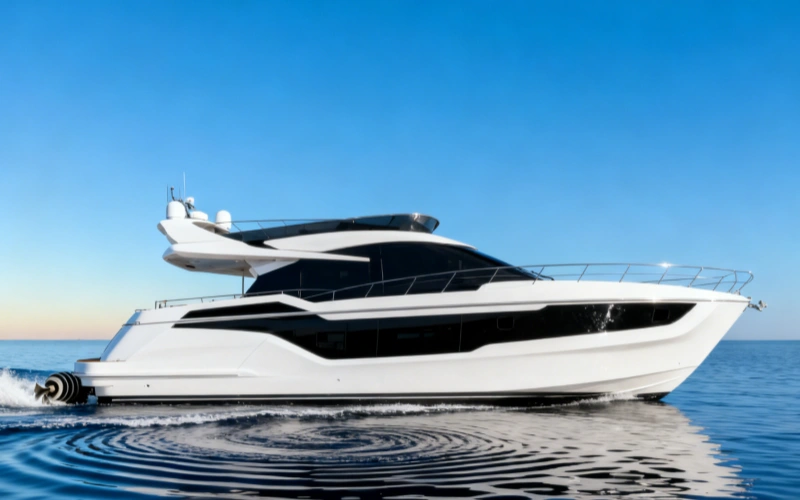
Prestige M48 — Best Power Catamaran for Space and Privacy
For families who prioritize living space over the handling performance of a monohull, the Prestige M48 motor catamaran is a strong choice.
Why It Fits a Family
The major advantage is usable volume.
A catamaran's broader beam can provide more interior and exterior space than a conventional monohull of similar LOA, although actual usable volume depends on the hull design and layout. The M48 uses that space for a large outdoor saloon, flybridge and private accommodation.
For families planning longer coastal trips, this can be more valuable than having a higher top speed.
Key Family-Relevant Specs
- LOA: 48 ft 6 in / 14.79 m
- Beam: Approximately 19 ft 8 in / 6 m
- Cabins: 3
- Engines: Twin Volvo D4-320
- Cruising Speed: Approximately 16 knots
- Maximum Speed: Approximately 19 knots
Best for: Families prioritizing space, privacy and relaxed cruising.
Main Compromise
The very feature that makes the M48 spacious also makes it harder to berth in some marinas. A 19-foot-plus beam requires careful checking of marina limits, travel-lift capacity and haul-out arrangements.
What to Verify Before Buying
Check berth width, haul-out availability, draft, engine access, water capacity, generator and air-conditioning requirements, and the exact cabin/head configuration.
👉 View the current Prestige M48 listing or request current pricing.
Absolute 48 Coupé — Best Enclosed Three-Cabin Coupé
The Absolute 48 Coupé is a strong choice for families who want three private cabins but prefer an enclosed, weather-protected cruising environment rather than a conventional flybridge.
Why It Fits a Family
The coupé concept works particularly well for families who cruise in variable weather.
The enclosed helm and salon create a more protected environment, while the large glazing helps maintain visibility and natural light. The three-cabin arrangement is also useful when children or guests need separate sleeping spaces.
Key Family-Relevant Specs
- LOA: 48 ft 11 in
- Cabins: 3
- Berths: Approximately 6
- Engines: Twin Volvo Penta D6 IPS650 on listed configuration
- Top Speed: Approximately 28 knots on listed configuration
Best for: Families who value enclosed living and all-weather protection.
Main Compromise
Compared with a flybridge yacht, there is less dedicated elevated outdoor living space.
What to Verify Before Buying
Check the exact production year, cabin layout, generator and air-conditioning system, opening-window mechanisms, solar system, IPS service history and condition of the hydraulic platform.
👉 View the current Absolute 48 Coupé listing or request current pricing.
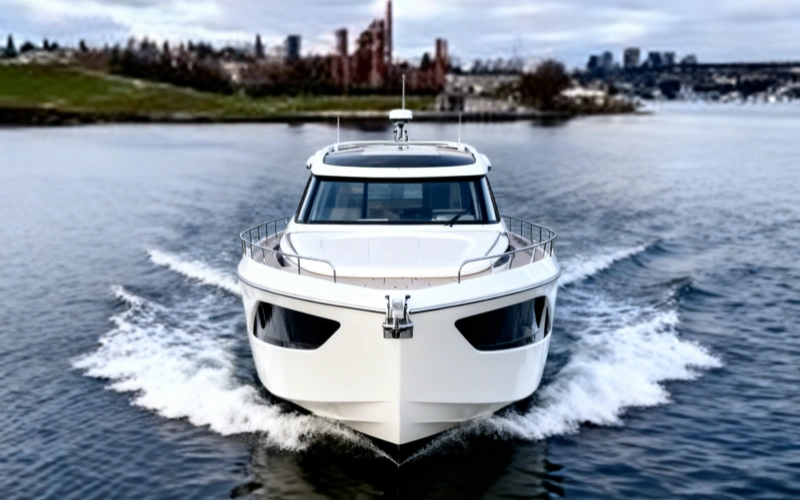
Azimut Atlantis 45 — Best Sporty Family Cruiser
The Azimut Atlantis 45 is aimed at families who want a more performance-oriented experience without giving up the basic comforts required for overnight cruising.
Why It Fits a Family
The Atlantis 45 has an open, single-level main deck that makes movement between the cockpit, saloon and galley relatively straightforward.
Its large glazing and open layout also create a more connected feeling between indoor and outdoor areas.
Key Family-Relevant Specs
- LOA: 47 ft 11 in
- Beam: 13 ft 9 in
- Cabins: 2
- Berths: 4
- Heads: 2
- Engines: Twin Volvo Penta IPS 650
- Maximum Speed: Up to 35 knots
Best for: Active families who prioritize speed and day cruising.
Main Compromise
The two-cabin layout provides less private sleeping capacity than several three-cabin alternatives.
What to Verify Before Buying
Check the cabin configuration, engine hours, IPS maintenance, hardtop and glazing systems, cockpit shade and whether the yacht's cruising profile actually justifies its performance-oriented specification.
👉 View current Azimut Atlantis 45 listings or request current pricing.
Aquila 36 Sport — Best Family Day Boat and Watersports Pick
Unlike the other large luxury cruisers on this list, the Aquila 36 Sport adopts a radically different design philosophy, focusing on maximizing deck space, cruising stability and flexibility for day cruises within a smaller hull size.
Why It Fits a Family
The 36 Sport is particularly attractive for families who spend more time swimming, fishing, entertaining and doing watersports than sleeping aboard.
Its wide catamaran platform provides substantial deck space for its length. The two private cabins provide dedicated overnight accommodation, while additional sleeping capacity in the salon can bring the total sleeping capacity to up to six people, depending on configuration.
Key Family-Relevant Specs
- Length: Approximately 36 ft
- Beam: Approximately 14 ft 7 in
- Cabins: 2
- En-Suite Bathrooms: 2
- Twin outboard propulsion
- Mercury joystick piloting
- Large aft swim platform
Best for: Families focused on day boating, swimming and watersports.
Main Compromise
It is not a substitute for a 45- to 50-foot cruising yacht when the family regularly needs large private cabins, extensive storage or multi-day accommodation.
What to Verify Before Buying
Check the exact engine package, fuel capacity, trailer or transport requirements where relevant, marina berth dimensions, cabin storage and whether the boat will mainly be used for day trips or overnight cruising.
👉 View the current Aquila 36 Sport listing or request current pricing.
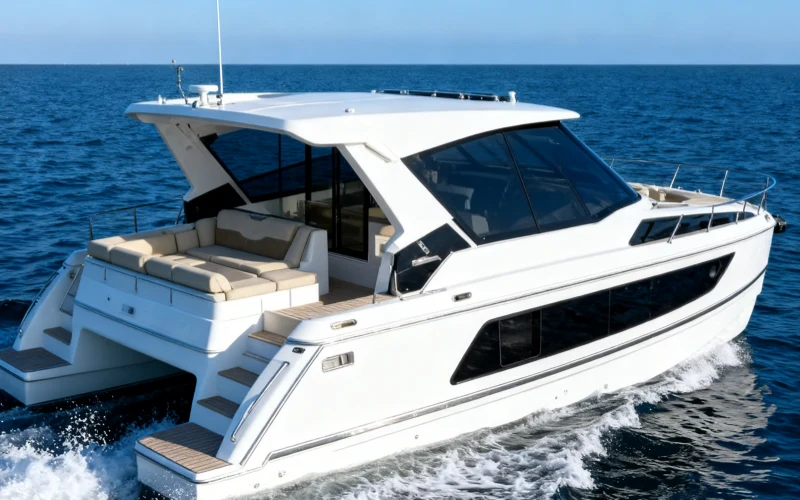
Beneteau Gran Turismo 45 — Best Used All-Weather Express Cruiser
The Gran Turismo 45 is an earlier-generation model and is primarily a used-market option in a 2026 buying guide. The model also uses an enclosed hardtop and connects indoor and outdoor spaces through its cockpit and salon arrangement.
Why It Fits a Family
The GT45 is particularly useful for families who want an express-cruiser layout with better weather protection than a fully open sport boat.
The two- and three-cabin configurations give buyers more flexibility, while the hardtop and patio-door options make the boat adaptable to different climates.
Key Family-Relevant Specs
- LOA: 48 ft 6 in / 14.78 m
- Beam: 13 ft 9 in / 4.2 m
- Cabins: 2 or 3
- Engine Power: Up to twin 440 hp
- Enclosed hardtop
- Available with IPS or sterndrive configurations depending on version
Best for: Families seeking a used express cruiser with strong weather protection.
Main Compromise
The Gran Turismo 45 belongs to an earlier generation and is no longer part of Beneteau's current Gran Turismo lineup. Buyers therefore need to evaluate each used boat individually rather than treating the model as a current 2026 new-yacht offering.
What to Verify Before Buying
Pay particular attention to engine and drive configuration, maintenance records, hardtop mechanisms, electronics age, upholstery, air-conditioning and evidence of water intrusion around opening systems.
👉 Browse current Beneteau Gran Turismo 45 listings.
Cranchi T36 Crossover — Best Value Used Crossover
The Cranchi T36 Crossover is another model that makes more sense as a used-market recommendation than as a new 2026 launch.
Why It Fits a Family
The T36 Crossover provides a practical combination of protected living space, outdoor access and sporty handling in a smaller package.
For families who primarily go cruising on the weekends and want a yacht that's more compact than the 45- to 50-foot alternatives on this list when docked, this yacht may be a better fit than purchasing a larger flybridge yacht.
Key Family-Relevant Specs
- LOA: Approximately 38 ft 10 in
- Beam: Approximately 11 ft 7 in
- Cabins: 2
- Twin Volvo Penta diesel configuration on documented versions
- Hardtop with protected outdoor area
Best for: Families wanting a compact used cruiser for weekend trips.
Main Compromise
Compared with the F45, M48 or 440 Fly, there is less interior and outdoor space.
What to Verify Before Buying
Check the specific model year, engine configuration, cabin layout, service history, hardtop and glazing, air-conditioning, generator and hull condition.
👉 View current Cranchi T36 Crossover listings or request current pricing.
Which Yacht Type Fits Your Family?
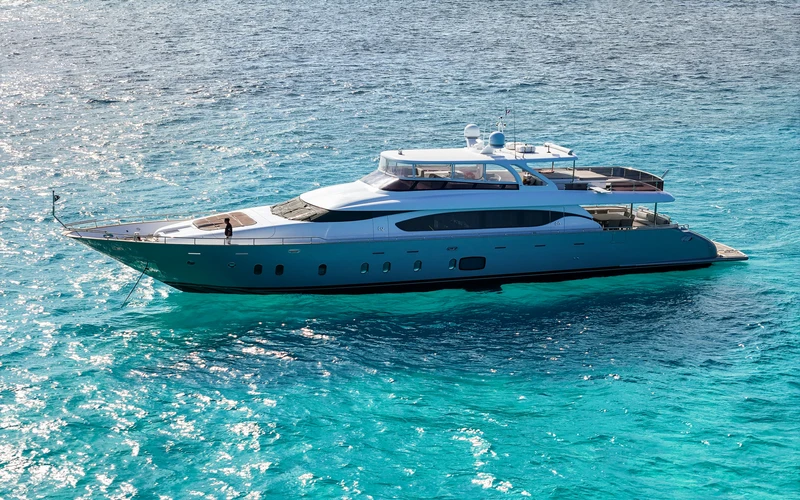
Choosing the right yacht type depends less on the brand or size than on how your family plans to use the boat. For the purposes of this guide, four common family-oriented yacht types under 50 feet can be compared as follows:
| Yacht Type | Best Family Use | Main Advantage | Main Trade-Off |
|---|---|---|---|
| Flybridge | Weekend cruising and outdoor living | Extra upper-deck social space | More systems and exposed equipment to maintain |
| Power Catamaran | Space, privacy and relaxed cruising | Very wide platform and large living areas | Marina and haul-out requirements can be more demanding |
| Enclosed Coupé | All-weather family cruising | Strong protection from sun, wind and rain | Less dedicated elevated outdoor space |
| Sport Cruiser | Speed, day use and short overnights | Responsive performance and compact layout | Usually less accommodation than a flybridge |
For many families, a flybridge yacht offers a strong all-around balance, while power catamarans generally provide a broad, stable platform at rest, but motion comfort still depends on sea state, speed and hull design, and sport cruisers are ideal for buyers who value speed and performance.
If you're still considering what type of boat is right for your family, you can compare motor and sailing options for family use.
What Families Should Check Before Buying
Before choosing a specific yacht, families should understand how to buy a yacht and arrange a survey, as well as the practical details that can affect everyday use.Beyond price, brand and specifications, families should assess how easily everyone can move around, board and live aboard the yacht. A practical inspection should include:
- Side-deck width and handholds
- Guardrail / bulwark height
- Non-slip surfaces
- Swim-platform and boarding access
- Steps between cockpit, salon and cabins
- Visibility from the helm
- Number of private cabins and heads
- Shade and enclosed-weather protection
- Engine noise near sleeping areas
- Berth width and marina availability
New vs Used Motor Yachts Under 50 Feet
The choice between new and used depends largely on how much customization you want and how comfortable you are evaluating an individual boat.
A new motor yacht provides the latest model-year equipment, factory options and warranty coverage. It can be particularly attractive when you already know the layout your family needs and want to specify the boat around that use.
A used yacht can offer access to a higher-level model or larger layout for the same purchase budget. However, condition becomes much more important. Engine hours, service records, previous ownership, electronics age, generator condition, hull history and equipment upgrades can materially change the value of two apparently similar boats.
Used-market choices such as the Beneteau Gran Turismo 45 and Cranchi T36 Crossover should therefore be assessed as individual vessels rather than simply by model reputation.
For either route, compare the actual boat's condition and specification before relying on a model name or advertised price.
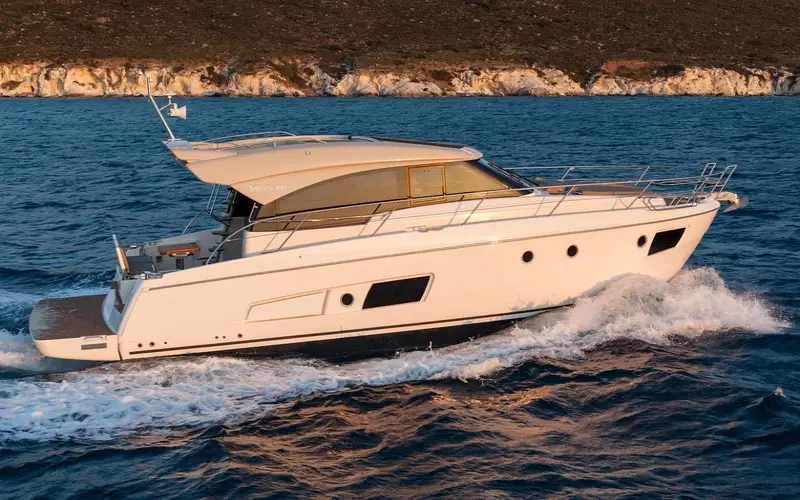
Ownership Costs: What Changes Below 50 Feet?
Being under 50 feet does not automatically make a motor yacht inexpensive to own.
The purchase price is only part of the budget. When estimating yacht running costs per year, family buyers should compare the main recurring expenses before choosing a model. These typically include berth fees, insurance, fuel, scheduled service, haul-out and a contingency fund for unexpected repairs. Actual costs vary significantly by yacht size, location, usage, age and condition, so a single percentage or annual estimate may not apply to every owner.
Berthing can be particularly significant in popular marinas, making yacht berthing costs in 2026 an important factor when comparing ownership locations. Fuel and scheduled service will also depend heavily on how often and how far the yacht is used, while haul-out and contingency expenses should be included in any realistic long-term budget.
Final Recommendation
If you want a conventional flybridge, start with the Princess F45. If accommodation flexibility matters most, consider the Galeon 440 Fly. For maximum living volume, look at the Prestige M48, while the Aquila 36 Sport is better suited to families focused on day boating and watersports.About the Editorial Review
This guide was prepared by the YachtTrading editorial team using publicly available manufacturer specifications, model information and YachtTrading listing data. Specifications may vary by model year, market and configuration. Manufacturer-published LOA is used as the primary length reference, and buyers should verify the exact vessel specifications, availability and condition before purchasing.
Disclaimer
This content is for general informational purposes only and does not constitute legal, tax, financial, investment or technical advice. Yacht purchases involve vessel-specific, financial and regulatory considerations. Buyers should consult qualified yacht brokers, marine surveyors, attorneys or other relevant professionals before making a purchase decision.
FAQ
Q1: What are the best motor yachts under 50 feet for families?
A: The best choice depends on how your family uses the yacht rather than on length alone. Important differences include the number of private cabins, outdoor living space, weather protection, beam, marina access and owner-operation features. In this guide, the Princess F45, Galeon 440 Fly, Prestige M48 and other models represent different priorities, from conventional flybridge cruising to power-catamaran space and compact day boating.
Q2: What is the best flybridge yacht under 50 feet?
A: When comparing flybridge yachts below 50 feet, focus on the relationship between outdoor living space, cabin layout, helm position and marina requirements. A compact flybridge can provide useful additional social space without moving into a larger yacht category, but the upper deck also adds equipment and maintenance considerations. Buyers should compare the actual model-year configuration, rather than choosing solely from the yacht's advertised length or model name.
Q3: What is the best day boat under 50 feet for a family?
A: For family day boating, prioritize easy boarding, generous cockpit space, shade, a practical swim platform and clear movement between the main activity areas. Overnight accommodation can be useful, but it may not need to be the primary design priority. A smaller power catamaran or sport-oriented motor yacht can therefore make more sense than a larger cruising yacht when most trips involve swimming, entertaining, fishing or watersports rather than extended stays aboard.
Q4: Is a 50-foot yacht too large to operate without a full-time crew?
A: Not necessarily. Some yachts around 40 to 50 feet incorporate joystick controls, bow or stern thrusters, integrated navigation systems and other features that can make owner-operated handling more manageable. These systems are aids rather than substitutes for training and experience. Buyers should consider visibility, docking characteristics, windage, propulsion type and local boating conditions, and should obtain appropriate instruction before operating a yacht independently.
Q5: How many people can sleep on a 40- to 50-foot motor yacht?
A: Sleeping capacity varies substantially because cabin layouts differ between models of similar length. Many family-oriented motor yachts in this range provide four to six fixed berths in two or three private cabins, while some configurations add convertible sleeping space in the salon. Buyers should distinguish between advertised maximum sleeping capacity and the number of people who can sleep comfortably in dedicated cabins when planning regular family trips.
Q6: Is a flybridge yacht or power catamaran better for families?
A: Neither type is universally better. A flybridge may suit families that want a conventional monohull, an elevated outdoor area and potentially broader marina compatibility. A power catamaran can offer greater beam, interior volume and a broad platform at rest. However, motion comfort depends on sea state, speed and hull design, while a catamaran's beam can create additional berth and haul-out requirements. The better choice depends on the family's cruising pattern and home marina.
Q7: Should a family buy a new or used motor yacht under 50 feet?
A: A new yacht generally offers current equipment, factory options and warranty coverage, while a used yacht may provide access to a higher specification or larger layout for the same purchase budget. The important comparison is not simply new versus used, but the condition and total ownership cost of the specific vessel. For used boats, review maintenance records, engine hours, electronics, generators, structural history and survey findings before making an offer.
Q8: What should families check before buying a motor yacht?
A: Families should inspect the yacht from the perspective of everyday use, not just its specifications. Check boarding access, side-deck width, handholds, guardrails, non-slip surfaces, swim-platform access, stair arrangements and helm visibility. Also consider cabin privacy, number of heads, shade, weather protection, engine noise near sleeping areas and berth dimensions. For a used yacht, a professional marine survey can identify vessel-specific defects that are not apparent during a normal viewing.