



This guide will analyse the methods for selecting a business yacht from the perspectives of usage scenarios, size, hull type, new versus pre-owned vessels, budget and specific models. Drawing on the core selection logic of the Yacht Buying Guide, it will assist companies in determining the most suitable procurement strategy based on their actual business needs.
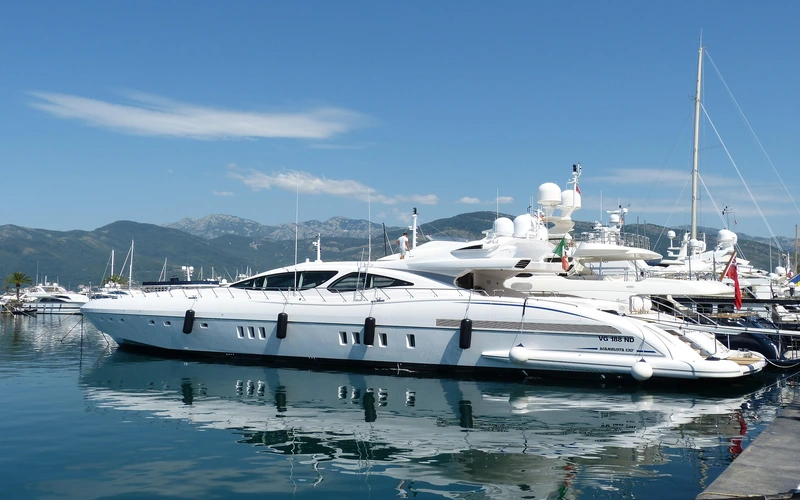
Different Usage Scenarios Determine Your Yacht Purchase Strategy
The choice of a business yacht depends first and foremost on the company’s actual intended use. Client hospitality, team-building activities, brand marketing and long-distance business travel all place different demands on space, performance and comfort. Companies should first identify their primary usage scenarios before deciding on the hull type, size and specifications, rather than simply purchasing a larger yacht based on budget alone.
H3 Client Hospitality and Business Negotiations
If the yacht is primarily used to host clients and partners, priority should be given to comfort, privacy and reception areas. Sport yachts or flybridge yachts measuring 40–60 feet typically offer well-appointed interior salons, outdoor seating and dining areas, making them suitable for small-scale business meetings and high-end client hospitality.
Corporate Events and Team Incentives
If the yacht is primarily used for staff team-building, client appreciation events or corporate gatherings, larger communal spaces and better circulation are required. Flybridge yachts and motor catamarans are generally better suited to large-group activities; however, the legal passenger capacity, safety equipment and actual activity space should be confirmed in advance.
Brand Promotion and Marketing Events
If the yacht is to be used for new product launches, client events or brand promotion, attention should be paid to exterior design, deck space and overall visual impact. For such organisations, a yacht is not merely a means of transport but can also serve as a key venue for brand events; consequently, design and social spaces are equally important.
Long-Distance Business Travel
If a company requires multi-day or cross-regional voyages, priority should be given to cruising capability, range, stability, accommodation space and storage capacity. Compared to high-speed performance, long-distance use places greater emphasis on a reliable propulsion system, a comfortable cabin layout and comprehensive living facilities.
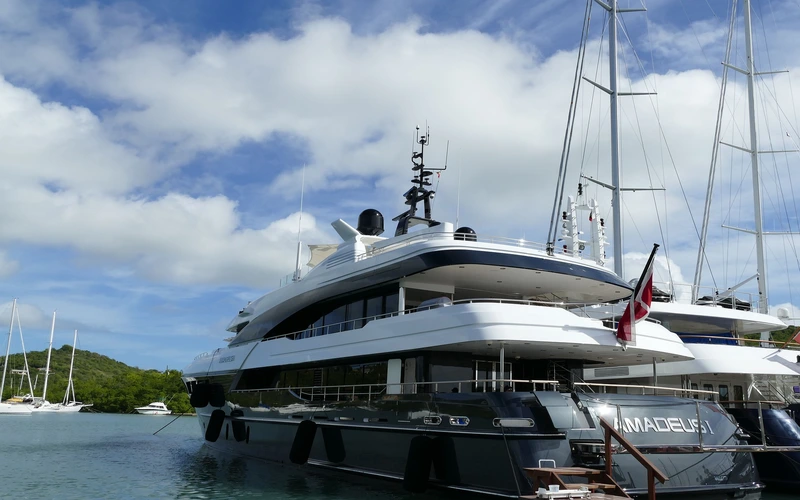
How to Choose the Right Size for a Business Yacht?
The size of a business yacht should be determined by the number of passengers, the area of operation, the distance to be covered and functional requirements, rather than simply aiming for the largest vessel possible.
Yachts measuring 30–40 feet are generally better suited to small businesses, start-up teams and companies that primarily host clients on short trips. This size is relatively easy to manoeuvre and moor, with manageable operating costs, whilst still providing basic social spaces. If a company primarily conducts half-day or weekend business activities in inshore waters, this size can serve as an ideal entry-level option.
The 40–50-foot range offers a well-balanced size for business use. It generally provides better indoor and outdoor spaces, more seating and more comprehensive accommodation facilities, without significantly increasing operational complexity as larger yachts do. This range is highly practical for companies needing to balance client hospitality, team-building activities and private use.
The 50–70-foot range is better suited to high-end client hospitality and large-scale corporate events. As the length increases, one can typically expect larger lounges, dining areas, outdoor social spaces and more private cabins. Companies may also opt for a flybridge layout, offering some guests superior views and additional outdoor space.
If a company needs to host large-scale events, undertake longer voyages or requires a higher standard of accommodation and hospitality, a yacht of 70 feet or more may be worth considering. However, a larger size does not necessarily equate to greater business value. Large yachts typically incur higher mooring fees, fuel costs, insurance premiums, maintenance expenses and the need for a professional crew; these costs must therefore be balanced against the company’s actual frequency of use.
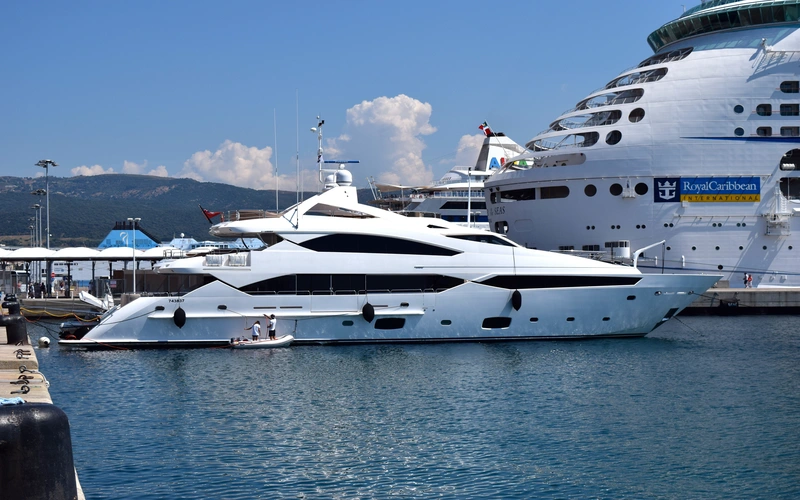
Which Type of Yacht Is Best Suited for Business Purposes?
No single yacht type suits every business. For business purposes, the primary options to consider are sports yachts, flybridge yachts, cruising yachts and motor catamarans.
Sport yachts are ideal for businesses that prioritise speed, design and a high-end client experience. They typically feature a modern aesthetic, open decks and strong handling performance, making them well-suited to short-haul business hospitality, brand events and weekend client engagements. If a business wishes for the yacht itself to form part of its brand presentation, a sport yacht is well worth considering.
Flybridge yachts are better suited to client hospitality and team-building events. The flybridge provides additional outdoor seating, dining and socialising space, whilst keeping the main deck relatively private. For businesses needing to organise multiple activity areas simultaneously, a flybridge layout is generally more practical than a single-deck layout.
Cruising yachts are suitable for companies requiring extended voyages or cross-regional use. These yachts generally prioritise range, comfort, storage space and accommodation capacity. If a company not only hosts clients in coastal waters but also plans to undertake multi-day business trips, a cruising yacht is a more suitable choice than a vessel designed purely for speed.
Power catamarans, on the other hand, are suitable for businesses that prioritise space utilisation, stability and group activities. The catamaran structure provides ample indoor and outdoor living space, making it ideal for corporate team-building, client events and hosting large groups. For businesses requiring operation in shallow waters, the shallow draught of certain power catamarans is also a notable advantage.
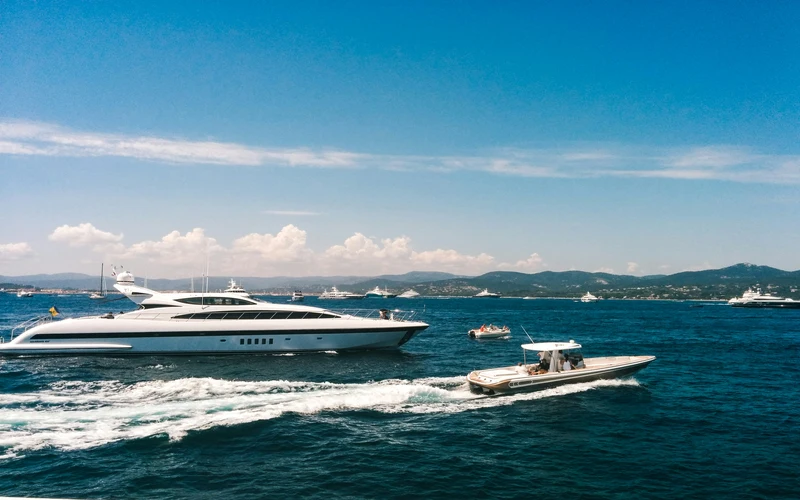
New or Used Business Yacht?
When choosing between a new and a second-hand business yacht, the key consideration is not simply a comparison of price, but rather a comparison of the initial investment, specifications, condition and long-term operating costs. Companies should base their decision on factors such as frequency of use, brand image, budget and reliability requirements.
New Business Yachts: Suitable for Companies Prioritising Brand Image
New yachts typically feature newer propulsion systems, electronic equipment and interiors, whilst allowing companies to select specific configurations to suit their needs. For companies that frequently entertain key clients, host brand events or intend to hold the vessel long-term, a new yacht offers a more consistent brand image and user experience.
However, the initial purchase cost of a new yacht is usually higher, and certain bespoke configurations may further increase the budget. Consequently, companies should set aside funds beyond the purchase budget to cover post-delivery insurance, mooring, maintenance and equipment upgrades.
Uesd Business Yachts: Suitable for Companies Seeking to Control Procurement Costs
The advantage of used yachts lies in the ability to acquire a well-established model with a comprehensive range of fittings at a relatively low initial outlay. If a company wishes to upgrade to a larger yacht without bearing the full procurement cost of a new vessel, a well-maintained pre-owned yacht may be a more attractive option.
However, the actual value of a second-hand vessel depends heavily on its age, engine operating hours, maintenance records and the condition of its equipment. Prior to purchase, a professional vessel survey and sea trial should be carried out, with particular attention paid to key systems such as the engine, hull, electrical systems, navigation equipment, generator and air conditioning.
How to Make a Choice Based on Corporate Needs?
If a company prioritises brand image, long-term use and customised specifications, a new business yacht is generally the more suitable option; if a company places greater emphasis on value for money and a wider selection of larger vessel sizes, a pre-owned yacht should be given serious consideration.
Regardless of whether a new or pre-owned vessel is chosen, it is advisable to factor in the purchase price alongside future costs for maintenance, insurance, mooring, fuel and crew. For a company, a business yacht that is truly worth purchasing is one that can maintain a high utilisation rate over the long term whilst remaining within budget.
Budget Recommendations
A business yacht budget should not be limited to the purchase price alone. What a company really needs to prepare is a comprehensive operating budget that includes procurement, mooring, insurance, fuel, maintenance, crew and management costs.
For small and medium-sized enterprises, it is advisable to begin by evaluating smaller yachts of around 40 feet. Compared to larger yachts, the costs associated with mooring, fuel and maintenance for such vessels are generally easier to manage, whilst still meeting the basic requirements for client hospitality and corporate events.
If a company’s primary need is high-end client hospitality, the budget should focus on high-quality sport yachts or flybridge yachts in the 40–60-foot range. Rather than allocating the entire budget to increasing the vessel’s size, it is advisable to prioritise investment in comfortable seating, air conditioning, the galley, bathrooms, navigation systems, entertainment equipment and high-quality interiors, as these features directly impact the client experience.
For large corporate yachts of 70 feet or more, businesses need to establish a more comprehensive long-term operational model. In addition to the purchase cost, consideration should be given to professional crew, mooring, insurance, fuel, regular maintenance, equipment replacement and annual management fees. Large yachts are prone to low asset utilisation if they are not used frequently enough.
Therefore, a more sensible budgeting approach is to first determine the annual number of days of use × average number of guests per trip × primary usage scenarios, and then select the yacht type and size accordingly. Companies should not incur operating costs that significantly exceed their actual needs simply to acquire a larger yacht.
Top Recommendations for Business Yachts in 2026
When selecting a business yacht in 2026, companies should narrow down their choices based on their primary usage scenarios, the number of guests to be hosted, the type of events and their operational budget. The models listed below are suited to different business needs and can serve as a guide for companies considering a purchase.
Sunseeker 95: High-End Client Hospitality
The Sunseeker 95 is ideal for companies requiring high-calibre client hospitality and multi-day business events. Its generous indoor and outdoor social spaces cater to a variety of scenarios—including business meetings, dining and leisure—whilst balancing comfort with the demands of long-distance use, making it suitable for companies with high standards for the client experience.
👉 View Sunseeker 95 for sale

Sunseeker 95
- Build Year2018
- Length92 ft
- Cabins4
- Top speed26 kn
- TypeFlybridge yacht
The Sunseeker 95 is a luxury flybridge yacht in its approximately 28-meter class, positioned as an "entry-level superyacht." With a core British design style, it combines the high-speed performance and stability of a deep-V hull with maximized space through an innovative main deck layout (master cabin above).
Versilcraft HS: Large-scale corporate events
The Versilcraft HS is better suited to companies needing to host large-scale client events, brand events or business social gatherings for large groups. Its generous overall space can accommodate more participants and provides relatively separate areas for business negotiations, dining and leisure activities, making it suitable for scenarios with frequent corporate event requirements.
👉 Browse the Versilcraft HS yacht

Versilcraft HS
- Length147 ft
- Cabins5
- Top speed15 kn
- TypeBusiness yacht
The Versilcraft HS is a 147.6 ft luxury business yacht featuring a three-deck layout with spacious meeting, salon, and dining areas. Powered by high-performance twin engines with a 4,000–6,000 nautical mile range, it is ideal for corporate hospitality, client entertainment, and long-range voyages, combining comfort with premium business functionality.
Sanlorenzo SX88: Business Networking and Brand Showcase
The Sanlorenzo SX88’s layout is well-suited to businesses needing to balance business negotiations, client networking and brand promotion. Its open-plan communal areas facilitate interaction whilst boasting a distinctive design, making it ideal for brands that prioritise client experience and corporate image.
👉 See Sanlorenzo SX88
Sanlorenzo SX88
- Build Year2018
- Length88 ft
- Cabins4
- Top speed22 kn
- TypeBusiness yacht
The Sanlorenzo SX88 is a high-end luxury commercial yacht that combines innovative design concepts with robust engineering technology, specifically crafted for owners seeking exceptional performance, comfort, and commercial operational capabilities.
Leopard 24: Short-Distance Business Hospitality
The Leopard 24 is better suited to companies focusing primarily on inshore cruising, short-distance client hospitality and high-end leisure activities. Compared to larger business yachts, it places greater emphasis on sailing performance and flexibility, making it a more practical choice for companies that do not require extensive accommodation but prioritise the sailing experience and client interaction.
👉 View Leopard 24 for sale
Leopard 24
- Build Year2005
- Length79 ft
- Cabins3
- Top speed32 kn
- TypeBusiness yacht
The Leopard 24 is a 79-foot large-displacement commercial catamaran yacht that blends Italian-inspired design with high-performance engineering. Its spacious three-stateroom, three-bathroom layout and flybridge social area make it equally suited for private ownership, commercial operation, or extended coastal voyages.
How to Choose the Most Suitable Corporate Yacht for Your Business?
Companies can follow these five steps to select a yacht.
First, determine the core purpose. Clarify whether the yacht will primarily be used for client hospitality, business meetings, corporate events, brand marketing or staff incentives. If there are multiple purposes, prioritise them according to frequency of use.
Second, determine passenger capacity. Base your decision on the typical number of guests rather than the maximum number that might occasionally be present. Companies should distinguish between ‘day-to-day capacity’ and ‘special event capacity’ to avoid purchasing a yacht that is too large simply to accommodate a few large-scale events.
Third, determine the cruising range. If operations are primarily confined to areas near the harbour, prioritise performance and space; if cross-regional cruising is required, greater emphasis should be placed on range, fuel capacity, stability, storage space and accommodation capacity.
Fourth, calculate the total cost of ownership. Include the purchase price, insurance, mooring fees, fuel, maintenance, cleaning, crew and management costs in the budget. For second-hand yachts, additional funds should be set aside for repairs and upgrades.
Fifth, conduct an on-site inspection and sea trial. Corporate procurement should not be based solely on photographs and technical specifications. A physical visit on board allows you to assess whether the space is suitable for business activities, whilst a sea trial helps to evaluate manoeuvrability, stability, engine performance and the condition of the equipment. For second-hand vessels, a professional survey should also be carried out before making an offer.
If a company is still unable to determine the appropriate size, it can first narrow down its requirements to five variables: ‘number of users, sailing area, annual frequency of use, budget and primary purpose’, and then filter for specific models. This approach is more efficient than comparing a vast number of yacht brands one by one.
Summary
The selection of a business yacht essentially involves striking a balance between the client experience, operational efficiency and long-term running costs. For most companies, yachts measuring 40–60 feet are typically the range worth prioritising, as they offer a good balance between hospitality space, comfort, seagoing capability and operating costs.
If a company primarily hosts clients on short trips, a sports yacht may be the appropriate choice; if events involving large groups are required, a flybridge yacht or motor catamaran should be given priority; and if multi-day business trips are necessary, a cruising yacht should be the preferred option.
Before purchasing, companies should also compare the total cost of ownership between new and pre-owned vessels, and verify their actual condition through on-site inspections, vessel surveys and sea trials. The best business yacht is not necessarily the largest one, but rather the one that best matches the company’s frequency of use, client profile and operational budget.
FAQ
Q1: Is it better for a company to purchase or lease a business yacht?
A: If the company uses the yacht frequently throughout the year, purchasing may be more suitable; if it is only used occasionally for client entertainment or annual events, leasing may offer greater flexibility. Companies should compare the estimated annual leasing costs with the depreciation, mooring, insurance, fuel and maintenance costs associated with ownership before deciding which option to adopt.
Q2: Should a business choose a new or second-hand yacht?
A: New yachts are better suited to businesses that prioritise specifications, brand image and long-term use, whilst second-hand yachts are more suitable for those wishing to reduce initial acquisition costs. When purchasing a second-hand yacht, particular attention should be paid to inspecting the hull, engines, electrical systems, navigation systems and maintenance records, and a professional survey and sea trial should be carried out.
Q3: What are the annual operating costs for a business yacht?
A: The annual operating costs of a business yacht are influenced by factors such as size, number of engines, frequency of use, mooring location, insurance and crew configuration. These costs cannot usually be calculated simply based on the purchase price alone. Companies should establish an annual cost model prior to purchase and set aside a budget for maintenance and unexpected repairs.
Q4: Are flybridge yachts suitable for corporate hospitality?
A: Flybridge yachts are ideal for companies requiring space for hosting large groups and outdoor socialising. The flybridge provides a separate function area, allowing clients to relax, network or dine in different zones. If a company primarily engages in inshore business activities and team-building events, a flybridge layout generally offers significant practical value.
Q5: What should be checked most carefully before purchasing a business yacht?
A: The most important thing is to confirm that the yacht genuinely meets the company’s operational requirements, followed by an inspection of the hull, engine, transmission system, electrical system, navigation equipment, air conditioning, generator and maintenance records. For second-hand yachts, a professional survey and sea trial are particularly important, as they can help companies minimise the risk of major repair issues arising after purchase.