Quick Answer:
All private or commercial yachts equipped with radio communication devices and planning to navigate in territorial waters or international waters must apply for the corresponding radio license. Vessels operating radio equipment without certification may face fines, confiscation of equipment, or even navigation restrictions imposed by maritime or communications regulatory authorities.
What is a Yacht Radio License?
In maritime navigation, radio licenses primarily include Station Licenses (vessel station permits) and Radio Operator Certificates (e.g., SRC, LRC). Certificate holders are authorized to operate corresponding equipment aboard yachts. International regulations mandate obtaining the appropriate certificate to operate VHF/DSC, MF/HF, or satellite communication devices.
For example, the Short Range Certificate (SRC) is an internationally recognized qualification permitting holders to use VHF radio and DSC digital selective calling during coastal voyages. The Long Range Certificate (LRC) covers VHF, MF, HF, and Inmarsat communications, meeting Global Maritime Distress and Safety System (GMDSS) requirements.
Chapter IV of the IMO's International Convention for the Safety of Life at Sea (SOLAS) mandates that vessels engaged in international voyages must be equipped with GMDSS devices (with exceptions for non-commercial yachts).
The ITU Radio Regulations govern global radio frequency usage, ensuring uniform management of emergency channels (e.g., VHF Channels 16, 13, 70).
Generally, different navigation requirements determine the certificate type: shorter voyages require only an SRC certificate, while ocean voyages necessitate an LRC or GMDSS-related license.
In my practice of processing certificates, I often explain to clients that radio licenses are not issued arbitrarily. They are strictly based on route and equipment matching the application criteria. These regulations ensure both Yacht Safety Regulations for communication and legal compliance—both are indispensable.
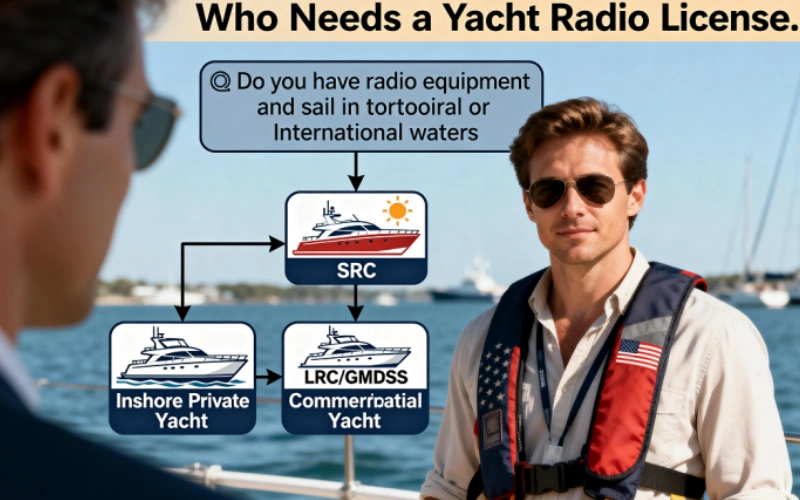
Who Actually Needs a Yacht Radio License?
● Private yachts: Any privately owned yacht with radio equipment navigating territorial or coastal waters.
● International voyages: Yachts planning to sail in international waters or cross oceans.
● Equipment type: VHF/DSC radios require SRC; HF or satellite communication devices require LRC or GMDSS.
● “Think you don’t need it but actually do”: Small private yachts, short coastal trips, or yachts using single-sideband radios may still legally require a license.
● Commercial yachts: All commercial yachts must comply with GMDSS requirements.
Which Yachts Require a Radio License?
Any yacht equipped with radio equipment and planning to navigate in territorial or international waters must comply with local and international radio regulations. Specifically:
● Private yachts navigating territorial/coastal waters: Yachts equipped with VHF/DSC radios require a Short Range Certificate (SRC).
For example, in the UK, Ofcom mandates that any vessel with radio equipment using international maritime channels must apply for a marine radio license, and operators must hold an SRC certificate. Even for short voyages within UK waters, obtaining an SRC is recommended for contingencies.
● Private yachts for ocean voyages: Yachts engaged in international voyages equipped with HF or GMDSS devices require a Long Range Certificate (LRC) or GMDSS license.
Per FCC Radio Licenses regulations, yachts operating in US waters with HF single-sideband or satellite communication terminals still require a marine radio license. Other nations similarly require ocean-going vessels to meet Chapter IV SOLAS communication equipment standards and be operated by qualified personnel.
● Commercial yachts: Must meet stricter requirements, including full GMDSS communication systems (EPIRB, AIS, etc.) and corresponding licenses. SOLAS Convention GMDSS vessel standards apply to all large vessels engaged in commercial international voyages, including commercial yachts.
| Boat Type/Purpose | Certificate Type | Applicable Area | Regulatory Source |
| Offshore Private Yacht | SRC | Territorial Waters, Coastal | ITU Radio Regulations/UK Ofcom |
| Ocean-going Private Yacht | LRC/GMDSS | International Waters | IMO SOLAS Chapter IV |
| Commercial (Operational) Yacht | GMDSS | Global Waters | IMO SOLAS Chapter IV |
● In the United States, the FCC specifies that while the 1996 Communications Act permits domestic recreational vessels to use VHF radios without applying for a license, any vessel engaged in international voyages or utilizing HF/satellite equipment must still obtain a station license.
● In China, maritime authorities enforce strict radio regulations: Yacht registration requires concurrent review of vessel radio station licenses, and operators must hold a “Certificate of Competency for Ship Radio Operators” or equivalent qualification (this certification system parallels SRC/LRC).
Ultimately, certification requirements depend on the yacht's equipment and navigation plans, but compliance with national laws and international treaties is mandatory.
When assisting clients, I frequently remind them: “Don't wait until the eve of departure to apply for a radio license,” as various certifications often require scheduling training and undergoing reviews.
SRC vs LRC vs GMDSS – Which Yacht Radio License Do You Need?
| Feature / License | SRC (Short Range) | LRC (Long Range) | GMDSS |
| Coverage | Coastal / Territorial Waters | Ocean-going / International Waters | Global / Commercial Vessels |
| Equipment Covered | VHF / DSC | VHF, MF, HF, Inmarsat | Full GMDSS System (EPIRB, AIS, etc.) |
| Examination Requirement | VHF/DSC operation test | VHF, HF, Satellite knowledge test | Comprehensive GMDSS training & exam |
| Mandatory For | Private coastal yachts | Private ocean-going yachts | Commercial yachts & international operations |
| Validity | 5–10 years | 5–10 years | Varies by country |
Yacht Radio License Application Process
Determine License Type
Select the appropriate license (SRC, LRC, or GMDSS) based on your navigation area and radio equipment type. For example: - Yachts planning only territorial waters navigation with VHF/DSC equipment should apply for a Short Range Certificate. - Yachts planning transoceanic voyages or equipped with HF/satellite devices should apply for a Long Range Certificate or GMDSS authorization.
Pro Tip: Plan ahead. Confirm the required license type with clients months before departure to avoid last-minute discoveries of missing documentation.
Prepare Application Materials
Submit owner identification, yacht registration certificate or inspection documents, radio equipment inventory, photographs, contact details, etc. Some regions require specific forms and license fees.
When assisting a French client with an SRC application, I prepared passport copies, vessel registration certificates, and DSC VHF photos as required by the maritime authority. Prompt communication with the registration agency prevented information omissions.
Submitting the Application
Submit materials to the national maritime authority or authorized agency. For example, the UK accepts online applications via Ofcom's website, while the US requires form submission through the FCC portal. Some countries permit agent representation. Applicants will receive provisional acceptance confirmation after submission.
Payment and Examination
Most countries or regions require applicants to pass a radio operator examination. Short-range certificates typically require a VHF/DSC operation test, while long-range certificates additionally require an HF/satellite knowledge test.
After completing training and examinations, submit the passing certificates to the regulatory authority. Some regions exempt private coastal vessels from examinations, but GMDSS or long-range certificate examinations are nearly always mandatory.
Certificate Issuance
Upon approval, the relevant authority issues a Ship Station Certificate (containing the call sign and MMSI) and an Operator's Certificate. Some countries use electronic certificates verifiable online, while others still issue paper certificates. For example, the UK's Ship Station Certificate is valid for life from the date of registration but requires re-registration upon transfer of vessel ownership.
Once obtained, carry the certificates with you at all times for inspection by port authorities or coast guard.
The entire process typically takes several weeks to two months, depending on regional review efficiency. In one French SRC application, I found the greatest challenge to be language and document translation. Therefore, I recommend clients use local nautical associations or accredited training institutions, as they are familiar with the process and can reduce communication barriers. Additionally, timely payment and submission of MMSI information can significantly shorten waiting times.
Radio License Validity, Renewal, and Holding Requirements
● The validity period of yacht radio operator certificates varies by region but is typically 5 or 10 years.
For example, under Czech telecom regulations, certificates are valid for 10 years and can be renewed for 5-year increments upon expiration.
In countries like the UK, certificate holders must provide updated information every 10 years (or revalidate online if no changes). Holders should verify certificate validity before continuing operations. Expired certificates require reapplication or revalidation; otherwise, the operator is not considered compliant.
● Renewal typically involves updating personal/vessel details online or by mail and paying fees. Re-examination is generally unnecessary provided you maintain essential safe radio operation knowledge. Authorities issue a renewal certificate upon completion.
● License holders must adhere to radio operating regulations during routine use. For example, radio watchkeeping is a global standard: any vessel equipped with VHF radio should monitor Channel 16 (156.800 MHz) when not actively transmitting.
Per ITU regulations, channels 16, 13, and 70 are designated for distress calls, ship-to-ship navigation communications, and digital distress calls respectively. Additionally, license holders must report vessel positions, maintain call logs, and conduct regular equipment inspections as required for maritime safety audits.
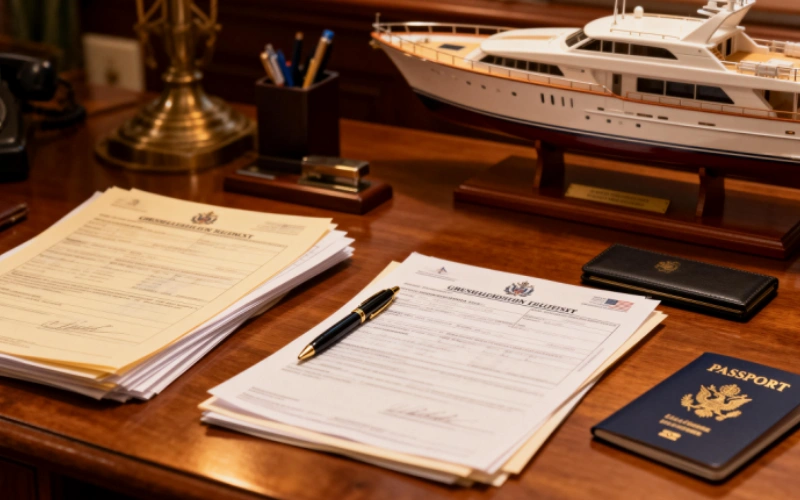
Penalties for Illegal Use of Yacht Radios
Operating radio equipment without a valid license constitutes a violation of the law, subject to penalties in all countries. Consequences typically include fines, confiscation of equipment, license revocation, and even criminal charges.
Below are penalties imposed by certain countries for unauthorized use of yacht radios:
| Country/Region | Violation | Fine Range | Additional Penalties |
| United States | Unlicensed operation of ship radio (VHF/HF) | $500–$2,000 | Equipment confiscation |
| United Kingdom | Unlicensed operation of ship radio (VHF/DSC) | £0–£5,000 | License revocation, equipment impoundment |
| China | Unlicensed operation of radio equipment | ¥1,000–¥5,000 | Order to rectify/confiscation, vessel detention |
Illegal radio use not only carries high risks but also restricts navigation—ports may refuse clearance and vessels may be detained if certificates are not presented.
Therefore, lawful and compliant operation is crucial. One vessel owner was once detained by customs for failing to renew their license on time. The vessel was impounded for several days, disrupting the voyage. Ultimately, the owner had to plead for transfer to maritime authorities and hire an expensive agent to resolve the issue.
This experience reinforces my firm advice to all clients: a radio license is not optional—it is a mandatory compliance requirement.
Conclusion
A yacht radio license is not only a legal requirement but also the cornerstone of maritime safety communications. Yachts operating on different voyages should select appropriate radio station licenses and operator certificates based on international regulations and the laws of the country of operation. Advance planning, standardized applications, and timely renewals will ensure your voyages proceed with greater peace of mind and smoothness.
As a broker with years of sailing and yacht transaction experience, I advise every owner to prioritize radio licensing in their yacht purchase and navigation plans. This ensures you can maintain contact with the outside world, receive emergency assistance, and avoid fines or navigation restrictions due to non-compliance—even when thousands of miles away.
About the Author
Emery
Yacht Broker / Yacht Transaction Consultant / Contributing Writer for Yachting Magazine
SAMS Certified Surveyor No.: AMS #2458
Honored as one of “Asia's Top 10 Yachting Industry Experts” and recipient of the “Outstanding Service Award for Yacht Brokers”
Last Updated: February 2026
Applicable Scope: Private and commercial yacht owners or prospective owners planning offshore or international voyages, as well as yacht brokers, management consultants, and navigation advisors concerned with radio compliance, certification procedures, and navigational safety.
Disclaimer
This content is for general informational reference only. It is compiled based on the author's personal maritime and yacht transaction experience, along with publicly available international regulations and official materials. It does not constitute formal advice regarding legal, regulatory, or licensing applications. Regulations governing yacht radio licenses, license types, application procedures, and penalty standards may change over time and vary by flag state, navigation area, and yacht usage. Before applying for or using radio equipment, readers should consult the latest regulations issued by their local maritime authorities, communications regulators, or accredited training institutions. Professional legal or compliance counsel should be sought when necessary.
FAQ
Q1: Must all yachts hold a radio license?
A: Only yachts equipped with radio devices and planning to navigate in territorial waters or internationally require certification. Yachts that never sail or use radio equipment need not apply.
Q2: What are the consequences of an expired certificate?
A: If a radio operator's certificate expires, the holder is no longer legally recognized as a qualified radio operator. The vessel may be detained at port for non-compliance or denied clearance to depart. In emergencies, unlicensed operation also poses legal risks.
Q3: Can a radio license be transferred or sold?
A: No. Radio licenses and certificates are tied to specific individuals and vessels. Upon yacht sale, the license must be canceled or registration details updated during the handover.