Quick Answer
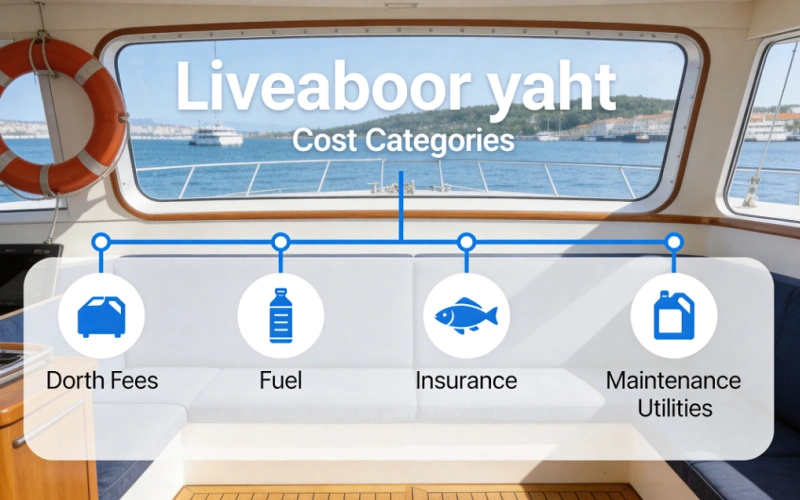
Should you plan to reside aboard your yacht long-term, the primary expense categories and typical ranges are as follows (compiled based on common experience and industry norms):
| Expense Category | Typical Cost Range |
| Berthing Fees | $300–$2,500/month |
| Fuel | $100–$800/month |
| Insurance | $1,000–$5,000/year |
| Maintenance & Repairs | 5%–10% of yacht value/year |
| Utility & Waste Disposal | $50–$300/month |
| Winter Dry-Docking/Protection | $1,000–$5,000/year |
| Internet/Communications | $50–$200/month |
What is a Liveaboard Yacht?
Definition of Liveaboard
Liveaboard refers to vessels used as long-term residences rather than for short-term recreational cruising.
Key characteristics include: private sleeping quarters, a fully equipped galley, shower and toilet facilities, permanent or seasonal power/air conditioning systems, and either permanent mooring or frequent coastal relocation.
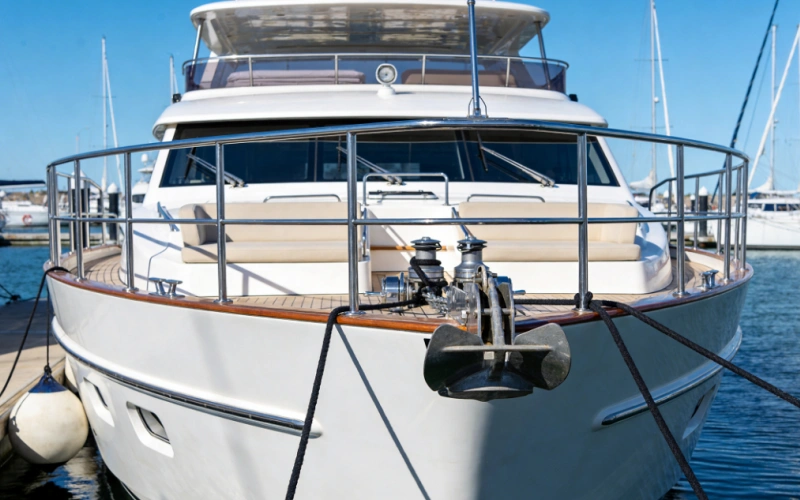
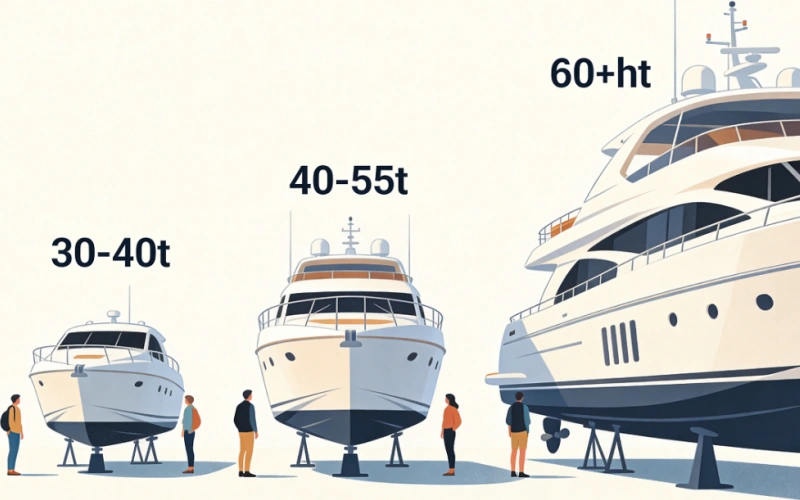
Suitable Liveaboard Yacht Sizes
| Length | Living Comfort | Suitable Occupants |
| 30–40 ft | Basic living | Single individuals/couples |
| 40–55 ft | Most common (balances space and cost) | Small families/long-term couples |
| 60+ ft | Luxury and extended cruising | Those seeking greater comfort and additional |
In my brokerage experience, the 40–55 ft range is most frequently chosen by buyers for long-term liveaboard use: it offers partitioned bedrooms and storage while avoiding the ultra-high maintenance costs associated with larger yachts.
Purchase Price of a Liveaboard Yacht
The purchase price of a liveaboard yacht directly determines the majority of subsequent expenses, such as insurance valuation, maintenance complexity, and berthing requirements.
Below are typical price ranges for reference:
| Length | Used Price | New Price |
| 30–40 ft | $80k–$250k | $400k+ |
| 40–55 ft | $200k–$800k | $900k–$2M |
| 60 ft+ | $600k–$3M+ | $3M+ |
In 2024, I assisted a Florida client in acquiring a 50 ft motor yacht for long-term habitation at a transaction price of approximately $620,000. His first-year expenditures exceeded projections by roughly 30%, prompting my current recommendation that buyers allocate a 30% buffer to their initial budget to account for ‘break-in costs’.
Regarding annual post-purchase expenditure, the industry commonly employs an empirical rule: allocate a percentage of the purchase price as the annual budget. This principle is frequently referenced in publications like Yachtworld's The Real Cost of Owning a Yacht, alongside numerous industry reports and professional advisors.
Monthly Living Costs on a Yacht
When beginners research liveaboard yacht cost, they often underestimate how expenses are distributed. Based on my brokerage experience working with long-term liveaboard owners in Florida and the Mediterranean, the cost structure usually follows a predictable pattern.
The following chart represents the average monthly cost breakdown of living on a yacht.
Average Monthly Cost of Living on a Yacht
| Expense Category | Average Share |
|---|---|
| Berthing Fees | 40% |
| Maintenance & Repairs | 30% |
| Fuel | 10% |
| Insurance | 8% |
| Utilities | 5% |
| Other Costs | 7% |
Below, I break down the monthly cost items you're most concerned about, presenting the actual distribution observed in my brokerage practice alongside recommended reserve funds.
Liveaboard Yacht Mooring Fees
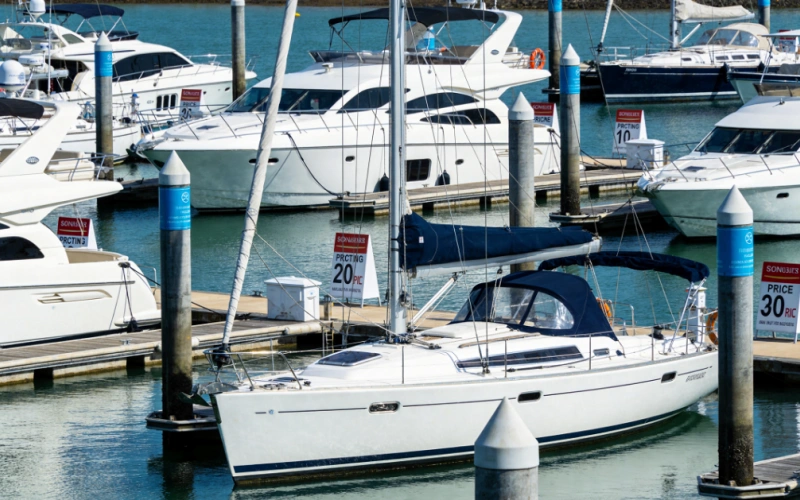
Mooring fees represent the most stable yet regionally variable expense. Prime coastal marinas command premium rates, while secondary or inland facilities offer more affordable options. Range examples:
Florida coastline, USA: $800–$1,800/month (40ft)
Mediterranean Prime Ports: €600–€1,500/month (seasonal variation)
Southeast Asia Secondary Marinas: $300–$900/month
California San Francisco/Los Angeles Premium Berths: $1,200–$2,500/month
Liveaboard yacht berthing fees vary by season, electrical supply rating (30A, 50A, 100A), and whether water/waste disposal/parking is included. If planning long-term mooring, always enquire about the marina's liveaboard policy. I recommend obtaining written quotes via platforms or directly from local marinas at your target port before budgeting.
Practical advice:
Prices can differ by 2–3 times between marinas within the same port; Do not focus solely on proximity to the city centre; consider long-term parking availability and contract terms.
Seek to include electricity charges, parking fees, and long-term expenses within the contract to avoid mid-year price hikes.
Liveaboard Yacht Insurance Costs
Liveaboard yacht insurance premiums are influenced by multiple factors: vessel age, construction materials, equipment, main/auxiliary engine configuration, home port and intended cruising area, sum insured, and claims history.
Typical annual premiums range from $1,000–$5,000/year—though premiums for high-end or ocean-going yachts may significantly exceed this. Obtain quotes from specialist yacht insurers and insist on a liveaboard endorsement (required by most marinas).
Liveaboard Yacht Fuel Costs
Fuel expenditure depends on sailing frequency and speed. If primarily moored at the marina with only brief engine warm-ups for short trips and port access, monthly fuel costs may range from $100–$300. For those who enjoy weekend cruising or frequent ferry crossings, this could rise to $500–$1,500 per month.
A prudent approach is to calculate an annual figure using ‘average monthly sailing hours × engine fuel consumption’ before converting this into a monthly budget.
Water, Electricity, Wastewater Treatment, and Internet Costs
Many marinas include basic utilities within monthly fees or provide separate metered billing. Typical additional charges range from $50–$300/month (covering basic electricity and domestic water), while Wi-Fi/marine communications incur $50–$200/month depending on the plan.
During extended berthing periods, electricity costs become significant if air conditioning is used onboard, particularly in hot climates.
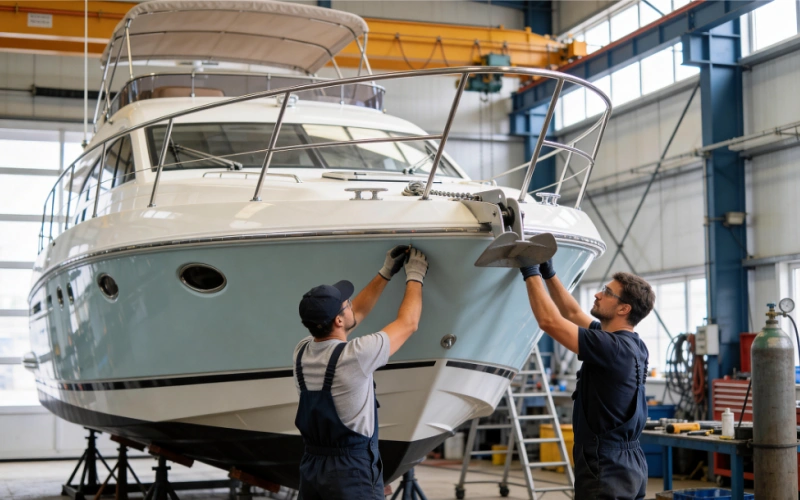
Winter Dry-Docking/Maintenance Costs
How to Winterise a Yacht Properly? In cold regions, yachts require dry-docking for winterisation, antifouling application, and inspection of propellers and shaft seals. A single dry-docking session typically costs $1,000–$5,000. Certain superyacht marinas or specialist shipyards may charge significantly more.
Hidden Costs of Liveaboard Yachting
Replacing/upgrading electronics often proves unexpectedly costly for liveaboard yachts; do not assume ‘marine electronics are equivalent to car parts’ – replacing a modern navigation system may cost thousands of dollars.
Emergency towing and rescue membership is typically billed as an annual fee, yet can save substantial sums in critical situations.
Berthing fines/local taxes: Certain ports impose additional levies, environmental charges, or short-stay restrictions.
Replacement of consumables and interior wear: Marine environments accelerate ageing of furnishings and fabrics, making replacements costlier than land-based home furnishings.
What is the Liveaboard Cost for a 50 Ft Yacht?
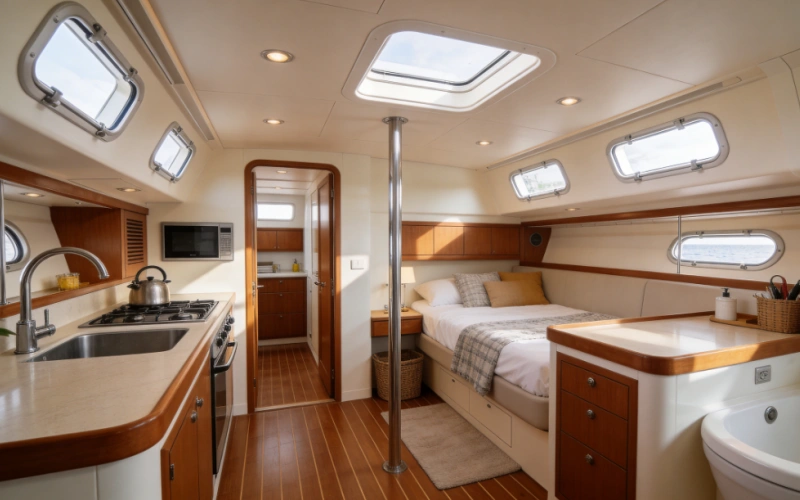
Example: 50ft liveaboard yacht moored in a secondary city marina, with occasional weekend cruising.
| Item | Monthly Budget | Description |
| Berthing Fee | $1,200 | Includes basic electricity/water (subject to contract terms) |
| Maintenance amortisation | $900 | Monthly allocation of annual maintenance ($10,800) |
| Insurance amortisation | $250 | Annual premium $3,000 |
| Fuel | $300 | Occasional voyages, short-range manoeuvres |
| Utilities & communications | $200 | Includes Wi-Fi |
| Miscellaneous/Contingency | $200 | Spare parts, cleaning, harbour fees, etc. |
| Total | $3,050 /month |
This example aligns with data from yacht owners I've encountered: most 50ft liveaboard yachts average between $2,500–$4,500 monthly (depending on berth). Costs rise significantly for premium harbours or frequent ocean voyages.
10 Year Cost of a 50 ft Liveaboard Yacht
Many first-time buyers underestimate the long-term cost of yacht ownership.
A useful planning method is to estimate the 10-year ownership cost, which provides a more realistic picture of total financial commitment.
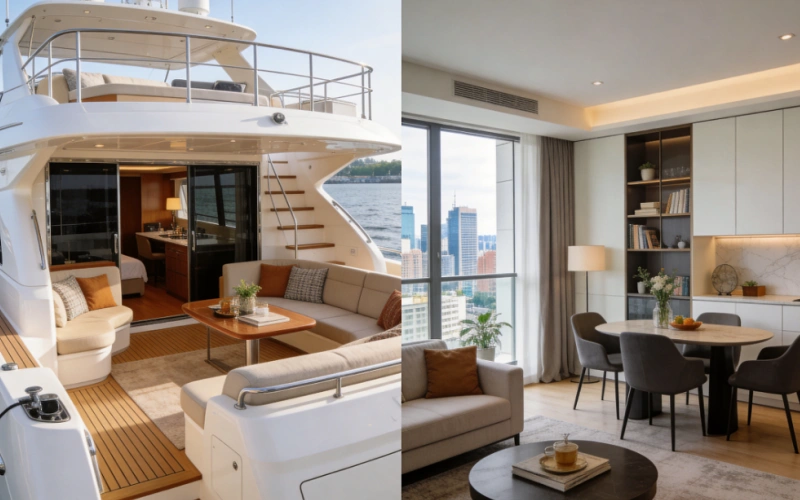
Below is a simplified example based on a 50-foot liveaboard motor yacht purchased for $620,000 — similar to a transaction I assisted with in Florida.
| Category | Estimated Cost |
|---|---|
| Purchase Price | $620,000 |
| Maintenance & Repairs | $300,000 |
| Berthing Fees | $150,000 |
| Insurance | $40,000 |
| Fuel | $60,000 |
| Upgrades & Equipment | $50,000 |
| Total | $1.22 million |
Is Living on a Yacht Cheaper Than a House?
In certain regions and for specific lifestyles, yacht living can indeed be cheaper than a city-centre flat; however, it involves greater volatility and more frequent unpredictable expenses (repairs, shore leave).
When determining whether it's ‘worth it’, one must weigh personal adaptability to maritime living against tolerance for unexpected costs.
Below is a brief cost comparison of these two lifestyles:
| Lifestyle | Typical Monthly Cost |
| City Studio Apartment | $2,000–$4,000 |
| 40ft Liveaboard Yacht | $1,500–$3,000 |
| 50ft Liveaboard Yacht | $2,500–$4,500 |
Best Types of Yachts for Living Aboard
Not every yacht is suitable for long-term living.
The best liveaboard yachts typically prioritize:
- interior volume
- fuel efficiency
- stable cruising performance
- practical storage
- comfortable cabins for long stays
From both my brokerage transactions and feedback from long-term yacht owners, the following vessel types are among the most popular liveaboard options worldwide.
Best Liveaboard Yacht Types
| Yacht Model | Type | Why It Works for Liveaboard |
|---|---|---|
| Beneteau Swift Trawler 44 | Trawler Yacht | Fuel efficient, large interior volume, excellent cruising range |
| Nordhavn 46 | Expedition Trawler | Built for long-distance cruising and ocean crossings |
| Lagoon 42 | Sailing Catamaran | Huge living space and low operating costs |
Why These Boats Are Popular for Living Aboard?
Trawler yachts are widely regarded as the most practical option for liveaboard lifestyles because they combine long cruising range with efficient fuel consumption.
Expedition yachts such as the Nordhavn series are designed for long-distance cruising and provide exceptional stability at sea.
Meanwhile, sailing catamarans from brands like Lagoon Catamarans offer some of the largest living spaces per foot of boat length, making them ideal for couples or families who want to spend extended periods onboard.
In practice, the 40–50 ft range remains the most balanced choice for beginners entering the liveaboard lifestyle.
Recommendations for Purchasing a Liveaboard Yacht
First determine your home port, then select the vessel type: Port-to-port price differences are substantial, so base your calculations on annual mooring fees.
Allow a 25–40% buffer in your first-year budget: Account for initial setup costs and first-time upgrades/refits.
Require marinas and insurers to include liveaboard clauses in contracts: many berths mandate liveaboard endorsements or supplementary liability coverage.
Establish three budget tiers: allocate maintenance/overhaul as a separate reserve (recommended 6–12 months' contingency).
Develop a long-term maintenance schedule: calendar routine items like engines, air conditioning, antifouling, and pumps to minimise sudden large expenditures.
Consult me—or engage a reputable yacht broker and surveyor: Professional sea trials and third-party inspections prior to purchase significantly reduce unforeseen subsequent costs.
Real-World Case Studies of Liveaboard Yacht Acquisitions
Case A: 50ft Bertram 50 Convertible Yacht, Florida, owner-occupied
Purchase price: $620k.
First-year total expenditure approx. $62k, including berthing, insurance, initial commissioning and several modifications; monthly average approx. $5,100, exceeding buyer's initial estimate.
Lessons learned: Initial winterisation and electrical system upgrade significantly increased annual costs.
Case B: 38ft Itama 38 Yacht, Mediterranean secondary port, retired couple
Purchase price: $180k.
Low annual berthing fees and a frugal lifestyle resulted in annual expenditure of approximately $22k, averaging around $1,800 monthly.
Lessons learned: The vessel's age and modest equipment kept maintenance costs low, though frequent sailing increased fuel and repair expenses.
Conclusion
Living aboard a yacht can be an exceptional life choice: seascapes, flexible travel, and a unique lifestyle. However, budgeting must be realistic—berthing fees and maintenance form the core of long-term expenditure, while initial costs, particularly first-time shore-based preparation and equipment upgrades, often exceed expectations. Therefore, I recommend:
Select your port first, then your vessel type;
Allocate a 25–40% buffer to your first-year budget;
Maintain at least 6–12 months' reserve for maintenance contingencies;
Arrange third-party inspections and confirm contractual terms in writing before purchasing.
I have consolidated industry insights, real-world case studies, and authoritative data above to facilitate your decision-making.
Should you wish: I can prepare a bespoke budget spreadsheet tailored to your target marina (including local berthing cost estimates and annualised maintenance allocations), recommend surveyors and insurance solutions, or arrange a one-to-one consultation and vessel viewing directly with me—simply share your target port and budget range, and I shall provide actionable next steps.
About the Author
Emery
Yacht Broker / Yacht Transaction Consultant / Contributing Writer for Yachting Magazine
SAMS Certified Surveyor No.: AMS #2458
Previously named among ‘Asia's Top Ten Yachting Industry Experts’ and recipient of the ‘Outstanding Service Award for Yacht Brokers’
Last Updated: March 2026
Scope of Application: This article is intended for prospective owners planning to purchase or reside long-term aboard a yacht, particularly readers concerned with liveaboard yacht costs, berthing fees, and annual maintenance budgets.
Disclaimer
This content is compiled based on the author Emery's extensive yacht brokerage and ownership experience, alongside publicly available industry data, and is intended solely for general reference. The cost ranges mentioned may vary significantly depending on yacht dimensions, age, configuration, cruising region, marina policies, and market fluctuations. Consequently, this does not constitute a specific quotation or investment advice. Readers are advised to seek the latest specific quotations and policy details from professional yacht brokers, surveyors, insurers, and local marina management before purchasing a yacht, signing a berthing contract, or planning long-term liveaboard living.
FAQ
Q1: What are the monthly costs of living aboard a yacht?
A: Liveaboard yachting incurs monthly expenses of $1,500–$6,000, depending on vessel size and port location.
Q2: What yacht size is most suitable for long-term living?
A: 40–55 ft is the most common size, balancing space, storage, and maintenance costs.
Q3: Is living aboard more free and economical than an apartment?
A: For some individuals—those willing to simplify their lifestyle, remain near ports, and select lower-cost moorings—it can be cheaper. However, one must accept the maintenance demands and the reality of living in damp/confined spaces.