



Quick Answer: Who is best suited to buying a flybridge yacht?
Flybridge yachts are ideal for owners who prioritise space utilisation and socialising, particularly families, groups travelling with multiple people, and those requiring a venue for business hospitality. Such owners typically focus not only on the sailing experience itself, but also on the lifestyle enjoyed on board, such as dining, socialising, and leisure activities.
At the same time, flybridge yachts are also suitable for those with medium to high-frequency sailing plans, or who wish to enjoy weekend cruises or short breaks. If you prefer stability, unobstructed views and a versatile layout over the sheer pursuit of speed and the thrill of handling, then a flybridge yacht would be the ideal choice.
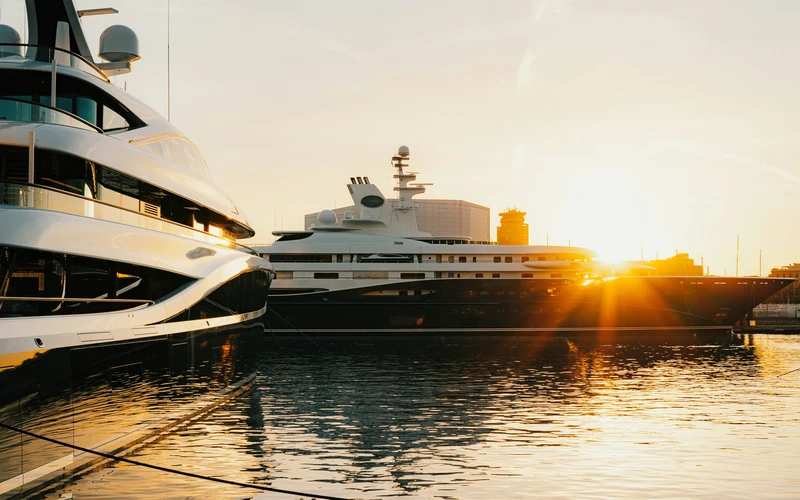
Different usage scenarios determine your boat-buying strategy
When it comes to the actual purchasing process, the value of a flybridge yacht is not fixed but depends on how you intend to use it. Different usage scenarios will directly influence your choice of size, layout, specifications and even brand.
If your primary use is for short weekend trips, then what you need is a flybridge yacht that is simple to operate, compact yet fully equipped. Such vessels typically fall within the 50–70-foot range, catering to family use without imposing excessive maintenance demands. In this scenario, selecting a well-equipped used flybridge yacht often strikes a better balance between budget constraints and the actual experience.
If your usage leans towards family holidays or multi-day cruises, the focus shifts to the number of cabins, kitchen facilities and the practicality of the flybridge space. The flybridge is not merely a helm station but a vital living space; the inclusion of a sunshade system, bar, barbecue facilities and the like will directly impact the experience.
For business hospitality or high-end social engagements, the image and spatial layout of the flybridge yacht are particularly crucial. An open flybridge, a spacious saloon and a fluid layout can significantly enhance the overall experience. In such scenarios, brand positioning and design style take precedence over mere performance specifications.
Finally, if you plan to undertake medium- to long-distance cruising or even cross-regional voyages, stability, range and crew capacity will become core considerations. Such users typically opt for larger flybridge yachts and pay close attention to hull structure and system reliability.
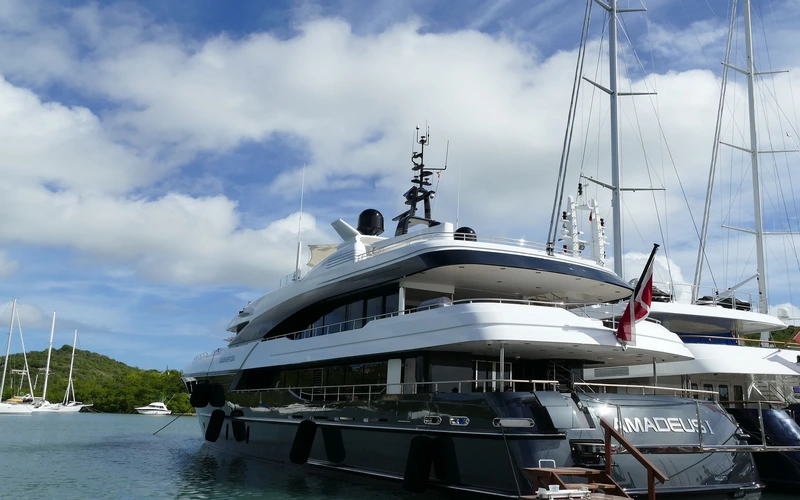
How to choose the right type of flybridge yacht?
Although flybridge yachts may appear to be a single category, they can in fact be subdivided into several distinct types, each catering to different usage requirements.
Firstly, there are ‘sport flybridge yachts’. These vessels emphasise performance and design, typically offering higher speeds and a more streamlined appearance whilst retaining the flybridge space. They are suitable for users who do not wish to sacrifice the joy of sailing but also desire additional social space.
Secondly, there are ‘standard cruising flybridge yachts’. This is the most common type on the market, balancing space, comfort and performance, and is suitable for most families and leisure users. Their flybridge areas are generally more practical, with a more balanced layout.
The third category is the “Ocean-going or Expeditionary Flybridge Yacht”. These vessels prioritise range and stability, making them suitable for extended voyages or challenging sea conditions. They typically feature larger fuel capacities, more robust structures and more comprehensive living systems.
Finally, there is the “enclosed flybridge (Skylounge)”. This design incorporates an enclosed space on the flybridge, allowing it to be used in all weather conditions whilst enhancing privacy. This type of design is more commonly found on larger yachts and is suited to high-end users or long-term usage scenarios.
When choosing which type to opt for, the key consideration is not which is “better”, but which best suits your actual usage patterns.
Size Selection Guide
The choice of size for a flybridge yacht is one of the key factors influencing the user experience and costs. Different sizes not only mean differences in space, but also have a direct impact on mooring, maintenance and operating costs.
| Size Range | Suitable For | Usage Scenarios | Advantages | Points to Note |
| 45–60 foot yacht | Beginners, small families | Weekend trips, short cruises | Easy to handle, lower costs | Limited space, average overnight capacity |
| 60–80 feet yacht | Mainstream users, families and friends | Multi-day voyages, social events | Balance of space and performance | Requires more specialised maintenance |
| 80–100 feet yacht | High-end users | Business hospitality, long-distance cruising | Ample space, comprehensive specifications | Significant increase in costs |
| 100 feet and above yacht | Superyacht users | Long-term living, global cruising | Ultimate experience | Requires a professional crew |
Generally speaking, the 60–80-foot range is currently the most popular on the market, offering a good balance between space, comfort and operating costs. If you are purchasing a flybridge yacht for the first time, this size range is usually a relatively safe choice.
Budget Recommendations
The budget for a flybridge yacht encompasses not only the purchase price but also the long-term running costs. Many novice owners tend to underestimate the latter, which can impact the overall experience.
In terms of purchase, the price of a new flybridge yacht typically rises rapidly with size and brand. The 50-foot class may start at around US$1 million, whilst yachts over 80 feet can reach several million or even tens of millions of dollars.
However, the real focus should be on annual costs, including mooring fees, maintenance, insurance, fuel and crew expenses. Generally, annual running costs amount to approximately 8%–12% of the purchase price. For example, a yacht costing $3 million might incur annual running costs of between $240,000 and $360,000.
Furthermore, depreciation must be taken into account. Unlike property, a yacht’s value depreciates over time. Therefore, from a long-term perspective, selecting a model from a brand with a stable reputation and strong market liquidity will be more advantageous for future resale.
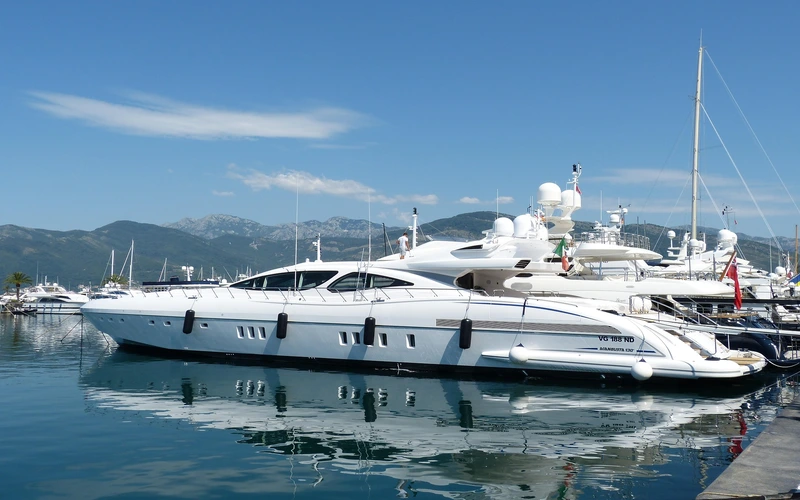
Top Recommendations for Flybridge Yachts
In the current market, several flybridge yachts have become popular choices among different types of owners due to their design, performance and market reputation.
Firstly, there are the Pershing 8X. The Pershing 8X represents the pinnacle of sporty flybridge yachts; its carbon fibre structure results in a lighter hull and higher speeds, making it ideal for those seeking a thrilling sailing experience.
👉 View Pershing 8X for sale

Pershing 8X 2000 M96L
- Length83.10 ft
- Top speed48 kn
- TypeFlybridge yacht
Truly embodying the highest level of yacht design is a miraculous display of perfection, an admirable fusion of luxury and technology. With its futuristic materials and propulsion systems, the Pershing 9X is a maritime supercar that blends Pershing's unique, exhilarating passion with the essence of the new Generation X, delivering an unprecedented cruising experience on the sea.
Next is the Cranchi Sessantasette. This is a very well-rounded flybridge yacht, striking a good balance between design, space and price. Its flybridge layout is practical, whilst the interior is spacious, making it ideal for those upgrading to a flybridge yacht for the first time; it is a prime example of a vessel that ‘combines value for money with a superb experience’.
👉 Browse Cranchi yacht
Cranchi Sessantasette
- Length68.30 ft
- TypeFlybridge yacht
The Cranchi Settantotto exudes a strong sense of family. This project is a collaboration between the Cranchi Yachts research center and Christian Grande, who was entrusted with the artistic direction. The lines are symbolic and complementary, referring to different elements of the silhouette. For instance, there is a connection between the curve of the stern hatch and the protruding section of the flybridge, or between the cutouts of the windows and the cracks in the center of the walls.
Third is the Horizon E75. As a flybridge yacht focused on the cruising experience, the E75 excels in stability, comfort and customisation. It is particularly suited to those planning extended voyages, offering an experience closer to that of a ‘floating home’.
👉 See Horizon E75
Horizon E75
- Length76.30 ft
- TypeFlybridge yacht
The Horizon E75 is a yacht model designed to enable the owner and their family to enjoy the pleasures of yachting life simultaneously. It boasts a classic European streamline exterior designed by renowned Swedish designer John Lindblom, who has collaborated with Jaroon Yacht for many years. Additionally, it features a highly innovative and versatile indoor layout that allows the owner to switch between four distinct yachting lifestyles: dining banquets, social events, family living, and leisure entertainment, all at their discretion.
Finally, there is the OceanAlexander 27R Skylounge. The highlight of this yacht is its enclosed flybridge design, ensuring a pleasant experience in all weather conditions. Furthermore, its overall craftsmanship and level of luxury are of the highest standard, making it suitable for owners with the highest demands for quality and privacy.
👉 See OceanAlexander 27R Skylounge
OceanAlexander 27R Skylounge
- Length88.30 ft
- TypeFlybridge yacht
Ocean Alexander, in collaboration with Evan K. Marshall once again, proudly presents the 27E - a stunning new addition to our Revolution series, cleverly combining cutting-edge engineering with exceptional design.
These models do not represent the ‘best choice’, but they each represent excellent options within their respective market segments and can serve as important references when making a purchase.
Summary
The core value of a flybridge yacht lies in the fact that it offers a more comprehensive lifestyle at sea. It is not merely a means of transport, but a space that accommodates family, socialising and leisure.
Whether it is right for you depends largely on how you intend to use it. If you prioritise speed and the thrill of driving, a flybridge yacht may not be the best choice; but if you wish to achieve multiple functions on a single vessel and share time at sea with family or friends, then a flybridge yacht is almost the ideal solution.
Starting with your intended use, combining this with your budget and size requirements, and then matching it with the appropriate type and brand, is currently the most sensible approach to purchasing a yacht.
FAQ
Q1: What is the main difference between a flybridge yacht and a sports yacht?
A: Flybridge yachts place greater emphasis on space and versatility, making them suitable for socialising and family activities; Sport yachts, on the other hand, emphasise speed and handling, making them better suited to short-distance cruising experiences.
Q2: Do flybridge yachts require a crew?
A: Vessels under 60 feet can usually be skippered by the owner, but for those over 80 feet, it is advisable to have a crew to ensure safety and maintain operational efficiency.
Q3: Is the flybridge space truly useful?
A: It is highly practical for socialising, sightseeing and leisure, and is one of the core advantages that sets flybridge yachts apart from other types.
Q4: When purchasing a flybridge yacht, is it better to buy new or second-hand?
A: New yachts are suitable for those seeking customisation and the latest designs, whilst second-hand options offer greater cost control and are suitable for value-conscious buyers.
Q5: Are flybridge yachts suitable for long-distance cruising?
A: Some large flybridge yachts are capable of long-distance cruising, but this depends on the specific design and configuration; not all models are suitable for ocean-going voyages.