Choosing between a “Super Yacht” and a “Power Yacht” is essentially a decision about budget, usage, and lifestyle. If you plan to use the yacht as a long-term residence at sea, a platform for business entertaining, or for extended cruising—and your budget reaches the multi-million-dollar level—then a Super Yacht is the better fit.
On the other hand, if your goal is weekend outings, family entertainment, or light cruising, while keeping costs and operational complexity under control, a Power Yacht is the more practical choice.
For most first-time buyers, entering the Power yacht market is a safer option due to the lower entry barrier and wider selection. For experienced buyers seeking a more elevated lifestyle, the Super Yacht market offers a completely different level of product and experience.
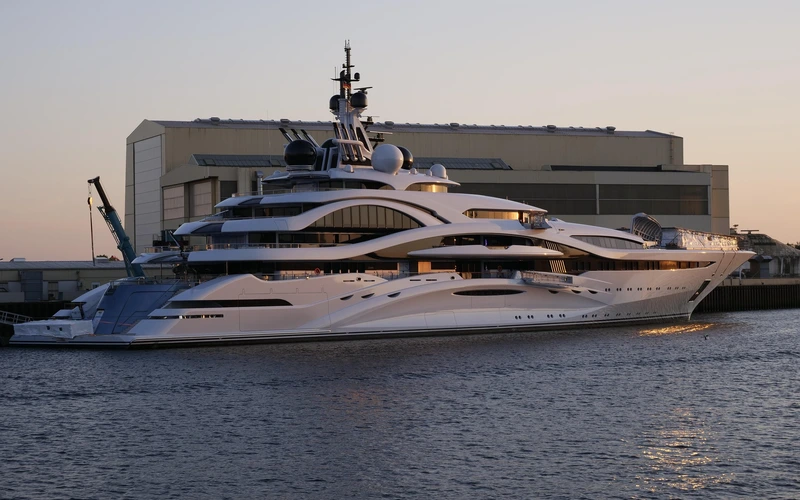
What Is a Super Yacht?
A Super Yacht typically refers to a luxury yacht over 24 meters (80 feet) in length. It is not just a vessel, but an extension of a high-end lifestyle. Compared to standard yachts, Super Yachts are defined by their high level of customization and professional operation.
From a design perspective, they are often built by world-class shipyards, allowing owners to customize interior layouts, materials, and even exterior styling. This level of personalization means each Super Yacht is unique.
Functionally, they are equipped with full living systems, including multiple cabins, full-size kitchens, entertainment areas, and even water toy garages.
In real-world use, Super Yachts almost always require a professional crew, including a captain, engineers, and service staff, making them more like a “floating luxury hotel.” For example, the 2026 Ocean Alexander 35P is a typical model, offering strong long-range cruising capability and spacious design, making it an excellent entry point into the Super Yacht segment.
👉 View Ocean Alexander for sale

2026 Ocean Alexander 35P
- Length113 ft
- Cabins5
- Top speed18 kn
- TypeSuper yacht
The 2026 Ocean Alexander 35P is a luxury motor yacht offering elegance, performance, and duty-free value. Ideal for enthusiasts seeking uncompromising quality.
What Is a Power Yacht?
A Power Yacht refers to any yacht primarily powered by engines, covering a wide size range—from small 20-foot sport boats to luxury cruising yachts over 70 feet.
Compared to Super Yachts, Power Yachts focus more on practicality and ease of use. Many models can be owner-operated without the need for a professional crew, significantly lowering the barrier to entry.
They also offer diverse designs tailored to different uses, such as fishing, family cruising, or high-speed performance.
In today’s market, Power Yachts remain the most mainstream choice.
For instance, the WallyWHY100 stands out with its futuristic design and open layout, making it ideal for socializing and modern lifestyles.

WallyWHY100
- Build Year2025
- Length70 ft
- Cabins3
- Top speed27 kn
- TypePower yacht
The WALLYWHY100 is an innovative crossover luxury yacht by Wally, measuring 21.46m overall, focused on open socializing and comfortable cruising. Featuring a semi-displacement hull and Volvo IPS propulsion, it reaches 27 knots and delivers 1,000nm range at 10 knots. Its signature flush deck, full-beam owner’s suite and 14m² beach terrace enable seamless indoor-outdoor living. A benchmark in the 70ft segment, it blends design, performance and versatility for the high-end market.
Meanwhile, the Absolute 47 Fly strikes a balance between comfort and handling, making it popular among families.
Absolute 47 Fly
- Build Year2021
- Length48 ft
- Cabins3
- Top speed28 kn
- TypePower yacht
This meticulously maintained 2021 Absolute 47 Fly represents the pinnacle of modern Mediterranean yacht design, offering exceptional comfort through an extensive list of premium equipment including Seakeeper gyro stabilization, Volvo DPS "Sky Hook" system, and full electronics suite. Powered by Volvo Penta D6-IPS650 diesel engines delivering 480hp each, she achieves a 28-knot maximum speed with efficient 22-knot cruising.
At the entry level, the Bayliner Trophy T22CC is known for its affordability and practicality, especially suited for fishing and casual outings.
Bayliner Trophy T22CC
- Length22.70 ft
- Top speed38 kn
- TypePower yacht
The Bayliner T22 delivers the perfect balance of fishing capability and cruising comfort, combining a deep-V hull with a versatile layout that appeals equally to anglers and family boaters. The spacious design features a broad bow for casting or lounging, comfortable aft bench seating, a self-bailing cockpit for easy cleanup, and an enclosed head compartment at the center console for added convenience.
Super Yacht vs Power Yacht: Key Differences at a Glance
Before making a purchase decision, understanding only price or size is not enough. The differences between Super Yachts and Power Yachts span multiple dimensions, including usage, operational complexity, lifestyle experience, and long-term costs.
These factors directly impact how often you use the yacht, the maintenance burden, and the overall ownership experience.
Below is a structured comparison to clarify the key differences:
| Category | Super Yacht | Power Yacht |
| Size | Typically 80+ ft | 20–80 ft |
| Price Range | Millions to $100M+ | Tens of thousands to millions |
| Operation | Requires crew | Often owner-operated |
| Customization | high | Mostly standardized |
| Usage Duration | Long-term cruising | Short-term use |
| Lifestyle | Strong (living + social) | Moderate (recreation-focused) |
At its core, a Super Yacht is closer to a “lifestyle asset,” while a Power Yacht is more like a “premium recreational product.”
Cost Comparison (2026 Market)
New Yacht Price Range
In the 2026 market, entry-level Super Yachts typically start at around $5 million, while large custom projects can exceed $100 million. These prices include not only the vessel itself but also design, engineering, and brand value.
Power Yachts cover a broader range—from tens of thousands of dollars for small boats to several million for luxury models. For example, high-end models like the 2026 Cranchi Sessantasette 67 are approaching entry-level Super Yacht pricing, representing a “crossover” category.
👉 See Cranchi Sessantasette 67
2026 Cranchi Sessantasette 67
- Length68.25 ft
- Cabins5
- Top speed27 kn
- TypeSuper yacht
The 2026 Cranchi Sessantasette 67 combines Italian elegance with powerful performance, making it ideal for luxury cruising and entertaining.
Used Yacht Market Differences
The used yacht market for Super Yachts shows significant price fluctuations and depreciation, but well-maintained yachts from strong brands can retain value relatively well.
In contrast, the Power Yacht market is more active, with higher liquidity and easier resale.
For buyers with limited budgets but clear goals, searching in the Super Yacht for sale segment for a quality used yacht can be a cost-effective strategy. Meanwhile, in the Power yacht for sale market, it is easier to find ready-to-use inventory.
Custom vs Standard Production
Super Yachts are typically fully or semi-custom builds, with construction timelines ranging from 1 to 3 years or more, allowing complete personalization.
Power Yachts are usually mass-produced with standardized configurations and shorter delivery times, making them ideal for buyers who want faster acquisition.
Annual Ownership Costs
Did you know? A $30 million Super Yacht can cost around $2.5M–$3.5M annually to operate, including crew salaries, maintenance, insurance, and docking fees.
In comparison, a $1 million Power Yacht typically costs around $50,000–$100,000 per year, making it more sustainable for long-term ownership.
Here’s a breakdown:
| Cost Category | Super Yacht | Power Yacht |
| Annual Maintenance | 8%–12% of value | 5%–10% of value |
| Crew Costs | High and fixed | Usually none |
| Docking Fees | Premium marinas | More flexible |
| Fuel Consumption | Very high | More manageable |
Usage Experience & Lifestyle Differences
The difference in experience goes beyond hardware—it reflects two completely different lifestyles.
A Super Yacht offers a highly private, luxurious, and long-term living experience at sea. It is ideal for extended voyages, business hosting, and family vacations, functioning like a movable oceanfront villa.
A Power Yacht, on the other hand, is more flexible and casual. It is perfect for short trips such as weekend outings, social gatherings, or fishing. It emphasizes usage frequency rather than duration.
If you value depth of experience, choose a Super Yacht. If you value frequency and flexibility, a Power Yacht is the better fit.
Which One Is Right for You?
To determine the right choice, consider these key questions:
• If your goal is to build a long-term ocean lifestyle, with a high budget and the need for privacy and social space, then a Super Yacht is the ideal choice.
• If you want a yacht that is easy to use, suitable for family entertainment and short trips, without heavy operational pressure, then a Power Yacht is more practical.
• For buyers in between, large luxury Power Yachts can be a perfect transition option, offering near–Super Yacht comfort with greater flexibility.
Conclusion
The core difference between Super Yachts and Power Yachts is not just size or price—it is the lifestyle they represent.
A Super Yacht stands for a high-end, private, and long-term ocean living experience. A Power Yacht represents a flexible, practical, and relaxed way to enjoy the sea.
Before making a decision, the most important step is not comparing specifications, but defining the lifestyle you truly want.
FAQ
Q1: Are Super Yachts suitable for first-time buyers?
A: Generally not recommended due to high complexity and costs; they are better suited for experienced buyers.
Q2: Can a Power Yacht be upgraded into a Super Yacht?
A: No, but owners can transition by buying larger yachts over time.
Q3: Is a used yacht worth considering?
A: Absolutely—especially in the Super Yacht segment, where a used yacht can significantly reduce buy costs.
Q4: What are the main costs of owning a yacht?
A: Maintenance, fuel, docking, and insurance—plus crew costs for Super Yachts.
Q5: What is the most overlooked factor when buying a yacht?
A: Long-term operational costs, which determine whether you can truly afford to use it.