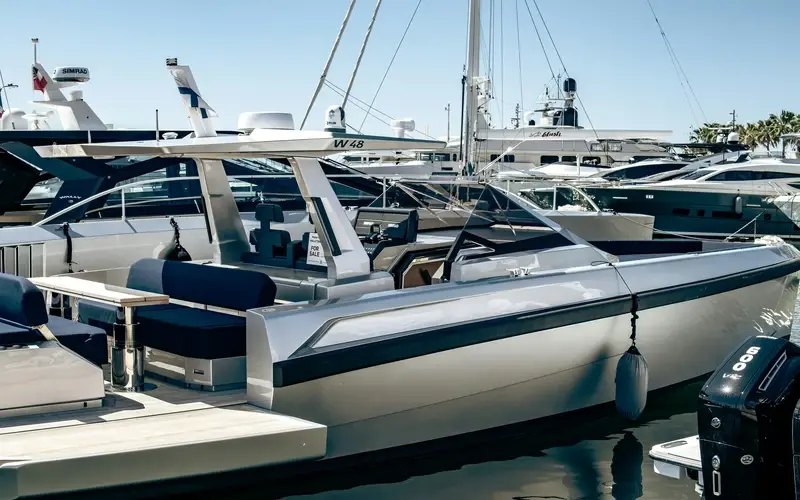
For most new owners who plan to operate the boat themselves, the safest starting point is usually a mainstream used yacht or cruiser in the 30–45 ft range. Smaller 25–30 ft boats can be a good first step for day boating, while yachts above 50 ft are better suited to owners who already have boating experience or plan to hire professional crew.
What Type of Used Yacht Is Best Suited for Beginners?
When choosing a pre-owned yacht, the key for beginners is not to pursue ‘the most powerful performance’ or ‘the highest specification’, but to prioritise three things: ease of handling, ease of maintenance, and reliability. Many people’s first yacht purchase fails not because of a lack of budget, but because they chose a model whose ‘operational complexity exceeded their experience’.
Based on actual market feedback, pre-owned yachts suitable for beginners mainly fall into the following categories, each with clear usage scenarios and advantages.
| Yacht Type | Main Advantages | Main Disadvantages | Beginner Recommendation Rating |
| Flybridge Cruiser | Excellent visibility; spacious living areas; ideal for family outings; high market availability, easy resale | Significant wind resistance; mooring fees slightly higher than those of sports boats of the same size | ★★★★★ |
| Sport Cruiser | Easy to operate; low maintenance costs; good value for money; suitable for short cruises and weekend use | Relatively limited interior space; comfort for long-term living is average | ★★★★★ |
| Power Catamaran | Excellent stability; less prone to seasickness; living space far exceeds that of monohulls of the same size; good fuel efficiency | Higher purchase price; the catamaran’s width is considerable, limiting choice of moorings at some marinas | ★★★★☆ |
| Catamaran Sailboat | Smooth sailing; strong long-distance cruising capability; low fuel consumption; suitable for extended cruising life | Longer learning curve for the sailing system; mooring manoeuvres are more complex than for motorboats | ★★★☆☆ |
| Monohull Sailboat | Lower purchase cost; pure sailing experience; relatively manageable maintenance costs | Limited interior space; significant heel; some beginners may suffer from seasickness | ★★★☆☆ |
| Performance Yacht | Fast; highly enjoyable to drive; sporty appearance | High fuel consumption; high maintenance costs; demanding to handle | ★★☆☆☆ |
| Large luxury yachts (60 feet and above) | Spacious and luxurious; well-equipped; suitable for business hospitality and long-distance cruising | High running costs; difficult to moor; usually requires professional crew | ★☆☆☆☆ |
Flybridge cruiser
Flybridge boats are the most accessible type for many beginners, as the helm is situated on the upper deck, offering excellent visibility. This makes it easier to judge distances when mooring or manoeuvring, making them very beginner-friendly.
These boats typically feature a well-designed layout, with the helm on the upper deck and living quarters on the lower deck, providing a pleasant experience for families. They are ideal for weekend trips and short cruises.
The downside is that they offer greater wind resistance, requiring some experience in strong winds or challenging sea conditions; however, overall, they remain one of the safer options for beginners.
Sport Cruisers
Sport cruisers are a ‘safe bet’ for beginners. Their overall design favours straight-line handling and speed, yet the complexity of their systems is relatively low.
Its advantages lie in straightforward handling logic and electronic systems that are not overly complex, making it a beginner-friendly option. Maintenance costs are also typically lower than those of larger flybridge yachts.
However, the downside is that space utilisation is average, and long-term living comfort is not as good as on larger yachts; it is better suited to short-distance leisure trips and weekend use.
Power Catamaran
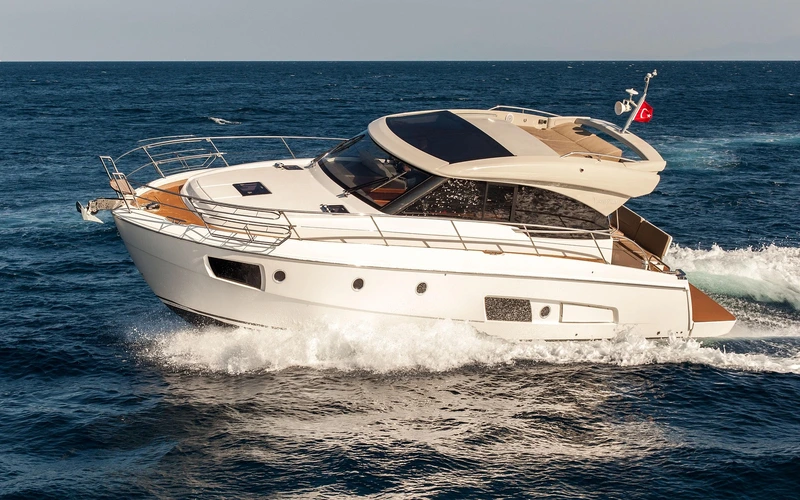
The defining feature of a catamaran is its ‘stability’. Compared to monohulls, it experiences less roll when stationary or travelling at low speeds, making it very user-friendly for beginners and families.
The advantages of this type of boat are particularly evident in family settings with children or those prone to seasickness. Space utilisation is also excellent, with the twin hulls creating a more spacious living area.
The downside is that mooring options are relatively limited; some marinas charge higher fees for catamarans or have fewer berths available, which is a practical issue that needs to be considered in advance.
Types not recommended for beginners
Although there are many other types of yachts on the market, they are not beginner-friendly, for example:
• High-performance sports boats: fast but complex to operate, requiring a high level of experience
• Large ocean-going cruisers: complex systems and high maintenance costs
• Old, refitted boats: prone to hidden issues and uncontrollable risks
These types are not ‘bad’, but are better suited to experienced boat owners rather than first-time buyers.
From a practical perspective, the top priorities for beginners are actually:
• Flybridge yachts = a more intuitive driving experience
• Sport cruisers = the lowest learning curve
• Motor catamarans = the best in comfort and stability
By selecting a yacht based on the principles of ‘simplicity, safety and ease of maintenance’, most beginners can significantly reduce the likelihood of making costly mistakes and reach the stage where they can truly enjoy yachting life more quickly.
Recommended Used Yachts for Beginners Across Different Budget Ranges
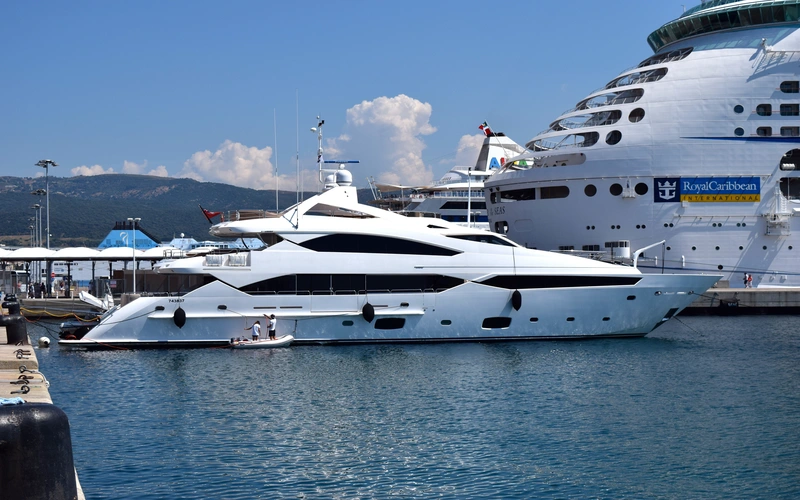
For beginners, budget often dictates the choice of boat type, size and overall experience. Rather than simply chasing a particular brand or size, it is more important to find a yacht within your budget that is in good condition, has reasonable maintenance costs and meets your specific needs. Below, we look at which types of pre-owned yachts are most worth considering across different budget ranges, along with some of the more popular models on the market. If you are looking for the best used yachts to buy in 2026, the budget options below can serve as a guide.
Budget: $100,000–$300,000
This is the most common budget range for beginners entering the yacht market. Within this price bracket, buyers have the opportunity to access well-maintained small to medium-sized cruising yachts, as well as some older but high-quality motor catamarans.
For those new to yachting, the greatest advantage of this budget is that the risks are relatively manageable. Even if you later find that your usage habits differ from expectations, the financial pressure of changing or upgrading your boat will not be too great. At the same time, yachts in this price range typically have a relatively simple structure, making maintenance and repair costs easier to manage.
However, it is important to note that the age of boats within this budget range varies considerably. When purchasing, you must focus on the condition of the engine, the hull structure and the maintenance records, rather than simply comparing prices.
Recommended Model: 2007 Manta 44 PowerCat

2007 Manta 44 PowerCat
- Build Year2007
- Length44 ft
- Cabins3
- Top speed20 kn
- TypeCatamaran yacht
The 2007 Manta 44 PowerCat “Lah De Dah” is a highly upgraded offshore cruising catamaran designed to deliver exceptional efficiency, long-range capability, and comfortable liveaboard functionality. Well known among experienced cruisers for its practical layout and stable multihull performance, the Manta 44 PowerCat combines spacious onboard living with economical diesel operation, making it an ideal platform for coastal exploration, island hopping, and extended blue-water cruising.
The Manta 44 PowerCat is one of the most popular classic power catamarans on the market. Its greatest strengths lie in its spacious living quarters and excellent stability, offering a comfortable and relatively stress-free experience even for novices with limited sailing experience. As a catamaran with a long track record in the market, it enjoys a strong reputation for family cruising and long-term living on board.
Budget: $300,000–$800,000
Within this budget range, the selection of available vessels increases significantly, whilst the age of the boats tends to be younger. Many high-performance modern motor catamarans and mid-to-high-end cruising yachts begin to fall within the buyer’s consideration.
For family owners planning to hold onto their yacht for the long term, this is typically the ideal budget range for balancing comfort, reliability and long-term maintenance costs. Onboard amenities are more comprehensive, typically featuring separate guest cabins, a galley, air conditioning and modern navigation equipment, capable of meeting the needs of weekend getaways or even multi-day cruising trips.
Furthermore, vessels in this price range generally incorporate more advanced design concepts, offering advantages over older models in terms of fuel efficiency, space utilisation and handling.
Recommended model: 2023 Fountaine Pajot MY4.S
2023 Fountaine Pajot MY4.S
- Build Year2023
- Length36.08 ft
- Cabins3
- Top speed28 kn
- TypeCatamaran yacht
The 2023 Fountaine Pajot MY4.S is a power catamaran featuring sleek lines and a modern design, engineered to deliver an efficient cruising experience, luxurious comfort, and dynamic offshore performance. Whether for coastal exploration, weekend getaways, or long-distance cruising adventures, the MY4.S is equipped to meet a wide range of needs.
The Fountaine Pajot MY4.S is a modern motor catamaran that has attracted significant attention in recent years. It combines the excellent stability of a catamaran with efficient fuel performance, whilst offering spacious and comfortable living quarters. For first-time buyers seeking a balance between family entertainment, coastal cruising and an effortless driving experience, the MY4.S is one of the most well-rounded options on the market.
Budgets over US$800,000
With a budget exceeding US$800,000, buyers can enter the high-end motor catamaran market. Yachts in this category not only offer more living space and greater range but also feature significant improvements in equipment, comfort and sailing quality.
For those planning frequent use of the yacht, long-distance cruising or extended life on board, a higher budget can deliver a more comprehensive maritime lifestyle experience. Whether for family outings, gatherings with friends or cross-regional voyages, these yachts offer a higher level of comfort and independence.
Of course, a higher budget also implies higher annual running costs, so it is essential to carefully consider mooring, insurance and maintenance expenses before purchasing.
Recommended Model: 2023 ArrowCat 420 Flybridge
2023 ArrowCat 420 Flybridge
- Build Year2023
- Length41.33 ft
- Cabins2
- Top speed24 kn
- TypeCatamaran yacht
The 2023 ArrowCat 420 Flybridge is a power catamaran that combines high-speed cruising performance, long-range comfort, and fuel efficiency. Measuring approximately 42 feet in length, it features a highly stable twin-hull design and a flybridge layout that provides owners with wider visibility and additional social space onboard.
The ArrowCat 420 Flybridge is a high-end motor catamaran that balances performance, comfort and fuel efficiency. The flybridge design not only provides excellent visibility for the helm but also creates additional space for leisure and entertainment. The stability afforded by the catamaran hull and the spacious layout make it a popular choice for many families looking to upgrade their yacht. For first-time buyers with a generous budget who wish to enjoy a high-quality cruising experience from the outset, this is an extremely attractive option.
Why Do Most Beginners Regret Their First Yacht Purchase?
Many first-time yacht buyers do not regret buying a yacht itself; they regret buying the wrong yacht for their actual usage pattern, skill level and ownership budget.
The first common mistake is underestimating the running costs. Many people only factor in the purchase price, overlooking mooring fees, insurance, repairs and crew costs. The result is that whilst they can afford to buy the boat, they struggle to maintain it.
The second mistake is overestimating how often the boat will be used. The reality is that most families may only go out to sea for 10–30 days a year, yet maintenance costs are incurred consistently throughout the year.
The third mistake is overlooking the complexity of operation. This is particularly true for yachts over 40 feet, where mooring, system management and engine maintenance all require accumulated experience, which can easily become overwhelming for beginners.
Another scenario is ‘upgrading too quickly’. Many people buy a boat that is too large for their first vessel, only to discover it doesn’t suit their usage patterns, forcing them to sell at a loss a few years later.
If you are researching the question of ‘how much does a used yacht cost’, you will find that the price is merely the starting point; it is the subsequent cost structure that truly determines the experience.
How Much Should a Beginner Budget for a Used Yacht?
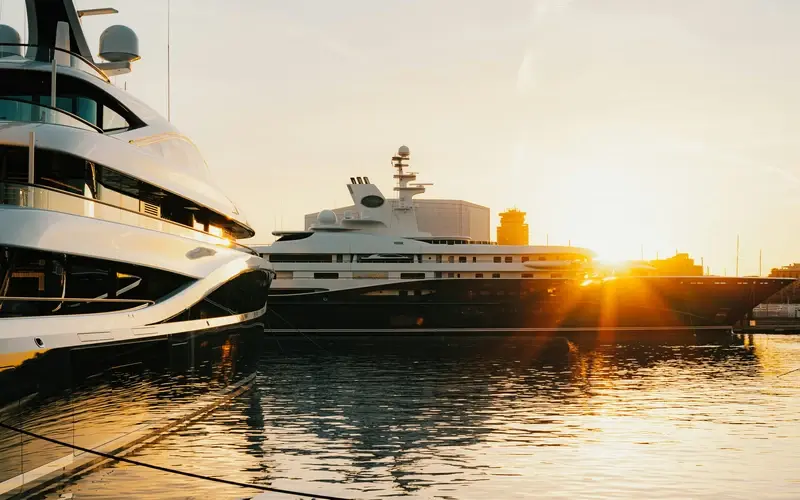
When entering the yacht market, many novices’ first reaction is ‘how much will this boat cost to buy?’, but the truly critical question is actually: how much capital do you need to set aside in total to cover the entire process of purchase, use and ownership? The cost structure of a second-hand yacht is not limited to the purchase price alone, but rather constitutes an ongoing, comprehensive system of expenditure.
Generally speaking, beginners can break down their budget into four tiers; the boat type, experience and subsequent financial burden vary significantly depending on the budget.
Budget under $100,000: The Entry-Level Experience
Within this budget range, options are typically limited to smaller entry-level motorboats or older sailing yachts, which are often of a higher age and feature relatively basic specifications.
The advantage is the low entry barrier, making them ideal for those new to sailing to learn basic operations, mooring techniques and simple maintenance. However, it is important to note that boats in this price range are often ‘cheap to buy but expensive to maintain’, and may require frequent repairs down the line.
Suitable for: Those seeking a purely recreational experience or buyers in the learning phase; not recommended for long-term, regular use.
Budget of $100,000–$300,000: The Mainstream Entry-Level Range
This is the most active price bracket in the global second-hand yacht market, and it is where many newcomers begin their journey towards owning a yacht for the first time.
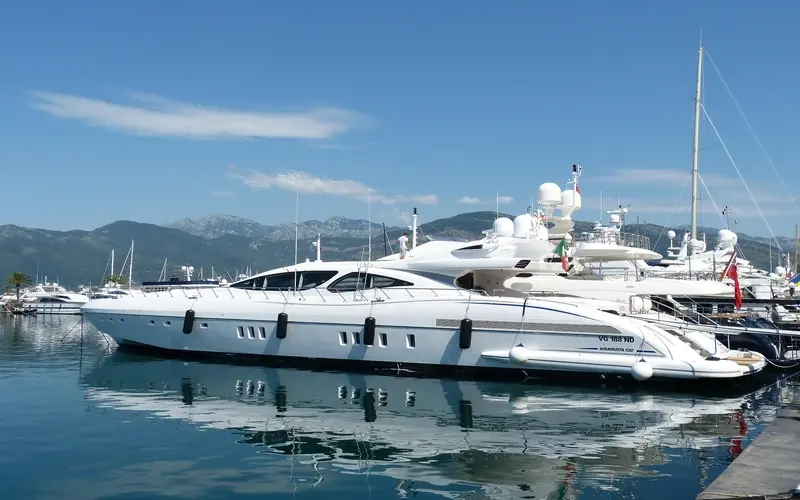
In this price range, you can find small cruisers from classic brands, such as entry-level second-hand models from Sea Ray or Bayliner. These boats typically feature a well-designed layout, are relatively easy to handle, and have good resale value.
However, the key issue in this bracket is the ‘wide variation in a boat’s age’. For the same price, you might purchase a well-maintained vessel or encounter an older boat requiring frequent repairs; therefore, the quality of the pre-purchase survey is crucial.
Overall, this bracket is suitable for: users experiencing yachting life seriously for the first time.
Budget of $300,000–$800,000: The Core Range for Comfortable Family Cruising
This budget marks the entry into the ‘true family yachting stage’, with significant improvements in space, comfort and sailing stability.
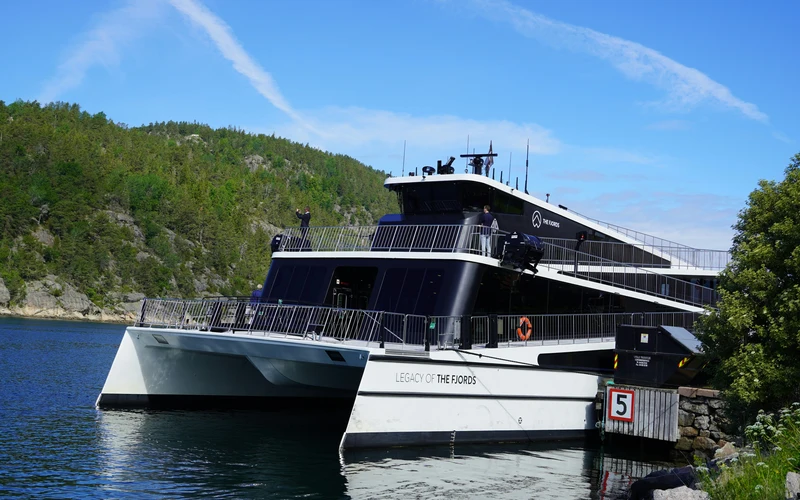
You can opt for a well-maintained mid-sized cruiser, such as a pre-owned Princess Yachts or Azimut. These vessels usually feature more comprehensive living facilities, such as separate cabins, a galley and air conditioning, making them ideal for weekends or short holidays.
Furthermore, vessels in this range offer greater stability and safety, making them suitable for families with children or larger groups.
However, it is important to note that once you enter this tier, mooring fees, insurance and maintenance costs will rise significantly, so you will need to plan your long-term ownership budget in advance.
Budget of $800,000 and above: High-end comfort and semi-luxury experience
This budget range approaches the high-end pre-owned yacht market, where many vessels, even when pre-owned, still offer an overall experience very close to that of a new boat.
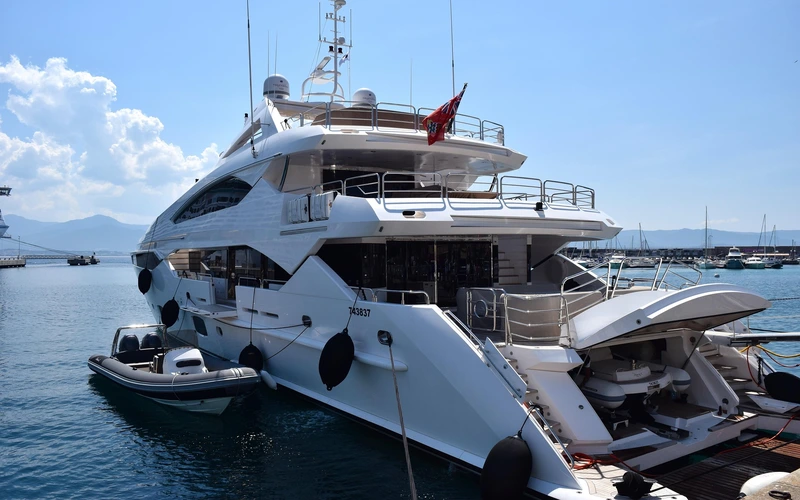
You may wish to consider premium brands, such as larger models from Sunseeker, or custom-built yachts with high-end specifications. These vessels offer more space and more advanced equipment, making them suitable for extended life at sea or frequent use.
However, the cost structure at this level is also more ‘realistic’: not only is the purchase price high, but maintenance, fuel, mooring fees and even crew costs will rise accordingly.
This is suitable for buyers with a substantial budget who seek a comfortable experience and have a stable plan for the yacht’s use.
The Hidden Costs Most First-Time Yacht Buyers Overlook
For first-time buyers of used yachts, the biggest misconception is often treating the purchase price as the total cost.
In reality, buying the boat is just the beginning. Whether it’s mooring, insurance, maintenance, or equipment upgrades and unexpected repairs, ongoing expenses will continue to arise in the future. Many owners feel they have bought a used yacht that offers ‘great value for money’ when signing the contract, only to discover a year later that the annual running costs far exceed their expectations.
A practical rule of thumb is to budget around 10%–20% of the yacht’s value per year for ownership costs, including mooring, insurance, maintenance, fuel, cleaning, inspections and unexpected repairs. For well-maintained smaller boats, the actual number may be lower; for older or larger yachts, it can be much higher.
Taking a 40-foot second-hand yacht with a market value of approximately US$500,000 as an example, let’s look at the cost items that newcomers are most likely to overlook.
Reference guide to annual running costs for a 40-foot second-hand yacht:
| Cost item | Annual reference cost (USD) | Notes |
| Marina Fee | $8,000 – $20,000 | Varies significantly depending on region and marina grade |
| Hull and Equipment Insurance | $3,000 – $8,000 | Premiums are generally higher for older vessels |
| Engine Maintenance | $2,000 – $6,000 | Includes oil, filters and routine servicing |
| Hull Cleaning and Anti-fouling | $2,500 – $8,000 | Usually carried out every 1–2 years |
| Fuel costs | $3,000 – $15,000 | Depends on frequency of sailing and distance travelled |
| Battery and electronic equipment maintenance | $500 – $3,000 | Navigation equipment, battery banks, etc. |
| Maintenance of auxiliary systems such as air conditioning and generators | $1,000 – $5,000 | Often overlooked by beginners |
| Annual inspection and certificate renewal | $500 – $2,000 | Requirements vary by registration jurisdiction |
| Contingency fund for unexpected repairs | $3,000 – $10,000+ | Recommended to set aside separately for older vessels |
| Total annual cost | Approx. $23,500 – $77,000 | Excluding major equipment failures |
This example excludes major engine failure, generator replacement, structural repairs, refit projects, financing costs and depreciation.
How Can You Tell If a Used Yacht Is Worth Buying?
First-time buyers often fall into the trap of judging value solely by price.
Many experienced boat owners will even check the maintenance records before inspecting the vessel itself, as they know that a well-maintained older boat is often a better investment than a newer one with no maintenance history.
So, what aspects should a novice consider when making this judgement?
Check the full maintenance history
Maintenance records are one of the most important factors in assessing the value of a second-hand yacht.
During its service life, a yacht undergoes a wide range of maintenance tasks, including engine servicing, anti-fouling treatment, electrical system inspections, air conditioning maintenance and equipment upgrades. If these records are kept in full, it indicates that the previous owner managed the vessel in a responsible manner.
Conversely, if the seller cannot provide repair records, maintenance invoices or annual service reports, you should be wary, even if the vessel appears to be in good condition.
This is because many potential issues are not immediately apparent from the exterior, but are hidden within the engine, hydraulic or electrical systems.
Put simply:
A complete maintenance record is, in itself, strong evidence of the vessel’s good condition.
Pay attention to engine operating hours
Many first-time buyers will ask directly about the engine’s operating hours when viewing a boat. Whilst this is an important indicator, it is not the only criterion.
For example, consider two yachts that have both run for 1,500 hours:
• The first has been serviced on time and had parts replaced regularly;
• The second has been left moored for long periods and poorly maintained;
Their actual condition may ultimately be completely different.
For most diesel engines, it is not uncommon to accumulate several thousand hours of operation with proper maintenance. Therefore, rather than focusing solely on the hour reading, it is better to examine:
• Engine maintenance records
• Whether there are any oil leaks
• The condition of the cooling system
• Whether the exhaust colour is normal
• Performance during sea trials
The engine’s actual condition is far more indicative of its health than the figure on the gauge.
Inspect the Hull and Deck Structure
Engines can be repaired, but hull structural issues are often the most costly. Consequently, hull inspections are typically given top priority during a survey.
Key points include:
• Signs of impact repairs on the hull bottom
• Evidence of water ingress
• Structural cracks in the hull
• Severe osmosis on the hull bottom
• Condition of the keel and supporting structures
Particularly in the case of fibreglass hulls, extensive osmosis can result in repair costs running into tens of thousands of dollars. Consequently, the structural integrity of the hull often determines whether a vessel is worth holding onto in the long term.
Assessing Equipment Upgrades
A second-hand yacht worth purchasing is not necessarily one that remains entirely in its original factory condition. In fact, many high-quality second-hand yachts undergo equipment upgrades over time.
For example:
• Next-generation navigation systems
• Radar upgrades
• Lithium-ion battery systems
• Autopilot systems
• New air conditioning units
• New generators
These upgrades not only enhance the user experience but also mean less maintenance pressure in the coming years. Naturally, upgrades must be carried out by authorised installers and professional fitters. If the vessel has a large number of modifications of unknown origin, particular caution is required.
Understanding Brand Resale Value and Market Demand
Many first-time buyers overlook the resale market when purchasing their first boat. In reality, most boat owners will upgrade to a new vessel within the next five to ten years. Therefore, whether a boat is easy to sell is also a key factor in determining its value.
Generally speaking, yachts with the following characteristics tend to retain their value better:
• Mainstream brands
• Large market presence
• Adequate supply of spare parts
• Complete maintenance records
• Length between 30 and 50 feet
Conversely, some niche brands, highly customised vessels or those that have been excessively modified may prove difficult to sell in the future, even if purchased at a low price.
Finally, I recommend a checklist for beginners buying a used yacht. When purchasing a used yacht, you can check each item on the checklist one by one.
First-Time Used Yacht Buyer Checklist:
| Checkpoint | Why It Matters |
| Complete maintenance records | Shows whether the boat was responsibly owned |
| Professional survey | Finds hidden structural and system issues |
| Sea trial | Confirms handling, engine performance and vibration |
| Engine hours + service history | Hours alone are not enough |
| Marina berth availability | Catamarans and larger yachts may be harder to berth |
| Insurance quote before purchase | Older or larger boats can be harder to insure |
| Annual cost estimate | Prevents ownership shock |
| Resale demand | Makes future upgrade easier |
| Parts availability | Reduces downtime and repair risk |
| Simple systems | Easier for new owners to maintain |
Which Used Yachts Are Not Recommended for Beginners?
Many first-time buyers focus on price, brand and appearance, but what truly determines the future user experience is often whether the boat type suits their level of experience.
In fact, not all inexpensive second-hand yachts are worth buying, nor are all luxury yachts suitable as a first boat. Some vessels that appear very attractive often conceal higher learning costs, maintenance costs and operational risks.
For beginners, avoiding the wrong choice is sometimes more important than making the right one. The following categories of second-hand yachts are generally not recommended as a first boat:
• Large yachts over 50 feet
• Vessels over 25 years old
• Boats with a complex maintenance history
• Boats with extensive custom modifications
• Niche brands with extremely low market availability
Conclusion
When purchasing your first second-hand yacht, defining your intended use is more important than choosing a brand, and managing long-term ownership costs is more important than driving down the purchase price. Regardless of your budget, you should always insist on a professional survey and sea trial to avoid high repair costs later on.
For most beginners, a mainstream brand yacht measuring 30–45 feet, aged 10–15 years, and with a complete maintenance history is usually the safest choice. If you are still researching how to buy a yacht, remember this principle: the aim of your first boat is not to get everything right at once, but to help you gain experience and discover the yachting lifestyle that truly suits you.
About the Editorial Review
This guide was prepared by the YachtTrading editorial team and reviewed against publicly available brokerage listings, yacht valuation references, brand model information and common ownership-cost benchmarks. Because yacht prices vary by condition, location, engine hours, specification and market demand, all price ranges should be treated as general guidance rather than fixed offers.
Disclaimer
The content herein is for informational purposes only and is intended to share the author's personal experiences and perspectives. It does not constitute legal, tax, or investment advice. Yacht transactions involve complex legal, financial, and technical matters. Actual purchasing processes may vary due to regional regulations, vessel type differences, or individual circumstances.
Before making any yacht purchase decisions, readers are advised to consult licensed professionals (such as attorneys, tax advisors, licensed yacht brokers, or surveyors) for personalized guidance tailored to their specific situation. Neither the author nor the publisher shall be liable for any direct or indirect losses arising from reliance on the information provided herein.
FAQ
Q1: What is the most suitable length for a beginner buying a second-hand yacht for the first time?
A: For most beginners, 30–45 feet is generally the ideal size range. This range offers sufficient living and recreational space without the added complexity of handling and ownership costs associated with larger hulls, making it highly suitable as a first yacht.
Q2: Is a pre-purchase survey essential when buying a second-hand yacht?
A: Absolutely. A professional survey is one of the most critical steps in the process of purchasing a second-hand yacht. A surveyor can inspect the hull structure, engines, electrical systems and potential maintenance issues, helping buyers avoid costly repairs down the line.
Q3: What are the approximate annual maintenance costs for a pre-owned yacht?
A: Typically, the annual running costs of a yacht amount to around 5%–15% of the purchase price, depending on the vessel’s age, size, frequency of use and mooring location. These costs primarily include mooring fees, insurance, fuel, servicing and equipment repairs.
Q4: Should a novice buy a sailing yacht or a motor yacht?
A: If the yacht is primarily intended for family leisure, weekend outings and short cruises, a motor yacht is usually the easier option to get started with. If you wish to learn sailing skills, experience long-distance cruising and are willing to invest time in learning how to sail, then a sailing yacht is also a good choice. For the vast majority of first-time buyers, the learning curve for a motor yacht is relatively lower.