With over a decade of experience as a yacht broker, I've personally handled hundreds of transactions—from small sailing yachts to ultra-luxury motor yachts, and from common pre-owned models to custom-built new vessels—including viewings, sea trials, and deal closures. This article has a straightforward goal: to help you quickly understand the three major yacht types—sailing yachts, motor yachts, and hybrid yachts—covering their definitions, pros and cons, key specifications (length, speed, price range), suitable scenarios, and purchasing advice.
Table of Contents:
1. Overview of Yacht Categories
2. Sailing Yachts Explained
3. Motor Yachts Explained
4. Hybrid Yachts Explained
5. Quick Yacht Type Selection Guide
6. Conclusion
1. Overview of Yacht Categories
| Type | Power Source | Typical Length (ft) | Typical Speed (knots) | Price Range (USD) | Suitable Scenarios |
| Sailing Yachts | Primarily sail, auxiliary internal combustion engine | 25–60 (cruising/offshore) to 100+ (ocean-going) | 4–12 (cruising)/higher for racing boats | $50k–$1M+ (depending on size and equipment) | Long voyages, slow cruising, sea living, racing |
| Motor Yachts | Internal combustion engine (gasoline/diesel), outboard/inboard propulsion | 30–200+ | 15–35+ knots (speedboats up to 40+) | $100k–$10M | Parties, speedboat cruising, business hospitality, fast offshore/ocean transit |
| Hybrid Yachts | Internal Combustion Engine + Electric Motor (or Plug-in/Battery) | 35–120 (current mainstream) | 6–30 (depending on design) | $300k–$5M | Emphasis on environmental friendliness and low noise, quiet coastal cruising, energy efficiency over long legs |
Note: The above table represents common industry ranges; specific figures depend on model/shipyard configuration.
2. Sailing Yachts Explained
Sailing Yachts rely primarily on sails for propulsion, with auxiliary internal combustion engines for maneuvering during docking or calm conditions. Common configurations include monohulls and multihulls (catamarans, trimarans). Monohulls derive stability from keel ballast, while multihulls achieve stability through their wide hulls, offering shallow drafts and ample deck space. The North American boating education platform BOATERexam's publication “Boat Hull Types & Designs” introduces various hull designs—flat-bottom, round-bottom, V-shaped, and multihull—each suited for different water conditions and sailing needs. This helps owners select the appropriate yacht hull type based on their usage scenarios.
a. Advantages and Disadvantages of Sailing Yachts
Advantages:
Low fuel consumption and long-term operating costs (wind-powered propulsion).
A “purer” sailing experience, ideal for year-round cruising and racing.
Multihulls offer greater deck/cabin space and shallow draft, suitable for anchoring in shallow/coral areas.
Disadvantages:
Speed varies significantly with wind conditions; travel times over long distances are unpredictable.
Requires advanced sailing skills and maintenance expertise (specialized upkeep for sails, rigging, ballast, etc.).
Multihulls may incur higher berthing fees in narrow or specific moorings (due to beam restrictions and berth compatibility).
During 2019–2021, I facilitated multiple trans-Mediterranean sailing yacht sales. Few vessels truly achieve year-round sailing capability. Most long-distance buyers opt for reliable power generation and propulsion systems alongside sail-driven propulsion to prepare for windless conditions.
b. Typical Sailing Yacht Parameters
Common Lengths: 30–60ft (leisure cruising); 60–100+ft (long-range/ocean-going).
Cruising Speed: Standard monohull cruisers 5–8 knots; performance sailboats up to 12–20 knots; multihull cruisers 7–12 knots.
Price Range: Entry-level small sailing yachts start at $10,000; mid-sized cruisers (35–50ft) range from $100,000 to $500,000; high-end ocean-going and custom ocean-going vessels can reach $1,000,000.
c. Recommendations for Selecting a Sailing Yachts
When purchasing a sailing yacht, in addition to understanding the 6 Factors to Consider When Buying a Sailboat, you should also incorporate the following 3 recommendations:
Wind Condition Preferences: Those frequently sailing in light wind areas (average wind speed <8 knots) should avoid less responsive long-sail configurations; conversely, those operating in high-wind zones should prioritize robust rigging and downwind solutions.
Sailing Frequency: For infrequent annual outings, choose low-maintenance cruising yachts; frequent sailors or those planning extended voyages should opt for more durable, well-equipped offshore vessels.
Handling Difficulty Tolerance: Solo or couple sailors should prioritize modern features like electric winches, servo-assisted steering, and streamlined sail handling systems; family boats may favor multihulls (easier to handle).
In 2022, I purchased a Jeanneau 57 cruising sailboat for a client on France's Côte d'Azur, prioritizing solo sailing for two and low maintenance. We ultimately selected electric winches and self-tailing systems, significantly reducing sail handling complexity.

3. Motor Yachts Explained
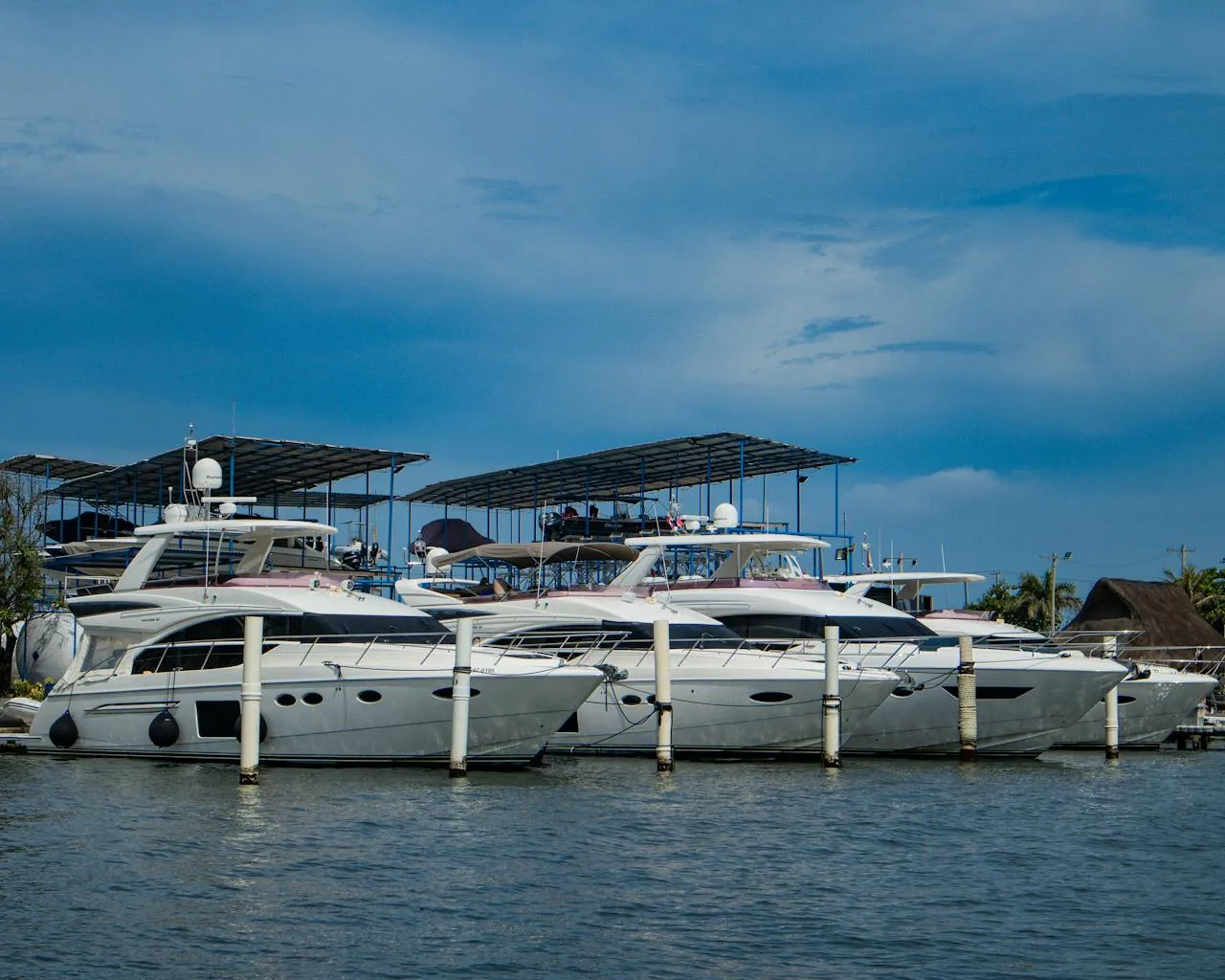
Motor yachts rely on engines for primary propulsion and are categorized by deck layout and purpose: flybridge yachts, sport yachts, luxury yachts, etc. Flybridge yachts typically feature an upper helm station and leisure area; sport yachts emphasize speed and sleek lines; luxury yachts prioritize comfort and customization.
a. Advantages and Disadvantages of Power Yachts
Advantages:
Consistent cruising speed enables rapid, scheduled destination reach. Ideal for short, frequent outings.
Spacious, comfortable interiors with ample social areas. Suited for hosting parties and business receptions.
Relatively low operational threshold. Intuitive start-up/navigation process, often featuring semi-automated equipment.
Disadvantages:
High fuel and maintenance costs, particularly for high-speed and large motor yachts.
Noticeable noise and vibration unless equipped with vibration isolation/noise reduction systems.
Higher berthing and mooring fees compared to sailing yachts of equivalent volume.
b. Typical Parameters of Power Yachts
Common Length: 30–80ft for mainstream recreational yachts; 80ft+ enters the luxury superyacht category.
Cruising Speed: Standard cruising speed for motor yachts is 15–25 knots; speedboats and sport yachts can cruise above 30 knots with top speeds exceeding 40 knots (depending on engine power and hull design).
Price Range: $100,000–$10,000,000.
c. Recommendations for Selecting a Motor Yacht
Budget: Establish a total purchase budget and allocate 30% for first-year operating expenses (fuel, marina fees, insurance, spare parts, crew/maintenance).
Speed Requirements: Prioritize power yachts if frequent long-distance high-speed travel is needed (e.g., port-to-resort island transfers), but weigh fuel costs and noise impact on the experience.
Usage Classification: Party/entertainment yachts favor large decks and wetbar designs; family day yachts emphasize safety factors and deck flow; business/hosting yachts prioritize guest cabins and audiovisual equipment.
I often remind clients: First-year operating costs for power yachts are frequently underestimated, especially with large engines and high speeds, where fuel and engine overhaul expenses can surge significantly.
4. Hybrid Yachts Explained
Hybrid yachts combine internal combustion engines with electric propulsion, commonly categorized into: series, parallel, and plug-in hybrid systems. Manufacturers like Greenline, Sunreef, and some traditional shipyards offer hybrid or electric product lines. The primary selling point of hybrid yachts is pure electric, silent operation at low speeds and while anchored.
a. Advantages and Disadvantages of Hybrid Yachts
Advantages:
Electric mode operates nearly silently during port calls and mooring, aligning with shore-based living and harbor regulations.
Long-term fuel savings and reduced emissions support industry compliance with low-carbon transition trends. This advances the International Maritime Organization's (IMO) efforts to cut GHG emissions from ships.
Strong market trend ensures favorable future resale value and regulatory adaptability.
Disadvantages:
Initial premium purchase cost and system complexity (battery management, cooling, weight distribution) increase maintenance and troubleshooting expenses.
Battery weight impacts payload capacity and layout.
Long-range high-speed operation still relies on internal combustion engines or larger battery packs.
b. Typical Parameters of Hybrid Yachts
Common Length: Current market mainstream ranges from 35–120ft, with many shipyards offering hybrid versions or custom hybrid solutions.
Cruising Speed: Pure electric mode suits low-speed cruising at 4–12 knots; hybrid mode can achieve 20+ knots, though this depends on engine configuration.
Price Range: Typically carries a premium (tens to hundreds of thousands of USD) compared to conventional yachts of similar size, with newer technologies commanding higher premiums—especially for luxury hybrid custom yachts.
c. Recommendations for Selecting Hybrid Yachts
Environmental Priorities: If your primary goal is reducing harbor noise/zero-emission cruising, hybrid or plug-in models are highly worthwhile; if transoceanic high-speed voyages are your objective, assess whether the battery pack can meet range requirements.
Range Requirements: Clearly define “how far/how long I want to sail purely on electric power” before discussing configurations. Pure electric harbor operations + short-range cruising are easily achievable; longer legs rely on combined hybrid/fuel power.
Long-Term Maintenance Capability: Verify local availability of shipyard support, battery supply chains, and motor maintenance resources—this directly impacts operational stability and resale value.
Hybrid yachts currently represent an “investment in future experiences.” While paying a premium, you're also preparing for potential regulatory shifts and second-hand market demand.
5. Quick Yacht Type Selection Guide
Three-Category Yacht Comparison Chart:
| Criterion | Sailing Yachts | Motor Yachts | Hybrid Yacht |
| Budget (Initial Purchase) | Low→Medium (size-dependent) | Medium→High (high-speed/luxury models expensive) | High (system cost premium) |
| Operational Difficulty | High (requires sailing skills) | Low (quick to learn) | Medium (simple operation but complex systems) |
| Environmental Impact (Emissions/Noise) | Best (wind-powered) | Worst (high fuel consumption) | Better (partial zero-emission operation) |
| Speed Requirements | Moderate-Low | High | Relatively Good (partial zero-emission operation) |
| Range | Suitable for long voyages (energy-efficient) | Suitable for short→medium range | Suitable for short trips/frequent port operations |
If your budget is limited and you want to sail long distances with family→monohull/stable cruising sailing yacht is the top choice; if you seek luxury hospitality and speed→motor yacht; if you frequently operate in restricted ports and prioritize image and environmental friendliness→hybrid yacht is preferred.
6. Conclusion
The three yacht types discussed here each offer distinct advantages: Sailing yachts suit those seeking the sailing experience and long-range cruising with low operating costs; Motor yachts cater to time-sensitive needs, social hosting, and luxury enjoyment; Hybrid yachts represent a compromise, balancing quiet operation, environmental friendliness, and power flexibility. The key to selection lies in: budget, primary purpose, environmental/regulatory requirements, and your willingness to invest in learning or crew costs.
Post-Reading Self-Assessment Checklist (Quick Determination: Which Yacht Type Best Suits Me?)
How many days per year do I typically use a yacht? (<30 days → Consider sharing/renting; >60 days → Ownership is more cost-effective)
Are my frequent sailing routes subject to emissions/noise restrictions? (Yes → Hybrid or sailing yachts are preferable)
Do I prioritize “sailing experience” or “time efficiency”? (Experience → sailing yacht; Efficiency → motor yacht)
Can I afford/am I willing to bear long-term fuel and maintenance costs? (No → sailing yacht or hybrid yacht; Yes → motor yacht)
Do I require low-noise, eco-friendly coastal operation? (Yes → hybrid or electric mode)
About the Author
Emery
Yacht Broker / Yacht Transaction Consultant / Contributing Writer for Yachting Magazine
SAMS Certified Surveyor No.: AMS #2458
Previously named among “Asia's Top 10 Yachting Industry Experts” and recipient of the “Outstanding Yacht Broker Service Award”
Last Updated: September 2025
Applicable Audience: Owners, prospective buyers, prospective sellers, and yacht brokers planning to purchase or sell flybridge yachts
Disclaimer
The information provided herein is compiled based on the author's professional experience and relevant industry materials, intended as a reference for yacht owners, prospective buyers, prospective sellers, and yacht brokers planning to buy or sell yachts. Due to the dynamic nature of the yacht market, variations across brands and models, and the complexity of individual usage needs and scenarios, the information regarding yacht types, specifications, advantages/disadvantages, and purchasing recommendations herein does not guarantee absolute accuracy or completeness. Readers should consult professionals and conduct further research based on their specific circumstances when making actual decisions. The author and publisher assume no liability for any direct or indirect losses arising from the use of this information.