Quick Take: REV Ocean Superyacht
- Length: 194.9 meters, one of the world's largest superyachts
- Purpose: Dual-use for scientific expeditions and luxury living
- Construction: Built by VARD shipyard with technical consultancy from Damen Yachting
- Core Capabilities: 21,120 nautical mile range, modular laboratories, full-size submersible support
When I first learned about the REV Ocean superyacht, I was immediately captivated. In my extensive experience following new luxury yacht projects, few initiatives have so clearly integrated an environmental mission with top-tier shipbuilding technology as REV Ocean does.
This article will provide a comprehensive analysis of the damen yachting rev ocean superyacht, covering rev ocean superyacht specifications, scientific research capabilities, and why it is considered a revolutionary superyacht.
What Is the REV Ocean Superyacht?
REV Ocean superyachts are not ordinary luxury yachts. From an engineering standpoint, their defining feature lies in their dual-purpose design—combining superyacht-level living and hospitality capabilities with a foundation built from the outset for scientific research and expedition missions.
Design Uniqueness
- Scale: REV Ocean ranks among the world's largest superyachts. Its dimensions far exceed those of typical superyachts, enabling it to accommodate scientific laboratories and expedition equipment.
- Multi-purpose design: Unlike conventional large luxury yachts, REV Ocean's laboratories and research workstations are fully integrated into the design, with every feature serving scientific missions.
- Sustainability: REV Ocean integrates environmental protection and long-term scientific research requirements into its core design philosophy, employing a hybrid propulsion concept, low-emission power systems, and onboard water treatment technology. The engineering solutions are led by VARD, with Damen Yachting providing technical consultation during the early conceptual phase.
Dimensions and Engineering Comparison
| Feature | REV Ocean | Typical Superyacht (70–120 m) |
| Length Overall | 194.9 m | 70–120 m |
| Beam | 22 m | 12–20 m |
| Draft | 5.5 m | 4–6 m |
| Number of Decks | 8+ Decks | 5–7 Decks |
| Gross Tonnage | 19,235 GT | 3,000–6,000 GT |
Note: REV Ocean technical specifications referenced from Boat International – REV Ocean Superyacht Directory.
Unlike a used passenger ship conversion—which would require structural compromises—REV Ocean was purpose-built from the keel up as a dual-purpose research and luxury vessel.REV Ocean's scale not only guarantees a luxurious experience but also accommodates research laboratories, deep-sea submersibles, and extensive expedition equipment—a rarity among private mega-yachts.
As of February 2026, according to the REV Ocean project website, this new yacht has completed main construction at Norway's VARD shipyard and has been transferred to Damen Shiprepair in the Netherlands for final outfitting.
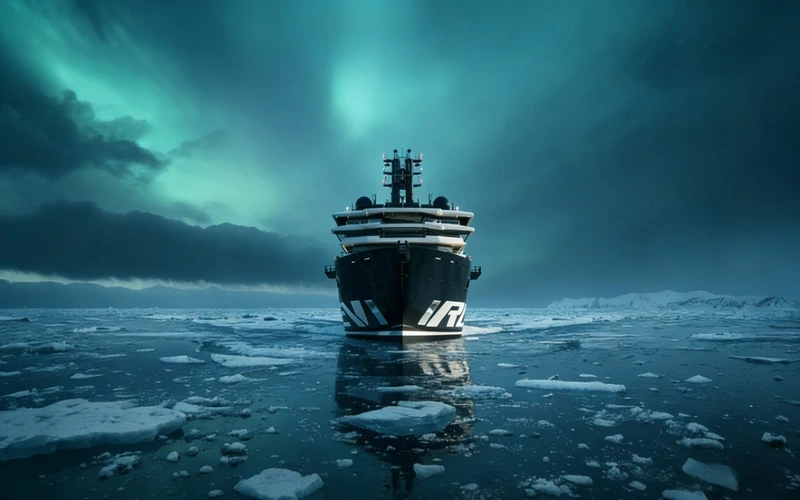
Damen Yachting REV Ocean Project: Technical Consultancy
After conducting an in-depth analysis of the REV Ocean project, it becomes clear that Damen Yachting did not participate as a traditional shipbuilder but rather served as a technical consultant during the early concept and overall design phases. The company provided specialized expertise in hull engineering and systems integration:
- Design Philosophy: While ensuring luxury, Damen makes the yacht suitable for scientific research expeditions and high-end hospitality.
- Engineering Expertise: Leveraging years of experience in large vessel construction, Damen ensures the hull structure and systems can withstand harsh marine environments.
- Project Collaboration: The construction process of REV Ocean exemplifies the typical collaborative model for large scientific expedition vessels.In the initial phase, VARD undertakes hull construction and basic systems engineering, ensuring structural dimensions meet scientific payload requirements. Subsequently, the hull enters the final outfitting and fitting-out phase led by Damen, integrating experimental facilities, living quarters, and complex systems.
Building on this foundation, REV Ocean is explicitly positioned as a long-term scientific research and marine conservation platform—its design objectives encompass not only mission execution but also emphasize multi-team extended onboard stays, remote expeditions, and testing of cutting-edge marine technologies. This mission-driven collaborative model signifies the transformation of superyachts from “single-purpose private vessels” to “public scientific research platforms.
REV Ocean Superyacht Specifications
REV Ocean's design parameters align more closely with deep-sea research vessels than traditional private mega yachts. Damen Yachting established during the design phase that three highly demanding criteria must be met simultaneously: polar and deep-sea navigation, long-term onboard scientific research, and premium residential comfort.
Core Technical Specifications
| Item | REV Ocean |
| Builder | VARD |
| Propulsion System | Hybrid Power / Low-Emission Diesel System |
| Range | Approximately 21,120 Nautical Miles |
| Endurance | Several Weeks to Several Months |
| Cruising Speed | 11 Knots |
| Helicopter Platform | Dual Helicopter Decks + Hangar |
| Submersible Support | Full-Size Scientific Submersible Launch and Recovery System |
REV Ocean's specifications far exceed those of ordinary superyachts. Take range as an example: most 90–100-meter big yachts have an actual range of approximately 5,000–6,000 nautical miles, whereas REV Ocean's 21,120-nautical-mile range approaches the circumference of the Earth's equator (21,640 nautical miles), enabling it to circumnavigate the globe in a single voyage.
In contrast, the 6,000-nautical-mile range of a traditional 100-meter superyacht is barely sufficient for a direct voyage from Monaco to New York. This means the REV Ocean can venture deep into the Great Pacific Garbage Patch or the Weddell Sea in Antarctica, operating continuously for 60 to 90 days without resupply. Traditional yachts, however, must plan their routes around ports, severely limiting their scientific exploration capabilities.
This self-sufficient, shore-independent design directly dictates the standards for the laboratory and hoisting system: once deep in the open ocean, all equipment maintenance and deployment must be completed onboard.
Key Design for Scientific Research Capabilities
- Modular Research Laboratory: Rapidly reconfigurable as biological, chemical, or environmental monitoring labs, supporting Triton 3300/3 manned submersible or ROV Seaeye Falcon deployment. A-frame crane with 30-ton lifting capacity, operable in Sea State 5 conditions.
- Industrial-Grade Deck and Lifting System: REV Ocean features a heavy-duty A-frame and rail system for direct deployment of deep-sea submersibles, ROVs, and scientific equipment—a configuration typically found only on specialized research vessels.
- Acoustic and Vibration Damping Design: To ensure scientific data accuracy, the hull and propulsion system incorporate enhanced noise reduction, minimizing disturbance to marine life while improving comfort during extended voyages.
Based on my experience with superyacht projects, REV Ocean stands virtually unmatched in integrating such a comprehensive research system without compromising comfort.
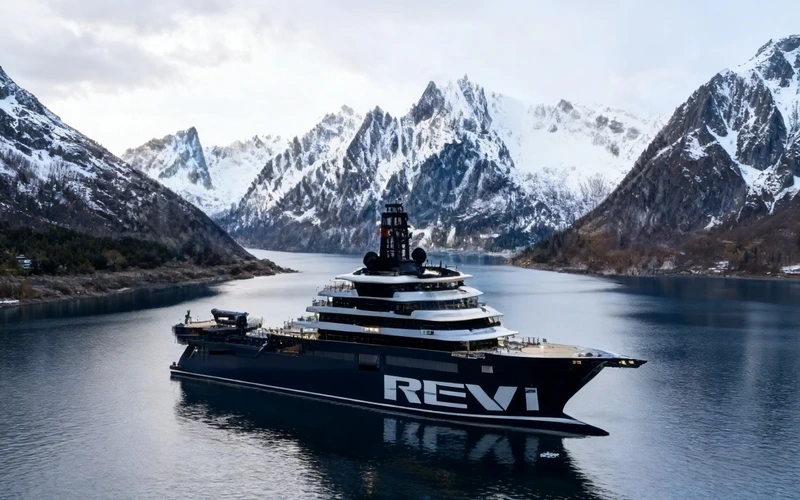
What is REV Ocean's core scientific mission?
If measured solely by size, the REV Ocean is already one of the world's largest yachts. But what truly sets it apart is not its sheer scale, but its clear and enduring mission.
REV Ocean, as a research expedition yacht, serves as a long-term marine research and public science platform, with scientific research at its core and luxurious comfort as its foundation.
Core mission
- REV Ocean prioritizes scientific research over luxury.
- Marine ecology, pollution, and climate change monitoring.
- Serves as a mobile platform for global scientific institutions.
Unlike the traditional expedition yachts I've encountered, the REV Ocean isn't merely “incidentally conducting research.” Instead, scientific exploration is its core function, with luxury and comfort serving solely as essential prerequisites for supporting long-term onboard operations.
Paper Revolution and Reality Test
It must be acknowledged that as of early 2026, REV Ocean remains a “revolution on paper.” Since its launch in 2017, the project has been delayed by six years beyond its original schedule, has yet to undertake any substantive scientific missions, and its hybrid funding model has not been operationally validated.
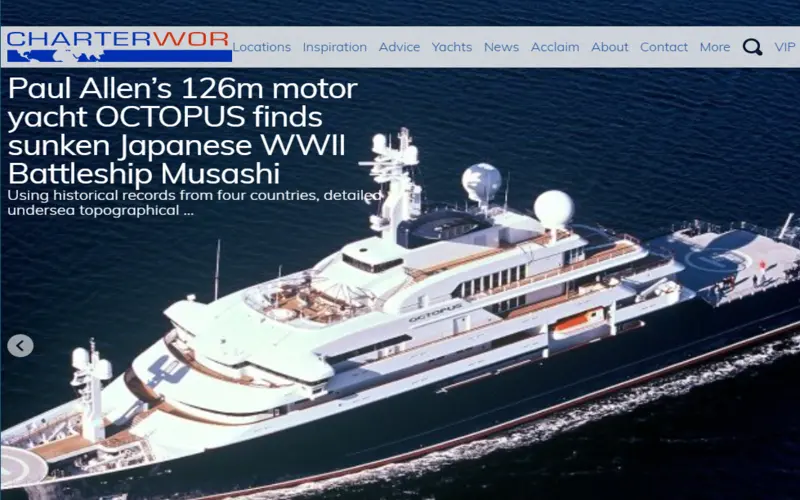
Historically, Paul Allen's 126-meter vessel “Octopus” supported multiple deep-sea discoveries, including CharterWorld's 2015 report on its discovery of the wreck of the Japanese battleship Musashi. Ultimately, however, Octopus reverted to its core function as a private yacht, with scientific activities dependent on the owner's personal interests and failing to establish a sustainable open mechanism. Whether REV Ocean can break this precedent and truly establish an institutionalized scientific collaboration platform will be the key test for the next decade.
This high-risk expectation precisely explains why REV Ocean must be built on a superyacht-level configuration—only by ensuring long-term onboard comfort and professional facilities can it attract top scientific teams to participate continuously, avoiding the pitfall of “research equipment becoming mere decorations.”
Why does REV Ocean require superyacht-level specifications?
- Long-term living comfort: Research teams require living environments suitable for extended stays aboard the vessel
- High-standard conference and communication facilities: Supporting multinational scientific collaboration
- Safety for polar and deep-sea missions: Designed with high redundancy and safety safeguards
In other words, REV Ocean is not merely “adding a laboratory to a superyacht,” but rather building a long-term research and expedition platform with superyacht-level engineering and living standards.
REV Ocean vs Traditional Superyachts
Before analyzing REV Ocean, I typically ask myself this question: If placed within the existing superyacht ecosystem, who exactly is it competing against? The answer is actually quite clear—REV Ocean isn't directly competing with traditional luxury superyachts. Instead, it's redefining the purpose of “superyachts” within a virtually untapped niche segment.
To gain a more intuitive understanding of REV Ocean's uniqueness, we can compare it with renowned super mega yachts currently on the market:
| Item | REV Ocean | Azzam | Eclipse | Dilbar |
| Length | 194.9 m | 180 m | 162.5 m | 156 m |
| Primary Purpose | Scientific Expedition | Private Luxury | Private Luxury | Private Luxury |
| Laboratory | Multiple Scientific Laboratories | None | None | None |
| Submersible Support | Full-Size Research-Grade | None | Yes (Recreational Grade) | Yes (Recreational Grade) |
| Range | Approximately 21,120 Nautical Miles | Approximately 6,500 Nautical Miles | Approximately 6,000 Nautical Miles | Approximately 8,000 Nautical Miles |
| Usage Scenario | Polar & Deep-Sea Research | Private Travel | Private Secure Travel | Private Vacation |
The ‘greatness’ of Azzam, Dilbar, and Eclipse lies in the extension of luxury and safety; whereas REV Ocean's ‘greatness’ stems from functional requirements working backward. This also explains the complexity of questions like “how much does it cost to build a yacht”—when building expensive yachts that must simultaneously meet polar expedition and luxury standards, costs no longer follow traditional per-meter formulas.
In the past projects I've analyzed, the integration of research capabilities with superyachts typically remained at the level of “adding a laboratory.” REV Ocean's breakthrough lies in its system-level integration—from hull form optimization (reducing vibration for research equipment) to redundant power systems (supporting precision instruments), and deck load calculations (reserving space for a 30-ton crane).
Such engineering requirements cannot be achieved through retrofitting, which is precisely why VARD's research vessel expertise proves more critical than that of traditional superyacht builders. This distinction also serves as the basis for industry professionals categorizing it separately as a REV Ocean research expedition yacht.
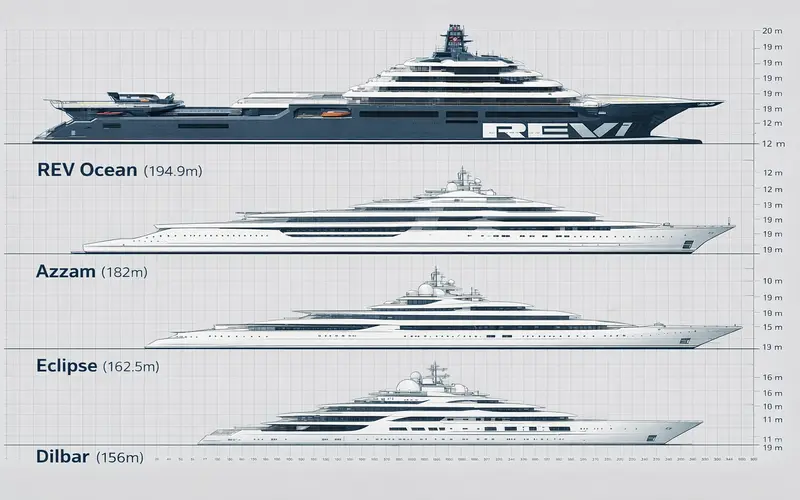
Redefining the Superyacht with REV Ocean
REV Ocean's uniqueness lies not only in its immense scale and ocean-going capabilities, but also in its pioneering of an entirely new market segment: the Research Expedition Superyacht. Here, scientific research and environmental conservation form the core of the design, with luxury and comfort serving merely as supporting elements.
Inverted Function Priority
Every deck and every facility is optimized for scientific research missions. Modular laboratories, 30-ton davits, and silent vibration-damping systems—these are foundational design elements, not aftermarket additions. The presence of luxurious spaces ensures the comfort and productivity of research teams during extended onboard stays.
Shift in Operational Logic
This yacht is not merely a private asset; its design enables multiple research institutions to share its use for conducting long-term scientific projects. This platform-sharing model transforms superyachts from traditional private vessels into global scientific resources and data collection platforms.
Asset Value Reconstruction
The value lies not in the opulence of deck decorations, but in scientific research output, environmental protection, and technological innovation. Its return on investment manifests in quantifiable, tangible impacts: monitoring ocean health, studying plastic pollution, and testing cutting-edge marine technologies.
Summary
As the first superyacht to integrate scientific research with luxury, REV Ocean not only provides long-term research residency capabilities, polar expedition voyages, and modular laboratory facilities, but also ensures comfort and safety. Compared to classic superyachts, it is not merely a private asset but a potential global scientific research platform.
Whether this model will be replicated remains to be seen, but REV Ocean seeks to demonstrate that the boundaries of superyachts can be defined by mission rather than size. The ultimate answer to this proposition hinges on whether it can establish a sustainable research mechanism independent of its founders over the next decade and produce independently verifiable outcomes in marine conservation.
About the Author
Brian G. Steler
Yacht Broker
Qualifications: SAMS Certified Surveyor, No. AMS #1249
Last Updated: January 2026
Disclaimer:
The content herein is for reference only and does not constitute investment advice. This article has not received sponsorship from any shipyard, financing institution, or brand; the author has not participated in brokerage transactions involving the vessels cited herein. Yacht specifications are based on publicly available information as of February 2026. Should subsequent changes occur, officially updated documentation shall prevail. Actual prices may vary by region and market fluctuations; final configurations are subject to classification society certificates. Prior to purchase, it is mandatory to engage an independent surveyor (not designated by the seller) to conduct sea trials and verify certificates. Neither the author nor the publishing platform shall be liable for any losses incurred through reliance on the information provided herein. Updated regulations or fees shall be governed by prevailing regulatory notices.
FAQ
Q1: Why is REV Ocean considered a "revolution on paper"?
A: REV Ocean is considered a “revolution on paper” because, as of 2026, it has yet to perform active scientific missions, leaving its ambitious research model largely untested in real-world operations.
Q2: How much does it cost to build a yacht with REV Ocean's capabilities?
A: A yacht with REV Ocean’s capabilities costs an estimated $350–500 million, as its price is driven by integrated research systems and polar expedition engineering rather than standard per-meter yacht pricing.
Q3: Is REV Ocean a superyacht or a research vessel?
A: REV Ocean is technically classified as a superyacht but functionally designed as a research expedition vessel. Its layout, systems, and priorities serve scientific missions first, with luxury accommodations supporting operations rather than being the primary purpose.