



Yacht closing costs vary widely rather than following a fixed percentage. Buyers should budget for surveys, sea trials, registration, taxes, legal services, escrow, and delivery, with total costs depending heavily on yacht value, location, tax status, and transaction complexity. On higher-value or international yacht purchases, taxes and delivery can become the largest additional expenses.
Common Yacht Closing Costs Checklist
| Cost Item | Purpose |
|---|---|
| Marine Survey | Check the yacht's actual condition |
| Sea Trial | Test performance and onboard systems |
| Taxes, VAT and Import Duties | Meet local tax and import requirements |
| Registration and Ownership Transfer | Complete the legal transfer of ownership |
| Legal Fees | Review contracts and ownership documents |
| Escrow Fees | Secure transaction payments during the deal |
| Transport and Delivery | Move the yacht to its final location |
This guide explains the main yacht closing costs buyers should consider before completing a yacht purchase.
What Are Yacht Closing Costs?
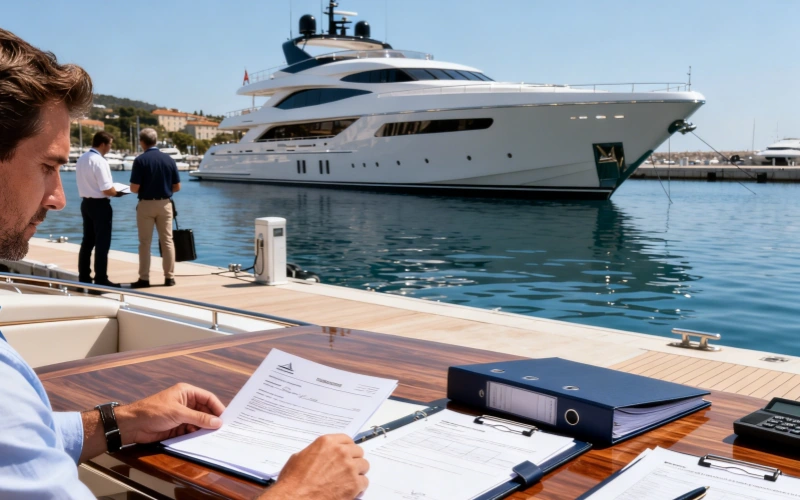
Yacht closing costs are the additional expenses involved in completing a yacht purchase, excluding the yacht's selling price.The purchase price pays for the yacht itself, while closing costs cover the services and procedures required to legally complete the transaction.
A typical yacht purchase process includes:
Price agreement → Purchase agreement → Survey → Sea trial → Documentation → Ownership transfer → Delivery
How Much Are Yacht Closing Costs?
Unlike real estate transactions, yacht closing costs do not follow a standard percentage. The total expense can vary significantly depending on the yacht, transaction location, and complexity of the purchase.Yacht Closing Cost Budget Examples
The following examples show potential closing cost ranges for different yacht purchase values. These figures are for planning purposes only and actual expenses may vary based on taxes, registration, location, and delivery requirements.| Yacht Purchase Price | Possible Closing Cost Range |
|---|---|
| $500,000 Yacht | Approximately $10,000–$50,000+ |
| $1 Million Yacht | Approximately $20,000–$100,000+ |
| $5 Million Yacht | Varies significantly depending on taxes, legal requirements, and delivery arrangements |
These ranges are illustrative only. Taxes, VAT, import duties, international delivery, and complex ownership structures can significantly increase the final closing cost.
For some smaller yacht purchases, closing costs may only involve basic inspection and registration expenses.
For larger yachts or international transactions, costs can increase substantially due to legal work, tax planning, transportation, and technical inspections.
Before negotiating the purchase price, see how to set a used yacht offer while leaving room for these additional costs.
What Costs Are Included in Yacht Closing Costs?
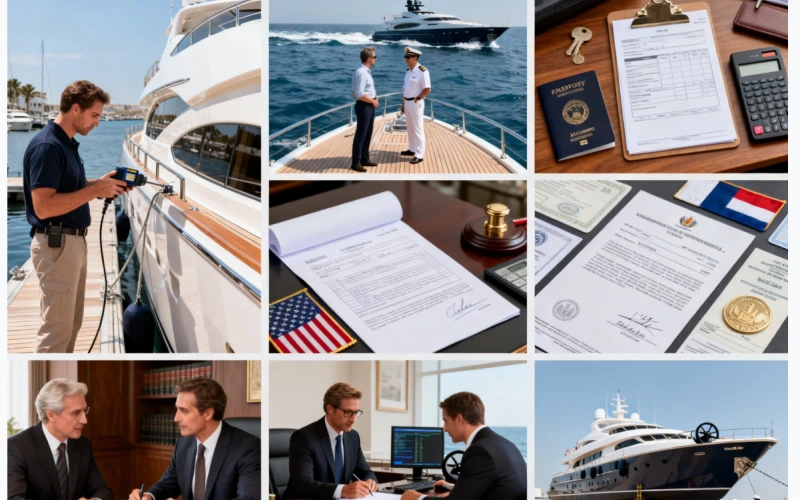
Yacht closing costs involve multiple steps in the buying process. The exact expenses depend on the yacht, location, and transaction structure.
Marine Survey
A marine survey is one of the most common yacht closing costs, especially for used yachts.The survey helps buyers understand the vessel's actual condition before completing the purchase.
It may include checks of:
- Hull structure
- Engines and mechanical systems
- Electrical systems
- Navigation equipment
- Safety equipment
- Yacht length
- Yacht age
- Location
- Inspection scope
Sea Trial
A sea trial allows the buyer to evaluate the yacht's real-world performance before final acceptance.During a sea trial, buyers can check:
- Engine performance
- Handling
- Navigation systems
- Generators
- Major onboard equipment
- Fuel
- Captain fees
- Marina charges
- Technical support
Taxes, VAT and Import Duties
Taxes can become one of the largest yacht closing costs, especially for international buyers.Depending on the yacht's:
- Purchase location
- Registration country
- Intended cruising area
- VAT
- Sales tax
- Import duties
- Government fees
- Current VAT status
- Import requirements
- Tax responsibilities
Registration and Ownership Transfer
After payment is completed, the buyer must transfer ownership and register the yacht according to applicable regulations.Common costs include:
- Flag registration
- Government documentation fees
- Ownership documentation
- Certificate updates
- United States
- Malta
- Cayman Islands
- Marshall Islands
Legal Fees
Because yacht transactions often involve significant amounts of money, many buyers work with a marine lawyer, especially for international purchases.Legal services may include reviewing:
- Purchase agreement
- Bill of Sale
- Builder's Certificate (for new yachts)
- Certificate of Registry
- Ownership history and documentation
- Existing liens or claims
Escrow Fees
For many yacht transactions, especially higher-value purchases, buyers and sellers may use an escrow service to manage funds during the closing process.An escrow arrangement helps:
- Protect the buyer's deposit
- Hold funds securely until agreed conditions are met
- Coordinate payment release
- Reduce financial risks for both parties
Transport and Delivery
If the yacht is located in another country or region, transportation and delivery can become a significant closing cost.Common delivery methods include:
- Professional captain delivery
- Yacht transport companies
- International shipping
- Final delivery location
- Transportation method
- Estimated delivery expenses
- Responsibility for delivery costs
New Yacht vs Used Yacht Closing Costs
The costs associated with purchasing a yacht vary depending on whether it is new or used.| Category | New Yacht | Used Yacht |
|---|---|---|
| Inspection | Final delivery inspection | Detailed condition survey |
| Sea Trial | Verify systems and performance | Evaluate actual performance and conditio |
| Mechanical Risk | Lower | Requires evaluation |
| Documentation | Construction records | Ownership and maintenance history |
| Repairs | Usually limited | Possible additional costs |
New yachts usually focus on delivery acceptance, while used yachts require more attention to condition and maintenance history.
Example: Closing Costs for a Multi-Million-Dollar Yacht Purchase
The following example uses a new Monte Carlo Yachts 70, a yacht in the multi-million-dollar category, to illustrate how closing costs may apply to a real purchase scenario.
Monte Carlo Yachts 70
- Length69 ft
- Cabins4
- Top speed28 kn
- TypeFlybridge yacht
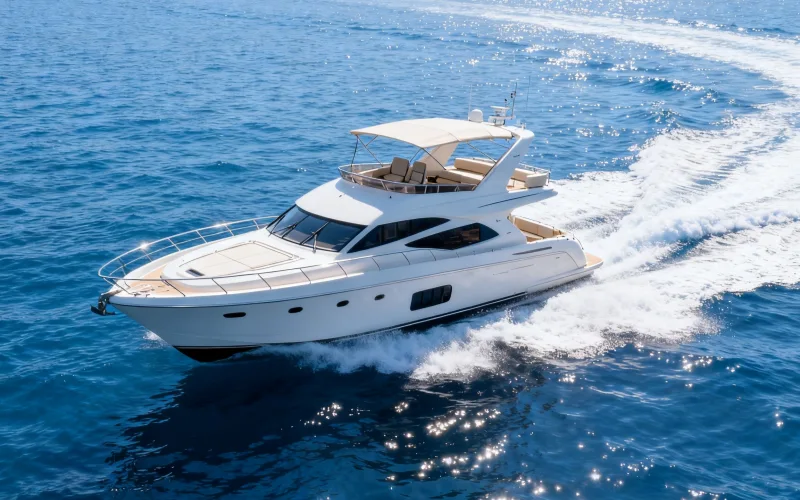
The Monte Carlo Yachts 70 is a 70-foot luxury flybridge motor yacht that combines elegant Italian design with reliable cruising performance. Its wide-beam hull provides a spacious interior layout, offering a comfortable main salon and multiple guest cabins. Powered by twin MAN V8-1200 diesel engines, the yacht cruises at around 22 knots with a top speed of about 28 knots, balancing speed and stability. The flybridge lounge, foredeck sunbathing area, and four-cabin layout make it suitable for family cruising, island vacations, and high-end social gatherings.
Note: This example is for budgeting purposes only and does not represent a current market quotation or fixed purchase price.
Assuming a purchase price of approximately $3.5 million, potential closing-related expenses may include:
| Cost Item | Illustrative Budget Range / Explanation |
|---|---|
| Final Inspection and Technical Survey | Approximately $5,000–$15,000+ depending on inspection scope |
| Sea Trial | Depends on shipyard arrangements, fuel, crew, and technical support requirements |
| Documentation Fees | Approximately $1,000–$5,000+ for ownership documents and registration preparation |
| Legal Review | Approximately $3,000–$10,000+ depending on transaction complexity |
| Flag Registration | Varies by country, vessel details, and registration requirements |
| VAT / Sales Tax / Import Duties | Depends on purchase location, registration, and intended use |
| Transport and Delivery | Depends on distance, delivery method, and logistics requirements |
The purpose of this example is not to provide a fixed cost, but to show why buyers should calculate the complete acquisition budget rather than focusing only on the yacht price.
These closing expenses are separate from annual yacht ownership costs, such as maintenance, crew, storage, insurance renewal, and operating expenses. Buyers should consider both acquisition costs and ongoing ownership costs when planning their total yacht budget.
Once your acquisition budget is clear, estimate the total cost of owning your yacht over your planned holding period, including operating expenses and expected resale proceeds.
Who Usually Pays Yacht Closing Costs?
There is no fixed rule for who pays yacht closing costs. Responsibilities are usually decided by the purchase agreement and negotiation between the buyer and seller.In most yacht transactions:
- Buyers usually pay for the marine survey, sea trial, registration, and ownership transfer costs
- Buyers are typically responsible for applicable taxes and government fees
- Legal fees depend on who hires the marine lawyer and the transaction structure
- Escrow and delivery costs are usually negotiated between both parties
Before signing the purchase agreement, buyers should confirm all expected costs and payment responsibilities.
When Do Yacht Closing Costs Occur?
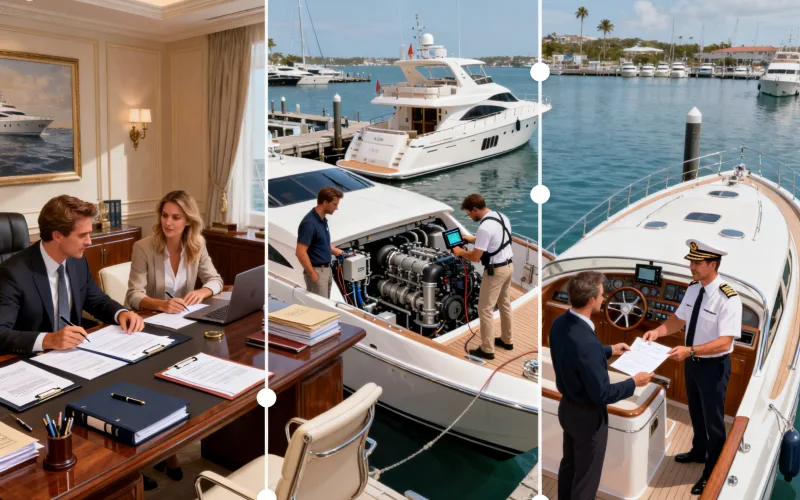
Yacht closing costs occur at different stages of the purchase process. The exact timing depends on the yacht type, location, documentation status, and transaction structure.
Before Signing the Purchase Agreement
Buyers may need to pay for:- Legal review
- Contract preparation
- Escrow arrangements
During Inspection and Evaluatio
Common costs include:- Marine survey
- Sea trial expenses
- Technical inspections
Before Final Closing and Delivery
Buyers may need to complete:- Registration and ownership transfer
- Tax payments and government fees
- Final payment arrangements
- Delivery preparation
Common Yacht Closing Problems Buyers Encounter
Even experienced buyers can encounter unexpected issues during the yacht closing process. Common problems include:- Missing Ownership Documents – Incomplete paperwork can delay ownership transfer
- Outstanding Marina or Service fees – Unpaid invoices should be resolved before closing
- Unclear VAT or Tax Status – International buyers should confirm tax obligations before purchase
- Expired Safety Certificates – Missing documentation may affect registration or insurance
- Previous Damage History – A professional marine survey can help identify hidden issues before completing the transaction
How to Control Yacht Closing Costs and Avoid Unexpected Expenses
Some yacht closing costs are unavoidable, but careful planning can help buyers avoid unnecessary expenses and reduce transaction risks.Work with an Experienced Yacht Broker
A professional yacht broker can help buyers- Evaluate market prices
- Identify risks
- Coordinate surveys and paperwork
- Negotiate better term
Complete Due Diligence Before Purchase
Before closing, buyers should:- Review ownership documents
- Check maintenance records
- Complete a marine survey
- Confirm no outstanding liens
Understand Tax and Registration Requirements Early
Before signing the purchase agreement, buyers should confirm:- Current VAT status
- Registration requirements
- Import obligations
- Intended cruising area regulations
Final Thoughts: Plan Beyond the Yacht Price
Yacht closing costs are an important part of planning a successful yacht purchase. Understanding expenses such as surveys, taxes, registration, legal services, escrow, and delivery can help buyers prepare a more accurate acquisition budget and avoid unexpected transaction issues.
Careful planning, professional advice, and proper due diligence can make the yacht purchase process smoother and more predictable.
Ready to Start Your Yacht Purchase?
Our yacht specialists can help you evaluate available yachts, understand the buying process, and plan the costs involved before completing your purchase.
👉 View Yachts for Sale
About This Guide
This guide provides an overview of the main yacht closing costs buyers may encounter when purchasing a yacht, including surveys, taxes, registration, legal services, and delivery expenses. It is designed to help international yacht buyers understand the potential costs involved beyond the yacht purchase price and prepare a more accurate purchase budget.
Disclaimer
The yacht closing costs in this guide are for general reference only. Actual costs vary depending on the yacht, location, registration requirements, taxes, and transaction details. Buyers should consult qualified yacht brokers, legal advisors, and tax professionals before completing a purchase.
FAQ
Q1: Are yacht closing costs included in the yacht price?
A: No. Yacht closing costs are separate from the yacht purchase price. They may include marine survey fees, registration, taxes, legal services, insurance, escrow, and delivery expenses required to complete the transaction.
Q2: How much should I budget for yacht closing costs?
A: There is no fixed percentage for yacht closing costs. The total depends on yacht value, location, taxes, registration requirements, delivery arrangements, and transaction complexity.
Q3: Do buyers pay yacht broker fees?
A: Yacht broker fees depend on the brokerage agreement and transaction structure. In many yacht sales, commissions are paid from the seller side, but buyers should confirm responsibilities before signing the purchase agreement.
Q4: Are yacht taxes included in closing costs?
A: Yes. Taxes and government charges may be part of yacht closing costs. Depending on the location, buyers may need to consider VAT, sales tax, import duties, and registration-related fees.
Q5: What is the biggest yacht closing cost?
A: The biggest yacht closing costs vary by transaction. For international purchases, taxes, VAT, and yacht transportation can become major expenses, while smaller purchases may have lower inspection and documentation costs.
Q6: Are yacht closing costs higher for international buyers?
A: Yes, international yacht purchases often involve additional costs, including tax considerations, import requirements, legal services, currency exchange, and transportation expenses.
Q7: Can a marine survey reduce yacht closing risks?
A: Yes. A marine survey helps buyers identify potential issues with the yacht's structure, mechanical systems, and equipment before completing the purchase, reducing unexpected repair risks.