Quick Answer:
The yacht safety checklist helps owners quickly address critical risks before departure, identify potential malfunctions early, ensure lifesaving equipment is operational and roles are clearly defined. By maintaining records and conducting drills, it reduces accident, repair, and insurance risks, making voyages safer and more controllable.
While specific safety requirements vary by flag state and yacht category, the following checklist reflects widely accepted international best practices applicable to most private yachts.
Every voyage is a journey into the unknown. Whether embarking on a short leisure cruise or crossing seas or even venturing into the open ocean, safety remains the most fundamental and non-negotiable priority.
For yacht owners who have just purchased a yacht, conditions at sea can change in an instant, and equipment or personnel issues may arise unexpectedly. By mastering core operations, equipping essential safety gear, and maintaining a rigorous inspection routine, even novice owners can significantly reduce the likelihood of accidents.
This guide provides comprehensive safety protocols and practical techniques to empower owners and crew to confidently navigate diverse maritime scenarios, ensuring each voyage is safer and more controllable.
Why Yacht Safety Inspections Cannot Be Overlooked?
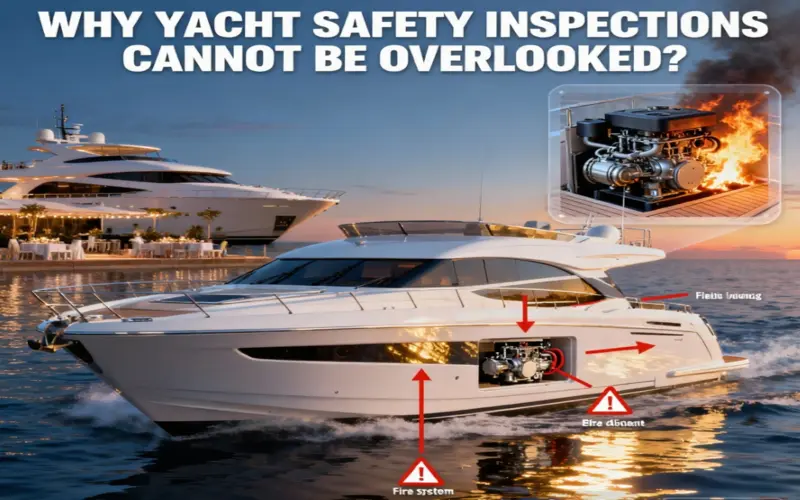
Safety inspections are not mere formalities but the fundamental safeguard for every voyage. Even when a yacht is equipped with comprehensive gear and advanced systems, it does not inherently guarantee safe navigation. On the contrary, the vast majority of accidents often stem from overlooked minor issues.
In practice, equipment aging, inadequate maintenance, or perfunctory inspections are common hidden dangers. Even minor engine irregularities, electrical faults, or fuel leaks, if undetected before departure, can escalate into severe accidents during navigation.
For yacht owners, neglecting safety inspections typically leads to three consequences:
1.Increased navigation risks:
Minor faults can escalate during operation, potentially causing engine failure, navigation system malfunction, or hull damage.
2.Blurred Liability Boundaries:
In cases of passenger injury or property damage, the owner often bears primary responsibility.
3.Impact on Insurance and Assets:
Non-compliant safety equipment or incomplete records may hinder claims processing while diminishing the yacht's long-term value and resale price.
Thus, the core value of safety inspections lies not only in meeting regulatory requirements but also in proactively identifying issues, mitigating uncontrollable risks, ensuring navigational safety, and safeguarding asset preservation.
Essential Pre-Sailing Safety Checks
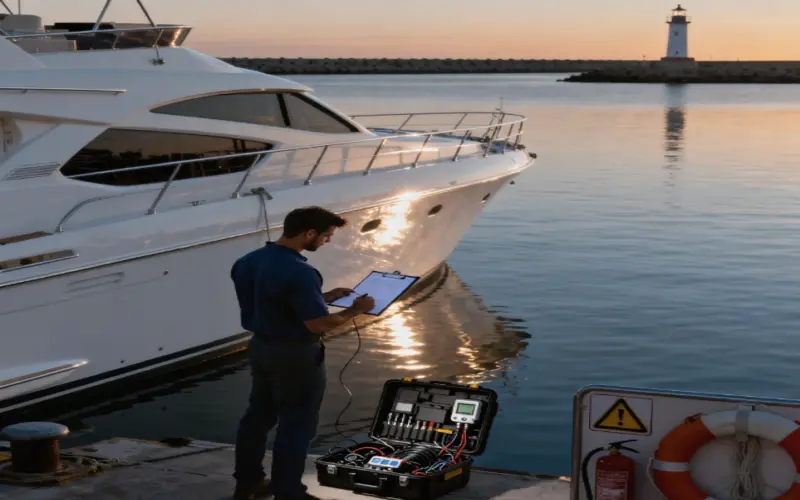
After understanding the importance of safety inspections, the key lies in implementing specific pre-departure checks for every voyage. For owners of a used yacht, these checks are particularly important for identifying existing wear, maintenance issues, or equipment problems before departure. The following checklist is organized systematically to cover the most critical risk points during navigation. This comprehensive arrangement—from equipment inspections to crew emergency preparedness—aligns with the SOLAS Convention's fundamental safety requirements for small vessels.
1. Hull and Propulsion System
▢Inspect the hull exterior for cracks, water seepage, or visible damage, particularly on fiberglass hulls. Pay attention to the disadvantages of fiberglass boats, such as prolonged UV exposure potentially causing surface aging or micro-cracks.
▢Start main and auxiliary engines to verify smooth operation.
▢Check fuel lines and tanks for leaks or unusual odors.
▢Verify rudder mechanism operates freely with no abnormal wear or looseness in transmission components.
2. Electrical System and Navigation Instruments
▢Check battery charge levels and ensure secure wiring connections.
▢Confirm GPS, radar, and navigation instruments function properly.
▢Test navigation lights, horns, and alarm systems for full functionality.
▢Inspect backup power sources (auxiliary batteries or generators) for readiness.
3. Life-Saving and Emergency Equipment
▢Ensure sufficient life jackets are available, suitable for all occupants, and in good condition.
▢Verify life rafts and lifebuoys are intact and readily deployable.
▢Confirm fire extinguishers are within expiration dates and easily accessible.
▢Test emergency signaling devices such as EPIRBs, flares, and radios.
▢Ensure emergency lighting functions properly.
4. Supplies and Life Support
▢Ensure sufficient freshwater and food provisions for the voyage.
▢Verify first-aid kit and essential medications are fully stocked.
▢Check basic repair tools for serviceability.
▢Inspect ropes, anchors, and deck equipment for proper condition.
Tips:
- Print or store the checklist onboard and verify each item before every voyage.
- Enlist crew or passengers to assist with inspections for greater accuracy.
- Maintain inspection records for long-term equipment tracking and insurance claims.
By rigorously implementing pre-voyage inspections, vessel owners can mitigate most foreseeable risks before departure, laying the foundation for safe navigation.
Lifesaving, Emergency Response, and Personnel Safety Management
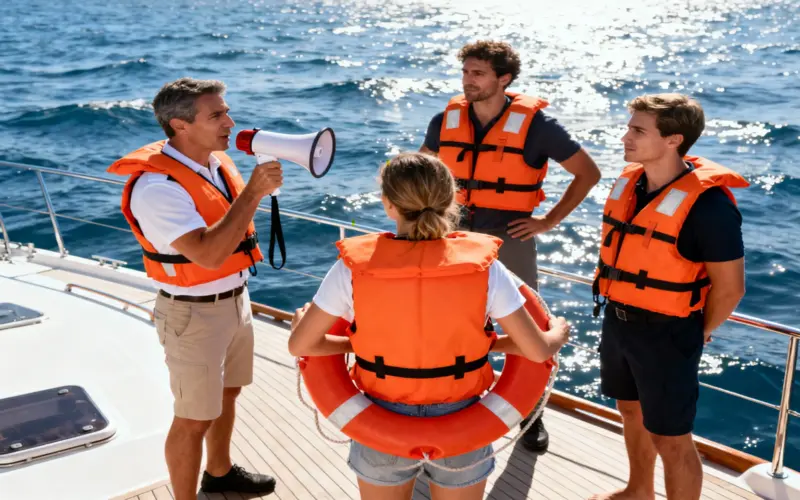
Even after completing pre-voyage inspections, unexpected situations may still arise during navigation. At such times, the safety awareness and emergency response capabilities of crew and passengers are often just as critical as the equipment itself.
The IMO explicitly states in the ISM Code that many navigation accidents stem not from equipment failure, but from human error or inadequate emergency preparedness. Therefore, establishing clear division of responsibilities and implementing continuous drill mechanisms are vital components of safety management.
To assist shipowners and crew in implementing these principles, the following table serves as a reference for routine inspections and drills:
| Category | Inspection Items and Procedures | Completion Status |
| Life-saving Equipment | All personnel must be familiar with the location and usage of life jackets, life rafts, and lifebuoys, and regularly conduct drills for man overboard, firefighting, and emergency evacuation. | ☐ |
| Crew Responsibilities | Each crew member must clearly understand their assigned operational area and emergency duties, with key positions proficient in equipment operation. | ☐ |
| Personnel Health and Safety | Ensure radio, EPIRB, and other equipment are operational, with crew familiar with procedures and emergency contact protocols. | ☐ |
| Personnel Health and Safety | Maintain fully stocked first-aid kits and essential medications. Crew must know their locations and provide safety briefings to children, seniors, or first-time passengers. | ☐ |
| Experience Management | Conduct regular full-crew drills using flowcharts or manuals. Simulate realistic scenarios to test response and coordination capabilities. | ☐ |
Completing the above checklist ensures that critical equipment is in good working order and crew responsibilities are clearly defined before each voyage, while also familiarizing everyone with emergency procedures.
Experience Sharing:
During a sudden squall at sea, the crew swiftly secured deck equipment and inspected lifesaving gear according to established procedures—the entire process was orderly and efficient. They also promptly identified a previously undetected equipment loosening issue, averting potential hazards during subsequent navigation. This experience reinforced my conviction that the value of drills often manifests precisely when they are most needed.
How Yacht Safety Protocols Mitigate Long-Term Risks
Completing a comprehensive yacht safety checklist not only ensures safety for each voyage but also significantly reduces risks in long-term management, as demonstrated in the following aspects:
1. Equipment Maintenance and Lifespan Extension
- Regular inspections of the hull, propulsion systems, electrical systems, and deck equipment enable early detection of wear or aging issues.
- Long-term tracking of inspection records facilitates proper scheduling of maintenance or replacements, extending the yacht's overall lifespan.
2.Reduced Accidental Losses and Repair Costs
- Systematic inspections prevent minor issues from escalating into major failures, lowering the risk of emergency repairs or towing.
3.Ensuring Insurance Claims and Compliance
- Comprehensive inspection records demonstrate the owner's commitment to safety, aiding compliance with insurance policies and facilitating smooth claims processing during incidents.
4. Cultivating Crew Safety Awareness
- Through drills and familiarity with emergency procedures, crew members can respond swiftly in unexpected situations, minimizing human error.
5. Preserving Long-Term Asset Value
- Yachts with well-documented records and rigorous safety management command greater competitiveness in the resale market, enhancing their long-term investment value.
Actual Case:
During a routine pre-voyage inspection of the power yacht, I discovered minor wear on the main engine belt. Prompt replacement prevented voyage interruption and avoided additional repair costs. Such seemingly minor findings demonstrate the value of safety protocols in long-term management.
Conclusion
Yacht safety relies not on a single inspection or piece of equipment, but on a set of consistently executed management practices. From pre-voyage checks and crew assignments during navigation to long-term record-keeping and drills, each step proactively reduces risks. For owners, safety protocols are both a compliance requirement and a long-term strategy for safeguarding personnel and assets. When safety becomes a daily habit, while uncertainties in navigation persist, risks remain consistently within manageable limits.
FAQ
Q1: What specific consequences will shipowners face if they fail to conduct pre-voyage inspections?
A1: Three types of consequences:
- Increased navigation risks, where minor malfunctions at sea can escalate to engine failure or loss of communication.
- Blurred liability boundaries, with shipowners bearing primary responsibility for crew injuries or fatalities.
- Impact on insurance and assets, where missing records lead to denied claims and reduced resale value.
Q2: How many life jackets are required for compliance?
A2: The requirement is “sufficient quantity, suitable for all occupants, and in good working order.” One per person is the minimum standard. Buoyancy and buckles must be regularly inspected, and children require separately provided, properly sized jackets.
Q3: What is the most overlooked yet most accident-prone inspection point before a yacht departs?
A3: Fuel line/tank leaks, aging electrical systems, and micro-cracks on fiberglass hulls. These show subtle early signs but can rapidly escalate into fires or flooding during rough seas.
Q4: What long-term financial benefits does adhering to safety checklists provide?
A4: Four key advantages—extended equipment lifespan, reduced unexpected repair costs, guaranteed insurance claims, and higher resale value.
Q5: Can I trust a fire extinguisher as long as it hasn't expired?
A5: No. Before sailing, you must shake the powder to ensure it's mixed, verify the pressure gauge is in the green zone, confirm the nozzle is unobstructed, and secure it in an easily accessible location. Otherwise, during an oil fire, it may fail to discharge or lack sufficient range, missing the critical 10-second window for effective suppression.
Q6:How often should yacht safety inspections be performed?
A6: Yacht safety inspections should be done before each voyage and every 3–6 months for more thorough checks, depending on yacht size, usage, and flag requirements. Regular inspections reduce risks and keep the yacht safe and compliant.
About the Author
Andrew Rogers possesses extensive experience in luxury yacht sales, management, and operations. He is well-versed in pre-sailing safety inspections, lifesaving, and emergency procedures, having repeatedly guided owners in implementing yacht safety checklist protocols. By integrating practical expertise into navigation safety management, he assists owners in mitigating risks before departure to safeguard personnel and assets.
Disclaimer
This content is provided for general informational purposes only, aiming to assist yacht owners in understanding safety inspection and management practices. The information herein does not constitute specific operational guidance, legal advice, or professional certification. Owners must adhere to relevant regulations, equipment manuals, and professional recommendations during actual operations, assuming full responsibility for associated risks. Neither the author nor the platform shall be liable for any direct or indirect losses arising from the use of this information.