Quick Response:
If your yacht is under 50–55 ft and you hold a skipper license, you generally do not need a crew.
Above 55–60 ft, or if sailing at night / long range, a captain becomes mandatory.
When considering yacht charters, many people's first thought is: “Should I charter with crew?” This seemingly simple question actually involves multiple factors such as responsibility allocation, operational safety, cost budgeting, and user experience. Chartering with crew versus bareboat charter isn't merely a difference between “having someone else operate the vessel or doing it yourself”—they differ fundamentally in control ownership, legal liability, operating costs, and even applicable navigation zones.
This article comprehensively breaks down the decision-making process—from comparing charter models and crew configurations to analyzing true costs—empowering you to determine whether you genuinely need a crew or can safely and economically opt for a bareboat charter in the 2025 market landscape.
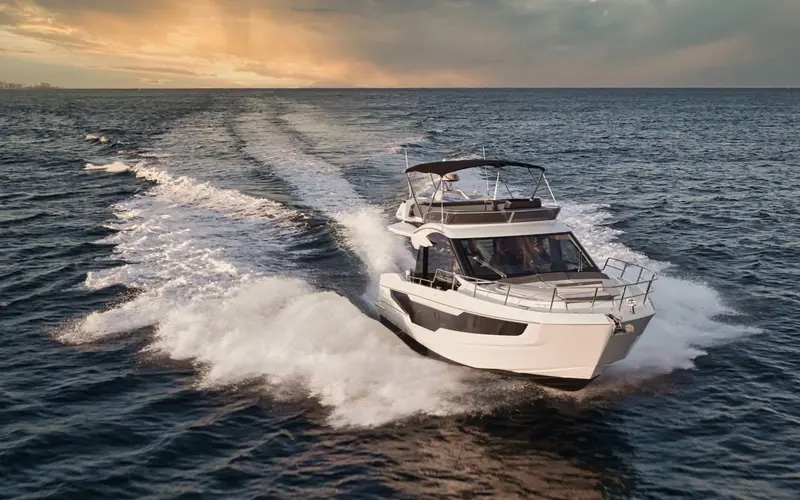
Charter Models Compared: Crewed vs Bareboat
In the yacht charter industry, “crewed charter” and “bareboat charter” represent two entirely distinct operational structures. The core differences between them extend far beyond simply “whether a captain is provided”—fundamental distinctions exist across control ownership, liability allocation, cost structures, and applicable scenarios.
In my years of experience, I've encountered clients who felt uncertain when choosing between crewed and bareboat charters. I provided a detailed explanation of the differences between the two models, covering aspects like control, liability allocation, and cost structures. With my guidance, they ultimately understood the respective advantages and disadvantages, enabling them to make a more suitable choice.
Below is a comparison table of the two charter models to help you better understand their distinct characteristics.
| Dimension | Crewed Charter | Bareboat Charter |
| Control | Retained by Owner | Temporarily assumed by Charterer |
| Crew Source | Provided by Owner | Provided by Owner |
| Licensing Requirements | None | Skipper license + experience verification required |
| Legal Liability | Owner's responsibility | Charterer's responsibility |
| Cost Structure | All-inclusive service fee | Charter fee + self-provided crew + fuel + insurance |
| Operating Waters | Global, unrestricted | Stable sailing routes (Mediterranean, Caribbean, etc.) |
In summary, crewed charter offers comprehensive service and operational support, while bareboat charter grants charterers greater autonomy and cost savings, but requires assuming more responsibility.
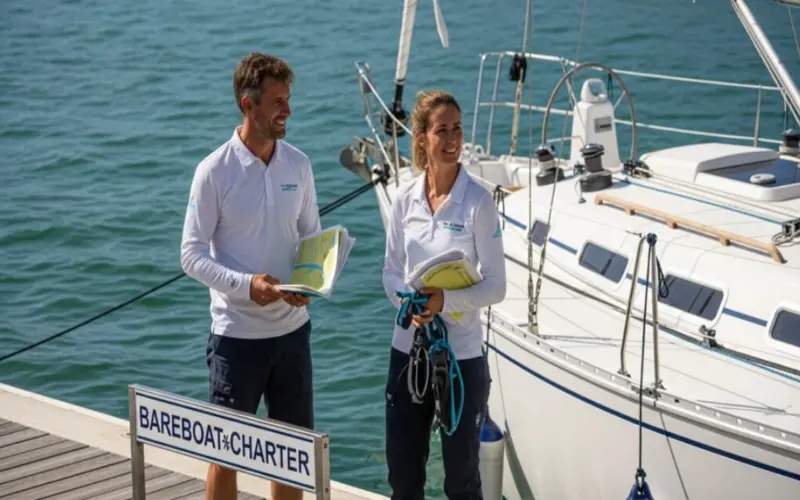
Yacht Crew Size Chart: 40–100 ft Optimal Headcount
After clarifying the liability structures of the two leasing models, the next step is to determine: Should charter yachts of different sizes be crewed? If so, how many crew members should be assigned?
The International Maritime Organization (IMO) explicitly states in its “Minimum Safe Manning” principle that vessels must maintain “adequate, effective, and efficient manning levels,” dynamically determining crew numbers based on vessel size, system complexity, automation levels, and voyage characteristics. This principle equally applies to the charter market, as charter companies must ensure delivered vessels meet minimum safe manning standards.
Meanwhile, as outlined in the article “Superyacht VS Standard Yacht,” conventional 40–60-foot yachts typically require only 1–2 core crew members for operational navigation. However, as the vessel's length, passenger capacity, and system complexity increase, crew numbers escalate progressively to fulfill responsibilities including mechanical maintenance, deck management, provisioning, housekeeping, and safety standby duties.
The following table summarizes the most common and reasonable crew configurations for 40–100-foot charter vessels, combining international regulations and industry practices:
| Boat Size Range | Recommended Crew Size | Typical Configuration | Typical Configuration |
| 40–55ft | 1–2 people | Captain (also handles navigation/maintenance) + optional deckhand/housekeeping | Nearshore cruising, weekend charters, relatively simple systems |
| 55–70ft | 2–3 people | Captain + Deckhand + optional housekeeping/cooking duties | Multi-day voyages, light hospitality, more mechanical systems |
| 70–85ft | 3–5 people | Captain + Deckhand + Engineer + housekeeping/cook | Significantly complex onboard systems requiring specialized operation |
| 85-100ft | 5–8 people | Captain + Mate + Engineer + 1–2 Deckhands + housekeeping team | Approaching “mini superyacht” status, involving ongoing maintenance and high-end hospitality services |
When yacht dimensions exceed seventy feet, mechanical complexity increases dramatically, leading to a more significant expansion in crew size.
⚠️ Warning:
- Insufficient crew may render the vessel ineligible for lawful operation, subjecting it to detention or fines by port state control.
- Bareboat charters require a qualified captain, with the charterer assuming full responsibility for navigational safety and compliance with licensing requirements.
- For voyages exceeding 60 nautical miles or night navigation, charter companies typically mandate the addition of one licensed watchkeeper.
2025 Crew Charter Cost Comparison: Real Data & Risk
Once it is determined that a chartered yacht requires a crew, many charterers ask how much more a crewed charter will cost compared with a bareboat arrangement. The answer depends heavily on the yacht, destination, charter duration, and what is included in the quoted rate.
Crewed charters may bundle crew services and certain onboard operating costs into the base rate, while other expenses—such as fuel, food and beverages, marina fees, and gratuities—may be charged separately. Bareboat charters remove the cost of professional crew, but the charterer takes on more responsibility for navigation, provisioning, docking, and day-to-day vessel management.
The following table outlines the main cost categories to check before comparing the two charter models:
| Category | Core Projects | Crewed Charter Cost Breakdown | Bareboat Charter Savings & Risks |
|---|---|---|---|
| 💰 Fixed Expenses | Crew wages + gratuities | Crew wages are normally included in the charter arrangement. Gratuities are discretionary and vary by charter arrangement and regional custom. For further explanation, see Vital Charters’ guide to how much to tip yacht crew. | No crew gratuity is required, but the charterer assumes responsibility for navigation and onboard operations. |
| Insurance | Hull, third-party liability, and other required charter coverage | Insurance arrangements vary by charter contract. Some crewed charters include certain insurance costs in the quoted rate, while others may list them separately. | Bareboat charters may require additional insurance or a security deposit, depending on the yacht and charter company. |
| Port & berthing fees | Marinas, utilities, cruising fees, and other destination charges | May be included or charged separately depending on the charter agreement and itinerary. | Generally remain the charterer's responsibility and must be managed independently. |
| 🎯 Variable Expenses | Food & beverages | Crewed charters may offer provisioning or catering packages, with costs depending on the menu, number of guests, and charter arrangement. | Charterers generally purchase and manage provisions themselves, which can provide more flexibility over spending. |
| Fuel & water toys | Main engine fuel, generator use, water-toy fuel, and other consumption | Usually charged according to actual usage or specified charter terms unless explicitly included. | Charterer is responsible for monitoring consumption and arranging refueling where required. |
Crewed charter provides comprehensive services including crew costs, insurance, and port fees, but at a higher price. Bareboat charter saves costs by eliminating crew expenses, but the charterer assumes full responsibility for navigation, safety, and management.
💡 Total Budget Quick Calculation Formula:
- Total Crewed Charter Cost ≈ Base Charter Rate × (1 + Fixed Expense Ratio) + Variable Expenses
- Total Bareboat Charter Cost ≈ Base Charter Rate + Variable Expenses (but charterer assumes operational and safety risks)
Key Points:For vessels of comparable size, consider fuel efficiency differences between sailing and motor yacht: Sailing yachts consume ≈ 60% of motor yacht fuel but travel ≈ 30% slower. Choose motor yachts for time-sensitive long-distance travel; opt for sailing yachts for leisurely cruising and scenic enjoyment.
Final Checklist: Should You Skip the Crew?
Whether to forgo crew services is never a simple matter of “saving money,” but rather a comprehensive choice based on “your risk tolerance for navigation” and “the purpose of yacht usage.” I've encountered two starkly contrasting cases illustrating the choices made by owners with different levels of experience:
- Charterer A (novice):During the first bareboat charter, a night navigation equipment failure occurred, leaving the crew unable to handle the emergency and causing a delay of several hours. Through this experience, A recognized the risks of operating without crew support and decided to opt for a crewed charter service next time.
- Charterer B (Experienced):Possessing years of sailing expertise, B opted for a bareboat charter with a first mate onboard. In familiar waters, B navigated all situations effortlessly, relishing the freedom of independent operation. B only sought additional crew assistance for unfamiliar waters or extended voyages to ensure safe and efficient navigation.
Below is the actual decision-making checklist I provided to the client:
Suitable for Retaining Crew Services (✓)
- Yacht exceeds 55–60 feet
- You are unfamiliar with waterways, tides, or local regulations
- Family members, elders, or children frequently accompany you
- You desire an experience closer to luxury chartering
- You prefer not to handle provisioning, mooring, cleaning, or maintenance
- Your annual sailing time exceeds 200 hours
Suitable for considering bareboat charter/reduced crew configuration (✓)
- Vessel length does not exceed 50 feet
- You hold a locally recognized captain's license
- Sailing range is stable and familiar
- Budget is limited but willing to handle operational tasks independently
- Primarily for fishing and short day trips
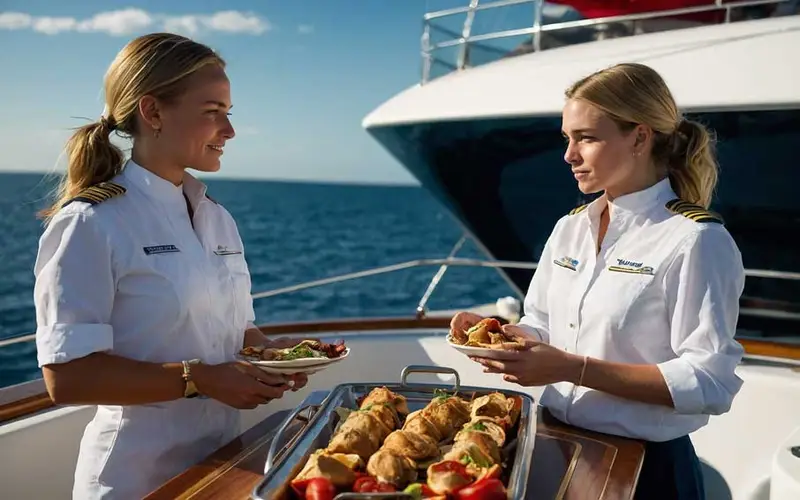
Summary
After thoroughly understanding the liability structures, crew requirements, and actual costs associated with crewed and bareboat charters, you will realize that neither model is inherently superior or inferior. The key factors are: your familiarity with sea conditions and regulations, your expectations for the voyage experience, and how much responsibility you are willing to assume for navigation and management. A crewed charter offers greater assurance in safety, maintenance, and hospitality; a bareboat charter grants experienced operators enhanced flexibility and budget control. By thoroughly understanding the differences between these models, assessing your own capabilities, and clarifying your travel objectives before making a decision, you can find the charter approach best suited to you in the dynamic market environment of 2025, ensuring a voyage that is both safe and enjoyable.
FAQ
Q1: Is a crew required when chartering a yacht?
A1: For vessels ≤55 ft operating day cruises near shore with a skipper license, bareboat charter is permitted. For vessels >55 ft, night cruises, or inter-island voyages, a captain must be present. Failure to comply may result in PSC deficiency code 151xx detention and insurance exclusion.
Q2: How much more expensive is crewed charter than bareboat?
A2: Crew surcharge ≈ base weekly charter × (salary 30-50% +gratuity is separate and discretionary). For an 80 ft vessel, this adds ~$8-15k USD weekly. Bareboat saves costs but shifts safety responsibility to charterer.
Q3: How much gratuity should be given to crew?
A3: Gratuity is discretionary. The CYBA Inclusive Agreement describes a customary 15 to 20 percent of the charter fee in the Caribbean, and MYBA's 2026 guidelines specify no percentage. It is customarily given to the captain in cash on disembarkation and divided among the crew.
Q4: How many crew members for 40-100 ft vessels?
A4: 40-55 ft: 1-2; 55-70 ft: 2-3; 70-85 ft: 3-5; 85-100 ft: 5-8. Must not fall below Safe Manning Certificate requirements.
Q5: What certifications are required for bareboat charter?
A5: Must hold a Day Skipper or equivalent boating license, VHF operator certificate, and provide proof of night navigation in English over 50 nautical miles. Non-English originals require an officially certified translation.
Q6: Consequences of insufficient crew?
A6: PSC imposes detention fines under 151xx, insurance becomes void; absence of watchkeeping personnel over 60 n miles or during night navigation also triggers penalties.
About the Author:
Andrew Rogers is an active yacht broker and marine surveyor operating in the United States and the Caribbean, with over 10 years of industry experience and having serviced more than 300 vessels. He specializes in yacht valuation, technical inspections, and safety compliance audits, consistently providing professional and reliable market and operational advice to buyers, owners, and charterers.
Disclaimer:
This content is provided for general informational and educational purposes only and does not constitute legal, navigational, insurance, or business decision advice. Actual charter requirements, licensing standards, fee structures, and safety manning levels must be determined according to flag state regulations, local port policies, and owner terms. For decisions regarding purchase, charter, or navigation, consult qualified professionals (e.g., licensed captains, marine surveyors, legal counsel, or insurance agents). Neither the author nor this platform assumes liability for any losses arising from reliance on this content.